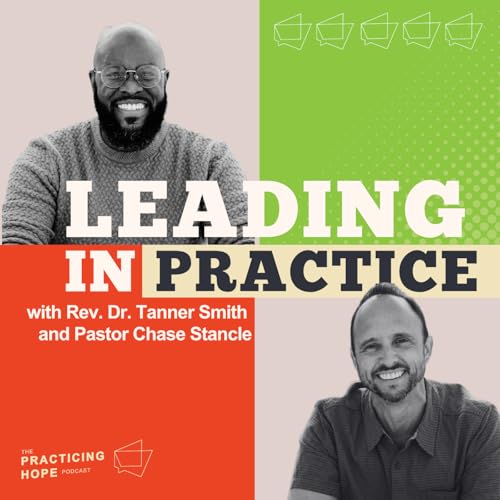
• The Cost of Doing Everything Yourself
    Jan 6 2026

    Have you ever gone days without needing to ask anyone for help?
    Groceries arrive at your door. Coffee is ordered ahead. Work, worship, and errands can all happen without a single face-to-face conversation. Life runs efficiently, but often at the cost of shared life.

    What if a fuller life comes not from convenience, but from shared life with others?

    Tanner Smith and Chase Rashad Stancle examine the value of self-sufficiency and how it shapes our neighborhoods, churches, and relationships. They talk about proximity, hospitality, and why growth often comes through inconvenience, disagreement, and showing up in person. Along the way, they offer practices that help rebuild everyday connection, starting right where we live.

    In this episode, you'll hear:

    • How convenience can replace interdependence

    • Why presence matters more than efficiency

    • One concrete practice to try with your neighbors

    Show Notes:

    • Genesis 2:18 — "It is not good for humans to be alone"

    • Making Room: Recovering Hospitality as a Christian Tradition by Christine Pohl

    • You Are What You Love by James K.A. Smith

    • Lessons from Mister Rogers, an article on The Latest by Heidi De Jonge, a Colossian Forum trainer

    • The extra pie practice: Make or buy more dessert than you need, then use it as a low-pressure reason to knock on a neighbor's door. The goal is to create a brief, human moment that opens the door to connection.

    • Pie recipes from Sarah: Chocolate Cream Pie and Lemonade Pie

    If you're interested in learning more about The Colossian Forum, visit our website colossianforum.org, and follow us on social media @colossianforum.

    Show More Show Less
    52 mins
  • How to Stay Human (And Hopeful) When Scrolling
    Dec 11 2025

    Have you ever opened your phone "just for a minute" and ended up angry at strangers on the internet? So many of us pick up our phones to relax, but instead feel restless, stressed, and less present to the people right in front of us.

    What if your online life could actually become a place to practice hope and love?

    In this episode of our Beholding series, Tanner Smith, Chase Rashad Stancle, and Sarah Johnson talk about how phones and social media shape our brains, our bodies, and our relationships — and how small, practical practices can help us stay human, grounded, and open to God, even while we scroll.

    In this episode, you'll hear:

    • Why doomscrolling creates "micro-stress cycles" in your body

    • Honest stories of losing and finding hope in online spaces

    • Simple ways to set boundaries and bring your real self back into the room

    Show Notes:

    • An article by Amy Julia Becker on engaging faithfully in online conversations (featured on The Colossian Forum's blog, The Latest)

    • The Colossian Forum "Prayer of the Week" — follow us on Instagram for regular prayers @colossianforum

    • The Social Dilemma documentary (recommended pre-phone viewing for teens)

    • Practice of tracking daily screen time in a paper planner

    • Ideas for analog hobbies: reading, coloring, puzzles, tying flies for fishing, walking outside

    If you're interested in learning more about The Colossian Forum, visit our website colossianforum.org, and follow us on social media @colossianforum.

    Show More Show Less
    50 mins
  • How Small Acts of Curiosity Can Save the Friendship
    Nov 26 2025

    Have you ever felt a friendship grow tense or distant and weren't sure why?
    In a world marked by polarization and quick assumptions, even strong friendships can feel fragile. A single comment, a post, or a difference in perspective can suddenly amplify the distance between us.

    But what if the gap you feel isn't the end of the relationship — just an invitation to truly see each other again?

    In this episode, Tanner, Chase, and Sarah explore why division makes friendships harder to navigate, why we sometimes turn friends into "categories," and how small acts of curiosity can soften what feels strained.

    In this episode, you'll hear:

    • Why polarized culture makes friendship feel more fragile

    • What's really happening when a friend starts to feel like a stranger

    • Simple practices for reconnecting with curiosity and humility

    Show Notes:

    • Curiosity prompt: "How did you come to see it that way?"

    • Philippians 4:7

    • Practice: Everyday Carry (EDC) Questions

    When a friendship feels tense or distant, try carrying an "Everyday Carry" question — one simple prompt you can use to stay curious instead of reactive. Just like you keep your keys or phone on hand, keep a question ready that helps you slow down and listen. Something like "How did you come to see it that way?", "What shaped the way you think about this?", or "What feels most important to you here?" These kinds of questions invite real stories instead of assumptions and create a little more space for connection when a moment feels tender or difficult.

    If you're interested in learning more about The Colossian Forum, visit our website colossianforum.org, and follow us on social media @colossianforum.

    Show More Show Less
    32 mins
  • What Hurry is Doing to Your Relationships
    Nov 12 2025

    Have you noticed hurry shrinking your capacity to love the people right in front of you?
    The pace of life makes us reactive — rushing kids out the door, skimming conversations, and missing moments that matter.

    What if slowing down wasn't about doing less, but about learning to see as God sees? In this kickoff to our Beholding series, Tanner, Chase, and Sarah explore how hurry distorts our relationships and how attention, presence, and prayer can restore them. Warm, practical, and honest—this conversation helps you trade frantic for faithful with the people you love most.

    In this episode, you'll hear:

    • Why "beholding" (2 Corinthians 5) changes how we see each other

    • Everyday practices to resist urgency and be present

    • A simple prayer rhythm to rest in God's lovingkindness

    Show Notes

    • Beholding: "From now on we regard no one from a worldly point of view" 2 Corinthians 5:16

    • Centering Prayer (Thomas Keating): using a prayer word like "lovingkindness"

    • Nikon Small World micro-photography (example of "seeing" the ordinary)

    • Resource: How to Slow Down and Be a Peaceful Presence When Tensions Are High — free guide from The Colossian Forum

    If you're interested in learning more about The Colossian Forum, visit our website colossianforum.org, and follow us on social media @colossianforum.

    Show More Show Less
    40 mins
  • When Powerlessness Becomes a Habit and How to Break It
    Oct 29 2025

    Have you ever felt powerless in a situation you care deeply about? When things feel out of control, it's easy to slip into the story that says, "There's nothing I can do." But what if helplessness isn't the whole story?

    In this episode, Tanner Smith, Chase Rashad Stancle, and Sarah Johnson wrap up their Relational Triangles series by exploring the Victim role — what it really is, what it isn't, and how to move from stuckness to agency. Through Scripture, humor, and real-life examples, they unpack how empathy and small choices can restore hope and courage in the midst of overwhelm.

    In this episode, you'll hear:

    • How to tell the difference between feeling powerless and being powerless

    • Why empathy is the first step toward reclaiming agency

    • How to shift from victim to creator — finding a faithful way forward

    Show Notes

    • Stephen Karpman's Drama Triangle: Victim, Villain, Hero roles

    • 1 Kings 19 – Elijah's story of exhaustion and renewal

    • Reflection guide: "15 Reflection Questions for Moving From Powerlessness to Agency" — a free resource to help you or someone you lead move from helplessness to hopeful agency through gentle, faith-centered self-reflection and conversation.

    If you're interested in learning more about The Colossian Forum, visit our website colossianforum.org, and follow us on social media @colossianforum.

    Show More Show Less
    40 mins
  • Why the Blame Game Keeps Us Stuck
    Oct 15 2025

    Can we be honest? Blame feels good — at least for a moment.
    It's quick, easy, and even a little satisfying to find someone else to fault. But before we know it, that "warm blanket" of blame can leave us isolated and stuck.

    In this next installment of the Relational Triangles series on the Practicing Hope Podcast, Sarah Johnson joins Tanner Smith and Chase Rashad Stancle to explore the role of the Accuser and how to move from calling people out to calling people in. Together, they unpack how fear, blame, and even our brains can keep us reactive and how curiosity, confession, and prayer can open space for real connection and growth.

    In this episode, you'll hear:

    • Why anxious systems feed on blame and how to calm them

    • How to shift from accuser to challenger

    • A simple prayer to slow down and respond with wisdom

    Show Notes

    • Stephen Karpman's Drama Triangle: Victim, Villain, Hero roles

    • Brain science: amygdala, mirror neurons, dopamine/oxytocin

    • Psalm 139 — "Search me and know my heart…"

    • PDF: 15 Reflection Questions for Leaders — a free PDF with 10+ thoughtful prompts you can keep in your back pocket to reframe conflict and invite growth

    • Slowing Down Guide — a simple, free, practical resource to help leaders pause, breathe, and show up as a peaceful presence when tensions rise

    • Staying Grounded Guide — a reflection-based guide that helps you pause in the heat of tension and move from reactivity to agency, so you can show up with greater clarity, peace, and presence.

    If you're interested in learning more about The Colossian Forum, visit our website colossianforum.org, and follow us on social media @colossianforum.

    Show More Show Less
    40 mins
  • Stop Saving Everyone (Even if You're Good at it)
    Sep 24 2025

    Have you ever felt the pressure to fix everyone else's problems?


    Maybe with your kids, your congregation, or coworkers, you step in, smooth things over, and carry weight that isn't yours. It feels noble, but it can drain you and keep others from growing.

    What if rescuing isn't the most loving thing you can do?

    In Part 2 of our Relational Triangles series, hosts Tanner Smith and Chase Rashad Stancle — joined by Sarah Johnson — unpack the "hero/rescuer" role of the Drama Triangle: why anxious systems reward over-functioning and how to shift from rescuer to coach with simple, wise questions.

    In this episode, you'll hear:

    • Why leaders are tempted to over-function

    • How rescuing can quietly dishonor people

    • Coaching questions to invite growth instead of fixing

    Show Notes:

    • Stephen Karpman's Drama Triangle: Victim, Villain, Hero roles

    • 1 Corinthians 12–14 (body metaphor)

    • Slowing Down Guide — a simple, free, practical resource to help leaders pause, breathe, and show up as a peaceful presence when tensions rise

    • PDF: Coaching Questions for Leaders — a free PDF with 10+ thoughtful prompts you can keep in your back pocket to reframe conflict and invite growth

    If you're interested in learning more about The Colossian Forum, visit our website colossianforum.org, and follow us on social media @colossianforum.

    Show More Show Less
    45 mins
  • Why You Keep Getting Pulled in: Understanding Relational Triangles
    Sep 10 2025

    Have you ever found yourself pulled into someone else's conflict?

    It happens at work, at church, even in the grocery store. One moment you're minding your own business, and the next you're caught in the middle of a conversation that really belongs between two other people. What if, instead of absorbing stress that isn't yours, you could learn to notice these moments and respond more healthily?

    In this hope-filled episode of Leading in Practice, hosts Tanner Smith and Chase Rashad Stancle explore the hidden dynamics of relational triangles. They share stories from pastoral life, practical strategies to "flatten the triangle," and ways to discern when you're moving toward connection—or just lowering discomfort. Along with guest producer Sarah, they reveal how triangles can either short-circuit relationships or create surprising space for wisdom and healing.

    In this episode, you'll hear:

    • How to spot the difference between gossip, venting, and seeking wisdom.

    • A simple practice for "flattening the triangle" and inviting the right person in.

    • Why noticing your patterns can help you stay grounded instead of over-functioning.

    Show Notes:

    • Edwin Friedman's "balcony vs. dance floor" metaphor from Leadership on the Line by Ronald Heifetz and Marty Linsky

    • The Karpman Drama Triangle: victim, villain, hero roles

    If you're interested in learning more about The Colossian Forum, visit our website colossianforum.org, and follow us on social media @colossianforum.

    Show More Show Less
    39 mins