Public History with Justin, Jake, and Molly cover art

Public History with Justin, Jake, and Molly

Public History with Justin, Jake, and Molly

Written by: Justin Voithofer Jake Wynn and Molly Keilty
Listen for free

About this listen

Welcome to Public History with Justin, Jake, and Molly - a podcast about how we share, interpret, and connect with the past. Each episode, we dig into how history is told in museums, historic sites, classrooms, and pop culture — and how storytelling can make the past relevant to the world we live in today. Between us, we've spent years in the field — from leading tours on Civil War battlefields and preserving historic landscapes to interpreting the stories of America's industrial workers and sharing local history online. We've seen firsthand how public history shapes communities, sparks curiosity, and sometimes stirs debate. Together, we'll talk with fellow historians, educators, and storytellers about how history reaches the public — on screen, on the ground, and everywhere in between. Through these conversations, we'll explore the ways history continues to inform who we are and who we want to be. The thoughts and opinions shared here are our own and don't represent those of our employers or affiliated organizations.2024 Social Sciences World
Episodes
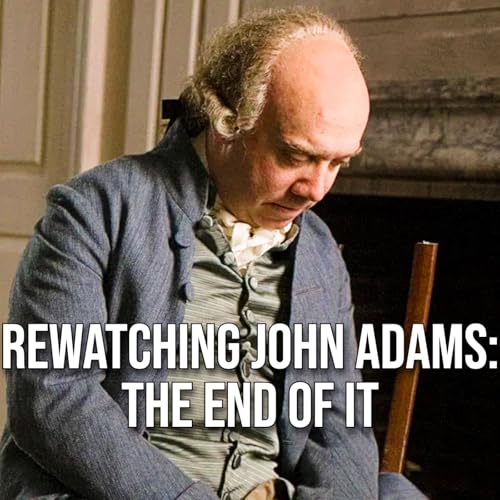
  • Rewatching John Adams: Law, Revolution, and Abigail's America (Episodes 1-2)
    Feb 23 2026

    In this episode of Public History with Justin, Jake, and Molly, we begin our rewatch of HBO's 2008 miniseries John Adams — and it feels different this time.

    Jake, Justin, and Molly dive into the first two episodes of John Adams, beginning with the Boston Massacre and John Adams' controversial defense of British soldiers. It's a legal drama rooted in principle and ambition - a reminder that the rule of law has always been contested in American history, even in 1770.

    From there, the conversation moves into the Continental Congress, the long road to independence, and the fragile coalition that produced the Declaration.

    Along the way, the trio unpacks the radicalization of John Adams, the diplomacy of Benjamin Franklin, the complicated legacy of George Washington, and the indispensable role of Abigail Adams - moral compass, political strategist, and intellectual equal.

    This episode of Public History with Justin, Jake, and Molly explores:

    • The Boston Massacre and why Adams defended the British soldiers
    • "Facts are stubborn things" and the meaning of the rule of law
    • The violence and instability of revolutionary Boston
    • The Continental Congress and the messy politics of independence
    • Jefferson, Franklin, and the drafting of the Declaration
    • The slavery clause that didn't survive
    • Smallpox, inoculation, and medicine in wartime
    • Abigail Adams as the quiet force behind the Revolution
    Show More Show Less
    1 hr and 17 mins
  • A Governor's Scandal: Sally McDowell, Francis Thomas, and A Very Public Divorce in the 1840s
    Feb 16 2026

    In this episode, Jake and Justin are joined by public historian Travis Shaw for a story that feels very modern - and yet unfolds in the 1840s.

    It begins with a marriage between Sally Preston McDowell, the daughter of a powerful Virginia political family, and Francis Thomas, a rising Maryland political star. Within weeks, suspicion, jealousy, and accusation turn that marriage into one of the most explosive public scandals of the antebellum era.

    What follows is a cascade of drama: alleged infidelity, a miscarriage, public accusations of infanticide, private letters turned into political weapons, and - at one point - two sitting governors physically fighting on a train platform in Virginia.

    Francis Thomas published a 52-page pamphlet detailing the intimate collapse of his marriage and places it on the desk of every member of Congress. State legislatures in Maryland and Virginia debated the case. Crowds packed the galleries. The press leapt at the chance to spill ink about this unfolding drama.

    But beneath the spectacle is something more human - and more revealing. This episode explores how marriage, divorce, reputation, and gender operated in the 19th century. It traces how a woman navigated public shame in a world that gave her few legal protections. And it follows the strange afterlife of a political career that seemed permanently destroyed - only to be resurrected during the Civil War.

    This episode of Public History with Justin, Jake, and Molly explores:

    • Marriage, jealousy, and power in the 1840s political elite
    • Divorce through state legislatures in antebellum America
    • Public scandal before tabloids and reality TV - broadsides, pamphlets, and packed galleries
    • Two governors fighting on a train platform
    • The Civil War redemption arc of Francis Thomas
    • Sally McDowell's second act - and a life reclaimed

    Want to learn more? Here's this episode's reading list and more information about Travis Shaw:

    The Great Catastrophe of My Life Divorce in the Old Dominion by Thomas E. Buckley

    If You Love That Lady Don't Marry Her: The Courtship Letters of Sally Mcdowell and John Miller, 1854-1856 (Volume 1)

    Statement of Francis Thomas

    Historians on Tap

    Virginia Piedmont Heritage Area

    Show More Show Less
    55 mins
  • Running Through History: Rewatching Last of the Mohicans
    Feb 9 2026

    In this episode, Jake, Justin, and Molly revisit Last of the Mohicans - Michael Mann's sweeping 1992 epic set during the French and Indian War.

    The conversation moves between cinema and history, unpacking the real events behind the film's dramatic core, including the siege and massacre at Fort William Henry in 1757. Jake and Justin trace the historical landscape of the war itself - a global conflict sparked in North America - and walk through how a young, inexperienced George Washington helped ignite a world war.

    Molly brings the film critic's eye, reflecting on performances, score, and why this movie feels fundamentally different from historical epics made today.

    The episode also explores the deeper cultural layers behind the story: James Fenimore Cooper's 19th-century novel, the romantic myth of the disappearing frontier, and how Native nations were portrayed by early American writers. Along the way, the hosts wrestle with what the film gets right, what it simplifies, and why popular culture still shapes how Americans imagine early American history.

    This episode of Public History with Justin, Jake, and Molly explores:

    • The French and Indian War as the prelude to the American Revolution
    • The real history behind Fort William Henry and its aftermath
    • James Fenimore Cooper, frontier mythmaking, and early American literature
    • Native nations, alliances, and survival in an imperial war
    • Why Last of the Mohicans feels like a movie that couldn't be made today
    • Running, cannons, heartbreak - and one of the great endings in film history

    Read more about Fort William Henry's history

    Show More Show Less
    50 mins
No reviews yet