• The Elusive Myth of an Evil Bible: A Philosophical Inquiry into Subversive Texts and Human Morality
    Jan 6 2026

    This study examines the absence of an evil Bible, a theoretical counterpart to sacred texts. It analyzes subversive works, exploring themes of rebellion, reform, and hidden wisdom, to understand humanity’s complex relationship with power and morality, explaining why no doctrine of pure malevolence has emerged in educational discourse.

    Read the complete essay and view supporting resources at Real Free News and Substack https://realfreenews.substack.com/p/the-elusive-myth-of-an-evil-bible

    #EvilBibleMyth #SubversiveTexts #ReligiousPhilosophy #MoralExploration #HumanityAndPower

    Show More Show Less
    20 mins
  • The Communist Manifesto in 5 Minutes: Concise Version with Summaries and Commentary
    Jan 6 2026

    This presentation offers a 5-minute concise version of a seminal text, enriched with introduction and conclusion summaries. It explores revolutionary principles and historical critique, inviting scholars to engage with a transformative work that reshaped political discourse, encouraging deeper exploration of its enduring influence on social and ideological landscapes.

    01:04 - Communist Manifesto's concise summary begins.

    #CommunistManifesto #MarxistThought #RevolutionaryIdeas #PoliticalDiscourse #Subversion

    Show More Show Less
    9 mins
  • Marxist Communism: A Comprehensive Inquiry into the Genesis, Evolution, and Resonance of Communism
    Jan 6 2026

    This analysis delves into the emergence of Marxist communism as a transformative ideological force, tracing its roots in 19th-century Europe. It explores philosophical underpinnings and global resonance, inviting scholarly curiosity into its complex origins, revolutionary potential, and enduring influence across diverse societies and historical contexts.

    Read the complete article and view supporting resources at Real Free News and Substack https://open.substack.com/pub/realfreenews/p/marxist-communism-a-comprehensive?

    #MarxistCommunism #History #Revolution #Philosophy #GlobalInfluence

    Show More Show Less
    30 mins
  • A Comprehensive Overview of The American Monetary System
    Jan 6 2026

    This essay examines the U.S. monetary system, detailing its historical development, money creation via fractional reserve banking, and roles of the Federal Reserve and U.S. Treasury. It analyzes currency valuation, revenue generation, and economic stability, supported by 2025 data. #USMonetarySystem #FederalReserve #MoneySupply #MonetaryPolicy #EconomicStability

    Show More Show Less
    30 mins
  • The White Population of European Descent: Peak Global Share to Projections of Reaching 5%
    Jan 6 2026

    The proportion of people identified as white and of European descent has changed significantly over time, influenced by global population growth and varying definitions. Around 1900, this group made up an estimated 33% to 40% of the world’s 1.6 billion people, totaling 550 to 600 million... #GlobalPopulation #DemographicTrends #EuropeanAncestry #PopulationProjections #IdentityShift

    Show More Show Less
    11 mins
  • Taxonomy of Identity: Decoding Descriptors Through Science and History
    Jan 6 2026

    Explore the shifting value of identity terms like ancestry, tribe, and race. Why do scholars favor precise descriptors while everyday talk leans on nationality? This journey unravels the science and history behind human belonging, revealing why some terms shine in research but fade in daily life. Discover the hidden divide.

    Ranked Descriptors with Definitions

    Ancestry: The traceable lineage of individuals or groups, rooted in genetic markers like Scandinavian DNA or historical records like dynastic chronicles, providing a direct thread to human origins.

    Tribe/Clan: A kinship-driven social group, such as the Maasai or Clan Gordon, defined by familial ties and traditions, offering a focused lens for genetic, archaeological, or historical study.

    Ethnicity: A cultural collective, such as the Yoruba or Han Chinese, shaped by shared language, rituals, and customs, prioritizing lived identity over biological roots.

    Heritage: The inherited backdrop of familial or ancestral past, such as Viking settlers in Orkney, blending genetic traces with historical narratives.

    Diaspora: A dispersed population, like Armenians post-1915, maintaining cultural or genetic continuity, evidenced by migration or trade records.

    Culture: The collective practices and beliefs of a group, such as Minoan art or the Islamic Golden Age, reflecting societal identity over individual ties.

    Race: A historical grouping by physical traits like skin color, now seen as biologically imprecise due to greater intra-group variation.

    Nationality: The legal bond to a state, such as Brazilian citizenship, tied to modern political frameworks rather than cultural or genetic depth.

    Identity: The personal or communal self-definition, such as “Berliner,” fluid and subjective, shaped by individual choice or affiliation.

    #Taxonomy #IdentityExplained #AncestryVsTribe #EthnicityUnraveled #HistoryAndScience

    Show More Show Less
    6 mins
  • Origins and Evolution of the Catholic Church: From Jewish Roots to Universal Identity
    Jan 6 2026

    This essay traces the Catholic Church’s origins from a 1st-century Jewish sect, sparked by Jesus of Nazareth, to a universal religion. Initially composed of Jewish followers expecting a messianic era, it diverged through Paul’s Gentile outreach after the Council of Jerusalem (50 CE). The term "Christian" emerged in Antioch, and "Catholic" appeared by 107 CE, reflecting its broad mission. Theological shifts, like the Trinity and salvation focus, distinguished it from Judaism. Formalized by Constantine’s 313 CE edict and the 325 CE Council of Nicaea, the Catholic Church evolved from Jewish roots into a global faith, embodying its "universal" name. #CatholicOrigins #JesusAndJudaism #ChurchHistory #GentileInclusion #UniversalFaith

    Show More Show Less
    7 mins
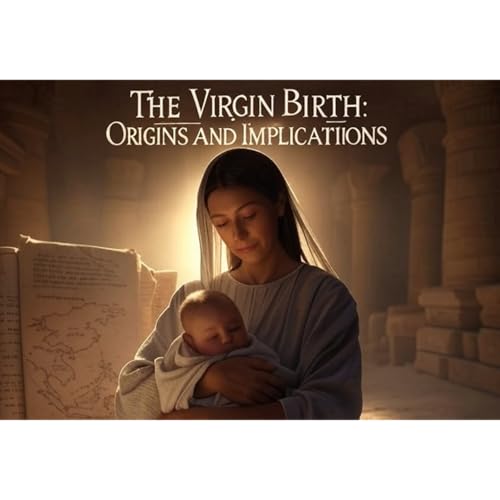
  • The Virgin Birth Narrative in Early Christianity
    Jan 6 2026

    The virgin birth, found only in Matthew and Luke, evolved from a minor detail into a core Christian doctrine, shaped by theology and culture, not Jesus’s own claims. He affirmed his divine sonship through miracles and authority, leaving the virgin birth narrative to later followers to emphasize his divine status. #VirginBirth #ChristianTheology #JesusSonOfGod #BiblicalStudies #NewTestament

    Show More Show Less
    8 mins