• Purple Rain and Prince’s Minneapolis with Rashad Shabazz
    Feb 19 2026

    In this episode, I sit down with cultural geographer Rashad Shabazz to dissect the 1984 classic starring Prince — and ask the uncomfortable questions.

    Is The Kid a tortured genius… or a young man replaying generational trauma?
    Is the final performance redemption — or dominance?
    And what does Minneapolis represent in a film about Black masculinity, ambition, and control?

    We unpack race, space, violence, desire, artistic genius, and the myth of upward mobility — all through the lens of one of the most iconic soundtracks of the 1980s.

    This is Purple Rain as you’ve never heard it discussed before.

    🎧 Press play.

    Show More Show Less
    1 hr and 43 mins
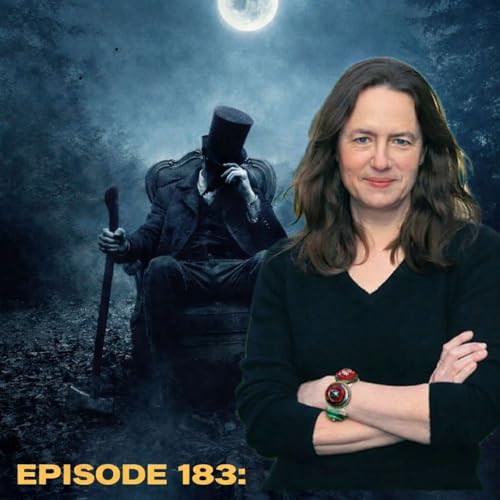
  • Episode 183: Heather Cox Richardson on Abraham Lincoln: Vampire Hunter
    1 hr and 46 mins
  • Episode 182: Contagion of Liberty: Smallpox, Freedom, and America's First Culture War with Andrew Wehrman
    Feb 9 2026

    In this episode of Reckoning, historian Andrew Wehrman, author of Contagion of Liberty, explores how smallpox and inoculation shaped the American founding—and ignited some of the earliest debates over liberty, risk, and public health.

    Long before COVID-19, Americans wrestled with questions of bodily autonomy, religious belief, communal obligation, and government authority, all in the shadow of a deadly disease and without modern medical knowledge. From local resistance to inoculation to George Washington’s controversial decision to mandate it in the Continental Army, this conversation places early American public health in its full moral and political context.

    By looking closely at how Americans responded to smallpox, this episode shows why vaccine controversy is not a modern anomaly—but a recurring feature of American life—and what our past can (and cannot) teach us about navigating public health crises today.

    Show More Show Less
    1 hr and 11 mins
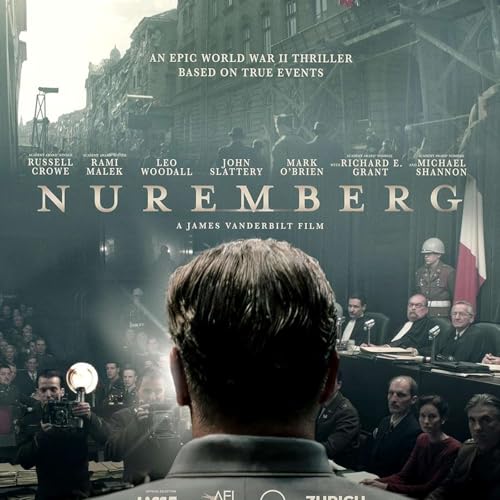
  • Episode 181: Jack El-Hai on Nuremberg, “The Nazi and the Psychiatrist,” and the Limits of Understanding
    Feb 5 2026

    In this episode of Reckoning, we speak with author and journalist Jack El-Hai about the new film Nuremberg and the deeper questions it raises about justice, memory, and moral responsibility.

    Drawing on his book The Nazi and the Psychiatrist, El-Hai examines the relationship between Hermann Göring and Dr. Douglas Kelley during the Nuremberg Trials, and what it reveals about psychology, power, and the human impulse to explain evil. The conversation considers how early efforts to diagnose Nazism continue to shape the way we understand perpetrators—and the limits of that understanding.

    This episode asks what it means to reckon with history honestly, without turning the past into either monsters or myths.


    About our guest:

    Jack El-Hai is an author and journalist whose work explores psychology, history, and the moral complexities of the twentieth century. He is the author of The Nazi and the Psychiatrist, which examines the psychological interrogation of Nazi leaders during the Nuremberg Trials and the uneasy questions those encounters raised about evil, responsibility, and human nature.

    El-Hai’s writing has appeared in The New Yorker, The Atlantic, Smithsonian, and other publications, and he is known for bringing rigorous historical research together with narrative clarity and ethical depth.


    Show More Show Less
    59 mins
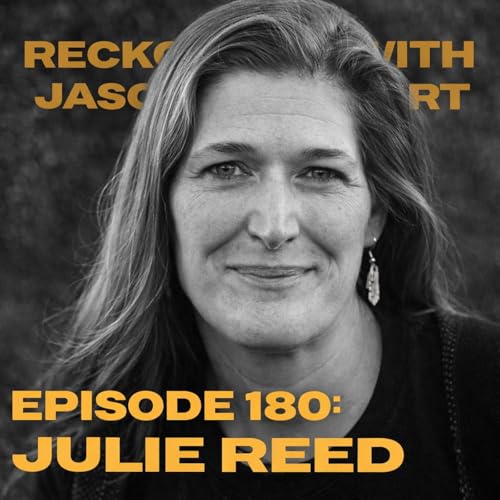
  • Episode 180: Julie Reed on Cherokee Land, Language, and the Power of Women
    Feb 2 2026

    In this episode, I’m joined by Cherokee scholar and author Julie Reed to talk about her powerful book Land, Language, and Women: A Cherokee and American Educational History.

    We explore how Cherokee women have shaped—and continue to sustain—relationships to land, community, and language in the face of colonial violence and dispossession. Reed shows how land is not simply territory, language is not merely words, and women are not peripheral to history, but are instead central to cultural survival and meaning.

    Our conversation moves between history, storytelling, gender, and Indigenous knowledge systems, asking what it really means to belong to a place—and what is lost when those relationships are broken. This is a conversation about memory, resistance, responsibility, and the enduring power of women to carry culture forward.

    About our guest:

    Julie L. Reed is an associate professor in history at the University of Tulsa. She is a historian of Native American history, with an emphasis on Southeastern Indians and Cherokee history, and American education. She is also a member of the Cherokee Nation.

    Show More Show Less
    1 hr and 27 mins
  • Episode 179: Coyote America with Dan Flores
    Jan 27 2026

    There is probably no historian working today more influential in shaping how we think about the way in which humans and animals engage with each other and the environment than Dan Flores. Today, Dan joins in to talk about his epic work, Coyote America: A Natural and Supernatural History, on the eve of its 10th anniversary release, along with discussions on wolf reintroduction, bison on the plains, the American Serengeti, and his relationship with Steven Rinella and the crew over at Meateater.

    About our guest:

    New York Times best-selling author Dan Flores is one of America’s most celebrated historians, renowned for his deep explorations of the country’s landscapes and the remarkable figures who shaped them. While he has 11 acclaimed books to his name, Flores is first and foremost a teacher. He served as Professor Emeritus of Western History at the University of Montana. This year, Flores brings a lifetime of expertise and storytelling to the MeatEater Podcast Network with his new podcast, The American West with Dan Flores.

    Show More Show Less
    1 hr and 23 mins
  • Episode 178: The Great Math War: When Math became a Battlefield
    Jan 20 2026

    This week Jason Socrates Bardi joins in to talk about about the rivalry between three mathematicians that defined the fifty years surrounding World War I.

    About our guest:

    Jason Socrates Bardi is an award-winning journalist in DC who has written two books about the history of math: The Calculus Wars and The Fifth Postulate. He has published hundreds of articles about modern science and medicine in outlets including the San Francisco Chronicle, Good Morning America, US News & World Report, and The Lancet. He lives in Bethesda, Maryland.

    Show More Show Less
    1 hr and 17 mins
  • Episode 177: The Quiet Crisis in America's Creeks
    Jan 12 2026

    This week Dr. Zackary Graham drops in to talk about one of America's most important environmental stewards--the crawfish--and why their disappearance should worry us all.

    About our guest:

    Zack is an evolutionary and behavioral ecologist who studies crayfish diversity. The goal of his research is to untangle the ecological and evolutionary complexities that have led crayfishes to be amongst the most successful freshwater animals within the Eastern United States and beyond.

    He is the author of an upcoming popular science book (available 1/6/26) on crayfish entitled Crayfish, Crawfish, Crawdad: The Biology and Conservation of North America's Favorite Crustaceans published by UNC Press.

    Show More Show Less
    54 mins