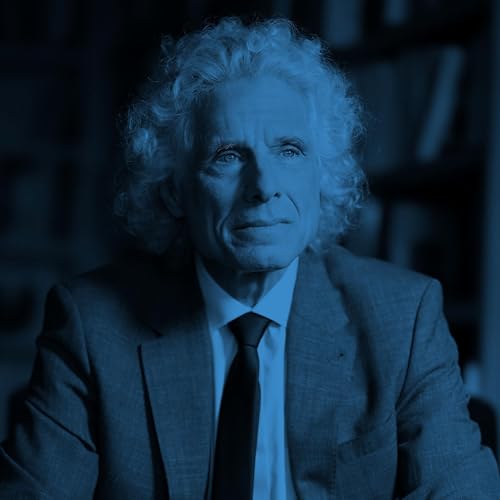
Rotman Visiting Experts cover art

Rotman Visiting Experts

Rotman Visiting Experts

Written by: Rotman School of Management
Listen for free

About this listen

Big ideas. Bold conversations. Hosted by Brett Hendrie, this monthly podcast takes you behind the scenes of Rotman’s acclaimed Speaker Series to explore transformative ideas about business and society. Each episode features global thinkers, bold business leaders and influential scholars sharing insights on how we work, lead and live in a rapidly changing world. From leadership in uncertain times to failing smarter, you’ll get sharp, practical takeaways and fresh perspectives you can apply right away — no MBA required.2023 - Rotman School of Management Careers Economics Leadership Management Management & Leadership Personal Success
Episodes
  • Terry O'Reilly on what mavericks and outcasts can teach leaders about innovation
    Jan 27 2026

    What does it mean to go against the grain? To be a trailblazer or a maverick? To break the rules?

    We often celebrate mavericks in the business world for their success, but rarely acknowledge the tumultuous — and sometimes despondent — path they face when defying convention.

    On the latest episode of Visiting Experts, Terry O’Reilly joins host Brett Hendrie to discuss his new book and explore how mavericks have changed the world, even when the personal cost was great. From Gustave Eiffel to Taylor Swift, it’s essential listening for leaders looking to bend — or break — a few rules.

    Show Notes

    [0:00] Brett Hendrie on the power of mavericks in business and society.

    [1:10] Meet Terry O’Reilly, host of The Age of Persuasion, and author of the new book Against the Grain.

    [2:17] What prompted Terry to write a book on individuals who break the rules, and through the process, what did he learn about shared traits they all have?

    [5:18] How did Gustave Eiffel — of Eiffel Tower fame — succeed when everyone believed he (and the tower) would fail?

    [8:42] Terry breaks down the important, yet tragic, story of Ignaz Semmelweis.

    [12:46] Why are intuition and hunches so crucial to the maverick mindset?

    [14:20] Taylor Swift may feel like she’s part of the system, but her smart approach to bending the rules has made her an unrivalled superstar.

    [17:23] Terry’s own journey into rule-breaking, for work with the Toronto Symphony Orchestra, shows the power of trusting your gut and ignoring the status quo.

    [20:34] If everyone has their own platforms and echo chambers, can you really go against the grain anymore? Terry says sort of.

    [21:52] His parting advice: “I would say this, if you don't think one person can change the world, you are wrong. That's the takeaway.”

    If you enjoyed this episode, why not give some of our back catalogue a listen? If you want to learn more about dealing with disruption, check out our conversation with Karthik Ramanna on leading in a time of outrage, or Anne Chow on redefining what inclusive leadership really means.

    Make sure you subscribe to this podcast on Apple, Spotify, YouTube, or wherever you get your podcasts — and please consider giving the series a five-star rating.

    To explore more leadership tips and tricks from the Rotman School of Management, check out our Rotman Executive Summary podcast, featuring the latest research and thought-leadership from our esteemed faculty. Check it out on Apple, Spotify or wherever you get your podcasts. And be sure to subscribe to the Rotman Insights Hub bi-weekly newsletter for even more insights shaping business and society.

    Show More Show Less
    24 mins
  • The value in what 'everyone knows': The invisible force behind communication and influence
    Nov 25 2025

    What we know matters. But what we know others know can make or break a deal. Professor Steven Pinker joins host Brett Hendrie to talk about common knowledge — what everyone knows that everyone knows, why it’s crucial to business and negotiation, and how shared understanding helps people get work done.

    Show notes:

    [0:00] Brett Hendrie on moments of shared understanding

    [0:58] Meet Harvard professor Steven Pinker, who joins the episode to talk about his new book When Everyone Knows That Everyone Knows.

    [2:28] What is common knowledge?

    [3:49] Steven was drawn to the topic because so much of language is what we don’t say… and he began to wonder why we don’t say it.

    [4:20] “Netflix and chill” is the perfect example of common knowledge in practice.

    [5:33] How common knowledge can shape advertising and marketing

    [7:59] It can also influence markets — think speculative bubbles, bank runs and trust in financial institutions.

    [11:01] Negotiations are often only successful because of common knowledge.

    [14:57] Complete openness and transparency can backfire — see Bridgewater Associates — and this is where things left unsaid (but still understood) can fill the gaps.

    [18:01] What do we lose with less common knowledge in a remote or hybrid work environment? Those physical social cues — blushing, glaring, staring — communicate a lot in the end.

    [19:51] In a world of information bubbles, common knowledge is getting fractured.

    [21:09] What’s left unsaid has lots of value. “I think the genteel hypocrisy and innuendo and euphemism makes social life possible — but that sometimes gets in the way of actually transacting the business of life. And that balance is, I think, what we call tact, savoir faire, social skill — not being too far along one end of the spectrum. And what I think a lot of that consists of is knowing what to put in common knowledge and what to keep out of common knowledge.”

    If you enjoyed this episode, why not give some of our back catalogue a listen? If you want to dig deeper into the psychology of the world around us, check out our discussions with Malcolm Gladwell on how our shared stories shape our world, or Michael Bungay Stanier on the secrets to coaching others.

    Make sure you subscribe to this podcast on Apple, Spotify, YouTube, or wherever you get your podcasts — and please consider giving the series a five-star rating.

    To explore more leadership tips and tricks from the Rotman School of Management, check out our Rotman Executive Summary podcast, featuring the latest research and thought-leadership from our esteemed faculty. Check it out on Apple, Spotify or wherever you get your podcasts. And be sure to subscribe to the Rotman Insights Hub bi-weekly newsletter for even more insights shaping business and society.

    Show More Show Less
    23 mins
  • Gut instinct: How to actually master your intuition
    Oct 28 2025

    We’ve all been told to “trust our gut.” But how do you know when intuition is steering you right — or leading you astray? In this episode, host Brett Hendrie explores the science and strategy behind gut feelings with Laura Huang, professor of management and organizational development at Northeastern University. She explains why our gut is always right, how we can train ourselves to listen to what it’s telling us, and how to turn that intuiting process into a real decision-making tool — not just a hunch.

    Show notes:

    [0:00] Brett Hendrie reflects on what it means to really listen to your gut.

    [1:19] Meet Laura Huang, professor of management and organizational development at Northeastern University, and author of You Already Know: The Science of Mastering Your Intuition.

    [2:15] What is our gut instinct and how does it differ from intuition?

    [5:03] Why is it important to disentangle our intuition from our emotions? (Hint: give yourself time.)

    [6:59] There are four types of decisions we need to make — simple, complicated, complex and chaotic — and we should really only use our gut for the latter two.

    [9:24] Your gut never lies. It’s 100% accurate. Why? Because it’s more like a compass than a right/wrong switch.

    [11:34] Our gut and intuiting process — like most things in life — aren’t linear. They pull data points from across our lives.

    [13:12] The three types of gut reactions: Eureka, Aha and Uh-Ohs.

    [15:55] To train yourself to trust your gut, start by identifying what type of reaction you’re having. (What is your body actually telling you?)

    [16:19] Training tip: Consider the rule of three (meet someone in three different settings) to test your gut.

    [19:09] Become an “expert novice.” Think brushing your teeth with your non-dominant hand. Try that, but with a job task.

    [21:39] What’s collective intuition?

    [22:02] Your gut is like a whisper trying to break through the noise around you. “And so we kind of shove that aside, and the more we shove that aside, the more the whispers are buried in this sea of screams, and so I would say, listen to what whispers and not what screams. And the more we do that, the more we'll be able to master our intuition.”

    If you enjoyed this episode, why not give some of our back catalogue a listen? To stay on theme, check out our conversations with Richard Davis on mastering your ability to judge people, or Nuala Walsh on tuning out the wrong type of information when making decisions.

    Make sure you subscribe to this podcast on Apple, Spotify, YouTube, or wherever you get your podcasts — and please consider giving the series a five-star rating.

    To explore more leadership tips and tricks from the Rotman School of Management, check out our Rotman Executive Summary podcast, featuring the latest research and thought-leadership from our esteemed faculty. Check it out onApple,Spotifyor wherever you get your podcasts. And be sure tosubscribeto theRotman Insights Hubbi-weekly newsletter for even more insights shaping business and society.

    Show More Show Less
    25 mins
No reviews yet