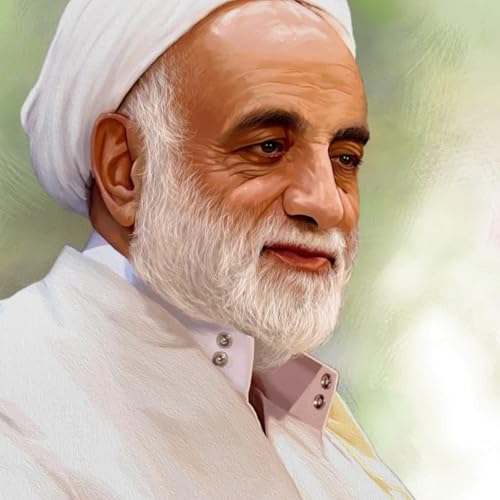
Shia prayers cover art

Shia prayers

Shia prayers

Written by: Hamid Farahmand
Listen for free

About this listen

Welcome to a special area devoted to the potent Shia prayers. These prayers, which come from God's chosen Imams, are meant to help you navigate life's problems and reach new heights in your spiritual development.Hamid Farahmand Islam Spirituality
Episodes
  • Episode 6 | Surah Al-Fatiha (1:6) - Seeking Divine Guidance to the Straight Path: Ihdina al-Sirat al-Mustaqim with Qara'ati
    Nov 12 2025

    In this episode, Ayatollah Mohsen Qara'ati delves into the profound prayer of Surah Al-Fatiha, verse 6: ٱهْدِنَا ٱلصِّرَٰطَ ٱلْمُسْتَقِيمَ (Guide us to the straight path). He emphasizes this as the most crucial prayer in Islam, being an obligatory part of every daily prayer. Ayatollah Qara'ati presents an insightful framework for understanding guidance, illustrating four types of individuals: those who are good with a crooked path, bad with a straight path, crooked in both, or straight in both. The prayer of Ihdina seeks for both the individual and their path to be sound and guided.

    The commentary distinguishes between two forms of guidance: "takwini" (creational), exemplified by God's guidance for all creatures (like bees making honey or ants building nests), and "tashri'i" (legislative), which is the guidance provided through prophets. Ayatollah Qara'ati dismisses paths driven by personal desires, others' whims, ancestral traditions, or satanic whispers, as all lead to regret and misguidance. He affirms that the only sound path is the path of God (وأن ٱعْبُدُونِى هَٰذَا صِرَٰطٌ مُّسْتَقِيمٌ), which is also the path of the prophets and turning to God. The episode highlights the continuous need for divine guidance in all aspects of life – from choosing a spouse or a career to minor daily decisions – underscoring that even prophets sought this guidance continuously. He stresses the importance of balance, avoiding extremism and negligence (إفراط و تفریط), and encourages moderation in all actions, including worship, social interactions, and personal conduct, aligning with the principles found throughout the Quran. This detailed discussion reinforces the prayer for the straight path as an essential request for comprehensive guidance in every believer's life.

    Show More Show Less
    12 mins
  • Episode 5 | Surah Al-Fatiha (1:5) - The Principle of Exclusive Worship and Seeking Help: Iyyaka Na'budu wa Iyyaka Nasta'in with Qara'ati
    Nov 12 2025

    In this episode, Ayatollah Mohsen Qara'ati explores the profound implications of Surah Al-Fatiha, verse 5: إِيَّاكَ نَعْبُدُ وَإِيَّاكَ نَسْتَعِينُ (You alone we worship, and You alone we ask for help). He elucidates that intellectual reasoning necessitates worshipping God, as humans inherently seek perfection and growth, attributes perfectly embodied by the Divine. The commentary emphasizes that humanity possesses an innate inclination towards worship and love, which must be correctly guided towards God, the ultimate source of all perfection and nurturing.

    Ayatollah Qara'ati draws comparisons between human devotion to worldly figures and the exclusive devotion owed to God, highlighting the transient nature of all but the Divine. He uses vivid examples, such as the fragility of a fly's existence and the inevitable oblivion of human legacies, to underscore why only the Ever-Living God deserves our complete servitude and reliance. The episode delves into how saying إِيَّاكَ نَعْبُدُ signifies exclusive worship, discarding servitude to desires, power, wealth, or hypocrisy. It also explains the emphasis on "we worship" (نَعْبُدُ) rather than "I worship," signifying the communal aspect of prayer and the importance of congregational worship in Islam. Furthermore, the commentary presents worship as a prelude to seeking divine help, affirming that while humans possess free will, their success in worship ultimately depends on God's assistance. This episode eloquently articulates the essence of pure monotheism and the path to sincere devotion.

    Show More Show Less
    14 mins
  • Episode 4 | Surah Al-Fatiha (1:4) - God's Ultimate Sovereignty: Maliki Yawm ad-Din with Qara'ati
    Nov 12 2025

    In this episode of our Surah Al-Fatiha commentary, Ayatollah Mohsen Qara'ati delves into the meaning of مَـٰلِكِ يَوْمِ ٱلدِّینِ (Master of the Day of Judgment). He elucidates that while God is the Master of this world too, human beings often become deluded by temporary worldly tools like power, wealth, and influence, mistaking themselves for the true masters. The commentary highlights that it is in moments of helplessness, when all worldly means fail, that the true and ultimate Master, God, is recognized.

    Ayatollah Qara'ati illustrates this through examples of human relationships, where only a mother’s love or the bond of close family endures when all others abandon someone in hardship, hinting at the enduring nature of divine connection. He explains that in this world, various "manifestations" (like medicine or natural phenomena) often obscure our perception of God’s direct mastery. However, on the Day of Judgment (Yawm ad-Din), all these intermediaries will be stripped away (تَقَطَّعَت بِهِمُ ٱلْأَسْبَابُ), and all power and command will belong solely to God (وَٱلْأَمْرُ يَوْمَئِذٍ لِّلَّهِ). The episode emphasizes that Yawm ad-Din signifies a day when no one can benefit another, and intellect, power, and relationships will hold no sway, revealing God as the undisputed Master. This understanding of God's ultimate sovereignty balances the hope derived from His mercy with the awareness of accountability, forming a crucial aspect of faith and prayer.

    Show More Show Less
    11 mins
No reviews yet