Welcome to the reading & commentary of Franz Kafka’s 1915 parable, Before the Law. In this episode, we read the classic text and dive into the psychology of self-inhibition, the weight of overbearing authority, and the exhausting reality of modern bureaucracy. And a little bit of personal reflection.
Franz Kafka remains one of the most influential and haunting voices of modern literature, famous for capturing the unsettling feeling of a world that operates on rules you aren't allowed to understand. Writing in German while living in early 20th-century Prague, Kafka worked a demanding day job at an insurance office, an experience that deeply colored his obsession with cold, labyrinthine bureaucracies. His signature blend of surreal absurdity, social alienation, and existential dread became so distinct that the term Kafkaesque was coined to describe any nightmarish, illogical situation where a normal person is trapped by an invisible, uncaring system.
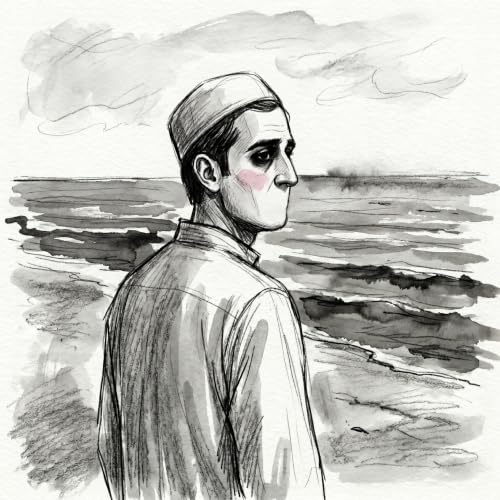
His 1915 short piece, "Before the Law" (Vor dem Gesetz), is a masterful distillation of this exact atmosphere. The story functions as a simple parable: a man from the country travels to seek entrance to "the Law." When he arrives, he finds the entrance blocked by a fierce, heavily bearded doorkeeper who calmly tells him that he cannot enter at this moment. Rather than a dramatic physical clash or a flat refusal, the man is simply forced to wait. He sits on a stool by the door for days, months, and eventually decades, trying to reason with, beg, or bribe a guard who remains entirely indifferent to his suffering.
"The doorkeeper gives him a stool and lets him sit down at the side of the door. There he sits for days and years." — Franz Kafka, Before the Law
Kafka later embedded this exact parable into his famous posthumous novel The Trial, where it serves as a central puzzle for the main character. The story's brilliance lies in its deep psychological layers. Is "the Law" a metaphor for religious salvation, societal acceptance, or the ultimate meaning of life? Kafka refuses to give easy answers, leaving you to ponder a terrifyingly universal human anxiety: the fear that we might spend our entire lives waiting for permission from a system that doesn't even know we are there.


 Jul 7 202616 mins
 Jun 30 202610 mins
 20 mins
 13 mins
 19 mins
 28 mins