Episodes

  • The Power of a House Call: How Home-Based Care is Changing the Lives of Families with Seriously Ill Children
    Dec 31 2025

    Featured paper: Home-Based Pediatric Hospice and Palliative Care Provider Visits: Effects on Healthcare Utilization

    What if the best hospital care happens at home? In this episode, we explore groundbreaking research revealing how home-based pediatric hospice and palliative care visits are transforming healthcare for seriously ill children and their families. Discover the shocking statistics: ICU days drop from 12 to zero, hospital admissions plummet from 72% to 54%, and families who once felt trapped in medical systems suddenly gain control and confidence. We dive into the magic of "goals of care" conversations that happen in living rooms instead of sterile clinics, explore why building trust with a doctor who knows your child's story leads to fewer ER visits, and unpack how this "proactive" approach actually saves the healthcare system money while giving kids back their childhood. Learn why phone calls increase from one to four per month, because families finally have someone they trust to call before crisis hits. Join us for a powerful look at how bringing expert providers into the home is revolutionizing what it means to truly care for seriously ill children, proving that sometimes the best medicine is simply being there.*Disclaimer: This content was generated by NotebookLM and has been reviewed for accuracy by Dr. Tram.*

    Show More Show Less
    15 mins
  • Safe Surgery for Kids: How a Simple Ultrasound Is Changing the Game
    Dec 24 2025

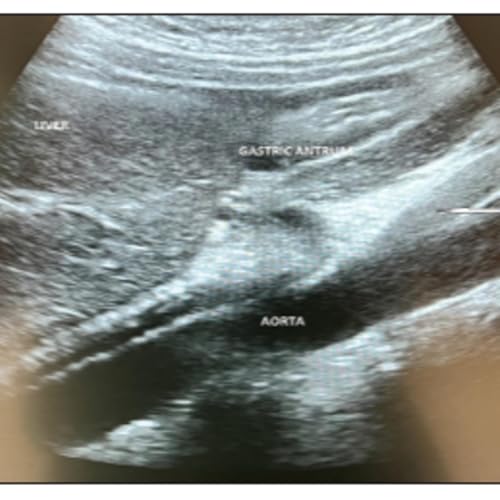
    Featured paper: Preoperative gastric point‑of‑care ultrasound in nonelective surgical procedures in pediatric‑aged patients
    What if a simple five-minute ultrasound could prevent a life-threatening complication during your child's emergency surgery? In this episode, we explore how point-of-care ultrasound (POCUS) is revolutionizing pediatric anesthesia by giving doctors a real-time window into the stomach before urgent procedures. Discover why traditional "nothing by mouth" rules aren't always enough when children are in pain or on opioids, factors that slow stomach emptying, and how gastric ultrasound measures the antrum to calculate exact aspiration risk. We dive into a real case where this technology caught unexpected solid food in a patient's stomach, preventing a dangerous induction, and explore how 98% of emergency pediatric patients turned out to be safe for controlled anesthesia instead of risky rapid-sequence intubation. Learn why seeing inside the stomach matters for children with neck injuries or difficult airways, and how this non-invasive tool is transforming surgery from guesswork into precision medicine. Join us for a reassuring look at how one simple scan is making emergency surgery safer for kids.

    *Disclaimer: This content was generated by NotebookLM and has been reviewed for accuracy by Dr. Tram.*

    Show More Show Less
    12 mins
  • The Simple Pharmacy Hack That Could Transform Pediatric Care
    Dec 17 2025

    Featured paper: Vial-splitting and Repackaging into Aliquotspecific Syringes: A Cost-effective and Waste-decreasing Strategy for Sugammadex

    What if the solution to a million-dollar hospital problem was hiding in your pharmacy? In this episode, we explore a surprisingly simple "hack" that's transforming pediatric medicine: vial-splitting. Discover how repackaging adult-sized doses of Sugammadex, a critical drug used to wake up patients after surgery, into smaller, child-appropriate aliquots could save hospitals over $1.3 million while slashing medication waste. We dive into the shocking discovery that 33% of pediatric patients only need 50 mg or less, yet hospitals throw away $90+ vials of unused medicine every single day. Learn why thinking small leads to big savings, explore the CDC safety protocols that make this work, and unpack the real-world barriers, from staff shortages to shelf-life concerns, that prevent hospitals from implementing this obvious solution. Join us as we investigate how one hospital's research is revealing a blueprint for resource stewardship that could transform pediatric care across America, one syringe at a time.
    *Disclaimer: This content was generated by NotebookLM and has been reviewed for accuracy by Dr. Tram.*

    Show More Show Less
    15 mins
  • Shhh! How a Quieter Operating Room Helps Kids Recover Better
    Dec 10 2025

    Featured paper: Operating Room Noise Environment and Behavior in Children Undergoing General Anesthesia: A Randomized Controlled Trial

    What if something as simple as turning down the noise in an operating room could transform your child's recovery at home? In this episode, we explore fascinating research revealing how a low-stimulus surgical environment with reduced noise, dimmed lights, and soft music dramatically improves how kids behave and recover after anesthesia. Discover why children who experience a calmer operating room have fewer temper tantrums, eat better, and stay more engaged with their families up to a week after surgery. We dive into the neuroscience of sensory overload during the vulnerable emergence from anesthesia, explore why this "critical window" matters more than we thought, and unpack the simple, cost-effective changes hospitals can make today. Learn how this research is shifting the paradigm from "just get through surgery" to "optimize the entire recovery experience," and why creating a peaceful OR environment is an act of compassion that echoes long after patients go home. Join us for a surprising look at how quieter operating rooms are creating calmer, healthier recoveries, one decibel at a time.*Disclaimer: This content was generated by NotebookLM and has been reviewed for accuracy by Dr. Tram.*

    Show More Show Less
    15 mins
  • Balancing Safety and Relief: How New Laws Are Changing Pediatric Pain Care
    Dec 3 2025

    Featured paper: Impact of opioid law on prescriptions and satisfaction of pediatric burn and orthopedic patients: An epidemiologic study

    Can we fight the opioid crisis without leaving children in pain? In this episode, we explore how Ohio's groundbreaking 2017 opioid cap law transformed pediatric pain management, limiting prescriptions to five days while maintaining patient satisfaction. Discover why burn and orthopedic surgery patients received significantly fewer pills after the law, yet 72% of families remained "very satisfied" with pain control. We dive into the surprising leftover medication problem - 68% of patients still had unused pills despite stricter limits - and examine what this reveals about our prescribing habits. Learn why the law accelerated trends that were already underway, how "precision prescribing" could replace one-size-fits-all approaches, and why multimodal pain management combining medications with virtual reality distractions represents the future of pediatric care. Join us as we navigate the delicate balance between protecting children from addiction risks while ensuring no young patient suffers unnecessarily during recovery. Essential listening for understanding how policy, medicine, and compassion intersect in the fight against America's opioid epidemic.*Disclaimer: This content was generated by NotebookLM and has been reviewed for accuracy by Dr. Tram.*

    Show More Show Less
    13 mins
  • How Standard Scans Could Save Kids from Blood Clots
    Nov 26 2025

    Featured paper: Prognostic Value of Fluorine-18-Fluorodeoxyglucose Positron Emission Tomography/Computed Tomography Imaging for Predicting Venous Thromboembolism in Children With Lymphoma

    What if the same scan doctors use to track cancer could also predict life-threatening blood clots before they happen? In this episode, we explore groundbreaking research revealing how routine PET/CT scans can identify which children with lymphoma face the highest risk of venous thromboembolism, a complication that's increased 13-fold over 25 years. Discover why chemotherapy acts as a double-edged sword, creating vein inflammation that shows up as a "glow" on standard imaging, and how this early warning system could revolutionize personalized treatment. We dive into the shocking statistics - every step up in vein inflammation nearly doubles or triples clot risk - and explore why doctors have been hesitant to prescribe preventative blood thinners without this crucial predictive tool. Join us as we investigate how looking at cancer scans through a new lens could protect vulnerable young patients, catching the "pre-heating" before the fire ever starts. Essential listening for understanding how existing technology is being reimagined to save lives.
    *Disclaimer: This content was generated by NotebookLM and has been reviewed for accuracy by Dr. Tram.*

    Show More Show Less
    13 mins
  • How Scientists are Engineering the Future of Human Windpipes
    Nov 19 2025

    Featured paper: A Multimodal Approach to Quantify Chondrocyte Viability for Airway Tissue Engineering

    What if we could grow replacement windpipes in a lab and keep them alive until patients need them? In this episode, we explore groundbreaking tissue engineering research that's bringing us closer to solving one of medicine's toughest challenges: replacing damaged tracheas. Discover why partially decellularized grafts work like "old houses with the furniture removed but the frame intact," how special cartilage cells called chondrocytes act as a 24/7 maintenance crew, and why keeping these cells alive is critical to preventing grafts from turning into brittle bone. We dive into the science of biobanking at -80°C versus standard freezing, explore the "glow-in-the-dark" microscope tests that reveal which cells are thriving, and unpack how CT scans can now monitor lab-grown windpipes in real-time without surgery. Join us as we investigate how this multimodal approach combining cutting-edge imaging with cryopreservation is engineering the future of human airways, one living straw at a time.*Disclaimer: This content was generated by NotebookLM and has been reviewed for accuracy by Dr. Tram.*

    Show More Show Less
    13 mins
  • From the Bayou to the Bio-Lab: How Scientists are Learning to "Put Crayfish to Sleep"
    Nov 12 2025

    Featured paper: Anesthesia with Tricaine Methanesulfonate (MS222) and Propofol and Its Use for Computed Tomography of Red Swamp Crayfish (Procambarus clarkii)

    Why are scientists putting crayfish to sleep, and what can these humble crustaceans teach us about healing human brains? In this episode, we dive into groundbreaking research that developed the first humane anesthesia protocol for Red Swamp Crayfish, unlocking their potential as neurological research superstars. Discover why MS222, the gold standard for fish, completely failed on crayfish, how propofol injections achieve surgical anesthesia in just 54 seconds, and why these crustaceans' superpower of continuously regenerating brain cells throughout their lives could hold secrets for human healing. We explore the delicate balance between effectiveness and safety, reveal stunning CT scan images captured during "crayfish naps," and unpack why understanding stem cells in crayfish blood might someday help us repair damaged human brains. Join us for a fascinating journey from the Louisiana bayou to the cutting-edge bio-lab, where better animal welfare meets revolutionary science.
    *Disclaimer: This content was generated by NotebookLM and has been reviewed for accuracy by Dr. Tram.*

    Show More Show Less
    14 mins