• #162 UITP: Shaping Mobility at the Dubai 2026 Summit
    Mar 4 2026

    In this episode of Smart in the City, we sit down with Hashem Alhendawi, Head of the UITP MENA, to discuss the rapid evolution of urban mobility in Dubai and across the broader Middle East and North Africa region. Hashem explains how cities in MENA are transitioning from car-centric designs to integrated, network-based public transport systems. We explore the concrete steps Dubai has taken over the past decade to build a multimodal network that includes the Metro, buses, and marine transport.

    Looking ahead to the upcoming UITP Summit 2026 in Dubai, Hashem highlights the practical challenges cities are prioritising, such as financial sustainability, workforce skills, and climate resilience. Join us to learn why the future of Smart Cities relies on reliable operations and connecting people to essential opportunities.

    Like our show? Remember to subscribe and rate it!

    Want to join us for an episode? Fill out the form on our Podcast Page.

    And for more insights, visit our BABLE Smart Cities Knowledge Hub

    Chapters
    • (00:00:00) - Intro
    • (00:01:10) - Teaser question: Can you describe UITP's mission using only three emojis?
    • (00:03:16) - Guest background
    • (00:06:04) - UITP Mission And Goals
    • (00:09:20) - Dubai Summit 2026
    • (00:13:35) - Dubai's Mobility Shift
    • (00:18:16) - MENA Mobility Shifts
    • (00:21:54) - MENA Innovation Opportunities
    • (00:25:43) - Future Summit Topics
    • (00:30:09) - World Public Transport Day
    • (00:31:34) - Segment: Inspire us
    • (00:33:42) - Ending question: “To you, what is a Smart City?”
    Show More Show Less
    37 mins
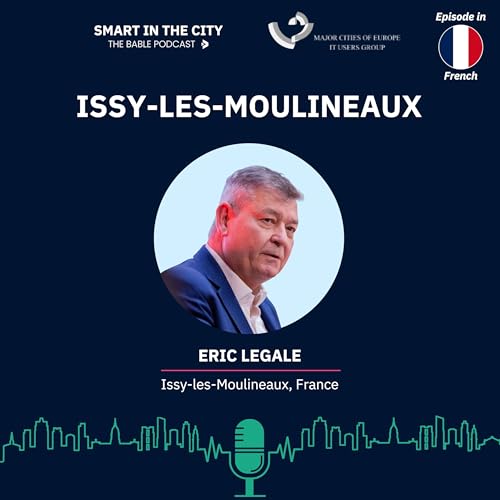
  • #161 Issy-les-Moulineaux : 30 ans d'innovation numérique et durable
    Feb 25 2026

    Dans cet épisode de Smart in the City, nous nous rendons en région parisienne pour échanger avec Eric Legale, directeur général d'Issy Média. Depuis plus de trois décennies, Issy-les-Moulineaux se positionne à l'avant-garde de la transformation urbaine, ayant lancé son premier site web municipal en 1996 et s'adaptant continuellement aux nouvelles vagues numériques.

    Nous explorons dans cet entretien comment la ville crée de la valeur concrète pour ses habitants à travers deux initiatives majeures. Nous discutons également du lancement d'IssyGPT, une IA générative souveraine conçue pour aider les citoyens dans leurs démarches administratives tout en garantissant la confidentialité des données. Notre invité détaille également le « Budget Climat » de la ville, une stratégie inspirée des modèles nordiques qui suit les émissions de carbone avec la même minutie que les dépenses financières, menant à une réduction de 37 % des gaz à effet de serre depuis 2005.

    Like our show? Remember to subscribe and rate it!

    Want to join us for an episode? Fill out the form on our Podcast Page.

    And for more insights, visit our BABLE Smart Cities Knowledge Hub

    Chapters
    • (00:00:00) - Intro
    • (00:01:40) - Teaser question: si vous deviez décrire Issi-les-Moulineaux en utilisant uniquement trois mots, quels mots vous choisiriez et pourquoi?
    • (00:02:51) - Parcours de l'invité
    • (00:05:18) - L'Assistant virtuel Issy-GPT
    • (00:08:22) - Fiabilité de l'IA
    • (00:10:30) - Sensibiliser les citoyens
    • (00:14:58) - Le Budget Climat
    • (00:21:03) - Données et transition
    • (00:26:32) - Les projets européens
    • (00:29:23) - Déployer des expérimentations
    • (00:35:16) - Collaborer avec la ville
    • (00:39:19) - Les prochains défis
    • (00:42:16) - Éducation au numérique
    • (00:44:33) - Segment: Inspire Us
    • (00:47:52) - Ending question: “Pour vous, qu'est-ce qu'une Smart City ?”
    Show More Show Less
    50 mins
  • #160 Aschaffenburg: Scaling Success with Open Source Solutions
    Feb 18 2026

    In this episode of Smart in the City, we travel to the Bavarian city of Aschaffenburg in Germany to explore how a mid-sized municipality is driving digital transformation through a human-centric approach. Petra Schwerdtfeger, Smart City Officer for the City of Aschaffenburg, shares details on the city’s "Dialog City" strategy. This initiative focuses on integrating digital and analogue worlds to ensure technology serves the common good and remains accessible to everyone.

    The conversation highlights the successful implementation and replication of the Smart Data Dashboard and the AschaffenBürgerGIS, both built on Open-Source technology. Petra provides insights into the practical benefits of city-to-city collaboration, explaining how Aschaffenburg adapted existing solutions from Münster and Hamburg to save costs and avoid reinventing the wheel. We also examine the realities of municipal decision-making, the importance of data sovereignty, and the challenges posed by limited internal resources when accelerating urban change.

    Like our show? Remember to subscribe and rate it!

    Want to join us for an episode? Fill out the form on our Podcast Page.

    And for more insights, visit our BABLE Smart Cities Knowledge Hub

    Chapters
    • (00:00:00) - Intro
    • (00:01:57) - Teaser question: If Aschaffenburg were a type of plant, which plant would it be and why?
    • (00:03:08) - Guest background
    • (00:04:21) - Aschaffenburg's Dialogue City Strategy
    • (00:06:16) - Replicating Smart City Dashboards
    • (00:08:57) - AI and Digital Twins
    • (00:11:59) - Open Source GIS Implementation
    • (00:15:25) - Balancing Storytelling and Utility
    • (00:18:18) - Tech Sales to Municipalities
    • (00:19:56) - Avoid Reinventing the Wheel
    • (00:21:43) - Public Sector Staffing Challenges
    • (00:24:15) - The Smart Start Program
    • (00:25:30) - Segment: Shout Out
    • (00:27:32) - Ending question: “To you, what is a Smart City?”
    Show More Show Less
    29 mins
  • #159 Norfolk: Digital Foundations and AI in a Mixed Rural County
    Feb 11 2026

    Innovation is not exclusive to dense megacities. In this special episode from our Major Cities of Europe 2025 series, we head to the UK to speak with Kurt Frary, Head of IT and CTO at Norfolk County Council. Kurt shares how Norfolk navigates the unique challenges of a large, mixed rural region to build robust digital foundations.


    We discuss practical applications that save real time and money, from an IoT network that automatically manages flooded roads to AI tools that reduce social care documentation from hours to minutes. The conversation also covers the strict "human-in-the-loop" philosophy, tech scepticism, and the importance of data privacy. Tune in to discover how Norfolk is scaling innovation effectively and what public and private sectors can learn from each other.

    Like our show? Remember to subscribe and rate it!

    Want to join us for an episode? Fill out the form on our Podcast Page.

    And for more insights, visit our BABLE Smart Cities Knowledge Hub

    Chapters
    • (00:00:00) - Intro
    • (00:02:04) - Teaser question: If you had to describe Norfolk county state of innovation with just three emojis, which would they be and why?
    • (00:02:50) - Guest background
    • (00:05:22) - Geography of Norfolk County
    • (00:07:19) - Innovating in Rural Areas
    • (00:08:52) - IoT Network and Flood Safety
    • (00:12:48) - Overcoming Innovation Challenges
    • (00:14:19) - Scaling Up Successful Pilots
    • (00:15:41) - Designing for User Groups
    • (00:17:37) - AI Program and Governance
    • (00:22:44) - Addressing Technology Skepticism
    • (00:25:13) - Data Privacy and AI
    • (00:28:24) - Collaboration of Data
    • (00:32:38) - Working with Private Partners
    • (00:35:10) - Cyber Security and People
    • (00:36:50) - Segment: Hot Take of the Day
    • (00:41:09) - Ending question: “To you, what is a Smart City?”
    Show More Show Less
    44 mins
  • #158 Leudelange: Smartes Wachstum & Bürgerbeteiligung
    Feb 4 2026

    In dieser Folge von Smart in the City reisen wir nach Luxemburg in die Gemeinde Leudelange. Moderator Alexander Schmidt und Co-Moderator Michael Agostini von Drees & Sommer begrüßen Bürgermeister Lou Linster, um über die Herausforderungen eines einzigartigen demografischen Profils zu sprechen: eine Gemeinde mit 2.800 Einwohner:innen, aber über 10.000 Arbeitsplätzen.


    Bürgermeister Linster gibt offene Einblicke in ein kürzlich durchgeführtes lokales Referendum über ein gemeindeweites Tempolimit von 30 km/h. Er spricht über das Ergebnis, die Bedeutung der Bürgerbeteiligung bei radikalen städtischen Veränderungen und wie das Feedback der Öffentlichkeit zukünftige Mobilitätspläne formt. Das Gespräch beleuchtet auch die ambitionierte Investitionsagenda von Leudelange, einschließlich der Umgestaltung des Dorfkerns in einen Shared Space, Strategien für bezahlbaren Wohnraum und die Integration von Geothermie-Systemen. Diese Folge bietet einen praxisnahen Blick darauf, wie kleinere Gemeinden Smart-City-Initiativen vorantreiben und gleichzeitig schnelles Wirtschaftswachstum bewältigen können.

    Like our show? Remember to subscribe and rate it!

    Want to join us for an episode? Fill out the form on our Podcast Page.

    And for more insights, visit our BABLE Smart Cities Knowledge Hub

    Chapters
    • (00:00:00) - Einleitung
    • (00:02:19) - Hintergrund des Gastes
    • (00:06:28) - Teaser-Frage: Wenn du eine Superkraft hättest, die dir bei der täglichen Arbeit helfen würde, welche Superkraft würdest du dir dann wünschen?
    • (00:07:57) - Struktur und Besonderheiten Leudelanges
    • (00:09:41) - Zukünftiges Wachstum und Stadtplanung
    • (00:15:09) - Referendum zur Verkehrsberuhigung
    • (00:24:35) - Lehren aus der Bürgerbeteiligung
    • (00:33:05) - Radwegenetz und bezahlbarer Wohnraum
    • (00:46:56) - Segment: Hot Take of the Day
    • (00:49:16) - Abschlussfrage: „Was ist für dich persönlich eine Smart City?“
    Show More Show Less
    51 mins
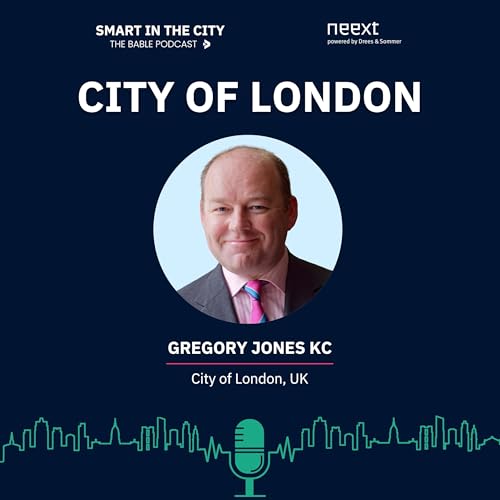
  • #157 London: Balancing Heritage with a Retrofit First Approach
    Jan 28 2026

    In this episode, recorded live at the neext 2025 in partnership with Drees & Sommer, we travel to the historic "Square Mile" with Alderman Gregory Jones KC of the City of London, UK. As a barrister and elected representative, Gregory provides a unique perspective on the intersection of planning law, heritage preservation, and urgent sustainability goals.


    We discuss the City's "retrofit first" presumption and the specific challenges of upgrading buildings in a dense, historic financial district. The conversation also explores the complexities of whole-life carbon, the reliability of current tools for measuring retrofit savings, and the importance of designing flexibility into new structures for future resilience.

    Like our show? Remember to subscribe and rate it!

    Want to join us for an episode? Fill out the form on our Podcast Page.

    And for more insights, visit our BABLE Smart Cities Knowledge Hub

    Chapters
    • (00:00:00) - Intro
    • (00:01:40) - Defining the City of London
    • (00:05:20) - Teaser question: Which one would you choose and why?
    • (00:06:41) - Guest background
    • (00:09:32) - Retrofitting in council work
    • (00:11:36) - National Planning Policy Framework
    • (00:13:29) - Local development plan challenges
    • (00:17:04) - Presumption of retrofit first
    • (00:21:33) - Whole life cycle carbon
    • (00:25:04) - Designing for flexibility
    • (00:27:41) - Measuring retrofit savings
    • (00:34:59) - Advice for other councils
    • (00:41:50) - Segment: Inspire Us
    • (00:45:24) - Ending question: “To you, what is a Smart City?”
    Show More Show Less
    50 mins
  • #156 Hamburg: From Research to Real-World Digital Twins
    Jan 21 2026

    In this episode, recorded at the Smart City Expo World Congress 2025, we travel to the City of Hamburg with Dr. Nora Reinecke, Project Manager for the Connected Urban Twins project.


    Nora explains how Hamburg is moving beyond the buzzwords to implement digital twins that address real urban challenges, from climate resilience and flooding to complex urban planning scenarios. She discusses the collaborative approach among Hamburg, Leipzig, and Munich, emphasizing the need for open-source tools and demand-driven strategies rather than technology for its own sake.


    The conversation also covers the practical application of GeoAI, the importance of citizen participation, and how to mitigate bias in urban data to ensure inclusive outcomes for all residents.

    Like our show? Remember to subscribe and rate it!

    Want to join us for an episode? Fill out the form on our Podcast Page.

    And for more insights, visit our BABLE Smart Cities Knowledge Hub

    Chapters
    • (00:00:00) - Intro
    • (00:02:14) - Teaser question: If you had to describe Hamburg with these three emojis, which would you use and why?
    • (00:03:29) - Guest background
    • (00:05:13) - Hamburg's Current State
    • (00:06:27) - Connected Urban Twins Project
    • (00:08:27) - Solving Urban Challenges
    • (00:10:26) - Digital Twin Use Case
    • (00:11:59) - Are Digital Twins Overhyped?
    • (00:12:40) - Understanding GeoAI
    • (00:14:33) - Mitigating AI Bias
    • (00:15:41) - Advice for Cities
    • (00:18:00) - Procurement vs In-House Development
    • (00:19:23) - Remaining Bottlenecks
    • (00:21:56) - Importance of Citizen Participation
    • (00:23:43) - Segment: Trial and Error
    • (00:25:17) - Ending question: “To you, what is a Smart City?”
    Show More Show Less
    27 mins
  • #155 Sustainable Cities: Prioritising Simplicity in Urban Strategy
    Jan 14 2026

    In this episode, recorded live at the Smart City Expo World Congress 2025 in Barcelona, we travel to France to explore a pragmatic vision for sustainable urban development. We are joined by Gérard Wolf, Special Advisor for Smart & Sustainable Cities to the Minister for Europe and Foreign Affairs, who shares the French approach to building resilient cities based on four essential services: energy, water, waste management, and transportation.


    Gérard discusses why simplicity must be prioritised over complex technological fixes and how this mindset drove the massive decarbonisation efforts behind the Paris 2024 Olympic Games. We also delve into the importance of the circular economy, specifically the strategic shift from demolition to retrofitting existing buildings. Finally, the conversation highlights a crucial human-centric challenge: ensuring that Smart City progress does not leave behind those living in informal settlements, making inclusivity a global priority.

    Like our show? Remember to subscribe and rate it!

    Want to join us for an episode? Fill out the form on our Podcast Page.

    And for more insights, visit our BABLE Smart Cities Knowledge Hub

    Chapters
    • (00:00:00) - Intro
    • (00:01:46) - Four Essential Urban Services
    • (00:05:31) - Teaser question: Impact, Simplicity, Cost or time?
    • (00:06:46) - Guest background
    • (00:09:07) - Integrating Essential Services
    • (00:11:30) - Fast Wins vs Deep Transformation
    • (00:14:20) - Decarbonizing the Paris Olympics
    • (00:19:45) - Scaling Circular Solutions
    • (00:24:16) - Retrofitting and Material Reuse
    • (00:29:13) - Addressing Slums and Inequality
    • (00:33:18) - Segment: Shout Out
    • (00:38:05) - Ending question: “To you, what is a Smart City?”
    Show More Show Less
    43 mins