Episodes

  • S2. E10. Sharon White Rewires Disco
    Nov 25 2025
    At the center of 1970s New York's most iconic clubs—from the celebrity-studded Studio 54 to the premiere lesbian discotheque Sahara—stood a queer Black woman on the turntables: Sharon White. With a sound she describes as "edgy, deep, aggressive, tech, synthy, percussive and lush," White became the first woman resident DJ at the Saint and the only woman to ever play Paradise Garage, breaking barriers in spaces where women were told they didn't belong. Her five-decade career didn't just challenge disco's male-dominated DJ culture; it redefined it, paving the way for future generations of women behind the decks. In this season finale, we explore how one visionary artist carved out space in disco's inner sanctum and what her trailblazing journey reveals about women—especially queer Black women—who shaped the sound and culture of an era from behind the booth. In the Season 2 Finale, hosts Ryan Purcell and Kristie Soares talk with legendary DJ Sharon White. Born in West Babylon, New York, White studied music at the New York School of Music before becoming a radio disc jockey. In 1975, she transitioned to club DJing, finding near-instant success at legendary venues including Studio 54, the Saint, Paradise Garage, Sahara, Limelight, and the Warehouse. She has been credited by several other women DJs, including Lizzz Krizer and Wendy Hunt, for helping them break onto the scene. White is still DJing today, and you can find her mixes on SoundCloud and Mixcloud. Learn more about your ad choices. Visit megaphone.fm/adchoices
    Show More Show Less
    1 hr and 8 mins
  • S2. S9. James Brown's War on Disco
    Nov 11 2025
    In the penultimate episode of season 2 of Soundscapes NYC, hosts Ryan Purcell and Kristie Soares sit down with acclaimed historian Alice Echols, author of Hot Stuff: Disco and the Remaking of American Culture. Echols—who holds the Barbra Streisand Chair of Contemporary Gender Studies at the University of Southern California—unpacks how disco not only mirrored but actively shaped the social, racial, and sexual revolutions of 1970s New York City. Echols is the author of several books that have framed the way we understand the history of the 1960s and 1970s, and particularly the way music has shaped society at the intersection of gender, sexuality, and race. The conversation begins with Echols’ newest research, drawn from her forthcoming book Black Power, White Heat: From Solidarity Politics to Radical Chic, which reexamines interracial activism and allyship during the Black Freedom Movement. From the Angela Davis trial to the alliances formed within SNCC and the Black Panther Party, Echols traces how solidarity both flourished and fractured across the era. Turning to disco, she considers disco’s uneasy place in Black and queer cultural history. She notes how disco was created by and for Black audiences, while also being rejected by many in the Black music industry, like James Brown, for being “politically empty.” Through figures like Nile Rodgers, Grace Jones, and Sylvester, Echols argues that disco’s lush orchestration and sensual performances reflected radical redefinitions of gender, sexuality, and Black masculinity. With musical excerpts woven throughout, Purcell and Soares guide listeners through the sonic textures of disco—its roots in funk and soul, its resistance to genre boundaries, and its capacity to move bodies and politics alike. Learn more about your ad choices. Visit megaphone.fm/adchoices
    Show More Show Less
    1 hr and 1 min
  • S2. E8. Disco's Revenge
    Oct 28 2025
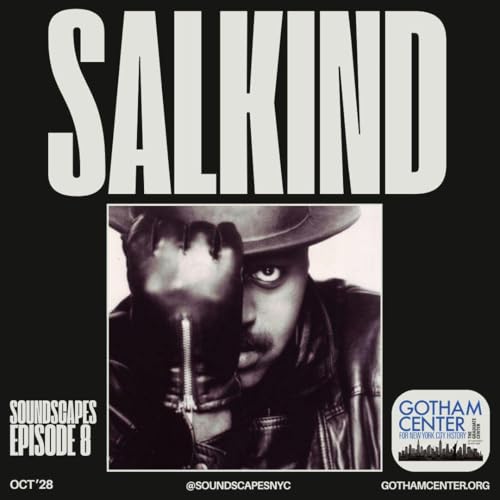
    In the wake of Disco Demolition Night in 1979—a cultural bonfire that seemed to signal the end of disco—something unexpected began to rise from Chicago’s underground. This episode traces the story of Frankie Knuckles, the Bronx-born DJ who became known as the “Godfather of House.” After the backlash against disco pushed the genre out of the mainstream, Knuckles found refuge in Chicago’s Black, Latinx, and queer nightlife scenes, most famously at a club called the Warehouse. There, he pioneered a new sound: blending disco’s heartbeat with gospel, soul, electronic drum machines, and experimental edits. What emerged was “house music,” named after the Warehouse itself, a genre that spoke directly to marginalized communities while later exploding into a global phenomenon. We’ll explore how Knuckles’s artistry and innovation not only kept dance floors alive after disco’s so-called death but also transformed music history. By tracing the arc from the ruins of Disco Demolition to the rise of house, this episode reveals how moments of cultural rejection can spark radical creativity. Frankie Knuckles didn’t just keep the party going—he built a new world of sound that would change the way the world dances. In this eighth episode of season two of Soundscapes NYC, hosts Ryan Purcell and Kristie Soares discuss the life and work of Frankie Knuckles with Micah Salkind, author of Do You Remember House?: Chicago’s Queer of Color Undergrounds (Oxford University Press, 2018). Micah Salkind is the Director of Civic and Cultural Life at the Rhode Island Foundation. Prior, in his roles as Deputy Director and Special Projects Manager at the City of Providence Department of Art, Culture and Tourism, he managed large grants and strategic artist initiatives for the City, collaborating with non-profit cultural institutions as well as its emerging artists, designers, and creative entrepreneurs. Learn more about your ad choices. Visit megaphone.fm/adchoices
    Show More Show Less
    59 mins
  • Signal Award Re-Release. S2.S2. Lost Women of Disco
    Oct 14 2025
    We're thrilled to announce that our episode “S2.E2. Lost Women of Disco” has been named a finalist in the Best Indie Podcast category at the 2025 Signal Awards! This powerful episode dives deep into the untold stories of the trailblazing women who shaped the culture we now call “disco”, but were overshadowed by history. We are re-releasing this episode, which originally aired on July 22, 2025, to highlight this recognition and to celebrate the forgotten legacy of these groundbreaking artists. Thank you to our listeners and the Signal Awards for this incredible honor. If you haven't tuned in yet, now’s the perfect time to discover the voices that helped define a generation. *** *** Women have been central to the evolution of dance music culture since its earliest days, yet their contributions have often been overlooked. From Régine Zylberberg's pioneering work in creating the modern discotheque in 1950s Paris to Sharon White's trailblazing presence at New York's legendary venues in the 1970s, female DJs have shaped dance floors worldwide. Sharon White broke barriers as a Black queer radio DJ, finding her way into the booth at the Paradise Garage in 1975. She became the first female DJ to play at the revered Saint club and spun records at Studio 54. Her influence can be seen in later pioneers like London's Smokin' Jo, who emerged from the British acid house scene to become one of England's most celebrated DJs and the only woman to be awarded DJ of the Year in DJ Magazine's Top 100. In the second episode of Season Two of Soundscapes NYC, hosts Ryan Purcell and Kristie Soares welcome DJ, academic, and journalist Lulu Le Vay to explore the often-untold stories of women in dance music culture. Le Vay, who holds a PhD in Sociology from Goldsmiths and performs as DJ Lulu Levan, represents a new generation of "PhDJs" combining academic inquiry with dance floor experience. From writing for publications like The Face, i-D, and The Guardian to spinning at festivals like Lovebox and Bestival, she documents club culture from multiple perspectives. Currently working on a documentary about women DJs with director Sonja Phillips, Le Vay is also part of Love Underground, a new collaboration with producer Tommy D whose new single "The Journey Part 1" is out on Chillifunk records. Through her podcast Where Love Lives and her work preserving dance music history, Le Vay continues to celebrate the women who built the foundations of club culture. Learn more about your ad choices. Visit megaphone.fm/adchoices
    Show More Show Less
    51 mins
  • S2.E7. Disco Sucks
    Sep 30 2025
    On July 12, 1979, Chicago’s Comiskey Park erupted into chaos during what was supposed to be a quirky baseball promotion. Shock radio jock Steve Dahl’s “Disco Demolition Night” incentivized listeners to bring disco records to a White Socks doubleheader, where, between games Dahl promised to blow them up in center field. Instead, the event descended into a riot, forcing the team to forfeit. On the surface, the incendiary event looked like a wild publicity stunt gone wrong — but in hindsight, it was tantamount to a book burning. In retrospect, the destruction of thousands of disco records was a symbolic rejection of the social meanings the sounds held, particularly for queer communities of color. The night marked not just the literal destruction of vinyl but a cultural turning point when disco’s dazzling reign collapsed under backlash. Or did it? In this episode, we explore how a stadium stunt revealed the deeper racial, sexual, and generational tensions shaping American music at the dawn of the 1980s. In episode seven, host Ryan Purcell and Kristie Soares talk with Gillian Frank is a historian of gender, sexuality, religion, and politics in the twentieth-century United States at Trinity College, Dublin. He is a managing editor of NOTCHES: (re)marks on the history of sexuality and co-host of the podcast Sexing History, which explores how the past shapes contemporary debates about sex. Frank’s scholarship has appeared in leading academic journals and edited volumes, and he has held research fellowships at Princeton and other institutions. His current book project examines the history of child adoption and foster care in the U.S., tracing how religion, race, and politics shaped family formation in modern America. Learn more about your ad choices. Visit megaphone.fm/adchoices
    Show More Show Less
    1 hr and 2 mins
  • S2. S6. Night at the Baths
    Sep 16 2025
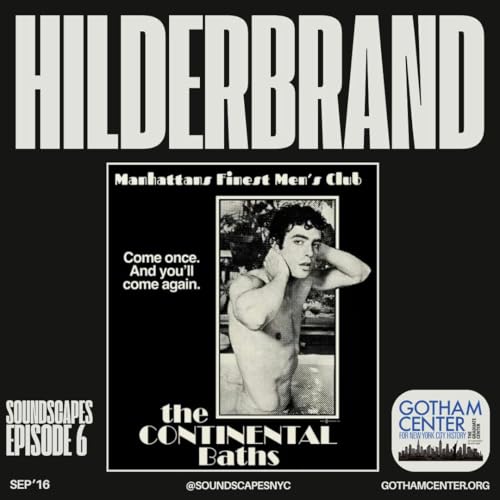
    Disco didn't just happen—it emerged from the vibrant gay club scene of 1970s New York City. In this episode, hosts Ryan Purcell and Kristie Soares explore how iconic venues like the Continental Baths, the Mineshaft sex club, and the legendary Paradise Garage became part of a musical revolution that transformed popular culture. Joining them is Lucas Hilderbrand, Professor and Chair of Film and Media Studies at UC Irvine and author of the groundbreaking book The Bars Are Ours: Histories and Cultures of Gay Bars in America, 1960 and After (Duke University Press, 2023). Together, they trace the fascinating connections between New York's underground gay scene and the rise of legendary DJs like Larry Levan and Frankie Knuckles, while uncovering how these same spaces launched the careers of mainstream superstars, including Bette Midler and Barry Manilow. From intimate bathhouses to pulsing dance floors, discover how gay culture didn't just influence disco—it created it. The conversation also touches on Hilderbrand's companion archival project, The Bars Are Archived: Primary Sources for Gay Bars in America, which is available through Alexander Street's Queer Pasts collection. Learn more about your ad choices. Visit megaphone.fm/adchoices
    Show More Show Less
    1 hr
  • S2. S5. From Stonewall to Studio 54
    Sep 2 2025
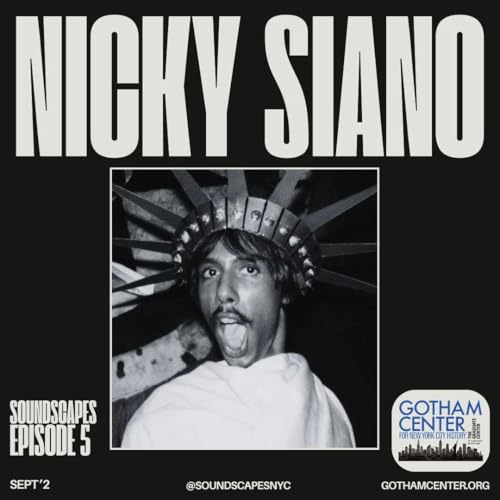
    In the fifth episode of Season Two of Soundscapes NYC, hosts Ryan Purcell and Kristie Soares sit down with the legendary DJ Nicky Siano. The history of dance music in 1970s New York is synonymous with the life and work of Siano. He was among the early attendees of David Mancuso’s Loft dances, where he learned to organize parties and DJ for an audience. Siano transposed Mancuso’s informal gatherings to a proper discotheque called The Gallery (1972-1977,) which he co-owned and DJed. At The Gallery, Siano pioneered techniques such as beatmatching, EQing, and using three turntables to fashion a proto-disco sound through his preferred selection of funky soul and R&B records, inspiring a host of celebrated figures like Larry Levan and Frankie Knuckles. The Gallery was a seminal 1970s nightclub that laid a blueprint for iconic New York clubs like the Paradise Garage and Studio 54. Siano is perhaps most well-known for DJing and being fired from Studio 54 for his unconventional methods. For Siano, music was more than pleasure. It was a source of empowerment, a refuge, and spiritual salve that has enabled him to persevere and thrive as a DJ in New York during the Seventies and beyond. In this conversation, Siano illustrates the power of music that animated his involvement as an activist in the Stonewall riots. As a DJ, Siano has maintained his belief in the capacity of music to bring people together, despite social differences, and as a healing force during the AIDs era. In this conversation, Siano traces his evolving romance with music, echoing his enduring salvo: Love is the Message. The title of this episode draws from a memoir that Nicky Siano is currently authoring, I, DJ: Stonewall to Studio 54. Learn more about your ad choices. Visit megaphone.fm/adchoices
    Show More Show Less
    48 mins
  • S2.E4. Disco's "Latin Tinge"
    Aug 19 2025
    In the 1930s, musician Ferdinand “Jelly Roll” Morton identified the influence of Latin American rhythms like the habanera in jazz, as a sonic “tinge” that fundamentally shaped his style as a stride pianist. In the Seventies, disco presented its own Latin tinge. The Latin American and Latino influence on 1970s New York disco extended far beyond the familiar narratives of the Paradise Garage and Studio 54, creating vibrant spaces that celebrated cultural fusion and community. Clubs like the Ipanema Discotheque, Copacabana, and Roseland Ballroom became crucial venues where Latin rhythms, Brazilian beats, and Caribbean sounds mixed with emerging disco to create something entirely new. These spaces, often overlooked in mainstream disco histories, were essential to the genre's evolution—places where the infectious energy of Latin music met the innovative production techniques of American dance music. The DJs who commanded these dance floors brought not just technical skill but cultural knowledge, understanding how to weave together the musical traditions of their homelands with the cutting-edge sounds emerging from New York's studios and clubs. In the fourth episode of Season Two of Soundscapes NYC, hosts Ryan Purcell and Kristie Soares welcome DJs Ronnie Soares and Luis Mario Orellana Rizzo to explore the Latin American contributions to New York's disco revolution. Soares, born in Brazil and arriving in New York as a teenager, became a DJ by accident in 1974 when asked to spin a Brazilian night at the French club Directoire. Though initially a dancer, he quickly became resident DJ at the famed Ipanema Discotheque and went on to create "Midnight Disco" at Roseland Ballroom—the first club in the city to hold 5,000 people. Rizzo began his career at the very inception of club culture in 1969-70, learning from DJ Francis Grasso before working at legendary venues including Cork & Bottle and Copacabana. As the first DJ to tour nationally and internationally, Rizzo helped spread dance music globally while founding Legends of Vinyl, an archival project celebrating the art of DJing. Learn more about your ad choices. Visit megaphone.fm/adchoices
    Show More Show Less
    1 hr and 1 min