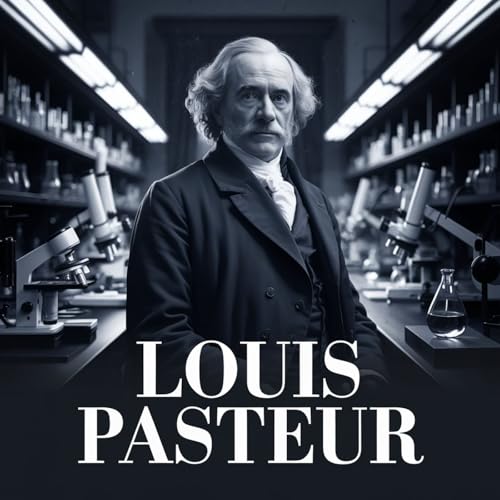
Spontaneous Generation Dies: The Swan-Neck Flask Experiments cover art

Spontaneous Generation Dies: The Swan-Neck Flask Experiments

Spontaneous Generation Dies: The Swan-Neck Flask Experiments

Listen for free

View show details

About this listen

In this episode of Louis Pasteur, Dr Sarah Quinn explores one of history's most decisive scientific experiments. Louis Pasteur's swan-neck flask experiments of the 1860s finally disproved the ancient theory of spontaneous generation, which held that life could arise from non-living matter. For over 2,000 years, from Aristotle onward, scientists believed that maggots, mold, and microorganisms could spontaneously emerge from decaying organic matter. When French naturalist Félix Pouchet published experiments in the 1850s seemingly supporting spontaneous generation, Pasteur designed an elegant counter-experiment. Using specially crafted flasks with curved, swan-like necks, Pasteur created sterile nutrient broths that remained open to air but protected from contamination. The curved necks trapped airborne microorganisms while allowing gases to pass through. The results were conclusive: sterile broths remained clear indefinitely, but immediately developed microbial growth when exposed to trapped contaminants. This groundbreaking work established that microorganisms come from pre-existing life forms, laying the foundation for germ theory and modern medicine. Some of Pasteur's original flasks remain sterile today, testament to his revolutionary methodology. Join us for this fascinating exploration of how one elegant experiment changed our understanding of life itself and transformed medical science forever.
adbl_web_anon_alc_button_suppression_c
No reviews yet