Success is Never Accidental cover art

Success is Never Accidental

Success is Never Accidental

Written by: Lynne Peyton
Listen for free

About this listen

Success is Never Accidental’ To be successful we need a success mindset, a certain skill set, as well as systems and strategies that are tried and tested, and we need to work as part of various teams. Above all we need to TAKE ACTIONMy purpose is to interview successful people from all different sectors and getinsights into what works, and tips to pass on and to add value to others by exploring different topics.

© 2026 Success is Never Accidental
Economics
Episodes
  • EP 71 Craig T. Ingram
    Jan 10 2026

    In this week’s episode of Success Is Never Accidental, I am joined by Craig T. Ingram, a trusted advisor to VC-backed start-ups and SMEs with extensive experience across med tech, health tech, digital health, biopharma and AI.

    Craig has led three successful business exits and is known for helping organisations cut through ineffective strategy, strengthen customer adoption, and achieve sustainable growth. In our conversation, we explored what genuinely drives success — disciplined thinking, decisive action, and integrity.

    We discuss:

    • Why mindset and execution matter more than ideas alone
    • Customer adoption as the true test of innovation
    • The value of coachable leadership
    • Using AI wisely without surrendering judgement

    Craig offers a timely reminder: “Wisdom is the proper use of intelligence.”

    This week’s reflection:
    What is one thing you could do differently to achieve better results?

    If you would value space to think, reflect, or refocus, you are welcome to book a 25-Minute Leadership Consult.

    Show More Show Less
    38 mins
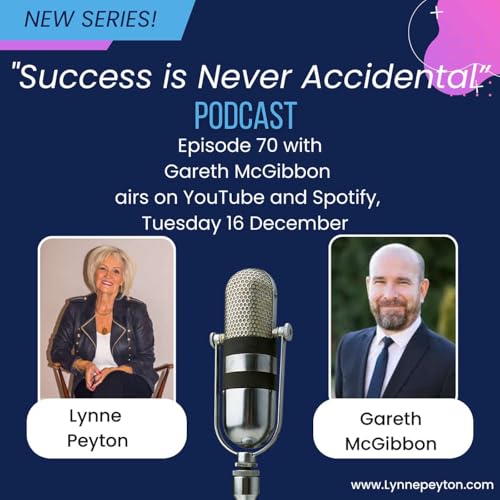
  • EP 70 Gareth McGibbon
    Dec 15 2025

    Gareth McGibbon, Director of McGibbon Consultancy and Safeguarding Services, has been at the forefront of public protection in Northern Ireland for many years. An advisor to government on interdepartmental collaboration, he is recognised nationally and internationally for his work tackling sexual and domestic abuse. Gareth co-authored the CASP Framework—used worldwide to assess parental capacity to protect children at risk—and serves as Chair of NOTA (NI). A visiting lecturer, media contributor, and international speaker, he brings a rigorous, evidence-informed approach to safeguarding alongside deep compassion for victims, families, and communities.

    Key Takeaways

    • Purpose drives performance. Gareth’s career is anchored in a clear mission: protecting children and reducing harm. That sense of purpose sustains focus, resilience, and high standards.
    • Evidence before ego. His tools and assessments are research-based and continually refined through feedback and self-critique—model habits for any leader serious about improvement.
    • Collaboration is non-negotiable. Effective safeguarding depends on coordinated action across departments and sectors. Leadership means building the systems and relationships that make this happen.
    • Hope, with accountability. Gareth believes people can change—while still prioritising safety, robust assessment, and responsibility for behaviour.
    • A public health challenge. The scale of the threat to children is vast. Solutions exist; what’s needed is political will and consistent implementation of known best practice.
    • No finish line. Lifelong learning and service keep Gareth energised. Mastery comes from staying curious, updating practice, and remaining close to the work.

    Today’s Challenge

    1. Check your purpose: What outcome matters most in your current role? Write it in a single sentence you can act on this week.
    2. Upgrade one system: Identify one safeguarding (or risk/governance) process that relies on goodwill rather than design. What’s the smallest change that would make it more reliable? Implement step one.
    3. Invite critique: Ask a trusted colleague for specific feedback on a recent decision or assessment. What will you do differently next time?
    4. Plan your development: Choose one evidence-based tool, framework, or paper to study this month. Block time now and note how you’ll apply it.
    5. Fulfilment audit: Does your current role energise you? If not, list three adjustments that could restore purpose where you are—or define one bold pivot to explore.

    Keep going—because in safeguarding, as in leadership, progress is built on purpose, evidence, and action. Success is never accidental.

    If you’re a high-performing manager who just needs some space to think, reflect, or refocus, book a 25-Minute Leadership Consult:


    For more information on CORE leadership skills please visit my website at www.lynnepeyton.com/core

    Communication Optimisation Relationships Evaluation

    Show More Show Less
    36 mins
  • EP 69 Amanda Taylor-Beswick
    Dec 1 2025


    Success Is Never Accidental – Episode 69
    Professor Amanda Taylor-Beswick – Leading Digital Transformation in Social WorkProfessor Amanda Taylor-Beswick, is a leading voice in how the social work profession is adapting to the digital world. Amanda began her career as a social worker in mental health and with D/deaf children and adults in Northern Ireland. Those early experiences sparked a deep curiosity about how emerging technologies could be harnessed for social good. That curiosity evolved into a pioneering career as a social scientist, educator, and thought leader in digital social work.


    Recognised by the UK government as one of the top three women leaders in tech, Amanda is now the founding director of the Centre for Digital Transformation at the University of Cumbria, where she continues to influence teaching, research, and professional development across the sector.

    Today, we explore her journey, her achievements, and her passionate belief that, regardless of profession, we must embrace AI ethically and systematically.

    Reflections and Early Influences

    Listening to Amanda speak about growing up during the Troubles in Northern Ireland resonated strongly with me: the challenge of navigating friendships across religious divides and the determination not to conform to separatism.

    Much of her career in practice education has been a search for innovative ways to ensure that students are genuinely prepared for frontline practice. She emphasised the need for a strong value base, a deeper understanding of the real lives people lead, and genuine empathy for their circumstances.

    Preparing Practitioners for a Digital World

    In recent years, Amanda has been at the forefront of preparing social workers for digital practice and integrating technology ethically into professional environments. She highlighted that while AI offers scale and efficiency, we must ensure we protect the safety of people’s data; prevent harm caused by poorly understood technologies; build tools that truly support good practice; train practitioners properly and ensure informed client consent.

    Amanda’s View of Success

    Amanda defines her success through the impact she has made on the profession—her contribution, her influence, and the communities she has helped build.

    Those who know my love of “the C’s of leadership” will appreciate that Amanda has her own set:

    Curiosity, Contribution, Collaboration, Community and a refusal to Conform when it is inappropriate to do so.

    When asked about the qualities professionals will need to thrive in future, Amanda offered powerful guidance:

    • Have a passion for what you do
    • Know your values and stay aligned with them
    • Be compassionate
    • Avoid becoming institutionalised
    • When facing challenges: pause, take a breath, lean in, reframe, look up

    Tony Robbins always says: reframe the problem in solvable terms — a message very much in tune with Amanda’s approach.

    Follow Amanda on LinkedIn and stay engaged in the debate about how we can integrate technology ethically across the professions.

    This week’s challenge.
    Don’t get left behind. Start reflecting on how technology could help you improve your practice, your service, or your leadership.

    And as always, remember, success is never accidental.

    If you’re a high-performing manager who just needs some space to think, reflect, or refocus, book a 25-Minute Leadership Consult:


    Communication Optimisation Relationships Evaluation

    Show More Show Less
    47 mins
No reviews yet