Season's Savings | ₹5/mo for 3 months

₹199/month after first 3 months. Renews automatically. Terms apply.
Sustainable Views cover art

Sustainable Views

Sustainable Views

Written by: FT Specialist
Listen for free

About this listen

Confused about sustainability? You’re not alone. Environmental, social and governance factors, or ESG, are increasingly a headache for business, finance and world leaders alike. Now even policymakers are creating rules to govern this space. It’s hard to keep up and make sense of it all. So let us help you by sharing some of the most interesting views shaping this space. Join us as we talk to the people living and breathing sustainability – and a few critics too. (We can’t promise this will be a completely jargon-free space, but we shall try!)


Want to talk to us directly? Email sustainable.views@ft.com.


Sustainable Views is an intelligence service by the Financial Times Group.

Hosted on Acast. See acast.com/privacy for more information.

dd1ab520-0e46-11f0-8ccf-256f7f1f0a6b
Economics Political Science Politics & Government
Episodes
  • The Green Finance Institute's plan to unlock capital for net zero
    Nov 16 2026

    The UK has no shortage of innovative clean technologies, but securing the investment needed to bring them to market remains a major challenge. So what's stopping private capital from flowing into the green transition, and how can governments help close the funding gap?

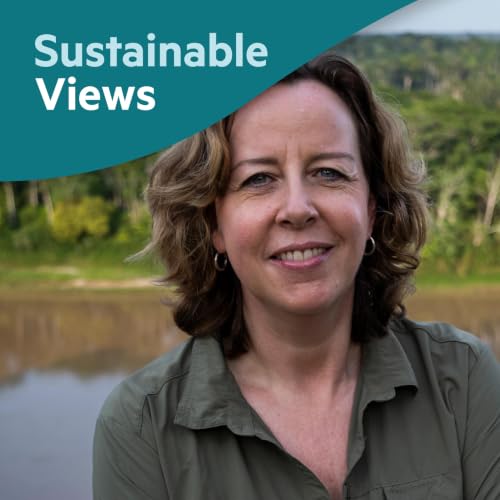
    In this episode of the Sustainable Views podcast, editor Philippa Nuttall speaks to Ingrid Holmes, deputy chief executive of the Green Finance Institute (GFI), about the barriers holding back green investment and the institute's efforts to overcome them.


    Holmes explains how GFI's new Transition Finance Lab is working with government, public finance institutions and private investors to turn climate ambitions into investable projects. From battery supply chains and hydrogen to heat networks and floating offshore wind, the initiative aims to unlock funding for technologies and infrastructure critical to the UK's net zero ambitions.


    The conversation also explores why British clean technology companies struggle to secure the large-scale investment available to their counterparts in the US and Europe, and the risk of promising businesses moving overseas rather than creating manufacturing jobs in the UK.


    With COP31 approaching, Holmes discusses why international climate commitments alone won't unlock the investment required, the importance of effective government policy and how blended finance could help bring private investors into emerging green industries.


    Chapters

    00:00 – Introduction: Ingrid Holmes and the Green Finance Institute

    01:45 – Inside GFI's new Transition Finance Lab

    04:35 – Which green technologies need investment?

    06:07 – What's stopping private capital from flowing?

    09:36 – Why UK clean technology companies struggle to scale

    12:09 – Financing the UK's heat networks

    14:24 – Can the UK become a global green finance leader?

    16:39 – Unlocking investment in sustainable aviation fuels

    18:56 – Are government climate policies sending the right signals?

    20:39 – Bringing the benefits of green investment to communities

    23:37 – Jobs, heat pumps and the impact of the energy transition

    25:33 – What needs to change at COP31?

    27:03 – How international climate finance can unlock private investment


    Read more analysis of sustainable finance, climate policy and the energy transition at www.sustainableviews.com.

    Sustainable Views is an intelligence service by the Financial Times Group. To stay up-to-date, subscribe to our newsletter.

    Hosted on Acast. See acast.com/privacy for more information.

    Show More Show Less
    26 mins
  • Why nature needs finance ministers, not just environmental pledges
    Nov 9 2026

    The world is falling behind on its biodiversity targets. So what will it take to turn global promises into meaningful action?


    Following the COP17 UN biodiversity summit in Yerevan, Armenia, Sustainable Views editor Philippa Nuttall speaks to Kirsten Schuijt, director general of WWF International, about the state of global efforts to protect nature and halt biodiversity loss.


    Schuijt reflects on the summit's achievements and shortcomings, the challenges of meeting the 2030 biodiversity targets and the political obstacles to reforming environmentally harmful agricultural subsidies.


    They also discuss the growing role of banks, investors and businesses in financing nature conservation, the opportunities and risks of biodiversity credits, and why financial institutions need to recognise nature as an economic priority.


    With the US absent from international biodiversity agreements, can governments and businesses deliver the changes needed to protect the natural world?


    Timestamps

    00:00 - COP17: Progress and disappointments

    03:49 - Harmful subsidies and the 2030 biodiversity targets

    07:25 - Why the financial sector matters for biodiversity

    09:39 - Financing green projects versus greening finance

    13:51 - Can conservation advance without the US?

    16:42 - Lessons from carbon markets

    22:40 - Are businesses recognising nature's economic value?

    26:53 - Why climate and biodiversity policy must work together

    Sustainable Views is an intelligence service by the Financial Times Group. To stay up-to-date, subscribe to our newsletter.

    Hosted on Acast. See acast.com/privacy for more information.

    Show More Show Less
    29 mins
  • Are banks doing enough to protect the climate and nature?
    Oct 30 2026

    As world leaders gather for COP17 in Armenia and prepare for COP31 in Turkey, the pressure is mounting on banks to redirect financing towards climate action and nature protection. But despite ambitious commitments, financial institutions continue to fund fossil fuels and environmentally damaging activities, while investment in clean energy and biodiversity restoration remains far below what is needed.


    In this episode of the Sustainable Views podcast, editor Philippa is joined by Anita Hawser, Europe editor of The Banker, and Sustainable Views reporter Ben Steele, to explore why banks are struggling to align their lending with global climate and biodiversity goals.


    They discuss the impact of Donald Trump's climate policy rollback, the collapse of the Net Zero Banking Alliance and the challenges banks face in assessing physical climate risks. They also examine why nature-related risks remain poorly understood, whether banks can make biodiversity projects financially viable, and how the rapid expansion of AI data centres is complicating the transition to net zero.


    With governments under pressure to deliver clearer policies and financial guarantees, can banks become drivers of the green transition, or will commercial pressures continue to hold back progress?

    Sustainable Views is an intelligence service by the Financial Times Group. To stay up-to-date, subscribe to our newsletter.

    Hosted on Acast. See acast.com/privacy for more information.

    Show More Show Less
    33 mins
adbl_web_anon_alc_button_suppression_t1
No reviews yet