Episodes

  • S110E1: If I Say This To You, "Everything I Say Is A Lie" - Trevor Gear Introduces Paradoxes And Freewill
    May 13 2026
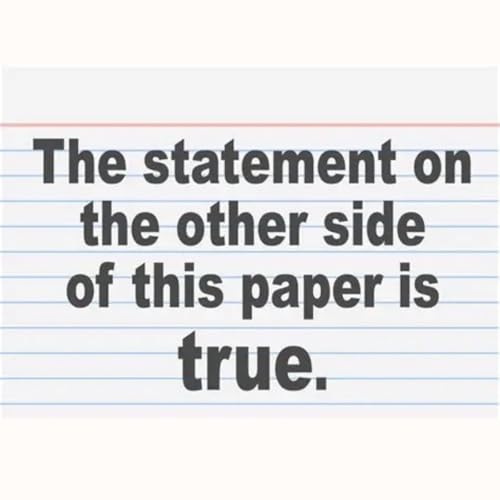
    This is the Season 109 of The Alien Spaceship with dRem TGI (Emmy Hikins) and Trevor Gear on Deepstuff TV and Deepstuff Radio of Deepstuff records. All Episodes conducted by Legendary Singer-Songwriter and Musician Trevor Gear and TV and Radio presenter Emmy Hikins (dRem TGI) and also a Singer-Songwriter and a music producer of Deepstuff records LTD. Joined by System Analyst Jerome JohnThis is a Comedy Talkshow and a Podcast In this season: Paradoxes and Free Will Paradoxes Discussion Trevor introduced the liar's paradox: "Everything I say is a lie" 32. He explained that if this statement is true, it contradicts itself (because the statement itself would be a lie). If false, it also contradicts the statement 3334. The paradox demonstrates statements that are simultaneously true if false, and false if true 34. Trevor then presented the crocodile paradox: A crocodile grabs a boy and tells the mother it will return the child if she correctly predicts whether the crocodile will keep or return him 34. When the mother says "You'll keep the boy," the crocodile faces an impossible dilemma—if he keeps the boy, the mother was right so he should return him; if he returns the boy, the mother was wrong so he should have kept him 35. Other paradoxical statements discussed included "The word impossible is not in my vocabulary" (which uses the word it claims doesn't exist) and "The only rule is that there are no rules" (a rule declaring no rules exist) 36. Truth and "My Truth" When asked what people mean by "my truth," Emmy interpreted it as "this is what I believe" or "this is my take on it" 3637. Jerome described it as **"saying your side of the story"**—recognizing that multiple people involved in an incident each have their own perspective 3738. Trevor agreed, noting that "my truth" recognizes how all humans live in their own minds—the world exists only from our individual perspectives because everything we perceive is filtered through our consciousness 3839. This can be therapeutic and acknowledge vulnerability in how we see the world 39. Free Will Debate Emmy initially argued humans do have free will, though it's limited by the laws of nature like gravity 3940. He clarified he meant free will to do "whatever we want to do without a second thought," including involuntary actions 4041. Jerome countered that free will is limited because you must consider laws of the land—rights like free speech are constrained by libel, slander, and sedition laws 4142. He concluded we have rights to live and breathe, but free will is restricted 42. Trevor argued that practical free will is severely limited by factors including childhood environment, upbringing, family influences, and developmental forces 43. He challenged whether anyone is truly "capable of anything" good or bad, noting most people would never commit crimes like mugging, stealing, or murder—suggesting they lack practical free will to do such things even if theoretically possible 434445. Exceptions to Limited Free Will Trevor identified two exceptions where people might act outside their normal constraints:Desperation: Parents unable to feed children might steal food with justification 46Mental incapacitation: Alcohol or drugs enable behavior people would never do sober, such as drunk driving or airplane incidents 474849Emmy used drunk driving as an example: someone chooses to drink, chooses to get behind the wheel, and chooses to drive recklessly—demonstrating free will in those decisions even if alcohol corrupts judgment 4748. Neuroscience Perspective Trevor cited Einstein as a staunch determinist who believed free will is an illusion—human actions are dictated by prior causes including nature, nurture, and physics laws, meaning we cannot control desires or actions but merely act on them 49. Scientific experiments show the brain makes choices before we're conscious of them 50. Trevor estimated 95% of daily decisions operate on autopilot—morning routines like having coffee or tea, eating cereal, driving familiar routes happen without conscious decision-making 5051. Thought Control Trevor posed a challenging question: Can we control what our next thought will be? 52 When not focused on specific tasks, thoughts simply arise without our direction 5253. Jerome responded that while you cannot control thoughts that arise, you can control the actions you take in response 5354. His example: waking up without milk might trigger a thought to shoplift, but you can decide not to act on that thought 54. Criminal Accountability Trevor addressed how society can hold criminals accountable if free will is limited. The answer: people who commit crimes have more free will than average because they possess the capacity to say no to criminal impulses but choose not to 555657. Most people lack the freedom to commit acts they would never normally do 57. Intelligence and Free Will Trevor shared that Marilyn Monroe had an IQ of 160, matching Einstein's intelligence ...
    Show More Show Less
    8 mins
  • S110E2: Basically If It's True It's False And If It's False It's True - Trevor Gear On Some Contradictions
    May 13 2026
    This is the Season 109 of The Alien Spaceship with dRem TGI (Emmy Hikins) and Trevor Gear on Deepstuff TV and Deepstuff Radio of Deepstuff records. All Episodes conducted by Legendary Singer-Songwriter and Musician Trevor Gear and TV and Radio presenter Emmy Hikins (dRem TGI) and also a Singer-Songwriter and a music producer of Deepstuff records LTD. Joined by System Analyst Jerome JohnThis is a Comedy Talkshow and a Podcast In this season: Paradoxes and Free Will Paradoxes Discussion Trevor introduced the liar's paradox: "Everything I say is a lie" 32. He explained that if this statement is true, it contradicts itself (because the statement itself would be a lie). If false, it also contradicts the statement 3334. The paradox demonstrates statements that are simultaneously true if false, and false if true 34. Trevor then presented the crocodile paradox: A crocodile grabs a boy and tells the mother it will return the child if she correctly predicts whether the crocodile will keep or return him 34. When the mother says "You'll keep the boy," the crocodile faces an impossible dilemma—if he keeps the boy, the mother was right so he should return him; if he returns the boy, the mother was wrong so he should have kept him 35. Other paradoxical statements discussed included "The word impossible is not in my vocabulary" (which uses the word it claims doesn't exist) and "The only rule is that there are no rules" (a rule declaring no rules exist) 36. Truth and "My Truth" When asked what people mean by "my truth," Emmy interpreted it as "this is what I believe" or "this is my take on it" 3637. Jerome described it as **"saying your side of the story"**—recognizing that multiple people involved in an incident each have their own perspective 3738. Trevor agreed, noting that "my truth" recognizes how all humans live in their own minds—the world exists only from our individual perspectives because everything we perceive is filtered through our consciousness 3839. This can be therapeutic and acknowledge vulnerability in how we see the world 39. Free Will Debate Emmy initially argued humans do have free will, though it's limited by the laws of nature like gravity 3940. He clarified he meant free will to do "whatever we want to do without a second thought," including involuntary actions 4041. Jerome countered that free will is limited because you must consider laws of the land—rights like free speech are constrained by libel, slander, and sedition laws 4142. He concluded we have rights to live and breathe, but free will is restricted 42. Trevor argued that practical free will is severely limited by factors including childhood environment, upbringing, family influences, and developmental forces 43. He challenged whether anyone is truly "capable of anything" good or bad, noting most people would never commit crimes like mugging, stealing, or murder—suggesting they lack practical free will to do such things even if theoretically possible 434445. Exceptions to Limited Free Will Trevor identified two exceptions where people might act outside their normal constraints:Desperation: Parents unable to feed children might steal food with justification 46Mental incapacitation: Alcohol or drugs enable behavior people would never do sober, such as drunk driving or airplane incidents 474849Emmy used drunk driving as an example: someone chooses to drink, chooses to get behind the wheel, and chooses to drive recklessly—demonstrating free will in those decisions even if alcohol corrupts judgment 4748. Neuroscience Perspective Trevor cited Einstein as a staunch determinist who believed free will is an illusion—human actions are dictated by prior causes including nature, nurture, and physics laws, meaning we cannot control desires or actions but merely act on them 49. Scientific experiments show the brain makes choices before we're conscious of them 50. Trevor estimated 95% of daily decisions operate on autopilot—morning routines like having coffee or tea, eating cereal, driving familiar routes happen without conscious decision-making 5051. Thought Control Trevor posed a challenging question: Can we control what our next thought will be? 52 When not focused on specific tasks, thoughts simply arise without our direction 5253. Jerome responded that while you cannot control thoughts that arise, you can control the actions you take in response 5354. His example: waking up without milk might trigger a thought to shoplift, but you can decide not to act on that thought 54. Criminal Accountability Trevor addressed how society can hold criminals accountable if free will is limited. The answer: people who commit crimes have more free will than average because they possess the capacity to say no to criminal impulses but choose not to 555657. Most people lack the freedom to commit acts they would never normally do 57. Intelligence and Free Will Trevor shared that Marilyn Monroe had an IQ of 160, matching Einstein's intelligence ...
    Show More Show Less
    8 mins
  • S110E3: So I'm Thinking Saying My Truth Is Saying My Side Of The Story - Jerome John Of 2 Sided Story
    May 13 2026
    This is the Season 109 of The Alien Spaceship with dRem TGI (Emmy Hikins) and Trevor Gear on Deepstuff TV and Deepstuff Radio of Deepstuff records. All Episodes conducted by Legendary Singer-Songwriter and Musician Trevor Gear and TV and Radio presenter Emmy Hikins (dRem TGI) and also a Singer-Songwriter and a music producer of Deepstuff records LTD. Joined by System Analyst Jerome JohnThis is a Comedy Talkshow and a Podcast In this season: Paradoxes and Free Will Paradoxes Discussion Trevor introduced the liar's paradox: "Everything I say is a lie" 32. He explained that if this statement is true, it contradicts itself (because the statement itself would be a lie). If false, it also contradicts the statement 3334. The paradox demonstrates statements that are simultaneously true if false, and false if true 34. Trevor then presented the crocodile paradox: A crocodile grabs a boy and tells the mother it will return the child if she correctly predicts whether the crocodile will keep or return him 34. When the mother says "You'll keep the boy," the crocodile faces an impossible dilemma—if he keeps the boy, the mother was right so he should return him; if he returns the boy, the mother was wrong so he should have kept him 35. Other paradoxical statements discussed included "The word impossible is not in my vocabulary" (which uses the word it claims doesn't exist) and "The only rule is that there are no rules" (a rule declaring no rules exist) 36. Truth and "My Truth" When asked what people mean by "my truth," Emmy interpreted it as "this is what I believe" or "this is my take on it" 3637. Jerome described it as **"saying your side of the story"**—recognizing that multiple people involved in an incident each have their own perspective 3738. Trevor agreed, noting that "my truth" recognizes how all humans live in their own minds—the world exists only from our individual perspectives because everything we perceive is filtered through our consciousness 3839. This can be therapeutic and acknowledge vulnerability in how we see the world 39. Free Will Debate Emmy initially argued humans do have free will, though it's limited by the laws of nature like gravity 3940. He clarified he meant free will to do "whatever we want to do without a second thought," including involuntary actions 4041. Jerome countered that free will is limited because you must consider laws of the land—rights like free speech are constrained by libel, slander, and sedition laws 4142. He concluded we have rights to live and breathe, but free will is restricted 42. Trevor argued that practical free will is severely limited by factors including childhood environment, upbringing, family influences, and developmental forces 43. He challenged whether anyone is truly "capable of anything" good or bad, noting most people would never commit crimes like mugging, stealing, or murder—suggesting they lack practical free will to do such things even if theoretically possible 434445. Exceptions to Limited Free Will Trevor identified two exceptions where people might act outside their normal constraints:Desperation: Parents unable to feed children might steal food with justification 46Mental incapacitation: Alcohol or drugs enable behavior people would never do sober, such as drunk driving or airplane incidents 474849Emmy used drunk driving as an example: someone chooses to drink, chooses to get behind the wheel, and chooses to drive recklessly—demonstrating free will in those decisions even if alcohol corrupts judgment 4748. Neuroscience Perspective Trevor cited Einstein as a staunch determinist who believed free will is an illusion—human actions are dictated by prior causes including nature, nurture, and physics laws, meaning we cannot control desires or actions but merely act on them 49. Scientific experiments show the brain makes choices before we're conscious of them 50. Trevor estimated 95% of daily decisions operate on autopilot—morning routines like having coffee or tea, eating cereal, driving familiar routes happen without conscious decision-making 5051. Thought Control Trevor posed a challenging question: Can we control what our next thought will be? 52 When not focused on specific tasks, thoughts simply arise without our direction 5253. Jerome responded that while you cannot control thoughts that arise, you can control the actions you take in response 5354. His example: waking up without milk might trigger a thought to shoplift, but you can decide not to act on that thought 54. Criminal Accountability Trevor addressed how society can hold criminals accountable if free will is limited. The answer: people who commit crimes have more free will than average because they possess the capacity to say no to criminal impulses but choose not to 555657. Most people lack the freedom to commit acts they would never normally do 57. Intelligence and Free Will Trevor shared that Marilyn Monroe had an IQ of 160, matching Einstein's intelligence ...
    Show More Show Less
    8 mins
  • S110E4: Nah Am I Confusing Myself Right Now - Jerome John On Explaining Freewill As A Concept
    May 13 2026
    This is the Season 109 of The Alien Spaceship with dRem TGI (Emmy Hikins) and Trevor Gear on Deepstuff TV and Deepstuff Radio of Deepstuff records. All Episodes conducted by Legendary Singer-Songwriter and Musician Trevor Gear and TV and Radio presenter Emmy Hikins (dRem TGI) and also a Singer-Songwriter and a music producer of Deepstuff records LTD. Joined by System Analyst Jerome JohnThis is a Comedy Talkshow and a Podcast In this season: Paradoxes and Free Will Paradoxes Discussion Trevor introduced the liar's paradox: "Everything I say is a lie" 32. He explained that if this statement is true, it contradicts itself (because the statement itself would be a lie). If false, it also contradicts the statement 3334. The paradox demonstrates statements that are simultaneously true if false, and false if true 34. Trevor then presented the crocodile paradox: A crocodile grabs a boy and tells the mother it will return the child if she correctly predicts whether the crocodile will keep or return him 34. When the mother says "You'll keep the boy," the crocodile faces an impossible dilemma—if he keeps the boy, the mother was right so he should return him; if he returns the boy, the mother was wrong so he should have kept him 35. Other paradoxical statements discussed included "The word impossible is not in my vocabulary" (which uses the word it claims doesn't exist) and "The only rule is that there are no rules" (a rule declaring no rules exist) 36. Truth and "My Truth" When asked what people mean by "my truth," Emmy interpreted it as "this is what I believe" or "this is my take on it" 3637. Jerome described it as **"saying your side of the story"**—recognizing that multiple people involved in an incident each have their own perspective 3738. Trevor agreed, noting that "my truth" recognizes how all humans live in their own minds—the world exists only from our individual perspectives because everything we perceive is filtered through our consciousness 3839. This can be therapeutic and acknowledge vulnerability in how we see the world 39. Free Will Debate Emmy initially argued humans do have free will, though it's limited by the laws of nature like gravity 3940. He clarified he meant free will to do "whatever we want to do without a second thought," including involuntary actions 4041. Jerome countered that free will is limited because you must consider laws of the land—rights like free speech are constrained by libel, slander, and sedition laws 4142. He concluded we have rights to live and breathe, but free will is restricted 42. Trevor argued that practical free will is severely limited by factors including childhood environment, upbringing, family influences, and developmental forces 43. He challenged whether anyone is truly "capable of anything" good or bad, noting most people would never commit crimes like mugging, stealing, or murder—suggesting they lack practical free will to do such things even if theoretically possible 434445. Exceptions to Limited Free Will Trevor identified two exceptions where people might act outside their normal constraints:Desperation: Parents unable to feed children might steal food with justification 46Mental incapacitation: Alcohol or drugs enable behavior people would never do sober, such as drunk driving or airplane incidents 474849Emmy used drunk driving as an example: someone chooses to drink, chooses to get behind the wheel, and chooses to drive recklessly—demonstrating free will in those decisions even if alcohol corrupts judgment 4748. Neuroscience Perspective Trevor cited Einstein as a staunch determinist who believed free will is an illusion—human actions are dictated by prior causes including nature, nurture, and physics laws, meaning we cannot control desires or actions but merely act on them 49. Scientific experiments show the brain makes choices before we're conscious of them 50. Trevor estimated 95% of daily decisions operate on autopilot—morning routines like having coffee or tea, eating cereal, driving familiar routes happen without conscious decision-making 5051. Thought Control Trevor posed a challenging question: Can we control what our next thought will be? 52 When not focused on specific tasks, thoughts simply arise without our direction 5253. Jerome responded that while you cannot control thoughts that arise, you can control the actions you take in response 5354. His example: waking up without milk might trigger a thought to shoplift, but you can decide not to act on that thought 54. Criminal Accountability Trevor addressed how society can hold criminals accountable if free will is limited. The answer: people who commit crimes have more free will than average because they possess the capacity to say no to criminal impulses but choose not to 555657. Most people lack the freedom to commit acts they would never normally do 57. Intelligence and Free Will Trevor shared that Marilyn Monroe had an IQ of 160, matching Einstein's intelligence ...
    Show More Show Less
    8 mins
  • S110E5: Do You Really Have Freewill To Go And Do Whatever You Want? - Trevor Gear On Freewill
    May 13 2026
    This is the Season 109 of The Alien Spaceship with dRem TGI (Emmy Hikins) and Trevor Gear on Deepstuff TV and Deepstuff Radio of Deepstuff records. All Episodes conducted by Legendary Singer-Songwriter and Musician Trevor Gear and TV and Radio presenter Emmy Hikins (dRem TGI) and also a Singer-Songwriter and a music producer of Deepstuff records LTD. Joined by System Analyst Jerome JohnThis is a Comedy Talkshow and a Podcast In this season: Paradoxes and Free Will Paradoxes Discussion Trevor introduced the liar's paradox: "Everything I say is a lie" 32. He explained that if this statement is true, it contradicts itself (because the statement itself would be a lie). If false, it also contradicts the statement 3334. The paradox demonstrates statements that are simultaneously true if false, and false if true 34. Trevor then presented the crocodile paradox: A crocodile grabs a boy and tells the mother it will return the child if she correctly predicts whether the crocodile will keep or return him 34. When the mother says "You'll keep the boy," the crocodile faces an impossible dilemma—if he keeps the boy, the mother was right so he should return him; if he returns the boy, the mother was wrong so he should have kept him 35. Other paradoxical statements discussed included "The word impossible is not in my vocabulary" (which uses the word it claims doesn't exist) and "The only rule is that there are no rules" (a rule declaring no rules exist) 36. Truth and "My Truth" When asked what people mean by "my truth," Emmy interpreted it as "this is what I believe" or "this is my take on it" 3637. Jerome described it as **"saying your side of the story"**—recognizing that multiple people involved in an incident each have their own perspective 3738. Trevor agreed, noting that "my truth" recognizes how all humans live in their own minds—the world exists only from our individual perspectives because everything we perceive is filtered through our consciousness 3839. This can be therapeutic and acknowledge vulnerability in how we see the world 39. Free Will Debate Emmy initially argued humans do have free will, though it's limited by the laws of nature like gravity 3940. He clarified he meant free will to do "whatever we want to do without a second thought," including involuntary actions 4041. Jerome countered that free will is limited because you must consider laws of the land—rights like free speech are constrained by libel, slander, and sedition laws 4142. He concluded we have rights to live and breathe, but free will is restricted 42. Trevor argued that practical free will is severely limited by factors including childhood environment, upbringing, family influences, and developmental forces 43. He challenged whether anyone is truly "capable of anything" good or bad, noting most people would never commit crimes like mugging, stealing, or murder—suggesting they lack practical free will to do such things even if theoretically possible 434445. Exceptions to Limited Free Will Trevor identified two exceptions where people might act outside their normal constraints:Desperation: Parents unable to feed children might steal food with justification 46Mental incapacitation: Alcohol or drugs enable behavior people would never do sober, such as drunk driving or airplane incidents 474849Emmy used drunk driving as an example: someone chooses to drink, chooses to get behind the wheel, and chooses to drive recklessly—demonstrating free will in those decisions even if alcohol corrupts judgment 4748. Neuroscience Perspective Trevor cited Einstein as a staunch determinist who believed free will is an illusion—human actions are dictated by prior causes including nature, nurture, and physics laws, meaning we cannot control desires or actions but merely act on them 49. Scientific experiments show the brain makes choices before we're conscious of them 50. Trevor estimated 95% of daily decisions operate on autopilot—morning routines like having coffee or tea, eating cereal, driving familiar routes happen without conscious decision-making 5051. Thought Control Trevor posed a challenging question: Can we control what our next thought will be? 52 When not focused on specific tasks, thoughts simply arise without our direction 5253. Jerome responded that while you cannot control thoughts that arise, you can control the actions you take in response 5354. His example: waking up without milk might trigger a thought to shoplift, but you can decide not to act on that thought 54. Criminal Accountability Trevor addressed how society can hold criminals accountable if free will is limited. The answer: people who commit crimes have more free will than average because they possess the capacity to say no to criminal impulses but choose not to 555657. Most people lack the freedom to commit acts they would never normally do 57. Intelligence and Free Will Trevor shared that Marilyn Monroe had an IQ of 160, matching Einstein's intelligence ...
    Show More Show Less
    8 mins
  • S110E6: Neuroscientist Believe 95 Percent Of The Decisions We Make - Trevor Gear On Decision-Making
    May 13 2026
    This is the Season 109 of The Alien Spaceship with dRem TGI (Emmy Hikins) and Trevor Gear on Deepstuff TV and Deepstuff Radio of Deepstuff records. All Episodes conducted by Legendary Singer-Songwriter and Musician Trevor Gear and TV and Radio presenter Emmy Hikins (dRem TGI) and also a Singer-Songwriter and a music producer of Deepstuff records LTD. Joined by System Analyst Jerome JohnThis is a Comedy Talkshow and a Podcast In this season: Paradoxes and Free Will Paradoxes Discussion Trevor introduced the liar's paradox: "Everything I say is a lie" 32. He explained that if this statement is true, it contradicts itself (because the statement itself would be a lie). If false, it also contradicts the statement 3334. The paradox demonstrates statements that are simultaneously true if false, and false if true 34. Trevor then presented the crocodile paradox: A crocodile grabs a boy and tells the mother it will return the child if she correctly predicts whether the crocodile will keep or return him 34. When the mother says "You'll keep the boy," the crocodile faces an impossible dilemma—if he keeps the boy, the mother was right so he should return him; if he returns the boy, the mother was wrong so he should have kept him 35. Other paradoxical statements discussed included "The word impossible is not in my vocabulary" (which uses the word it claims doesn't exist) and "The only rule is that there are no rules" (a rule declaring no rules exist) 36. Truth and "My Truth" When asked what people mean by "my truth," Emmy interpreted it as "this is what I believe" or "this is my take on it" 3637. Jerome described it as **"saying your side of the story"**—recognizing that multiple people involved in an incident each have their own perspective 3738. Trevor agreed, noting that "my truth" recognizes how all humans live in their own minds—the world exists only from our individual perspectives because everything we perceive is filtered through our consciousness 3839. This can be therapeutic and acknowledge vulnerability in how we see the world 39. Free Will Debate Emmy initially argued humans do have free will, though it's limited by the laws of nature like gravity 3940. He clarified he meant free will to do "whatever we want to do without a second thought," including involuntary actions 4041. Jerome countered that free will is limited because you must consider laws of the land—rights like free speech are constrained by libel, slander, and sedition laws 4142. He concluded we have rights to live and breathe, but free will is restricted 42. Trevor argued that practical free will is severely limited by factors including childhood environment, upbringing, family influences, and developmental forces 43. He challenged whether anyone is truly "capable of anything" good or bad, noting most people would never commit crimes like mugging, stealing, or murder—suggesting they lack practical free will to do such things even if theoretically possible 434445. Exceptions to Limited Free Will Trevor identified two exceptions where people might act outside their normal constraints:Desperation: Parents unable to feed children might steal food with justification 46Mental incapacitation: Alcohol or drugs enable behavior people would never do sober, such as drunk driving or airplane incidents 474849Emmy used drunk driving as an example: someone chooses to drink, chooses to get behind the wheel, and chooses to drive recklessly—demonstrating free will in those decisions even if alcohol corrupts judgment 4748. Neuroscience Perspective Trevor cited Einstein as a staunch determinist who believed free will is an illusion—human actions are dictated by prior causes including nature, nurture, and physics laws, meaning we cannot control desires or actions but merely act on them 49. Scientific experiments show the brain makes choices before we're conscious of them 50. Trevor estimated 95% of daily decisions operate on autopilot—morning routines like having coffee or tea, eating cereal, driving familiar routes happen without conscious decision-making 5051. Thought Control Trevor posed a challenging question: Can we control what our next thought will be? 52 When not focused on specific tasks, thoughts simply arise without our direction 5253. Jerome responded that while you cannot control thoughts that arise, you can control the actions you take in response 5354. His example: waking up without milk might trigger a thought to shoplift, but you can decide not to act on that thought 54. Criminal Accountability Trevor addressed how society can hold criminals accountable if free will is limited. The answer: people who commit crimes have more free will than average because they possess the capacity to say no to criminal impulses but choose not to 555657. Most people lack the freedom to commit acts they would never normally do 57. Intelligence and Free Will Trevor shared that Marilyn Monroe had an IQ of 160, matching Einstein's intelligence ...
    Show More Show Less
    8 mins
  • S110E7: But The Action You Take, You Can Control - Jerome John On Actions We Take When We're Emotional
    May 13 2026
    This is the Season 109 of The Alien Spaceship with dRem TGI (Emmy Hikins) and Trevor Gear on Deepstuff TV and Deepstuff Radio of Deepstuff records. All Episodes conducted by Legendary Singer-Songwriter and Musician Trevor Gear and TV and Radio presenter Emmy Hikins (dRem TGI) and also a Singer-Songwriter and a music producer of Deepstuff records LTD. Joined by System Analyst Jerome JohnThis is a Comedy Talkshow and a Podcast In this season: Paradoxes and Free Will Paradoxes Discussion Trevor introduced the liar's paradox: "Everything I say is a lie" 32. He explained that if this statement is true, it contradicts itself (because the statement itself would be a lie). If false, it also contradicts the statement 3334. The paradox demonstrates statements that are simultaneously true if false, and false if true 34. Trevor then presented the crocodile paradox: A crocodile grabs a boy and tells the mother it will return the child if she correctly predicts whether the crocodile will keep or return him 34. When the mother says "You'll keep the boy," the crocodile faces an impossible dilemma—if he keeps the boy, the mother was right so he should return him; if he returns the boy, the mother was wrong so he should have kept him 35. Other paradoxical statements discussed included "The word impossible is not in my vocabulary" (which uses the word it claims doesn't exist) and "The only rule is that there are no rules" (a rule declaring no rules exist) 36. Truth and "My Truth" When asked what people mean by "my truth," Emmy interpreted it as "this is what I believe" or "this is my take on it" 3637. Jerome described it as **"saying your side of the story"**—recognizing that multiple people involved in an incident each have their own perspective 3738. Trevor agreed, noting that "my truth" recognizes how all humans live in their own minds—the world exists only from our individual perspectives because everything we perceive is filtered through our consciousness 3839. This can be therapeutic and acknowledge vulnerability in how we see the world 39. Free Will Debate Emmy initially argued humans do have free will, though it's limited by the laws of nature like gravity 3940. He clarified he meant free will to do "whatever we want to do without a second thought," including involuntary actions 4041. Jerome countered that free will is limited because you must consider laws of the land—rights like free speech are constrained by libel, slander, and sedition laws 4142. He concluded we have rights to live and breathe, but free will is restricted 42. Trevor argued that practical free will is severely limited by factors including childhood environment, upbringing, family influences, and developmental forces 43. He challenged whether anyone is truly "capable of anything" good or bad, noting most people would never commit crimes like mugging, stealing, or murder—suggesting they lack practical free will to do such things even if theoretically possible 434445. Exceptions to Limited Free Will Trevor identified two exceptions where people might act outside their normal constraints:Desperation: Parents unable to feed children might steal food with justification 46Mental incapacitation: Alcohol or drugs enable behavior people would never do sober, such as drunk driving or airplane incidents 474849Emmy used drunk driving as an example: someone chooses to drink, chooses to get behind the wheel, and chooses to drive recklessly—demonstrating free will in those decisions even if alcohol corrupts judgment 4748. Neuroscience Perspective Trevor cited Einstein as a staunch determinist who believed free will is an illusion—human actions are dictated by prior causes including nature, nurture, and physics laws, meaning we cannot control desires or actions but merely act on them 49. Scientific experiments show the brain makes choices before we're conscious of them 50. Trevor estimated 95% of daily decisions operate on autopilot—morning routines like having coffee or tea, eating cereal, driving familiar routes happen without conscious decision-making 5051. Thought Control Trevor posed a challenging question: Can we control what our next thought will be? 52 When not focused on specific tasks, thoughts simply arise without our direction 5253. Jerome responded that while you cannot control thoughts that arise, you can control the actions you take in response 5354. His example: waking up without milk might trigger a thought to shoplift, but you can decide not to act on that thought 54. Criminal Accountability Trevor addressed how society can hold criminals accountable if free will is limited. The answer: people who commit crimes have more free will than average because they possess the capacity to say no to criminal impulses but choose not to 555657. Most people lack the freedom to commit acts they would never normally do 57. Intelligence and Free Will Trevor shared that Marilyn Monroe had an IQ of 160, matching Einstein's intelligence ...
    Show More Show Less
    8 mins
  • S110E8: By The Age Of 10 She Had Read The Entire American Encyclopaedia Range - Trevor Gear
    May 13 2026
    This is the Season 109 of The Alien Spaceship with dRem TGI (Emmy Hikins) and Trevor Gear on Deepstuff TV and Deepstuff Radio of Deepstuff records. All Episodes conducted by Legendary Singer-Songwriter and Musician Trevor Gear and TV and Radio presenter Emmy Hikins (dRem TGI) and also a Singer-Songwriter and a music producer of Deepstuff records LTD. Joined by System Analyst Jerome JohnThis is a Comedy Talkshow and a Podcast In this season: Paradoxes and Free Will Paradoxes Discussion Trevor introduced the liar's paradox: "Everything I say is a lie" 32. He explained that if this statement is true, it contradicts itself (because the statement itself would be a lie). If false, it also contradicts the statement 3334. The paradox demonstrates statements that are simultaneously true if false, and false if true 34. Trevor then presented the crocodile paradox: A crocodile grabs a boy and tells the mother it will return the child if she correctly predicts whether the crocodile will keep or return him 34. When the mother says "You'll keep the boy," the crocodile faces an impossible dilemma—if he keeps the boy, the mother was right so he should return him; if he returns the boy, the mother was wrong so he should have kept him 35. Other paradoxical statements discussed included "The word impossible is not in my vocabulary" (which uses the word it claims doesn't exist) and "The only rule is that there are no rules" (a rule declaring no rules exist) 36. Truth and "My Truth" When asked what people mean by "my truth," Emmy interpreted it as "this is what I believe" or "this is my take on it" 3637. Jerome described it as **"saying your side of the story"**—recognizing that multiple people involved in an incident each have their own perspective 3738. Trevor agreed, noting that "my truth" recognizes how all humans live in their own minds—the world exists only from our individual perspectives because everything we perceive is filtered through our consciousness 3839. This can be therapeutic and acknowledge vulnerability in how we see the world 39. Free Will Debate Emmy initially argued humans do have free will, though it's limited by the laws of nature like gravity 3940. He clarified he meant free will to do "whatever we want to do without a second thought," including involuntary actions 4041. Jerome countered that free will is limited because you must consider laws of the land—rights like free speech are constrained by libel, slander, and sedition laws 4142. He concluded we have rights to live and breathe, but free will is restricted 42. Trevor argued that practical free will is severely limited by factors including childhood environment, upbringing, family influences, and developmental forces 43. He challenged whether anyone is truly "capable of anything" good or bad, noting most people would never commit crimes like mugging, stealing, or murder—suggesting they lack practical free will to do such things even if theoretically possible 434445. Exceptions to Limited Free Will Trevor identified two exceptions where people might act outside their normal constraints:Desperation: Parents unable to feed children might steal food with justification 46Mental incapacitation: Alcohol or drugs enable behavior people would never do sober, such as drunk driving or airplane incidents 474849Emmy used drunk driving as an example: someone chooses to drink, chooses to get behind the wheel, and chooses to drive recklessly—demonstrating free will in those decisions even if alcohol corrupts judgment 4748. Neuroscience Perspective Trevor cited Einstein as a staunch determinist who believed free will is an illusion—human actions are dictated by prior causes including nature, nurture, and physics laws, meaning we cannot control desires or actions but merely act on them 49. Scientific experiments show the brain makes choices before we're conscious of them 50. Trevor estimated 95% of daily decisions operate on autopilot—morning routines like having coffee or tea, eating cereal, driving familiar routes happen without conscious decision-making 5051. Thought Control Trevor posed a challenging question: Can we control what our next thought will be? 52 When not focused on specific tasks, thoughts simply arise without our direction 5253. Jerome responded that while you cannot control thoughts that arise, you can control the actions you take in response 5354. His example: waking up without milk might trigger a thought to shoplift, but you can decide not to act on that thought 54. Criminal Accountability Trevor addressed how society can hold criminals accountable if free will is limited. The answer: people who commit crimes have more free will than average because they possess the capacity to say no to criminal impulses but choose not to 555657. Most people lack the freedom to commit acts they would never normally do 57. Intelligence and Free Will Trevor shared that Marilyn Monroe had an IQ of 160, matching Einstein's intelligence ...
    Show More Show Less
    8 mins