Tech Trajectory cover art

Tech Trajectory

Tech Trajectory

Written by: DiUS
Listen for free

About this listen

Presented by DiUS – where growth, grit, and bold ideas collide to uncover the human side of innovation.


Join us each fortnight as we dive into the journeys of trailblazers shaping the future of technology. Through engaging conversations, we’ll explore career highs and lows, groundbreaking ideas, and the challenges of leading in a rapidly evolving industry.


Whether you’re navigating your own tech trajectory or looking for fresh insights, this podcast is your go-to for inspiration, connection, and actionable takeaways.

© 2025 Tech Trajectory
Episodes
  • Leading engineering in a changing world: people, systems and AI Guest
    Oct 8 2025

    Send us a text

    Episode summary

    What happens when AI shifts not just how we build systems, but how we lead people?

    In this episode, Chris Davies is joined by James Ross, CTO for SEEK across Asia Pacific. They explore what’s changing (and what isn’t) about leading engineering teams in a world of increasing complexity, scale and generative AI. James shares his personal journey from developer to tech exec, his philosophy on leadership, and where he sees AI unlocking real change; not just in tools, but in how value gets created.

    They also talk about trade-offs, trust, fast feedback loops, and why engineering leadership today is as much about helping people navigate ambiguity as it is about making technical decisions.

    Guest bio

    James Ross is the Chief Technology Officer for SEEK across Asia Pacific. With a background in software engineering, architecture and product development, he’s led teams from scale-ups to large enterprises. Before SEEK, James was VP Engineering at Envato. He’s passionate about enabling others, building technical cultures of trust, and helping engineers do their best work, even when the ground is shifting beneath them.

    Key takeaways

    1. From dev to CTO: leadership as a shift in mindset

    [04:36] James shares his career journey and why becoming a leader wasn’t a single decision, it was about following the work that felt meaningful.
    [06:30] He reflects on letting go of technical depth as your sole source of value, and learning to lead through others.
    [08:05] The hardest part? Shifting from doing to supporting and optimising for impact, not output.

    2. Building high-trust teams in high-complexity systems

    [11:02] James describes how SEEK’s engineering team is structured and what leadership looks like at scale.
    [13:42] Chris and James discuss the role of clarity in complex systems—and why high autonomy needs strong shared context.
    [16:40] Leadership isn’t about controlling outcomes; it’s about creating environments where others can thrive.

    3. AI is reframing the role of engineering

    [18:14] James unpacks how AI is changing engineering trade-offs, from speed and observability to system safety.
    [22:50] SEEK is experimenting with AI across architecture, code, and process, but sees it as an amplifier, not a silver bullet.
    [25:10] Chris poses the big question: what makes a great engineer now? James reflects on curiosity, communication and judgement.

    4. Generalists, fixers and the future of engineering roles

    [28:17] James explores whether AI is shifting team dynamics, do we need fewer specialists, or just different kinds?
    [30:12] They talk about the emerging “Fixer” role, someone who can make sense of the AI-generated mess and restore order.
    [32:44] Complexity isn’t going away. But AI is changing how we navigate it, and who does the navigating.

    5. AI as both catalyst and constraint

    [36:23] James shares SEEK’s internal approach: fast feedback cycles, embedded AI teams, and collaborative exploration.
    [39:48] It’s easier than ever to try new things, but harder to choose the right ones. The challenge is filtering signal from noise.
    [42:51] James reflects on how AI has changed his own thinking as a leader: the bar for quality hasn’t lowered, it’s just moved.

    Resources and links

    • Learn more about SEEK’s engineering culture

    Follow us on Instagram, TikTok and YouTube.

    Show More Show Less
    46 mins
  • Leading with customer clarity in a changing world
    Jun 30 2025

    Send us a text

    In this episode, host Kavita Kerwar speaks with Yann Burden, growth strategist and startup founder turned Chief AI Officer at Pendula, about the leadership lessons from navigating complexity and change.

    Yann shares what it takes to lead when the path isn’t clear, the market isn’t ready, and the idea hasn’t quite landed yet. He talks about using customer clarity to cut through complexity, building belief when outcomes are uncertain, and why bold experimentation only works when others are willing to follow.

    This is a conversation for anyone driving change without a roadmap, and looking for ways to move forward with focus and impact.

    1. Customer clarity as compass Even in moments of ambiguity, customer needs can provide focus and direction.

    • [08:53] Anchoring decisions in what truly matters to customers
    • [12:38] Building customer trust wasn’t idealistic, it was essential in a low-trust, high-switching-cost industry
    • [16:23] A relentless focus on customer value helps cut through internal debates and competing priorities

    2. Building before the market’s ready The biggest lessons came from solving unseen problems.

    • [19:35] Billcap was built to make energy data useful, before retailers had the tools (or appetite) to use it
    • [21:56] Staying mission-driven gave the team staying power when the pace of market adoption lagged behind their vision
    • [24:43] “If someone’s hair’s on fire, they’ll use a brick to put it out”. True product-market fit means urgency, not perfection

    3. Turning insight into action Ideas are easy. Driving alignment to bring them to life is the hard part.

    • [28:53] At Pendula, using AI for reporting meant aligning product, commercial, and data teams around something still evolving
    • [31:06] Gen AI raised expectations, but success came from scoping carefully and managing belief internally
    • [34:10] No matter how promising the tech, change only sticks when the organisation is ready for it

    4. Learning to let go Leadership evolves when switching from founder to executive.

    • [38:28] How to influence without formal authority, and why trust is the real currency
    • [40:50] Know when to push and when to pivot, there’s no universal playbook
    • [42:55] Every role has called for a different version of himself, adaptability has been the throughline

    5. Wrap-up & reflections

    • [45:16] Advice for leaders building in uncertain environments: Don’t wait for clarity, create it
    • [47:05] Ambiguity isn’t the enemy; it’s a signal you’re doing something new
    • [48:28] Solving meaningful problems, momentum, and good people

    Resources

    • The “hair on fire” analogy comes from Michael Seibel at Y Combinator. It captures true product–market fit: if someone’s hair is on fire, they’ll even use a brick to put it out.
    • Conversations with Tyler podcast
    • 99% Invisible podcast
    • The Victorian Internet

    Find Yann

    • LinkedIn

    Follow us on Instagram, TikTok and YouTube.

    Show More Show Less
    50 mins
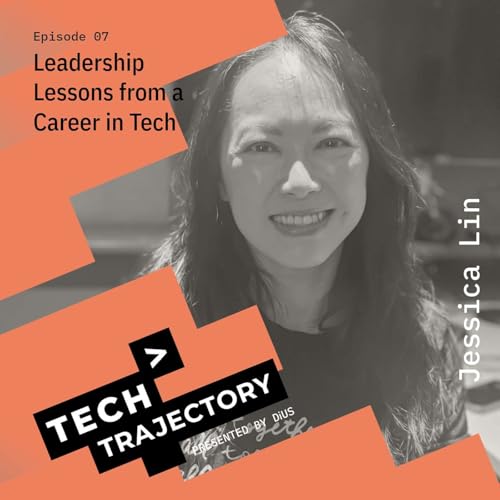
  • From Startups to Enterprises: Leadership Lessons from a Career in Tech
    Jun 16 2025

    Send us a text

    Episode introduction
    Careers don’t always follow a straight line, and for Jessica Lin, the detours have been the most rewarding part. In this episode of The Tech Trajectory, she joins host Kavita Kerwar to share what she’s learned from leading through change, jumping into unfamiliar industries, and building teams that thrive under pressure. From managing cultural shifts to overcoming imposter syndrome, Jessica offers practical advice on how to embrace uncertainty, back yourself in, and grow as a leader. And yes, there’s a game of Jenga, because leadership is as much about balance and bold moves as it is about strategy.

    Guest bio
    Jessica Lin is Executive Manager of Retail Technology – Digital Core Experiences at Commonwealth Bank. With leadership roles at AWS, Airbus, Qantas and Linktree, Jessica has led diverse technology teams through rapid growth, transformation, and cross-industry transitions.

    Episode summary
    In this candid and insightful conversation, Jessica reflects on the mindset that’s helped her embrace career pivots with curiosity rather than fear, and how she’s adapted her leadership style across vastly different environments from nimble startups to global enterprises. She shares how she challenges her team to think bigger and take ownership, what she learned from her most difficult role abroad, and how she’s worked through imposter syndrome. Jessica also breaks down the difference between mentorship and sponsorship, and why both matter in shaping a career. Along the way, she offers real stories, practical advice, and one very relatable Jenga metaphor, reminding us that leadership isn’t about having all the answers, but being open to growth.

    Key takeaways

    1. Embracing change through curiosity
    [02:50] Career shifts can be opportunities, not setbacks.
    [03:50] Transferable skills like leadership and adaptability build confidence in new environments.
    [05:50] Curiosity and asking questions often lead to support, not resistance.

    2. Adapting leadership to context and scale
    [07:05] Startups need fast decisions and risk-taking; large organisations require structure and alignment.
    [08:55] Clear direction and adaptability add value in any setting.
    [09:40] Stretch goals and support help teams step up.
    [11:00] Innovation happens when challenge is balanced with care.

    3. Navigating setbacks and building resilience
    [13:10] Not every role is the right fit—honesty protects wellbeing.
    [14:40] Cultural awareness is just as important as technical skill.
    [16:00] Letting go of pride can unlock deeper growth.

    4. Redefining confidence and communication
    [18:10] Imposter syndrome often stems from comparison, especially around communication style.
    [19:50] Feedback reframed quietness as a leadership strength.
    [20:30] Leadership impact doesn’t require being the loudest voice.

    5. Growing through others—mentorship and sponsorship
    [24:10] Sponsors push for opportunities behind the scenes.
    [27:10] Mentors help shape direction and decisions.
    [31:30] Come prepared—clear goals make mentorship more valuable.

    Resources

    • How I Built This Podcast
    • Coursera

    Where to find Jessica Lin
    LinkedIn: Jessica Lin

    Follow us on Instagram, TikTok and YouTube.

    Show More Show Less
    41 mins
No reviews yet