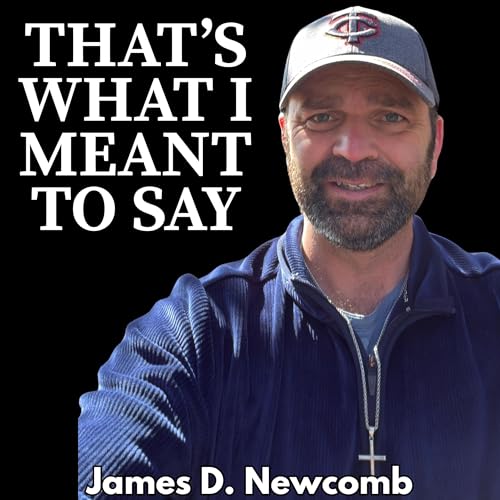
That’s What I Meant To Say cover art

That’s What I Meant To Say

That’s What I Meant To Say

Written by: James D. Newcomb
Listen for free

About this listen

This is a podcast for those who believe words still matter—words that shape us, steady us, and call us to something higher. Hosted by musician and scholar James D. Newcomb, this show explores the deeper currents beneath language, story, philosophy, and the human pursuit of meaning. Here you’ll find reflections, essays, and conversations that invite you to slow down, think deeply, and rediscover the wisdom woven into the world.

www.jamesdnewcomb.comJames D. Newcomb
Art Entertainment & Performing Arts Spirituality
Episodes
  • No Jazz at Juilliard. Chris Gekker's Thoughts on Career Longevity, Institutional Bias, Playing Softly and Much More!
    Feb 18 2026

    A career in music reveals more than technique. It reveals how institutions quietly define legitimacy, how cultural norms harden into policy, and how mastery shifts from spectacle to restraint.

    In this episode, I revisit my conversation with Chris Gekker which was recorded in 2021 on the heels of the Covid matter to explore improvisation, prestige, discipline, and the wisdom of knowing when to step back.

    From jazz at elite conservatories to the quiet art of playing softly, this reflection examines how excellence is formed—and how it matures over time.

    #MusicAndMeaning#JazzHistory#ArtisticExcellence#Improvisation#CulturalInstitutions#TrumpetLife#ThatIsWhatIMeantToSay


    Get full access to James D. Newcomb at www.jamesdnewcomb.com/subscribe
    Show More Show Less
    28 mins
  • When the Truth Feels Like an Attack
    Jan 31 2026

    Why do people cling to beliefs even after they’ve been proven wrong? In this episode, we explore what happens in the mind when deeply held beliefs are challenged, why facts alone often fail to persuade, and how emotional investment shapes what we accept as true.

    Drawing on decades of psychological research, this conversation unpacks why corrections sometimes backfire, why empathy matters more than argument, and how curiosity can open doors that confrontation slams shut.

    If you’ve ever wondered why misinformation spreads so easily, or why difficult conversations go nowhere, this episode offers clarity—and a more hopeful way forward.

    Key Themes

    * Why the brain treats belief challenges like physical threats

    * How emotional reactions precede logical reasoning

    * Why more evidence can sometimes make beliefs stronger

    * The difference between explaining a belief and defending it

    * Why timing matters when correcting misinformation

    * How and why detailed corrections can unintentionally backfire

    * The “truth sandwich” method and why it works

    * Age, emotion, and susceptibility to misinformation

    * Motivational interviewing as an alternative to confrontation

    * Why empathy changes minds more effectively than argument

    * Winning relationships versus winning debates

    #BeliefChange#Misinformation#CriticalThinking#Psychology#TruthAndMeaning#CognitiveBias#EmpathyMatters#That’sWhatIMeantToSay#fakenews


    Get full access to James D. Newcomb at www.jamesdnewcomb.com/subscribe
    Show More Show Less
    8 mins
  • Why Being Right Feels So Good (And Costs Us So Much)
    Jan 27 2026

    Why do intelligent, well-informed people so often talk past one another? Why do we cling to our beliefs, even when presented with overwhelming evidence that on the surface disproves them?

    In this episode, we explore a phenomenon known as “Confirmation Bias.” This is the tendency to favor information, even blatantly false, that supports what we already believe to be true. Drawing on research from Harvard University, MIT, and Stanford University, the conversation examines why false information spreads faster than truth, why being proven wrong can literally feel painful, and why facts alone rarely change minds.

    Rather than focusing on a single event, although it would be easy to do so, this episode looks at how we receive information itself, and why we might do well to question our own certainty in an increasingly polarized world.


    Get full access to James D. Newcomb at www.jamesdnewcomb.com/subscribe
    Show More Show Less
    8 mins
No reviews yet