Episodes

  • Break 011: So Near Where Earth Sees Its End/No Place Safer
    Apr 18 2023
    On this episode of The Break, “So Near Where Earth Sees Its End,” written by Elizabeth Kilcoyne, inspired by No Place Safer, the EP by The Good Williams Fringe.So Near Where Earth Sees Its EndBy Elizabeth KilcoyneThe mud on my boots would have bothered me once, but it doesn’t condemn me in a town like this, and I’m far beyond old vanities now. Everybody around here knows the river silt on these banks sticks to you, even after you’re baptized. Every holy roller knows to expect a little smudge of it on the hems of their whitest whites. After sin is scrubbed from you, that mud still lingers and the preacher lets it because there’s only so much God can do about it. God made dirt. Dirt don’t hurt. Or so I’ve been told.That’s why I don’t mind to get right up next to the lip of the bank where it kisses the river, close enough that mud closes over the toes of my boots and clings so thoroughly to the hem of my pants I know years of current couldn’t wash it all away. Of course, even your graveyard dirt wants to sink its claws in me. It clings. It sinks into me like nails digging into my palms. The water won’t wash that away, no matter how long I stare into it, looking for your face and seeing only mine, dim and rippling in the darkness.You’re somewhere in this river even still. You were dispersed into these waters twice, first in those days held beneath the current, moved slow and rhythmic, skin torn from muscle revealing hipbone, ground into limestone riffle-grit, then again after you were raised from the current by search and rescue divers, like angels lifting you into the clouds. Your parents had you torched in holy flame at the Blue Haven Crematorium, near enough to heaven but not quite there. Then after your funeral rites were said, they scattered you back down here again, the place you considered heaven, the waters where in life you often floated face up to the sky, smiling a placid, Ophelia smile for only the sun to see. Water to water to water again, too fluid and lively to have ever been made from or kept in or crushed back into dust.So hell, if you want to get holy about it, I’ll be a prophet now, tired of my short career as a priest. I’ll be a seer, scrying here in the shallows among the crawfish and the hellgramites and the glimmer of low-hanging stars until God defies death and rolls away the moon to reveal your face to me once more. I’ll be the holy man who starves away, who, rose-breathed and emaciated, looks towards sainthood and away from the world, into any darkness that will show me your lovely reflection. But all I see in the darkness is a reflection of the man who thought he could be your redeemer–I suppose I once fancied myself that. A one-time baptizer, I brought you all the way to God, hand-delivered, and now he’s got you, and I’ve got the water you drowned in lapping at my boots.Sending you to Jesus was the last thing on my mind when I held you fast to that muddy river bottom you so loved to float above. I was only thinking about bringing you down below into the mud that made you a little more human, a little less starlight, with a film of current veiling your face.Did that spirit in you really fly above the clouds, or does it linger, tucked into my cheek, hanging at the tail ends of my speech? I still hear your voice, but now it says what I say, thinks what I think, and its broader mountain cadence is swallowed up in wing-clipped city tones. My voice cuts through your meaning. Morphs it with my own. It takes all memory of who either of us used to be before each other, and mangles it, blurring you and me into us with every rippling wave that laps over my reflection until the face before me could belong to us both, an image keeping the vow of one flesh where I couldn’t manage. Your whisper across my tongue now justifies my evil. It forgives my sins. It makes what I say sound true. Where we mingle, I could give our story any flavored ending and where you harmonize, our sadness could sound sweet.What’s left of you is a piece of me, but I’ve stained it like river muck and now I’ll never get it out. Now I have to search the water for any piece that hasn’t touched me yet--what remains separate from the problem, the shittiness of me. My solution, my last hope of salvation. But I’m stuck in the mud I sank you in, a haint counting out particles of sand from particles of silt until I find whatever bones and ash you left behind. I waste, waiting for sunrise, but the night of dark water in front of me stretches its spindly arms until it reaches the Mississippi and holds me farther from you and the light on an endless, sleepless current. My face hollows out into something you wouldn’t recognize, cavernous and thin as rotting leaves. In my weakness I stare, transfixed, loving and forgiving it for all its ugliness in a voice I tore out of your throat.Echo, I’ve found you, hiding in the caved-in mess of my mouth. I’ll end the selfsame way you ...
    Show More Show Less
    26 mins
  • Break 010: The Source/Apparition
    Feb 14 2023
    On this episode of The Break, “The Source,” written by Josh Hanson, inspired by Apparition, a song by Jessie Marks.The SourceBy Josh HansonThey’d moved at least once a year. Furnished houses filled with anonymous furniture, or sometimes hollow, empty rooms that they would half-heartedly fill with a mattress on the floor and a pressboard chest of drawers. All things that would be left behind with only a water ring on the top or a black scuff along the base to show that they had belonged to anyone, had seen use.This new place was nice, a low, ranch-style house under tall trees, with a wide, fenced yard. Plenty of room for him and his brother to play. But beyond the fence was a stand of trees that led further back into the hills, into a maze of old concrete foundations and rusted girders and the frames of old machinery whose purpose they could not even imagine.It was here that they found the first of the bones.It was in the loose gravel hemmed in by the remains of a ruined foundation, and the boys had been using the space as a kind of no man’s land, scrabbling over the crumbling walls and belly-crawling across the gravel amongst the hail of imaginary gunfire and shrapnel, fingers digging down into the dusty rock, where he uncovered that circle of bright bone.There had been no moment of confusion, no mistaking it for something else. It was so clearly the crown of a skull, off-white with the sutures along the crown clearly marked with dirt.He called to his brother, and by lunchtime, they had uncovered most of the skeleton, the rib cage collapsed and lying in a thousand tiny pieces, but the long bones all whole and almost fully articulated. They stood over the bones and looked down, both of them quiet for a long moment. Who were they? How long had they rested here beneath the gravel and dust? It was as if someone had simply laid down in the center of the floor and gone to sleep, waiting and waiting--how many years the boys could not imagine--for someone to uncover them.He got down on his knees and began to shovel with both hands in the dirt. Somehow he knew there were more. He could almost hear them humming below the surface. They’d waited so long.Within minutes, he’d uncovered the fine bones of a hand, and calling his brother over, the two boys began to clear the ground. Both boys worked in quiet, their faces white with dust and streaked with sweat.The next morning, at the excavation site, the bones shone bright in the morning sun. Three figures laying rigid in their beds, chests collapsed, staring upward. They were about to get down in the gravel and move away more rock and dirt, when he heard something off to his left. He straightened and looked deeper into the trees, back where the rusted frames of machinery were half-hidden by weeds and the ground sloped slightly upward toward the hillside. He watched and listened. Nothing.There it was again. He moved off, leaving his brother playing in the dirt, up, toward the direction of the sound. Almost a voice. He passed through the shadow of the trees, emerging in the next clearing, the chalky red brick of an old foundation off to his left, thin trees growing up where once the building had stood. He cocked his head to the side, strained his hearing. Strained for that humming feel.He began to dig.It took hours before he found something. This time it was the long bone of a leg, very white against the dark clay that made up this part of the slope. Deeper than the others.Following the legs up to the pelvis, he soon realized that the roots of a tree were caught up with the bones, snaking through the ribs. He dug away the dirt from around the roots as well, and by early afternoon the whole skeleton was visible, the tree growing spindly and straight, rising from the ruined chest, so alien there among the bones, and he heard the hum. It was behind him, further up the slope.He followed the path up and around, away from the excavated bones, away from the house, away from the afternoon sun. He walked on until the hillside rose in a sheer cliff-face of deep red rock. He looked up, and the cliff rose out of sight above him. Scrub trees grew at the base of the cliff, and there were chunks of brick here, too, running right up into the cliff face.He followed the line of crumbling brick, just barely breaking the surface, pushing away the brush and high grass. And there was the door. Wider than it was high, maybe three feet across, with a brick archway set in the hillside. The door itself was made of thick timbers that appeared to have been nailed up from inside what he imagined must be a tunnel. He squatted down before the doorway, pressed a hand to the wooden planks. Cold. Solid.He felt the hum in his hand. It was inside, the source of that sound. Deep within the mountain. He imagined it, grub-white and hulking, rubbing itself up again the other side of the door, only inches from his raised hand. It was ancient, timeless, and patient as the earth itself. It sank ...
    Show More Show Less
    13 mins
  • Break 009: A Parting Gift/Everybody Loves Christmas
    Dec 15 2022
    On this episode of The Break, “A Parting Gift,” written by James M. Maskell, inspired by Everybody Loves Christmas, the song by Seattle artist and producer Nat Bayne.A Parting GiftBy James M. MaskellIt wasn’t until after she decided not to decorate that Mary found the package tucked away in the closet one Friday morning in December. Its blue and green plaid giftwrap blended seamlessly into the folded stack of flannel bed sheets and she thought she may have even seen it before without realizing. Silver and white ribbon crossed impressively tight over the top of the box—something she’d insisted on for years—but the bulky, irregular folds under the taped edges were unmistakably his. It was the one thing he’d left behind after walking out last month without an explanation. “It’s just not working out” he’d told her, his things already packed in the car when she’d arrived home from work. Last week a friend said she saw him out with a woman she had met once or twice, Katie or Kaitlyn, or something like that, and Mary wondered for how long that had been going on.She thought about the package her whole way to the office as the first snow of the season drifted down, thought about it through her morning coffee and into the staff meeting where management reminded everyone about the upcoming holiday party. Small decorations had begun to show up in cubicles since Thanksgiving, and now the more aggressive office-wide celebration was taking shape: garland hung over doorways; potted poinsettias on desks and countertops; a plastic menorah on the table by the watercooler; and of course, the horribly misshapen four-foot artificial tree in the corner, its cheap ornaments with their tattered satin threads revealing the Styrofoam core beneath. Of course, nothing could be tackier than the mistletoe someone hung over the copy machine. She suspected it was Derek, the office creep, but found out later it was actually Janice, the jovial assistant manager whose inappropriate office banter fell just under the radar of the general public.And yet, despite the poorly executed holiday displays at work, and the newly discovered gift left behind by the man she thought she’d eventually marry, the season still managed to hold for her a certain charm.Mary had loved everything about Christmastime as a child. Department stores transformed into shining lands of red, green, and silver. All through the neighborhood, ladders leaned against the gables and gutters of capes and split-level ranches as children fed strings of lights up to their fathers, untangling the lines one kink at a time and working desperately to finish the job before the first snowfall. And the music... Perry Como, Brenda Lee, Sinatra, Nat King Cole, and Mary’s absolute favorite, the angelic and haunting “Carol of the Bells.” God, how she loved the music.What she adored most was the enchanting conversion that took place inside her childhood home. Her mother wrapped and ribboned the picture frames so imaginary presents hung from the walls. A wooden manger replaced the clock over the fireplace, as monogrammed stockings spread outward across the mantle, Mom’s and Dad’s on the left, hers and her brother Joey’s on the right. And then, once Dad had set the tree in its stand and strung it full of lights, the four of them trimmed it with ornaments and silver tinsel, as the fragrant Douglas fir became the centerpiece of their home. Wrapped presents appeared beneath it, quietly, one at a time, over the next few weeks.But, with each passing year, Christmas shed just a bit of its magic. The strains of suburban life emerged as Dad’s hours were cut and money grew scarce. Their tightening budget grew more noticeable as Christmas drew near. Her family maintained their holiday routines as best they could, but over time those traditions became little more than habits, as though they were merely checking off boxes with each decoration. Joey moved out three years before her and, after she graduated college and left for the city, her parents quietly divorced, sold the house, and moved on to their own lives. Mary brought a few of her favorite childhood ornaments with her when she and her boyfriend moved in together, and the past two Christmases, while quiet, were intimate and lovely, echoing many of the sights and sounds she’d adored as a child. Now she was alone and didn’t see the point of a Christmas that couldn’t be shared.When five o’clock finally rolled around at the office that day, Mary rushed home even more urgently than usual, ridding herself of the fraudulent workplace cheer. She got off the train a few stops early, the package once more consuming her mind. The snow, beautiful that morning, had melted mostly, leaving scant patches on the grass and gray, slushy clumps by the side of the road. Why buy me a gift if he was planning to leave? she wondered as she walked the damp and dreary path home. When she reached her building, the young couple...
    Show More Show Less
    13 mins
  • Break 008: Limitations and Space/22 Endings for a Story About Marriage - Extended Episode
    Oct 31 2022
    On this episode of The Break, “22 Endings for a Story About Marriage,” written by Amber Sparks, inspired by Limitations and Space, the new instrumental EP from Seattle artist and producer MariGo.22 Endings for a Story About MarriageBy Amber Sparks1. And so it began! I do, she said, and he said it too, and he was weeping, and she was not, and this was nothing new. There were tears, sometimes, on the tip of her tongue, but she swallowed them always. She put her hands on either side of his face and said his name; she carried him over the threshold with the sheer, unyielding force of her personality. People cheered, and the music flew out of the speakers and into the hearts of everyone there. It was a celebration, and they decided to run headlong into it. They held hands and ran into joy, into the ridiculous sunshine, and into the rest of their lives.2. The baby, at least, was finally asleep. And now the baby was dreaming murmurs, drawn into the bedroom in threads through the monitor. And now the baby was the only quiet heart in the house.3. There was only the loud slam of the car door, then the long, slow silence that followed.4. She was dancing, alone and in love with herself. He had never seen her dance, had never seen her wear her hair that way, and somehow this was worse than any affair. Her hair! Her dress! This was the nightmare his friends had warned him about. He had married a complete stranger!5. Have you spoken to your husband about this, the doctor asked? He frowned. He was older, white-haired and disapproving; he is sure husbands should be consulted about all things. Oh yes, she lied. Yes, he’s completely on board. Yes.6. Finally she said it, the unsayable thing. Are you still in love with me? He stood still for a long time, surprised by the calm violence of the question. The two-year-old sat on the floor between them, stacking her blocks, thankfully impervious to the sudden shift in the weather.7. At dinner he saw that her hair, and the daughter’s hair, were both bright pink. Mermaid hair. She saw him staring, and smiled. It’s better than buying a motorcycle, she said, and calmly got up to clear the dishes.8. They laughed then, a good, hungry laugh, until they felt like people who had forgotten time and space. Let’s make cookies, he said, and let’s eat every one of them while the kids are asleep. Let’s eat chocolate chip cookies until we puke, she said.9. She slid down next to him on the floor, took his head, and tucked it into her breast, a brazen benediction. His sadness made her feel almost holy, her hair down in curtains around him like both Marys: mother, whore, saint. She opened her legs.10. There was not even enough money to fix the drywall, let alone the rest of it, but it didn’t matter after all. If it was all going to rot, let it rot. Let it all break down like everything does in the end, as the gods intended. Let the sidings crumble, let the brickwork crack, let the vines find their way through the openings to let life in, to let green life in at last. Let entropy take the wheel.11. Everyone, he thought, becomes a pod person at some point. Look at her. Her eyes were not hers, they belonged to someone older, happier, more tired. They were such exhausted eyes; they looked like they were longing only to close.12. What will we do now, she said? The house, empty and blank, echoed back at her, but did not provide an answer.13. He was the better cook, but tonight he would let her experiment. He knew it wasn’t the right outlet for her, but when someone is finding themselves, you can’t tell them where to go. You can’t provide a map. All you can do is say, I love you at the start of the journey, and I love you upon the long-awaited return. And eat the shitty dinner.14. He’s gone, she said, he’s gone, and her tears were so shocking and unexpected, so incongruous that the husband just kept sipping his whiskey, making no move at all to comfort her. Her phone lay on the floor, playing a song he’d never heard, on repeat. The whole scene kept circling, a terrible time loop: her tears, the song, his whiskey. He wondered if it would go on like this for the rest of their lives. Tears, song, whiskey, ad infinitum. Tears, song, and whiskey.15. The son walked up the drive and saw them through the living room window, laughing together, intimate and tender; it occurred to him for the first time that they were people he didn’t know. It was ridiculous to spy on one’s own parents like this, as if they were strangers, and yet, there was a kind of gentle pleasure in it, too. He wondered what they were like, these people he’d never met before. He wondered what they hoped for, what their favorite color was, what they dreamed about at night. He wondered if they liked him. I must remember to treat them like people, he said, though of course he would never recall this moment again, not even when he had grown children of his own.16. Promise me you’ll never do it again, said the...
    Show More Show Less
    45 mins
  • Break 007: Dust/Coincidence
    Sep 27 2022
    On this episode of The Break, “Dust,” a story written by Kiana Kazemi inspired by Coincidence, the first single from the debut album in production by Lindsay Liebro.Dustby Kiana KazemiThe last time we saw each other was the last time I dusted off the top of my bookshelf.I wonder if you can recall that day so clearly as I can, and if it haunts your late-night thoughts like mine.My friend had called me around ten in the morning, asking to spend the evening at the boardwalk just a few hours away. I agreed to go after I finished cleaning my bedroom–the usual sheet wash, plumping the pillows, watering the flowers, dusting the shelves. It was so unbearably hot that day, I almost regretted breaking out the ladder from the cabinet to climb up just to dust some shelves. I think I still regret that.As I walked to my closet, swinging the doors open with my remaining strength and glancing at the hangers, I could only think of one thing: it had only been a month since you disappeared from my life, yet there were endless reminders of you in everything I have.Sometimes, it’s as if you never left. And I hate that.Of course I didn’t choose to wear the deep blue shirt I wore when we got ice cream together. Instead I went for the slightly-tattered gray sweatshirt I found lying on the top rack. And I didn’t choose to wear the hat you endlessly complimented at our weekly picnics; the knockoff ballcap I found in the clearance aisles a week ago worked just fine.As my friend picked me up, I flipped through my phone’s screens until I found some music so tastelessly generic I could mute my thoughts. You know, the neverending radio “hits” that we used to make fun of before you would quickly switch the music off.I remember trying to shake memories of our trips to the boardwalk as I carefully stepped on, noticing the beauty of it instead. The sky that day was as if someone had taken the foamy ocean waves and quickly whisked them into meringues, blowing them gently into the baby blue sky above. The breeze was welcoming, like an old friend bringing you into their embrace after months. It felt like a serene escape.And I wish I hadn’t decided to continue walking down the beach at that point. Sometimes I wish I had never even agreed to go out to the boardwalk that day.Because as my friend laughed with me over the seagulls stealing food, some strawberries and a crab cake from an abandoned picnic basket, my eyes fell on you. You, and someone else. You and my replacement.Two thoughts flashed through my mind at that moment: I’m happy for you and I hope your heart is torn just like mine.I knew you saw me at that moment too. We made eye contact, not the brief, shy type, but the type that you make when you’re trying to recognize an old friend you haven’t seen for 5 years, doubting if it’s truly the same person. And we both realized, at the same time, we were who we thought we were.I saw your hand twitch for a moment, as if you were contemplating whether or not to wave “hi.” But I’m glad you didn’t. I don’t know how I would have reacted. Before you could make a split-second decision, the girl you were with tugged on your hand — right, you were holding hands — and focused your attention.She smiled so brightly at you, just like I used to. You grinned back at her, as if our shared moment never even happened. She kissed you on the cheek, pulling out her camera to snap a quick picture of the two of you. Adorable, really, from anyone else’s view.Soon, you walked away. And I still felt left behind. It was almost as if the sand began pulling me in, cementing me in so I can never move on from this moment. But my friend quickly diverted my attention to the sunset. I have a feeling they knew what happened.I spent that night mulling over what we could have been if you had never left me alone in the cold sand a month ago.I dusted my shelf off again today – what has it been, four months? I tried not to think much of it, not to think of what was in our past oh so many months ago.I headed to the store, with plans of picking up cat food, eggs for the muffins I wanted to bake, and maybe a bouquet of flowers if there were any still left after Valentine’s.And there you were.I hate that I can recognize you from a mile away. I hate that I fall victim to hearing your laughs that aren’t shared with me. I hate that I can still see you, unaffected by what we were, if we were ever even something to you.You were picking up some eggs, and — who was that by your side? — you placed them in the gray grocery cart — who was laughing by your side? — before moving towards the next aisle.You didn’t see me. I rushed out of the store, pushing the one carton of eggs I had already picked up onto a random shelf, and headed back home before you could notice. Perhaps the cashier at the front noticed my abrupt departure, one mimicking yours that I still grieve to this day.Some days, I realize that I don’t feel guilty for ...
    Show More Show Less
    12 mins
  • Break 006: Answer Inc./ Inhuman
    Jul 27 2022
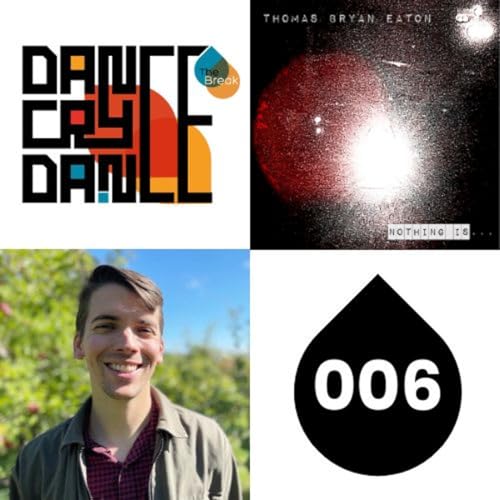
    On this episode of The Break, we open with “Answer Inc.,” a story by Corey Farrenkopf followed by Inhuman, a track from the album Nothing Is by Nashville artist/producer Thomas Bryan Eaton.Answer Inc.By Corey FarrenkopfAnswer Inc. doesn't provide a company computer. For thirty-two fifty an hour, my old Mac does the job. The screen illuminates my face as I hunch over the keyboard. Every light is off in my basement apartment, the scent of microwaved Biryani filling the cramped space. I’m confined to the beanbag chair my parents let me take from my childhood bedroom, the faux leather slightly sticky beneath my back.Once I log in, questions fill my ears.Is a Pomchi the right breed of dog for me?How far is too far to drive for a Tinder date before I look like a creep?If I can only afford to buy my father’s diabetes medication or my brother’s diabetes medication, whose should I buy?I’m not allowed a follow up question. I can’t delve into which relative Asker C is closest with, which attended more of her high school drama performances, which calls on her birthday. No. They are paying for a one sentence reply, so one sentence is what they get.No, a cockapoo is the correct breed.Anything over fifty miles and you’ll seem like an axe murderer.Strictly based on life expectancy, your brother.Sometimes I imagine my callers. Twenty-something with a perfect fade. Late thirties with a softening gym body. Early forties, grays coming in at the roots. It helps me answer, to humanize the anonymous caller numbers and blurred-out headshots.For fifty dollars, clients log on to have someone else make their decisions. Should they get a face tattoo? How many cats is too many cats for their condo? Which is the best day of the week to bring up divorce to their blindsided spouse? I can see the allure. There are too many options these days, too many lives you can live, and none of them feel right. The vastness is crippling. If I had money, maybe I’d use the service. Employees get a twenty percent discount, but rent is steep.My questions remain my own.***I rarely get the same caller twice, except b582 that is.Somehow, she’s in my queue every day.I imagine she’s in her thirties, short hair, eyes baggy from sleep. At least that’s what her one sentence a day conveys.“Is the air in my apartment toxic?” she asked on her first call.I listened for the bleep of CO detectors. Finding none, I said “No, the air in your home is clean.”The next day she asked, “If my landlord is trying to poison me, how would I know?”After consulting a poison control Google search, I said, “You would feel light-headed and nauseous.”Her daily questions morph from outward concerns to inner.“Is it crazy to believe your landlord is trying to kill you?”“Is it normal to fear the water coming from the tap?”“Is it normal to worry about what’s coming for me?"To each question, given the times we live in, I say No it is completely normal to worry about X,Y, and Z as long as it doesn’t rule your life.***After a month, I email my boss asking if I can get in touch with b582 to give her the number for a healthcare professional or therapist that may be better equipped for her questions than an ex-barista with a sociology degree. My supervisor writes back that of course there is no way to contact b582. Answer Inc. cares about customer privacy, and, if we were to pass b582 onto another service, we would be losing the fifty dollars per call, and that certainly isn’t in the business plan.We are a form of therapy, he says. The simplest form of therapy.***On b582’s hundredth call, I refuse to answer her question about fearing the inhuman silhouette standing on her street corner. Instead, I give her my cellphone number, rattling off the digits, hoping my supervisors aren’t listening in.“There’s got to be a better way of doing this. I can’t give you the help you need. Call me and we’ll figure something out.”b582 pauses.“But what about the silhouette?” She asks after a minute. I swallow whatever response I thought I’d come up with and simply tell her, “If it’s close to your house, yes, go lock your doors.”Then she hangs up and my next caller is on, asking me about haircare products and flammability around tiki-torches.***I wait for an unknown number to light up my cellphone screen, but nothing happens. I continue to answer questions about organic sheets, dopamine deficiency, and the most successful ways to potty train a cat, with no interruptions. I end my shift at eight o’clock and move to the kitchen where I microwave instant cup noodles and continue to wait for her call.But the call doesn’t come.I worry about how quick she locked the door.***The next morning, b582's ID pops up on my screen. She neglected my personal number, but I’m cool with that simply for the fact whatever she thought she saw beneath that streetlight didn’t get her in the night. I click “accept” and wait for her voice.“...
    Show More Show Less
    13 mins
  • Break 005: Swim Deep/Outskirts
    Jun 29 2022
    On this episode of the The Break, we open with “Swim Deep,” a story by Eirinie Carson followed by the exclusive premiere of Outskirts, the new single (available July 1, 2022) by Argentinian artist/producer Elhel.Swim DeepBy Eirinie CarsonCari was a full year older than Rosie, which to an adult might seem like nothing, but to a 19- and 20-year-old was vast. An ocean of knowledge stretched out between them, and although Rosie had done better at school, was getting good grades at college, she felt like an infant around Cari, a fresh born babe who knew nothing, had done nothing. The ocean they found themselves in seemed a bottomless blue, and Rosie was painfully aware of just how far out to sea they were. She didn't like to think of the depths in open water—it made her contemplate the unfathomable map beneath her as she trod water above it: mysterious currents and seismic changes, not to mention the creatures. Blind scaly monsters, impossibly electric with unseen teeth, and smooth beings, getting too close to her legs without her even knowing.Cari was buoyant with the ocean, casual, her Wayfarers swept up off her face, holding her wet, jet-black hair like a headband, like that song about the summer, widow’s peak severe and mysterious. Rosie was a strong swimmer, but Cari was stronger, having spent so many summers at the beach as a lifeguard. By the end of each season her already enviable body would look as if it were still wearing a swimsuit when naked, stark and comparatively pale. Cari was one of those girls for whom stripping off was undaunting; she would step long lithe legs out of her sundress, revealing a wet but drying bikini bottom, a taut stomach with abs from days of swimming out past the buoys.Rosie did not have such a body, and although she was technically covered by the waves and water around her, and should have felt weightless and light like a stray piece of seaweed, she felt large and unwieldy, legs peddling desperately, brushing her stomach’s puppy-fat with each stroke. They had the kind of friendship Rosie assumed people whispered about, wondering how such a vibrant, charismatic beauty as Cari could have found such a dumpy, quiet pal in Rosie. But it felt cosy in Cari’s slipstream, cosy and slightly ominous, like stepping into a freshly peed bit of warm. Rosie would trail in her wake, waiting for something exciting to happen to her, if only vicariously through Cari.This was that heady type of friendship where often Rosie’s stomach would do a big swoosh when she was anticipating seeing her, where even when Cari wasn’t around, she was still the sole occupier of Rosie’s thoughts. She didn’t think about her boyfriend like that. Sometimes he would step into her dorm room, and she would blink several times as if trying to bring her eyes into focus, as if trying to remember who or what this person in front of her was. She always remembered--always remembered to hold his hand and close her eyes when they kissed and smile when he talked to her and try to maintain the roles they were performing. This boyfriend-slash-girlfriend game. It was her first time playing, and she suspected it was his too, although he spoke frequently of his “exes”, but only in vague ways that seemed more to coerce Rosie into a certain type of behaviour: “My ex always did this” “My ex didn’t like rom coms” “My ex always wore matching underwear”. Rosie thought perhaps she might be more bothered by these quite transparent attempts at manipulation, but she couldn’t bring herself to care enough. She would watch his films, coordinate her bras with her knickers, try to push away thoughts of Cari whilst they were talking.Cari made sure to hang out with Rosie only one on one; if they were ever in a crowd Rosie would find herself being led away to the outskirts of the party, with Cari’s breath on her ear as she whispered her secrets. She hated Rosie’s boyfriend and conjured up a variety of bland names to call him that were not his actual name. “Why do you bother with Darren anyway?” “What do you see in Fred?” “Where’s Martin today, off buying some more cargo pants?” The digs thrilled Rosie, and whilst she never joined in with the ribbing, she loved that Cari was displaying something close to jealousy, some bright, vicious little stone, heavy in the hand and just for her.Cari seemed as if she wasn't moving, treading water as she looked back toward the shore coolly, even though Rosie felt out of breath from her effort. "Isn't this fun?" Cari smiled through the ocean which splashed against her white teeth as if she was merely part of the landscape. "I come out here every day.""Mmhmm,” Rosie spluttered, wondering again about the noiseless shapes beneath her feet. A cold current hit her ankles, and she brought her legs up higher, as if peddling on a tricycle. Rosie's father had always told her never to turn her back on the ocean, and so even now, all the way out here, she ...
    Show More Show Less
    13 mins
  • Break 004: Wrong World/Refuge
    May 28 2022
    On this episode of The Break, we open with “Wrong World,” a new original story by New York Times bestselling author of the Warm Bodies series Isaac Marion followed by the exclusive premiere of refuge, the debut album from Seattle art-rock duo quand il pleut.Wrong Worldby Isaac MarionBeth sits alone in a cafe she’s never seen before, sipping pale yellow coffee that tastes like cherry juice, watching impossibly fat rain hammer the pink pavement, diligently straining to learn about this world she’s fallen into.Her laptop sits in front of her, but the internet is still too overwhelming. It was overwhelming even where she came from, but here, without any context to shape its flood of information, it might as well be pure noise. She prefers to learn slowly by looking and listening, a few revelations at a time.“Did you hear about Maxico?”“Yeah but I don’t get it. Why would Maxico attack Colomdia? Weren’t they allies in the Pedro Bank war?”“All about that lithium, baby.”Beth finds eavesdropping to be the most manageable method. A drip feed of information slow enough to seep in without drowning her. The best way to learn a language is immersion. She struggled with Spanish for years until she spent a few months in Mexico—which is apparently now “Maxico,” which has apparently always been “Maxico” and she somehow had it wrong her whole life. So she immerses herself in what used to be her own language, her own country and culture, now altered in so many ways she might as well start from scratch here in the Unified States of Anerica.“Sorry, do you have cow’s milk by any chance? I’m allergic to dandelion.”“He says he’s more of a cat person, doesn’t really like raccoons, is that a red flag?”“Should we do Greenland for winter break? Soak up some darkness?”She scribbles lists in her journal of things she doesn’t understand, things to research further when she’s a little less overwhelmed. But some questions resist research. The social norms and unwritten laws.“Of course they’re closing the beach, Beth, four people drowned this year.”“What do you mean ‘why are we freaking out’? Malaysia put trade sanctions on Brunei, it’s called ‘global conflict,’ Beth.”“You’re going on a walk without a sunscreen rubdown? That’s ten minutes closer to cancer.”Sometimes the facts are familiar and it’s only the context that’s shifted, the mutual understanding of normality which has suddenly ceased to be mutual. Other times it’s the facts themselves, a sudden onslaught of unbelievable statistics and rattling confrontations.“You kissed someone without a mouth screen? That’s a one in four chance of syphilis, Beth.”“Beth, you should never stop for gas alone, the average gas station has a hundred kidnappings per year.”“You really don’t have asteroid insurance? We get two hundred house strikes a month in this state.”That can’t be right, she finds herself saying again and again. She’s never heard of that. She could have sworn.But she’s never completely sure. Did everything really change, or was she always wrong? Had she been misspelling “Anerica” all her life? Undervaluing all the dangers around her? Was she simply that uninformed?“Did you see what Mackie tweeted about AOP?”“Oh my God, so messed up, right? That one’s going straight to the Pound.”Beth doesn’t recognize most of the names she overhears. Politicians? Pop stars? Both? A quick google would slot them into the puzzle, but it’s a puzzle with no edges, ever-expanding—fill in one section and another one spills off the table.“Is the Pound even still a thing?”“It is as long as Tertia’s on the Desiccant train.”“Ha! Fair enough.”Sometimes the references are so thick, Beth can’t follow a single word. Is it just her age? Did she fall into a foreign universe the moment she turned forty? She sneaks a glance at the two women chattering incomprehensibly at the nearby table. Their eyes are shrewd, their conversation sharp, their rejoinders instantaneous, everything about them snaps—and they’re in their mid-fifties.No, this is not just aging. This is not the natural withering of her cultural umbilicus as she drifts out from the heartbeat of humanity. Something happened. This is not the same world. She looks out the window for her daily confirmation: those surreal clouds branching across the sky in complex fractal patterns, dumping hurricane torrents of rain that no one but her finds notable.“Seems pretty typical for Febrewary,” the barista replies when she remarks on it—that unexpected voicing of the silent “r,” and the usual confused squint. “The street pumps are keeping up with it, but I hope you brought your body bubble!”Beth did not bring a body bubble. But she spots dozens of people who did–calm and dry inside clear plastic umbrellas that extend all the way to their feet– as she sprints across the parking lot, screaming ...
    Show More Show Less
    55 mins