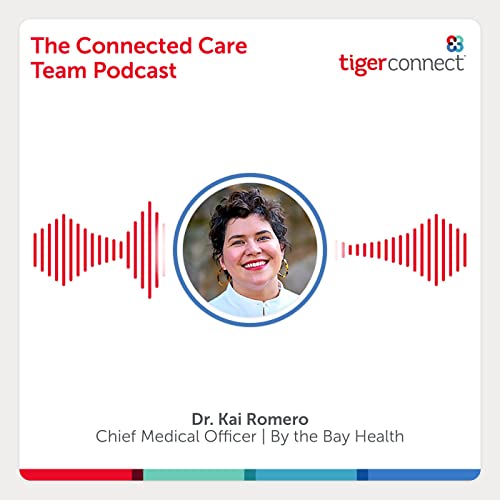
The Connected Care Team cover art

The Connected Care Team

The Connected Care Team

Written by: TigerConnect
Listen for free

Despite many 21st-century technological advancements in Healthcare, care team collaboration tools and processes remain unequivocally in the past.The Connected Care Team podcast brings you firsthand accounts highlighting how advancements in Healthcare IT technology can modernize care teams, giving you insights to provide better patient care.© 2023 The Connected Care Team
Episodes
  • The Art of Resident Scheduling: How Chief Residents Handle the Challenge
    Jul 28 2023

    In this episode of The Connected Care Team podcast, Mohammed Shaik, MD, PhD, and Brittney Newby, MD, PhD, pediatric chief residents at the Children’s Hospital of Philadelphia, share the challenges of balancing manual resident scheduling with physician wellness and discuss AI’s potential applications in medicine. 

    Scheduling complexity and work-life balance 

    Dr. Shaik and Dr. Newby discuss the intricacies of managing scheduling in a medical residency program. A central focus of theirs is balancing educational requirements and residents’ personal lives while ensuring quality patient care. As chief residents, they tirelessly coordinate schedules, communicate with stakeholders, and strive to uphold the well-being of fellow residents. 

    “Staffing the hospital is also part of our responsibility. We need to make sure the patients on our floors are covered by the providers, which oftentimes are residents, in a way that is safe, effective, and efficient. This requires us to talk to a lot of people across the hospital to make that happen.” 

    Mohammed Shaik, MD, PhD 

    Setting boundaries 

    As co-chief residents, both doctors reflect on the unexpected workload that comes with their leadership role and the kind of environment they want to foster. They emphasize the importance of setting boundaries, both for themselves and the residents they mentor, to maintain work-life balance and uphold their values in the demanding environment of medical residency. 

    “What I did not expect this year as a chief is the amount of tasks we have. Naturally, your job bleeds into other aspects of your life. So, I think even more this year, we've had to work hard and make sure that we keep those values and keep those boundaries. And I think that's something we try to teach and convey to the residents as well.” 

    Brittney Newby, MD, PhD 

    AI in healthcare 

    Both Dr. Newby and Dr. Shaik express enthusiasm for the potential of AI in healthcare administration. They envision leveraging ChatGPT and other AI tools to streamline administrative tasks, saving significant time and effort. With the ability to generate scripts or gather large pieces of information, AI could greatly enhance efficiency in medical settings. 

    “I love the idea of using ChatGPT or other AI interfaces for administrative tasks. You could literally type in a query to ChatGPT and ask it to write a script or code that would potentially take hours and hours to write. So, I think that it could certainly improve our efficiency. And I'm excited to see where the automation field goes over the next couple of years.” 

    Brittney Newby, MD, PhD 

    Related:  

    • Connect with Mo Shaik on LinkedIn  
    • Connect with Brittney Newby on LinkedIn 
    • Learn more about TigerConnect Resident Scheduling 

    Follow TigerConnect on LinkedIn for episodes, announcements, and news  

    Subscribe to The Connected Care Team on your favorite platform to get new episodes first

    Learn more about the TigerConnect Product Suite

    Follow TigerConnect on LinkedIn for episodes, announcements, and news

    Subscribe to The Connected Care Team on your favorite platform to get new episodes first

    Show More Show Less
    24 mins
  • What’s Right for the Patient – The Role of Technology in Healthcare Communication
    Apr 6 2023

    In this episode of The Connected Care Team podcast, Christopher DeFlitch, M.D., chief medical information officer at Penn State Health, shares how the organization has benefited from healthcare technology. Dr. DeFlitch discusses how improved connectivity, optimized workflows, and contextual communication have helped improve patient outcomes.

    The role of technology in healthcare delivery
    As the healthcare landscape continues to evolve, leveraging technology to manage care delivery is becoming increasingly critical. Christopher DeFlitch, M.D., has spent the past 25 years working to help healthcare professionals at Penn State Health understand how technology can improve processes and patient outcomes. DeFlitch notes that asynchronous communication is key to improving healthcare delivery – and better serves patient care.

    Efficient healthcare communication
    TigerConnect has proved essential to communication at Penn State Health, where Dr. DeFlitch notes that the organization sends 2 million secure messages monthly. Better connection and TigerConnect Roles and Teams have significantly improved the efficiency and speed of clinical collaboration. By setting up different roles within the organization, healthcare professionals can engage in role-based messaging, putting new messages into greater context. For example, instead of receiving a message from Dr. Smith, role-based messaging displays the sender as ‘Critical Lab Results Hospital A.’ This cuts out the antiquated process of using a pager to send a page and wait for a callback.

    “So, all of a sudden, I've got four or five minutes of work as opposed to I can look at this, and I can see that it’s for real, and I gotta do something with it. Or you look at it and say, ah, no, I knew about that already, and I can just bypass it. I mean, that's a second, as opposed to minutes conversation. And it makes the patient care, I think, a little bit more effective, and it makes me as a physician more efficient.” – Christopher DeFlitch, M.D.

    Leveraging Healthcare Technology for the Betterment of Patients
    In the last two decades, healthcare communication and collaboration have come a long way. Dr. DeFlitch believes that healthcare technology has made it easier for healthcare professionals to connect with their patients and offer them better care. But he also acknowledges that there's still a lot of work to be done, especially when addressing the social indicators of health. DeFlitch thinks that the healthcare industry must leverage technology and expertise to improve the long-term outcomes of families in need. And he believes that this responsibility will be taken up by the next generation of healthcare employees, who are already socially connected and tech-savvy. Leveraging healthcare technology can help the healthcare industry do what's right for patients, especially those facing social healthcare barriers.

    Learn more about the TigerConnect Product Suite

    Follow TigerConnect on LinkedIn for episodes, announcements, and news

    Subscribe to The Connected Care Team on your favorite platform to get new episodes first

    Show More Show Less
    25 mins
  • Patient Centered Palliative Care: Insights from By the Bay Health
    Jan 18 2023


    In this episode of The Connected Care Team podcast, Dr. Kai Romero, chief medical officer at By the Bay Health, discusses mission-driven work, how communication technology streamlines the use of interdisciplinary teams in palliative care, and the importance of connectedness.

    Mission-driven healthcare

    Like many healthcare professionals, Dr. Kai Romero’s interest in medicine was rooted in family. Her father, a family practice physician who immigrated to the United States at the age of thirteen, instilled in Dr. Romero the importance of mission-driven work. With that as her guiding compass, Dr. Romero originally pursued emergency medicine before ultimately being drawn to hospice and palliative medicine. Her training in emergency medicine led her to quickly realize that the healthcare system is very challenging for seriously ill individuals and that emergency rooms cannot always meet their needs.

    “You wouldn’t imagine it, but there’s quite a bit of overlap between the two fields, primarily in the sense hospice patients have the same emergencies as ER patients do. They just happen at home without an IV and without advanced equipment to manage them. And as a result, you have to do a lot of similar problem-solving and thoughtful diagnosis and treatment, but you’re doing it all within a far more resource-limited setting. – Dr. Kai Romero

    Reliable patient and provider communication

    The COVID-19 pandemic has been a challenge for many healthcare organizations to physically provide care for patients. In addition to challenges with COVID-19, By the Bay Health has also encountered challenges during fire season in the Bay Area. Highways are often inaccessible during large fires, and the air quality is also a concern for staff who need to visit patients at their homes. With these challenges, the organization relies on fast and reliable communication to keep both staff and patients connected. By the Bay Health implemented TigerConnect Patient Engagement as a flexible solution to connect with both patients and interdisciplinary teams. 

    “One hallmark of hospice and palliative medicine is the use of interdisciplinary teams to care for patients. So, it’s not just a nurse or a doctor, it’s also a social worker, a chaplain. And what the use of [the technology] has done is basically made it much easier to create a multipart interdisciplinary meeting with families so that it’s not reliant on any one person’s particular schedule, ability to drive X, Y, and Z location.” – Dr. Kai Romero

    An opportunity for connectedness

    In addition to palliative care, By the Bay Health also provides hospice, home health, and pediatric care services. The TigerConnect implementation was well-received by staff, with a large adoption on the palliative care side. With many in the organization still remote due to the pandemic, the technology has proven beneficial in connecting staff and shaping their patient communication.

    “When I’m in a meeting and I hear a social worker describe what it is that they’re doing around existential grief with a patient, it shapes how I talk about symptom management or goals of care. And I think that kind of real-time learning from your peers is greatly enhanced by just having more exposure to them.” – Dr. Kai Romero

    Related:

    ●      Connect with Dr. Kai Romero on LinkedIn

    ●      Learn more about the

    Learn more about the TigerConnect Product Suite

    Follow TigerConnect on LinkedIn for episodes, announcements, and news

    Subscribe to The Connected Care Team on your favorite platform to get new episodes first

    Show More Show Less
    25 mins
adbl_web_anon_alc_button_suppression_c
No reviews yet