Episodes

  • Ep. 14 - Shaping Champions Through Coaching: The DartBrain of Alex Spellman
    Oct 17 2025

    In this episode of the Dart Brain Podcast, Alex Spellman shares insights into the mental aspects of playing darts, emphasizing the importance of confidence, focus, and resilience. He discusses strategies for maintaining mental edge, the concept of a 'burner leg' for practice, and how to approach matches against tough opponents. The conversation also touches on the evolution of mindset from beginner to pro and the role of emotions in performance. In this conversation, Alex Spellman shares his journey in darts, discussing the importance of self-discovery, mental management, and the transition from casual play to competitive darts. He emphasizes the significance of coaching as a collaborative process that requires commitment and clarity from both the coach and the player. Alex also delves into the mental aspects of the game, offering strategies for managing stress and building confidence through consistency and control. He reflects on the challenges of balancing coaching with personal performance and the importance of tinkering with technique to find what works best for each individual. Finally, he shares his future aspirations in the darts landscape, navigating personal health and competitive opportunities. In this conversation, Alex Spellman shares insights on coaching in darts, emphasizing the importance of preparation routines, managing pressure, and entering a flow state. He discusses goal setting strategies, effective feedback mechanisms, and the significance of past successes in empowering players. The dialogue also explores resilience in players, the interplay between personal experience and coaching, and the future of coaching in darts, highlighting the accessibility and benefits of the sport.

    TAKEAWAYS

    • Darts is about feeling and muscle memory.
    • Confidence is crucial for overcoming challenges.
    • Resilience helps players bounce back from poor performance.
    • Focus can be disrupted by overthinking or distractions.
    • A 'burner leg' is a practice leg to correct mistakes.
    • Facing opponents requires a mental strategy to avoid pressure.
    • Mindset evolves with experience and practice in darts.
    • Choking can be a result of stress and anxiety.
    • Maintaining a mental edge involves consistent practice and self-awareness.
    • Emotions play a role but should not dominate performance. Success is about being acknowledged in the conversation.
    • Coaching is a collaborative process that requires effort from both coach and player.
    • Managing stress involves making conscious choices to slow down and focus.
    • Transitioning to competitive play requires practice and exposure to stress.
    • Confidence is built through consistency, comfort, and control in technique.
    • Players must understand the 'why' behind their actions to improve.
    • It's normal to experience ups and downs in performance; everyone goes through it.
    • Tinkering with technique is essential for finding what works best for each player.
    • Balancing coaching responsibilities can impact personal performance.
    • Future aspirations in darts involve navigating personal health and competitive opportunities. Preparation routines are crucial for managing performance expectations.
    • Players should find what works for them in their warm-up routines.
    • Entering a flow state involves clearing the mind and focusing on the physical aspects of the game.
    • Goal setting should be realistic and achievable to avoid unnecessary pressure.
    • Feedback is most effective when it is verbal and encourages self-reflection.
    • Reminding players of past successes can empower them during high-pressure situations.
    • Resilience is built through trusting the process and making necessary adjustments.
    • Coaching methods should adapt to the individual needs of players.
    • Darts can be an accessible sport for all, promoting inclusivity and engagement.
    • The future of coaching in darts may involve innovative approaches to reach a wider audience.
    Show More Show Less
    54 mins
  • Ep. 13 - From Grassroots to Glory: The Coaching Path in Darts
    Oct 4 2025

    In this episode of Dart Brain, Clint Clarkson explores the multifaceted world of coaching in darts, emphasizing its critical role in enhancing performance, building confidence, and providing psychological support. The conversation delves into the differences between formal and informal coaching, the psychological principles that underpin effective coaching, and practical tools for self-coaching. Through anecdotes and insights, Clarkson illustrates how coaching serves as a vital compass for players navigating the complexities of the game, ultimately making darts more enjoyable and rewarding.

    TAKEAWAYS

    • Coaching is essential for navigating the complexities of darts.
    • Feedback accelerates learning and helps identify blind spots.
    • Coaching builds confidence and emotional regulation.
    • Both formal and informal coaching play significant roles in player development.
    • Peer coaching is a valuable resource in the darts community.
    • Coaching helps players break through performance plateaus.
    • Self-coaching tools like journals can enhance practice effectiveness.
    • Coaching provides accountability, making practice more structured.
    • The psychological aspects of coaching are as important as technical skills.
    • Community support and shared experiences enrich the learning process.

    Show More Show Less
    38 mins
  • Ep. 12 - Focus, Fortitude, and Three World Championships: The DartBrain of John Part
    Sep 24 2025

    In this episode of the Dark Brain Podcast, John Part, a three-time world champion, shares his insights on the mental aspects of darts. He discusses the importance of focus, routine, and self-talk, as well as how to overcome mental traps and pressure during matches. John reflects on his journey in darts, his career highlights, and the evolution of his mindset over the years. He also addresses listener questions and shares his thoughts on the future of darts in North America. In this conversation, John Part, a three-time world champion in darts, shares insights into the mental aspects of competition, including resilience, confidence building, and strategic thinking. He discusses the importance of visualization, self-talk, and establishing a consistent pre-shot routine. John also reflects on the evolution of the sport and the pressures modern players face from media and social media. He emphasizes the need for introspection and dedication in practice to improve performance and navigate the challenges of competitive play.

    TAKEAWAYS

    • Tenacity separates good players from great players.
    • Expectational traps can hinder performance.
    • Focus means sticking to your delivery routine.
    • Playing against stronger opponents can be motivating.
    • Choking can happen, but practice helps overcome it.
    • Mindset evolves with experience and challenges.
    • Self-talk is crucial during matches.
    • Maintaining a mental edge requires consistent practice.
    • Darts in North America need more exposure. Mental resilience is crucial for moving forward in competition.
    • Strategic thinking can give you an edge in games like cricket.
    • Overcoming performance plateaus requires a focus on winning.
    • Consistency in equipment can enhance muscle memory and performance.
    • Practicing with rivals can be beneficial but also risky.
    • The nickname 'Darth Maple' reflects a blend of fun and persona.
    • Building confidence starts with practice and winning.
    • Self-talk can be used to motivate or calm oneself during matches.
    • Visualization techniques can help reinforce desired outcomes.
    • Establishing a preshot routine can block out distractions and maintain focus.
    • Refining throw technique is essential for consistency in performance.
    • Mental strategies are key for making comebacks in matches.
    • Experiencing the zone often comes from necessity and enjoyment of the game.
    • Processing losses involves introspection and learning from mistakes.
    • Modern players must navigate increased media scrutiny and pressure.
    • Dedication to practice and accountability is vital for improvement.

    #Darts #DartBrain #Podcast #PDC #PDCTour #DartFans #DartPsychology #SportsPsychology

    Show More Show Less
    1 hr and 26 mins
  • Ep. 11 - Confidence Under Pressure at the Oche: The DartBrain of Jim Long
    Sep 17 2025

    In this episode of the Dart Brain Podcast, host Clint Clarkson interviews Jim Long, a Canadian darts player, about the mental aspects of playing darts at a competitive level. They discuss the importance of mental clarity, focus, and emotional regulation during matches, as well as the challenges of traveling and competing on the PDC tour. Jim shares insights on building confidence through practice and positive self-talk, and emphasizes that mistakes are a natural part of the game. The conversation highlights the shared experiences of players at all levels and the ongoing journey of improving one's mental game in darts.

    TAKEAWAYS

    • Mental clarity is essential for peak performance.

    • Self-talk can be a double-edged sword; limit negative thoughts.

    • Traveling for tournaments can impact enjoyment and performance.

    • Confidence is built through preparation and practice.

    • Emotional regulation is key to maintaining focus during matches.

    • Positive self-talk can help overcome pressure and anxiety.

    • Mistakes are part of the game; learn to accept them.

    • Building confidence takes time and experience.

    • Playing against top players can be freeing; there's less pressure.

    • The mental game is crucial in darts, often more than the physical.

    #darts #dartsfans #dartbrain #dartpsychology #sportspsychology #PDC #PDCTour #podcast

    Show More Show Less
    41 mins
  • Ep. 10 - Confidence vs. Self-Doubt: The Ultimate Darts Mind Game
    Sep 10 2025

    In this episode of Dart Brain, Clint Clarkson delves into the intricate relationship between confidence and self-doubt, particularly in the context of darts. He explores the psychological underpinnings of confidence, its fragility, and how it can be built and maintained through specific tools and routines. The conversation emphasizes the importance of understanding confidence as a skill that can be developed, rather than a fixed trait, and introduces the concept of the confidence-competence loop, illustrating how confidence and skill are interconnected. Ultimately, listeners are encouraged to adopt practical strategies to enhance their confidence and resilience in the face of challenges.

    TAKEAWAYS

    • Confidence is the guardian of guardians.
    • Self-efficacy is the belief in your ability to execute skills.
    • Confidence is fragile and can be easily shaken.
    • Routines provide stability and anchor confidence.
    • Confidence is built on process, not outcomes.
    • The confidence-competence loop explains the relationship between skill and belief.
    • Self-doubt often distorts perception of ability.
    • Practicing under pressure helps transfer confidence to competition.
    • Tracking past wins reinforces belief in ability.
    • Confidence can be developed and strengthened over time.
    Show More Show Less
    35 mins
  • Ep. 9 - Motivation, Momentum, and the PDC Grind: The DartBrain of Danny Lauby II
    Sep 3 2025

    In this episode of the Dartbrain podcast, host Clint Clarkson interviews American PDC Tour card holder Danny Lauby, exploring his journey in darts, the influence of family, and the mental challenges faced by professional players. Lauby shares insights on motivation, commitment, and the importance of practice, while also discussing the unique challenges faced by North American players in the international darts scene. The conversation delves into the balance between personal life and professional commitments, the significance of small wins, and advice for young players looking to develop their skills in darts.

    TAKEAWAYS

    • Commitment is the foundation of success in darts.
    • Family influence plays a crucial role in a player's journey.
    • Success can be defined in many ways, not just titles.
    • Mental resilience is key to handling pressure in matches.
    • Travel challenges can impact performance for North American players.
    • Regular practice with others is essential for improvement.
    • Finding motivation in small wins can help maintain focus.
    • The fear of regret drives commitment to practice and competition.
    • Daily routines should include meaningful practice sessions.
    • Social connections can help alleviate the isolation of professional play.

    #darts #dartpsychology #sportspsychology #motivation #commitment #PDC #practice #mentalgame

    Show More Show Less
    40 mins
  • Ep. 8 - Why Commitment Wins in Darts: The Motivation Myth
    Aug 27 2025

    In this episode of Dart Brain, Clint Clarkson delves into the crucial distinction between motivation and commitment in the context of darts. He emphasizes that while motivation can spark interest, it is commitment that sustains progress and improvement. The conversation explores the commitment scale, the interplay between the 'chimp' and 'professor' brains, and the importance of aligning goals with one's actual level of commitment. Practical strategies for building habits and routines are discussed, alongside the challenges posed by neglect, which can undermine commitment. The episode concludes with actionable tools to enhance commitment and ensure consistent practice, reinforcing that success in darts, as in life, is built on steady, deliberate effort rather than fleeting motivation.

    LINKS

    Grit: The Power of Passion and Perseverance | Angela Lee Duckworth | TED

    TAKEAWAYS

    • Motivation is a temporary spark; commitment is the fuel.
    • Commitment is a scale, not a switch.
    • Small increases in commitment can lead to significant improvements.
    • Align your goals with your actual commitment level.
    • Habits and routines are essential for maintaining commitment.
    • Neglect is the gremlin that undermines commitment.
    • Use the 'Just One Rule' to trick your brain into practice.
    • Quality practice is more important than quantity.
    • Accountability can enhance commitment and practice consistency.
    • Commitment requires showing up, even when motivation wanes.

    Show More Show Less
    28 mins
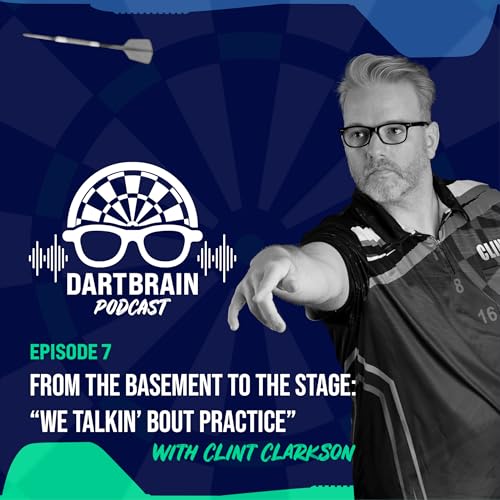
  • Ep. 7 - From the Basement to the Stage: "We Talkin' Bout Practice"
    Aug 21 2025

    In this episode of Dart Brain, Clint Clarkson delves into the psychology of dart practice, emphasizing the importance of structured, deliberate practice over mindless repetition. He discusses the role of pressure in training, the necessity of building mental resilience, and how to effectively transfer skills from practice to performance. The conversation highlights the significance of focus, the impact of gremlins (distractions and self-doubt), and the value of micro wins in achieving consistency. Practical practice plans are provided to help players enhance their skills and prepare for competition, ultimately reinforcing the idea that effective practice is about preparing for the chaos of real matches rather than just logging hours at the board.

    TAKEAWAYS

    • Practice doesn't make perfect; it makes permanent.
    • Deliberate practice involves clear goals and immediate feedback.
    • Game-like practice simulates competition conditions.
    • Focus is a skill that can be trained.
    • Gremlins like neglect and distractions thrive in practice.
    • Building guardians like confidence and commitment is essential.
    • Practice should end with a win to reinforce positive experiences.
    • State-dependent learning affects performance transfer.
    • Micro wins contribute to consistency in performance.
    • Structured practice plans enhance skill development.
    Show More Show Less
    54 mins