

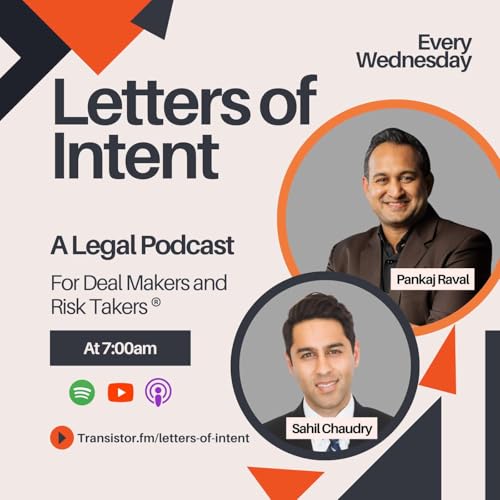
The Early Stage Guide to Raising Money
Failed to add items
Add to cart failed.
Add to wishlist failed.
Remove from wishlist failed.
Follow podcast failed
Unfollow podcast failed

The Early Stage Guide to Raising Money
-
Narrated by:
-
Written by:
About this listen
Setting up a growing business requires far more than just clicking a few buttons on an online legal portal. When founders skip critical structuring steps, they risk deadlocked boards, massive tax liabilities, and SEC violations—mistakes that cost a fortune to fix later on.
In this episode of Letters of Intent, Pankaj Raval and Sahil Chaudry break down the most common foundational errors early-stage companies make and how to avoid them. They explain the crucial difference between authorizing and issuing shares, how to choose the right entity type based on your exit strategy (LLC vs. S-Corp vs. C-Corp), and why you must comply with SEC Safe Harbor rules even if you are only issuing a single share. Pankaj and Sahil also dive into dynamic equity splits, the danger of 50/50 board control, vesting schedules, and why the 83(b) election is the most important tax document a founder will ever file.
Takeaways
- Authorized vs. Issued Shares: Just because your company authorized 10 million shares does not mean you own them. You must legally issue shares to yourself before you can issue them to investors.
- Match Your Entity to Your Goals: If your goal is monthly recurring revenue and cash flow, an LLC is ideal for pass-through taxation. If you are aiming for a massive exit and outside investment, a Delaware C-Corp is the gold standard.
- Equity Shouldn't Be Guessed: Avoid arbitrary 50/50 or 33/33/33 equity splits. Equity should be tied to exactly what each partner is contributing (capital, IP, or services) and should always be tied to a vesting schedule.
- Don't Forget the 83(b) Election: If your equity is on a vesting schedule, filing an 83(b) election allows you to lock in the nominal value of your shares upfront, preventing a massive tax bill when the shares become more valuable later.
Soundbites
- "You can't issue shares to an investor before you've issued shares to yourself."
- "Even if it's just one share, you need to follow the rules for how you're issuing that share."
- "If two people though are going 50-50, we would raise a red flag and real potential for stalemate here."
- "You want to lock in the nominal value of those shares upfront as opposed to when you would sell them later on when the shares are much more valuable."
🔗 Learn More
Website: carbonlg.com
Connect with Pankaj: https://www.linkedin.com/in/pankaj-raval/
Connect with Sahil: https://www.linkedin.com/in/sahil-chaudry-6047305/
Click Here To Schedule A Call With Us