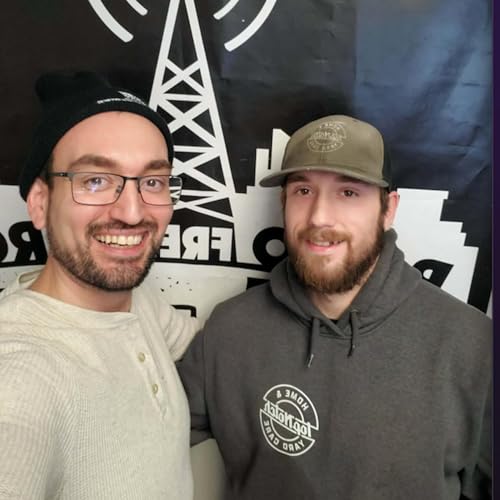
Conrad Fargo sits down with Shelle Hagen, owner of Elite Massage Academy, to unpack how one local massage business became three interconnected ventures: Elite Therapeutic Massage (with offices in Fargo and Moorhead), Elite Massage Academy (a massage therapy school), and a continuing education operation that has her traveling the United States teaching therapists and spa teams. The conversation starts with Shelle’s philosophy of pursuing ideas even without early supporters, then quickly turns into the real-world mechanics of building a business that runs while the owner is on the road, and why teams, systems, and delegation are non-negotiable.Shelle breaks down the licensed-profession landscape on the ND/MN border, explaining North Dakota’s state regulation versus Minnesota’s city-by-city approach, and why she actually values regulation as a pathway to safety, education, and broader modalities for clients. From there, Conrad digs into her day-to-day reality: juggling a long-running practice, building a school, and spending weeks each month traveling to teach continuing education, sometimes inside high-end spa environments where premium services can run hundreds of dollars.The core story is innovation in the most literal sense: Shelle describes the pain points of traditional hot stone massage, including the infamous “pulled pork roaster” water-heating setup, awkward river rocks, timing windows, cleanup, sanitation logistics, and the sheer labor involved in resetting for the next client. That frustration leads to Core Stones, an ergonomic soapstone tool system that can be used hot or cold and functions as an extension of the therapist’s hand. Shelle recounts discovering the product in a Massage Warehouse magazine, connecting with the original owner (Dale Grust in New Paltz, New York), flying out to see the operation, and ultimately purchasing the company so it would not disappear when the founder retired.From there, the “Innovate” theme gets even sharper: Shelle explains how the old water-based heating method was still an unsolved problem, so she prototyped a no-water, open-heat system that is safer, temperature-controlled, and designed for real workflows. She tells the story of ordering and hacking together equipment, reaching out to “Evan Dash” and the Dash pancake griddle as an early prototype, then taking the leap to call 1-800-Invention to connect with engineers and move toward a patent-backed product. The payoff is operational: her cleanup/turnover time drops from roughly 40–50 minutes to about 3 minutes, and spas can see measurable revenue increases by adding the modality as a signature service.Conrad also pulls the thread back to origins. Shelle shares her path through Concordia College (exercise science and Spanish), her early cleaning business in 1998, her decision to enter massage therapy, and why she started her massage business halfway through training in Moorhead before licensing in North Dakota and moving into Fargo. She explains how retraining hires sparked the idea for Elite Massage Academy, designed to bridge common gaps she saw in graduates, and even mentions using a synthetic cadaver tool for anatomy education. She also highlights a North Dakota Career Builders funding option that can cover much of the cost of training for those who commit to working in North Dakota afterward.


 Feb 11 202652 mins
 Jan 28 202651 mins
 Jan 21 202650 mins
 Jan 7 202646 mins
 Dec 17 202541 mins
 Dec 11 202542 mins