Episodes

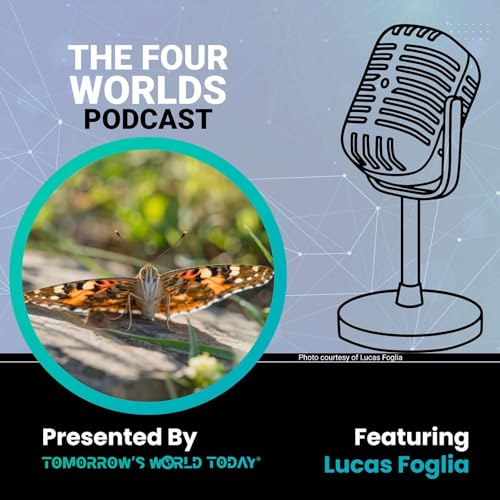
  • Constant Bloom: Following the World’s Longest Butterfly Migration with Lucas Foglia
    Jan 29 2026

    This episode features the guest Lucas Foglia, a photographer with a deep connection to nature and climate change. From the micro to the macro, from intimate to planetary systems, Lucas captures the nuances behind his subjects and helps usher in real-world change. From his Long Island farm childhood, Lucas creates a body of work that pulls nature back from any notion of a museum diorama or a lost paradise.

    His newest book, Constant Bloom, sheds light on the longest known butterfly migration from Kenya to Norway and back. A photo he took in Barcelona shows blooms above a melting glacier, taken by a researcher who happened to be on his own scientific journey across borders.

    In this episode, you will hear about his other compelling books, such as A Natural Order, which explores off-grid lives after the recession, and Front Country, which balances Western wildness and extraction. You'll also hear about Human Nature's blend of neuroscience and conservation.

    Lucas speaks about his photographic processes, practices, and philosophy, offering an excellent taste of how art goes from "huh" to "wow" and how a quiet picture from the Rikers Island garden program helped expand it.

    He talks about collaborating with people, calling it "photographing with, not of," and giving practical guidance like making friends, not networks, starting with one honest question, and offering counterpoints to today's loudest headlines.

    If you're feeling squeezed by algorithms or doom, this is a reminder that depth still matters, and that images can open doors to empathy and action. If the stories resonate, please subscribe, share the episode with a friend, and leave a review telling us the last image that changed how you see the world.

    Purchase a copy of Constant Bloom here!

    Support the show

    Show More Show Less
    29 mins
  • How Selin Balci Turns Microorganisms Into Living Works of Art
    Jan 23 2026

    In this episode, we are joined by artist Selin Balci, whose art begins not with paint but with living microorganisms.

    A former forestry and microbiology student, Selin explains how she collects microbes from soil, trees, water, and even the human body, then isolates and cultivates them into controlled art pieces.

    We talk about the science and art of sterilizing tools, nutrient mediums, contamination, and how she decides when to stop and when a piece is finished. We touch on her project, Echoes of Nature, in which mold consumes Polaroids of actual nature scenes to signify the end of nature as we know it, and 30 Faces, where people’s microbes reform the portraits of their faces over time, making them interactive.

    Selin also ponders imperfection, rot, why contamination is not always a mistake, and the questions her art evokes about identity and sustainability.

    If you’re interested in where art, science, and the natural world intersect, this is a rare glimpse into microscopic art.

    Support the show

    Show More Show Less
    34 mins
  • Turning Over a New Leaf: How Christina Selby Is Revolutionizing Plant Conservation
    Jan 16 2026

    More on Christina Selby:

    • Photographer Christina Selby Uses Visual Storytelling to Connect Us With the Natural World
    • How Christina Selby is Using Photography to Encourage Others to be a ‘Voice for Nature’
    • Creating Climate Resilience: The Art of the Refuge

    A photograph is more than just something to look at. It can influence what we pay attention to, what we name, and what we choose to protect. In this episode, we talk with conservation photojournalist and visual artist Christina Selby. She shares her journey from growing up in the Midwest and studying ecology to exploring the mountains of the Southwest and the rivers of the Amazon. Christina shows how she combines science, art, and community in her work. She discusses her view of the “more-than-human world” and how this outlook helps people. We talk about telling powerful conservation stories using portraits of scientists and ranchers at work, sweeping landscapes, drone photos that help people connect with a place, and close-up shots that reveal details of plants and pollinators. We look at ways to show nature’s beauty without focusing only on the damage from clear-cutting and habitat loss, which can make people feel hopeless. We also share field stories, like mistaking the target species, hiking for miles, and searching for a rare bloom that took a week to find. These behind-the-scenes moments offer new insights into capturing amazing images.

    We talk about plant blindness and how learning the names of plants in your backyard or local park can inspire care and curiosity. We discuss how sharing knowledge in the community can lead to real solutions. Our conversation touches on the changing alpine ecosystem in the southern Rockies, the hope offered by climate refuges, new ways to recover from wildfires that support biodiversity, and lessons from Korea. Christina also tells us about the International League of Conservation Photographers and how teamwork can bring attention to issues like giant salamanders and native sunflowers.

    If you want to learn how photography can help protect nature or are looking for practical ways to reconnect with the world around you, this episode is for you. Tune in, share it with a friend who loves nature, and tell us your thoughts. What species will you learn to name in your backyard this week?

    Support the show

    Show More Show Less
    34 mins
  • Threads of Change: How SMART Is Redefining Textile Production
    Nov 14 2025

    Ever wonder who stands between a pile of cast-off clothes and a landfill? We sit down with Jessica Franken, Director of Government Affairs at SMART, to unpack how a reuse-first approach turns textiles into a second-life economy—and why the right rules can scale it globally. Jessica takes us inside the quiet infrastructure of circularity: collectors sourcing from charities and institutions, expert sorters finding the best next use, and recyclers turning what can’t be worn into insulation and padding. Along the way, we dig into Extended Producer Responsibility for textiles, and explore how reuse-first language can lock in real environmental gains. 👖

    The policy stakes are high. UN conversations about what counts as “reusable” versus “waste” could reshape cross-border flows overnight, affecting both landfill diversion and livelihoods built around quality secondhand apparel. Jessica breaks down how SMART is advocating for definitions and standards that reflect operational reality, not just theory. We also touch on the Americas Act’s nod to textile reuse and recycling infrastructure, as well as ongoing U.S. efforts to open market access where demand for secondhand goods is strong. 👕

    If you care about sustainability, supply chains, or the future of fashion, this conversation connects the dots from sorting floors to statehouses. You’ll learn how to prepare for data and reporting under textile EPR, what success should look like in measurable outcomes, and how individuals and companies can engage—whether by tracking state bills, submitting comments, or partnering with trade groups. ♻️


    Support the show

    Show More Show Less
    39 mins
  • Scaling Secondhand Sustainably with Bank & Vogue and Beyond Retro
    Oct 3 2025

    Learn more about: Bank & Vogue

    A single pair of jeans can live many lives, and sometimes its next one is a luxury handbag or a cult-favorite sneaker. In this episode, we sit down with Steven Bethell, co-founder of Bank & Vogue and Beyond Retro, to talk about how secondhand fashion has gone from thrift bins to high-profile collaborations with Converse, Coach, and Wrangler. 👖

    Steven takes us behind the scenes of circular fashion at scale: moving millions of garments each week, partnering with charities and private collectors, and building remanufacturing pipelines that give old materials a new life. He explains why he refuses to use the word “waste,” how language can shift mindsets, and why circular design is about more than sustainability—it’s about culture, creativity, and style. 👟

    Along the way, we explore how authentic, lived-in textiles can be transformed into something new, how brands are measuring impact through life cycle assessments, and why embracing the “consistently inconsistent” nature of secondhand is actually a strength.

    🎧 If you’ve ever wondered how secondhand becomes first choice, this conversation is for you.

    Support the show

    Show More Show Less
    30 mins
  • Sole Purpose: How Vivobarefoot is Regenerating the Shoe Industry
    Sep 26 2025

    Learn more about: Vivobarefoot

    What if the shoes you've been wearing your whole life are actually hurting your feet? That's the startling revelation at the heart of our conversation with Galahad Clark, seventh-generation shoemaker and co-founder of Vivobarefoot.

    Coming from a family with 200 years of shoemaking history, Clark's journey took an unexpected turn when he discovered that conventional footwear actually weakens our feet and disconnects us from nature. "The big shoe industry is genuinely one of the least sustainable industries in the world," he explains. "It's devastating for both planetary and human health." This realization led him to create Vivobarefoot, a company dedicated to making shoes that allow feet to function naturally.

    The concept is surprisingly simple yet revolutionary: our feet evolved over millions of years to work perfectly without shoes. When we encase them in rigid, padded footwear with heels, arch supports, and narrow toe boxes, we're actually causing long-term harm. As Clark puts it, "Most people in the West wearing those cookie-cutter shoes have deformed, weak feet because of the shoes." These weakened feet then create problems in other areas of the body, like the knees, hips, and back.

    Clark points out that indigenous cultures worldwide created perfect barefoot footwear for thousands of years, crafting shoes person by person, foot by foot from local sustainable materials. Now, through their VivoBiome system, the company is using AI, mobile scanning, and local 3D printing to return to this personalized approach while minimizing environmental impact.

    While the journey hasn't been without challenges, Clark's vision extends beyond just better footwear. It's about reconnecting humans with nature, starting literally from the ground up. "When you wear barefoot shoes or less shoes and you put your feet on the earth, you psychologically can't help but believe that living in local communities and local food systems is the right path for humans."

    Ready to reconsider the relationship between your feet and the earth beneath them? Listen now and take the first step toward stronger, healthier feet and a more sustainable future.

    Support the show

    Show More Show Less
    45 mins
  • Brisk It’s Smart Grills Are Making Barbecuing Faster, Easier, and Smarter
    Sep 12 2025

    Ever ruined an expensive brisket? You're not alone. The fear of wasting time and money keeps most of us from attempting serious barbecue—until now.

    Christopher Huang, founder of Brisk It, joins us to reveal how artificial intelligence is revolutionizing home cooking, starting with the intimidating world of smoking and grilling. What began as a mission to make barbecue more accessible has evolved into a vision for transforming our entire relationship with food preparation.

    "I'm much more passionate about eating barbecue than making it," Huang confesses, explaining how this philosophy drove Brisk It's development. Unlike traditional "smart" appliances that simply follow pre-programmed instructions, Brisk It's Grills employ what Huang calls "agentic AI"—technology that adapts, learns, and makes decisions based on real-time data and your personal preferences.

    The technology is impressive: adaptive temperature algorithms maintain perfect stability; the system detects and addresses common issues like temperature stalls automatically; and the more you use it, the better it understands your preferences. One early user assembled their grill and successfully smoked a perfect brisket on their very first attempt—a feat that would typically require multiple failed attempts and cost hundreds of dollars.

    We explore Brisk It’s unique approach to product development, including their decision to hire industrial designers from Apple and automotive backgrounds rather than traditional grill designers. This fresh perspective, combined with Silicon Valley-style rapid iteration, has allowed them to create something truly revolutionary.

    Looking toward the future, Huang shares his vision for automating the entire home cooking experience, meal selection and grocery shopping to preparation and sharing. The goal isn't to remove humans from cooking, but to eliminate the stress while ensuring consistently delicious, nutritious results that match individual preferences.

    Check out Brisk It Grills on their website, Amazon, Lowes.com, or Sam's Club, and stay tuned for their next big announcement at CES 2026.

    Support the show

    Show More Show Less
    44 mins
  • Slug Science: Limax’s Healing Hydrogel Breakthrough
    Aug 22 2025

    The secret to revolutionary medical adhesives might be hiding in your garden. Benjamin Freedman, PhD, and Phoebe Kwon of Limax Biosciences have developed a groundbreaking hydrogel technology inspired by slug slime. It's designed to adhere strongly to wet, dynamic tissues while staying flexible and stretchable.

    Unlike traditional medical adhesives that focus on stickiness but turn brittle, Limax’s innovation combines powerful adhesion with remarkable cohesive properties. The result? A hydrogel that’s 90% water yet sticks firmly to actively moving organs like a beating heart—something no other material has achieved. The breakthrough moment came when the team successfully applied their creation to a pig’s heart during testing.

    From their work at Harvard’s Wyss Institute for Biologically Inspired Engineering to the founding of Limax Biosciences in 2021, their journey exemplifies biomimicry—using nature’s time-tested designs to solve human challenges. After winning the Harvard President’s Innovation Challenge in 2022, the team has been refining their technology, tackling key considerations like resorbability, handling properties, storage, and sterilization.

    What makes this hydrogel particularly promising is its versatility. Beyond sealing wounds or joining tissues, it can function as an advanced drug delivery system, holding up to 500mg/ml of medication (50x more than traditional hydrogels) while maintaining adhesive strength. That means localized drug delivery that stays in place for weeks instead of dispersing through the body.

    As Limax works toward FDA approval, the focus is on completing pre-clinical trials in surgical models before moving into human clinical studies. Their goal is simple yet profound: putting this slug-inspired technology into the hands of clinicians to improve patient outcomes across a wide range of specialties.

    Curious about how nature’s solutions might transform healthcare? Follow Limax Biosciences at limaxbiosciences.com or connect with them on LinkedIn to stay updated on their journey.

    Support the show

    Show More Show Less
    24 mins