• Jenice Armstrong on Dorothy Gilliam
    Nov 13 2026

    Jenice Armstrong is a columnist for the Philadelphia Inquirer and a member of the paper's editorial board. Jenice has been an Inquirer columnist since 2017 and is one of the most widely read journalists in the city of Philadelphia. She’s a native of Washington D.C. and a Howard University graduate. In 2017, the Pennsylvania Newspaper Association awarded her first place for commentary.

    Dorothy Butler Gilliam's distinguished journalism career started in 1957, as a reporter for The Memphis Tri-State Defender, a black weekly, where she covered the integration of Little Rock Central High school by the Little Rock Nine. She joined the Washington Post in 1961 and worked there for more than three decades as a reporter, editor, and columnist.

    The Post Style Section writer whose name I unsuccessfully tried to come up with in the episode is Gene Weingarten.

    Show More Show Less
    25 mins
  • Michael Tisserand on Stan Mack
    Nov 4 2026

    Michael Tisserand is a Minnesota-based writer whose books include :"Krazy: George Herriman, a Life in Black and White," the Eisner Award-winning biography of the creator of the classic comic strip Krazy Kat; "The Kingdom of Zydeco"; and, most recently, "Bunny Matthews: His Art, Life, and Obsession," co-written with Alison Fensterstock, about the New Orleans cartoonist influenced by the subject of today's episode, Stan Mack.

    Stan Mack has been drawing some version of "Real-Life Funnies" since the 1970s and shows no sign of slowing down.

    A good introduction to Mack's work is the article "Stan Mack and the Delicate Art of Eavesdropping."

    Show More Show Less
    36 mins
  • Gary M. Pomerantz on Bob Cousy
    Oct 21 2026

    Gary M. Pomerantz is an author and a lecturer in the graduate program in journalism at Stanford University. He started his career at the Washington Post, where he covered Georgetown University basketballand the National Football League. He then moved to the Atlanta Journal-Constitution where he wrote about a wide range of topics. His first book was about Atlanta: Where Peachtree Meets Sweet Auburn: A Saga of Race and Family. Since then he’s published books covering a wide range of topics, including WILT, 1962: The Night of 100 Points and the Dawn of a New Era; The Devil's Tickets: A Night of Bridge, a Fatal Hand, and a New American Age; and Their Life's Work: The Brotherhood of the 1970s Pittsburgh Steelers, Then and Now. His most recent book is The Last Pass: Cousy, Russell, the Celtics, and What Matters in the End.

    Bob Cousy highlight reel.

    Cousy comes out of retirement in 1969 and plays in New York Knicks' record-breaking 18th win in a row (including people standing up and blocking the camera).

    Bob and Gary's interview with NPR's Scott Simon.

    Show More Show Less
    26 mins
  • Carl Freedman on Samuel R. Delany
    Aug 19 2026

    Carl Freedman is the William A. Read Professor Emeritus of English Literature at Louisiana State University and the author of many books, including The Age of Nixon: A Study in Cultural Power; The Incomplete Projects: Marxism, Modernity, and the Politics of Culture; and Versions of Hollywood Crime Cinema: Studies in Ford, Wilder, Coppola, Scorsese, and Others. As you can see, his interests range widely but one of the main ones through the years has been science fiction. In addition to his book Critical Theory and Science Fiction, he has written many articles on the subject and edited collections of interviews with several sci-fi writers, including the subject of this episode, Samuel R. "Chip" Delany.

    Delany was born in 1942 and started publishing at the age of 20. He is a prolific author in many genres, most frequently science fiction--and he was named a Grand Master of the form in 2013. Among his books mentioned in this episode are Babel-17; Dhalgren; Stars in My Pocket Like Grains of Sand; Times Square Red, Times Square Blue; Sods and Surds; and Of Solids and Surds.

    Delany's website. Delany's Facebook page.

    Carl Freedman's website. His Facebook page.

    Following up on a couple of points mentioned in the podcast, Delany's aunts Sadie (born 1889) and Bessie (born 1891) were first the subjects of a magazine article in 1991, then a book called Having Our Say in 1993, and then a Broadways play (also called Having Our Say) in 1995.

    Green's Dictionary of Slang lists the first appearance in print of the following terms:

    Horse opera: 1927
    Soap opera: 1939
    Space opera: 1949

    Photo of Delany by Delany.

    Show More Show Less
    28 mins
  • Chris Whipple on Harry Benson
    Aug 10 2026

    A former Life magazine correspondent and CBS 60 Minutes producer, Chris Whipple is the author of Uncharted: How Trump Beat Biden, Harris, and the Odds in the Wildest Campaign in History' which was an instant top-ten New York Times bestseller. His previous best-selling books include The Gatekeepers: How the White House Chiefs of Staff Define Every Presidency; The Spymasters: How the CIA Directors Shape History and the Future; and The Fight of His Life: Inside Joe Biden's White House. His Vanity Fair cover story on the Trump White House created headlines worldwide.

    His subject is the legendary photographer Harry Benson.

    Harry Benson's website.

    Harry Benson: Shoot First documentary.

    Chris Whipple's website.

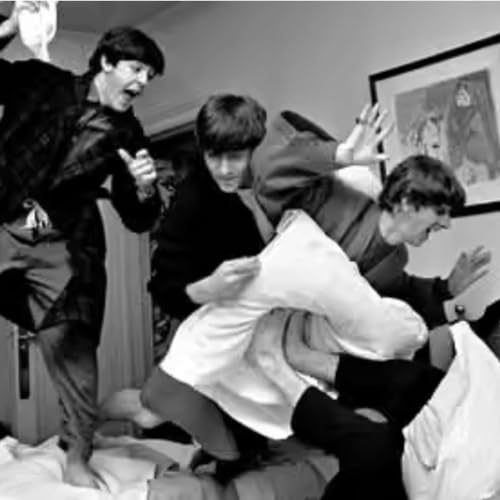
    The image is Harry Benson's photograph of the Beatles pillow-fighting in a Paris hotel room in 1964. For information on licensing it and other Benson photos, visit his website.

    Show More Show Less
    30 mins
  • Tom Reney on Charlie Musselwhite
    Jul 20 2026

    Tom Reney was honored by the Jazz Journalists Association with the Willis Conover-Marian McPartland Award for Career Excellence in Broadcasting in 2019. In addition to hosting Jazz à la Mode since 1984, Tom writes the Corner Pocket music blog at tomreney.com and hosts the Jazz Beat podcast at New England Public Media. He began working in jazz radio in 1977 at WCUW, a community-licensed radio station in Worcester, Massachusetts. Tom holds a bachelor's degree from UMass Amherst, where he majored in English and African American Studies.

    Tom's website

    Charlie Musselwhite's website

    2022 profile of Charlie in Delta Magazine

    "Moment of Charlie Musselwhite" is from the promotional video for his 2025 album "Look Out Highway"

    The photo is of Charlie at age 18. You can definitely feel the Robert Mitchum vibe.

    Show More Show Less
    38 mins
  • Jack Lynch on Bryan Garner
    Jul 9 2026

    Jack Lynch is a Distinguished Professor of English at the University of Rutgers/Newark. In addition to many scholarly publications, focusing on 18th century British literature, notably Samuel Johnson, he has written widely and brilliantly for a general audience, in books including:

    Becoming Shakespeare: The Unlikely Afterlife That Turned a Provincial Playwright into the Bard; You Could Look It Up: The Reference Shelf From Ancient Babylon to Wikipedia; and The Lexicographer's Dilemma: The Evolution of 'Proper' English, from Shakespeare to South Park. He’s currently working on a book about the greatest reference book, and perhaps the greatest book, of all time, the Oxford English Dictionary.


    Bryan Garner's website

    Jack Lynch's website

    David Foster Wallace's essay on Garner, "Authority and American Usage"

    The photo is of a Bryan Garner bobblehead

    Show More Show Less
    35 mins
  • Gene Seymour on Ron Carter
    Jun 3 2026

    Gene Seymour, a Connecticut native, spent years working for big-city newspapers as a reporter and movie and jazz critic—including at the Philadelphia Daily News, where we first crossed paths. He's the author of a young adult history, Jazz, the Great American Art. These days, he lives in Philadelphia and contributes mightily on a remarkable range of subjects from baseball to crime novels and many steps in between to The Nation, Bookforum, CNN. com, The New Republic, the Washington Post, and others. His excellent Substack is That Gene Seymour.

    Ron Carter, the great bassist, was born in 1937, and you would be hard-pressed to find a notable jazz artist from the 1960s to the present he did not play with. These days he leads several groups and has an active touring schedule, which you can learn about at his website. I recommend following him on Facebook, YouTube, and virtually every other platform you happen to find yourself on.

    Photo: Ron Carter in 2009. Credit: Marek Lazarski

    Show More Show Less
    37 mins