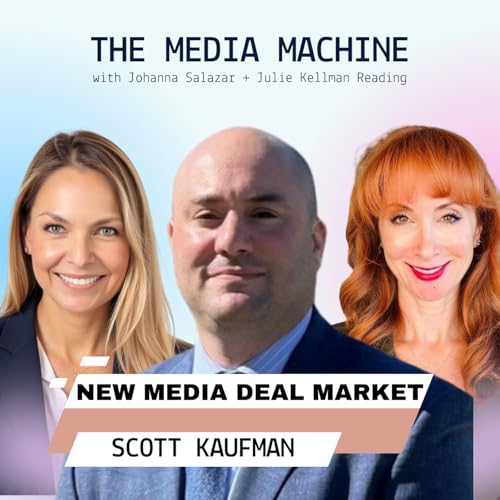
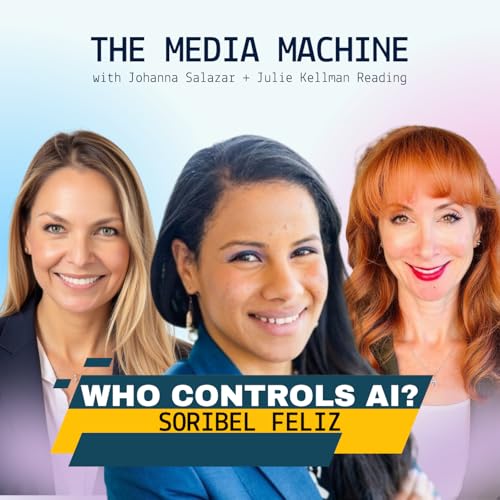
The Media Machine cover art

The Media Machine

The Media Machine

Written by: Johanna Salazar Host & Creator
Listen for free

The Media Machine is where media, business, and innovation intersect. Hosted by industry veteran Johanna Salazar, the podcast explores the future of content, technology, and entertainment through the lens of four key pillars: Process – The strategies, tools, and systems shaping media production and distribution. Profits – The business models, investments, and revenue streams driving the industry. People – The creators, executives, and changemakers redefining the landscape. Planet – The impact of media on culture, society, and sustainability. Through insightful conversations with visionaries, disruptors, and pioneers, The Media Machine unpacks the challenges and opportunities shaping the next era of media. Whether you're an industry insider or an innovator looking to break in, this podcast is your playbook for navigating the media machine.2026, Johanna Salazar, Lioness Global Network, LLC. All Rights Reserved. Art
Episodes
  • The Business of Visibility: What Media Learned from MTV with Vinnie Potestivo
    May 14 2026
    The creator economy did not begin with TikTok, YouTube, or podcasting. Long before creators were building personal brands online, MTV was experimenting with talent-driven storytelling, cultural franchises, audience engagement, and visibility as a business model. In this episode of The Media Machine, Johanna Salazar and Julie Kellman Reading sit down with Emmy-winning media strategist and talent development executive Vinnie Potestivo for a wide-ranging conversation about the evolution of media, talent, and the creator economy. From helping shape iconic MTV franchises like The Osbournes, Punk'd, Laguna Beach, Wild 'N Out, TRL, and The Hills, to working with artists and personalities like Beyoncé, Mandy Moore, Jessica Simpson, Nick Cannon, and Ashton Kutcher, Vinnie shares the behind-the-scenes philosophy that helped identify talent before the world fully understood who they were becoming. The conversation explores how MTV became an early creator ecosystem, how visibility evolved from celebrity exposure into strategic positioning, and why vulnerability, credibility, and intentionality are becoming the new currencies of modern media. Vinnie also breaks down how creators and executives can build sustainable visibility without burnout, why intellectual property and metadata matter more than ever, and how the next phase of media will shift from platform-controlled distribution to creator-controlled ecosystems. This episode is both a masterclass in media evolution and a deeply human conversation about identity, leadership, community, and the emotional side of being seen. **** WHY THIS EPISODE MATTERS Media is entering a new phase. The traditional gatekeepers that once controlled visibility are losing influence as creators, founders, executives, and independent operators build direct relationships with audiences across podcasts, social media, streaming platforms, and creator-owned ecosystems. But visibility alone is no longer enough. Today's media landscape rewards intentional positioning, audience trust, credibility, community, and the ability to turn attention into sustainable intellectual property. Vinnie Potestivo has operated at the center of this shift for more than two decades. At MTV during the rise of reality television and celebrity culture, he helped shape some of the most influential unscripted franchises of the 2000s while developing talent that would go on to define pop culture for years. Today, he applies those same principles to executives, entrepreneurs, and creators navigating the modern media economy. This episode explores how media visibility actually works behind the scenes, why emotional intelligence and self-awareness matter in talent development, and how creators can build long-term assets instead of chasing short-term moments. For creators, media executives, founders, producers, and storytellers, this conversation offers a rare bridge between the original creator economy and the future of creator-led media. **** ABOUT THE GUEST Vinnie Potestivo is an Emmy-winning media strategist, talent development executive, podcast host, and founder of Vinnie Potestivo Entertainment. He is best known for his work at MTV Networks during the rise of reality television, where he helped develop and cast major franchises including The Osbournes, Punk'd, Wild 'N Out, Laguna Beach, The Hills, TRL, and more. Over the course of his career, Vinnie has worked with artists, creators, and personalities including Beyoncé, Mandy Moore, Jessica Simpson, Ashlee Simpson, Nick Cannon, Ashton Kutcher, Christina Milian, and many others. Today, through Vinnie Potestivo Entertainment and his podcast I Have A Podcast, he advises creators, executives, founders, and brands on visibility, audience growth, intellectual property, podcasting, and strategic positioning in the modern creator economy. His work focuses on helping people build sustainable visibility through intentional storytelling, credibility, metadata strategy, and audience development. Check him out: vpe.tv/gift **** WHAT WE COVER IN THIS EPISODE How MTV became an early version of the creator economyWhy creator-led media changed the entertainment industryThe philosophy behind identifying breakout talentWhat Vinnie learned working with Beyoncé, Mandy Moore, Jessica Simpson, and other major artistsWhy the best talent already knows who they are becomingThe role emotional intelligence plays in media successWhat "intentional visibility" actually meansWhy vulnerability is becoming more valuable than authenticity aloneHow creators can turn visibility into scalable businessesThe difference between moments and long-term media assetsWhy credibility is one of the most valuable currencies in mediaHow metadata, IMDb, SEO, and discoverability shape modern visibilityWhy creators should stop relying on platforms to define who they areHow creators can build evergreen systems to avoid burnoutThe future of creator-led distribution and media ecosystemsWhy collaboration and ...
    Show More Show Less
    47 mins
  • The New Media Deal Market: Who Has Leverage Now?
    May 7 2026
    The creator economy is maturing, and the rules of media deals are changing fast. Buyers are becoming more disciplined, creators are expected to bring audiences and business infrastructure with them, and leverage no longer comes from visibility alone. In this episode of The Media Machine, Johanna Salazar and Julie Kellman Reading sit down with Scott Kaufman, Vice President of Alternative and Media Publishing at Buchwald, for a deep dive into how media deals are actually getting made in today's market. Scott's work spans books, licensing, podcast partnerships, live experiences, sports, and intellectual property development, giving him a front-row seat to how creators, platforms, publishers, brands, and buyers are adapting to a more data-driven and competitive ecosystem. The conversation explores how leverage has shifted since the peak creator boom years, why audience ownership and IP matter more than ever, how podcast deals are being structured today, and what creators, producers, and operators need to understand to build sustainable media businesses moving forward. **** WHY THIS EPISODE MATTERS The media industry is undergoing a structural reset. Studios and publishers are becoming more selective. Podcast networks are moving away from large guarantees. Buyers expect creators to arrive with audiences, engagement, proof of concept, and clear monetization potential already in place. At the same time, creators have more tools and distribution opportunities than ever before. Brands are becoming media companies, independent creators are building direct-to-audience businesses, and intellectual property is increasingly moving fluidly across podcasts, books, live events, and streaming platforms. This episode explores what leverage actually looks like in this new media economy. Scott Kaufman shares how buyers are evaluating talent and IP today, how deal structures are evolving, and why creators who control audience relationships and intellectual property are better positioned for long-term success. For creators, producers, founders, and media executives, this conversation offers an inside look at the mechanics shaping the future of media deals. **** ABOUT THE GUEST Scott Kaufman is Vice President of Alternative and Media Publishing at Buchwald. His work spans books, podcast partnerships, licensing, live experiences, sports, and intellectual property development across the evolving creator economy. Over the course of his career, Scott has worked across talent representation, publishing, podcasting, and content packaging, helping creators, talent, and production companies navigate a rapidly changing media landscape. At Buchwald, he works closely with creators, publishers, podcast networks, brands, and platforms to structure deals and identify opportunities across multiple revenue streams and distribution channels. His perspective sits at the intersection of traditional media, creator-led businesses, and the next generation of intellectual property development. **** GUEST SOCIAL PAGES LinkedIn: LinkedIn Profile Instagram: https://www.instagram.com/skaufman99/ **** WHAT WE COVER IN THIS EPISODE How the media deal market has changed since the creator boom of 2021 and 2022Why buyers are becoming more data-driven and selectiveWho is actually writing checks in today's media environmentHow creators are expected to bring audiences and business infrastructure to dealsWhy audience ownership and IP control matter more than visibility aloneHow podcast deal structures are evolvingWhy minimum guarantees are becoming less common in podcastingHow creators and brands are partnering in more integrated waysWhat publishers and buyers now expect from creators before making dealsWhy books remain foundational intellectual property in the modern media ecosystemThe growing relationship between brands, creators, and long-form contentWhat opportunities still exist for emerging creators and producers **** KEY TAKEAWAYS Leverage has changed in the creator economy. Audience size alone is no longer enough. Buyers increasingly prioritize ownership, engagement, monetization potential, and audience relationships.Media buyers are more disciplined. Studios, publishers, podcast networks, and brands are scrutinizing deals more carefully and relying heavily on analytics and data before committing capital.Creators are expected to arrive with infrastructure. Today's creators are often expected to bring audiences, engagement, proof of concept, and monetization pathways before deals are made.Podcast economics are evolving. Large minimum guarantees are becoming less common as podcast networks move toward more revenue-share-driven models.Brands are becoming media companies. Brands are investing more heavily in creator partnerships and original content as they compete for audience attention and cultural relevance.Books remain powerful foundational IP. Scott explains why books continue to serve as valuable intellectual ...
    Show More Show Less
    39 mins
  • AI Is Moving Faster Than Ethics. Who Is Responsible?
    Apr 30 2026

    Artificial intelligence is transforming everything, from the way we work to the way we create media. But one question is becoming impossible to ignore:

    Who is responsible for making sure AI is safe, fair, and ethical?

    In this episode of The Media Machine, host Johanna Salazar sits down with Soribel Feliz, founder and CEO of Responsible AI = Inclusive AI and former Meta program manager, to explore the human side of artificial intelligence.

    While AI promises massive productivity gains and new creative possibilities, it is also raising serious questions about the future of work, economic inequality, and the systems being built behind the scenes.

    Soribel shares insights from inside the tech industry on:

    • How AI is reshaping the global labor market
    • Why many experienced professionals are struggling to transition in the AI era
    • The hidden workforce responsible for moderating and training AI systems
    • Why diversity in AI development is critical to preventing biased technology
    • The growing role of governments and companies in AI regulation
    • How generative AI could reshape media, storytelling, and content creation

    This conversation also explores a critical concept rarely discussed in public conversations about AI: the "integrity workers" behind the technology, the people responsible for monitoring, auditing, and correcting AI systems.

    As artificial intelligence continues to scale globally, Soribel argues that ethics cannot be an afterthought. It must be built into the system from the beginning.

    If you work in media, technology, or the creative industries, this episode will challenge the way you think about AI and the responsibility we all share in shaping its future.

    Note: This conversation was recorded in 2023, published in 2025 during Season 1 of TMM, but the issues discussed have only become more urgent as AI adoption accelerates across industries.

    Show More Show Less
    38 mins
adbl_web_anon_alc_button_suppression_c
No reviews yet