• Burnout in the aid sector and how to respond | Rethinking Humanitarianism
    Feb 12 2026

    Humanitarians have a "burnout culture", experts say. They work long hours in difficult environments. They're trying to help people in the worst moments of their lives. In the middle of today's funding crisis, they're also deciding who gets aid and who does not. In this episode, humanitarians and experts in mental health or wellbeing talk about what's driving high rates of burnout, how people can identify it and take action, and what organisations must do better to help their staff.

    Guests:

    Javid Abdelmoneim, international president of Médecins Sans Frontières

    Nancy Nyambura, regional staff counsellor at Médecins Sans Frontières

    Gemma Houldey, author of The Vulnerable Humanitarian: Ending Burnout Culture in the Aid Sector

    Got a question or feedback? Email podcast@thenewhumanitarian.org or post on social media using the hashtag #RethinkingHumanitarianism.

    Show notes:

    The Vulnerable Humanitarian: Ending Burnout Culture in the Aid Sector

    https://www.sciencedirect.com/science/article/pii/S0010440X24000920

    Show More Show Less
    52 mins
  • Don't forget about the Rohingya | Rethinking Humanitarianism
    Jan 29 2026

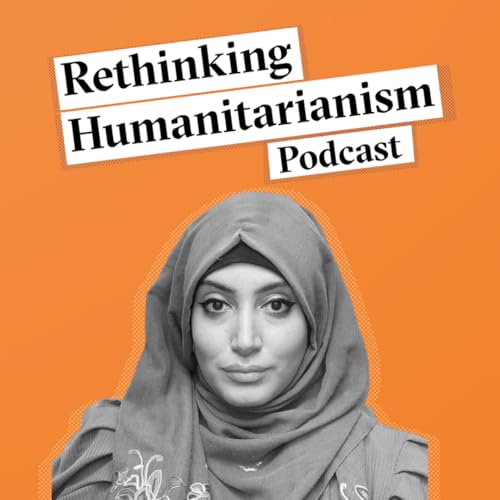
    Myanmar's persecuted Rohingya community are waiting for justice. A landmark genocide case at the International Court of Justice is a major step. In this episode, Noor Azizah, a survivor who heads a Rohingya civil society group, tells her family's story of being driven from their homeland. She explains why today's Rohingya trial paved the way for other atrocity crime cases, and discusses humanitarians' complex role delivering aid in Myanmar.

    Guests:

    Noor Azizah, co-executive director of the Rohingya Maìyafuìnor Collaborative Network

    Got a question or feedback? Email podcast@thenewhumanitarian.org or post on social media using the hashtag #RethinkingHumanitarianism.

    Show notes:

    The Rohingya: The exodus isn't over

    Show More Show Less
    31 mins
  • What's happening in Iran? The wider context | Rethinking Humanitarianism
    Jan 12 2026

    Protests have spread across Iran, and the fallout is rapidly evolving. In this episode, Hamid Dabashi, Iranian-American author and professor of Iranian studies and comparative literature at Columbia University, explains the wider historic context and evolution of these protests. He helps host Tammam Aloudat think through the nuance of opposing an abusive government while also rejecting imperialism – whether that be in Venezuela, Iran, or the al-Assad regime in Syria. And Dabashi discusses what humanitarians might pay attention to as events unfold.

    Guests:

    Hamid Dabashi, Iranian-American author and professor of Iranian studies and comparative literature at Columbia University

    Got a question or feedback? Email podcast@thenewhumanitarian.org or post on social media using the hashtag #RethinkingHumanitarianism.

    Show More Show Less
    49 mins
  • What we've learned so far: Key takeaways for 2026 | Rethinking Humanitarianism
    Jan 8 2026

    The crisis of illiberalism. The global gender backlash. Aid blind spots. Gaza and the failure of international law. Our guests have taken on difficult topics, but they've also come up with ideas on how to move forward. In this episode: Key takeaways to navigate today's challenges, and the issues driving conversations in 2026.

    Guests:

    Anjali Dayal, assistant professor of international politics at Fordham University

    Saskia Brechenmacher, senior fellow at the Carnegie Endowment for International Peace's Democracy, Conflict, and Governance Program

    Sana Bég, executive director, Doctors Without Borders/Médecins Sans Frontières (MSF) Canada

    Hourie Tafech, director for refugee leadership and partnerships at Refugees International

    Tammam Aloudat, CEO of The New Humanitarian

    Levi Sharpe, Rethinking Humanitarianism producer

    Got a question or feedback? Email podcast@thenewhumanitarian.org or post on social media using the hashtag #RethinkingHumanitarianism.

    Show More Show Less
    56 mins
  • No one wants to depend on aid, including refugees | Power Shift (REPLAY)
    Dec 25 2025

    The UN has a new refugee chief: Barham Salih is the former president of Iraq. He takes over as high commissioner for refugees in January 2026. Salih may be a surprise pick. The head of UNHCR, the UN's refugee agency, has almost always been a European. Just as rare: The new refugee chief has actually been a refugee.

    But does a change at the top really address the power imbalances refugees face in the aid sector? Revisit our series, Power Shift, which puts decision-makers – and those affected by their choices – at the same table.

    In this episode, Hafsar Tameesuddin, a Rohingya activist and refugee, speaks to Raouf Mazou, a senior UNHCR official. They talk about passports and privilege, and try to find common ground.

    –––

    Power Shift is an experiment in dialogue that puts decision-makers in aid and philanthropy and those affected by their decisions in honest, one-on-one conversations about the aid sector's inequalities.

    ___

    Subscribe on Spotify, Apple, or YouTube, or search "The New Humanitarian" in your favourite podcast app.

    You can find transcripts of all podcasts on our website.

    Are you or anyone you know interested in participating in future Power Shift conversations? Email us with the subject line 'POWER SHIFT".

    Show More Show Less
    1 hr and 5 mins
  • International law is failing us. What now? | Rethinking Humanitarianism
    Dec 11 2025

    When countries can commit genocide or invade neighbours with few repercussions, it's clear that international norms and laws are not working. On the podcast, three legal experts discuss the problems and some steps forward, from decentralised ways of enforcing criminal law, to including non-state actors, to erasing the legal loopholes used to justify violence.


    Guests:


    Neve Gordon, professor of international law and human rights at Queen Mary University of London and a fellow of the British Academy of Social Sciences. He has written extensively about the Israeli–Palestinian conflict, the bombing of healthcare facilities, and coined the term "medical lawfare."


    Oona Hathaway, professor of international law at Yale Law School who has been a member of the Advisory Committee on International Law for the legal adviser at the US Department of State since 2005 and a member of the Council on Foreign Relations since 2011. She is working on a book titled "War Unbound: Gaza, Ukraine, and the Breakdown of International Law".


    Michael Addo, law professor at the University of Notre Dame and lawyer with expertise in international human rights law and international business policy. The UN Human Rights Council appointed him in 2011 to join its Working Group on Business and Human Rights, which he currently chairs.


    Got a question or feedback? Email podcast@thenewhumanitarian.org or post on social media using the hashtag #RethinkingHumanitarianism.

    Show More Show Less
    1 hr and 1 min
  • Who wants to be the new UN refugee chief | Rethinking Humanitarianism
    Nov 27 2025

    The UN's high commissioner for refugees, Filippo Grandi, finishes his term at the end of the year. As with most top UN roles, picking the next UN refugee chief is far from transparent. What's different this time around? Refugee-led organisations held rare public forums with some of the candidates. Co-organiser Hourie Tafech joins host Tammam Aloudat to talk about the race to lead the UN refugee agency, how to make the selection more transparent, and what refugees want from a new UNHCR boss.


    Guests:


    Hourie Tafech, director for refugee leadership and partnerships at Refugees International


    Got a question or feedback? Email podcast@thenewhumanitarian.org or post on social media using the hashtag #RethinkingHumanitarianism.

    Show More Show Less
    40 mins
  • Security Council backs Trump's Gaza plan. What could go wrong? | Rethinking Humanitarianism
    Nov 20 2025

    The UN Security Council has passed a resolution backing US President Donald Trump's peace plan for Gaza. It authorises an "international stabilisation force", and approves a "board of peace". Essentially, this would govern Gaza, and oversee reconstruction and humanitarian aid. It also follows a playbook similar to the occupation of Iraq, warns international law expert Shahd Hammouri: "The US using international legal mechanisms to normalise an unlawful occupation."


    Guests:


    Shahd Hammouri, lecturer in International Law and Legal Theory at the University of Kent, and an international legal consultant


    Nour ElAssy, poet and writer from Gaza, Palestine


    Riley Sparks, reporter covering migration and human rights

    Show More Show Less
    58 mins