Episodes

  • Questions and Answers Episode 45
    Jan 24 2026

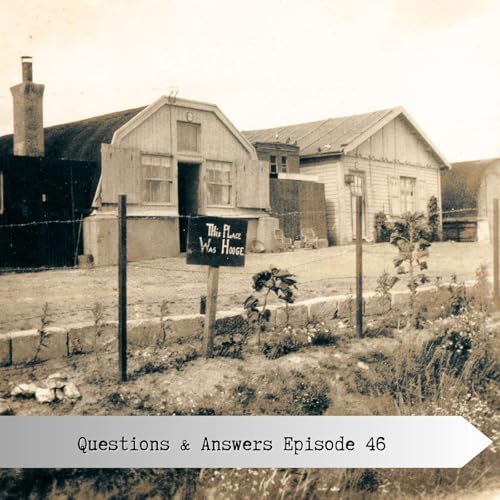
    In this latest Questions & Answers episode, we tackle some intriguing, and often misunderstood, aspects of life and fighting on the Western Front during the First World War.

    Who actually decided what a battle was called? Did the ordinary soldier know, at the time, which battle he was fighting in – or even when one battle had ended and another begun, during almost four years of near-continuous combat? We explore how battles were named, dated, and defined, and what that meant for the men experiencing the war on the ground.

    We also examine the introduction of the policy that 10% of a battalion was held back during attacks, particularly on 1 July 1916, the First day of the Battle of the Somme. When did this practice begin? Was it standard throughout the war? And where were these men actually positioned? Was it in support trenches, reserve lines, or further back with transport and logistics?

    For those who engage with the First World War through the landscape itself, we answer a listener’s thoughtful question about walking The Old Front Line at Ypres. Thinking about the surviving terrain, memorials, and traces of trench warfare, we recommend one particularly powerful walking route in the Ypres Salient that still tells the story of the war in a way that just maps and books sometimes cannot.

    Finally, we address a sensitive but important topic: did British Army officers really receive more leave than their men? If so, how was this perceived by the ranks, and what impact did it have on morale within the British and Commonwealth armies?

    Main image: British troops arriving on leave at Victoria Station, London. (IWM Q30515)

    The Battles Nomenclature Committee Report 1919: Naval and Military Press website.

    Sign up for the free podcast newsletter here: Old Front Line Bulletin.

    You can order Old Front Line Merch via The Old Front Line Shop.

    Got a question about this episode or any others? Drop your question into the Old Front Line Discord Server or email the podcast.

    Send us a text

    Support the show

    Show More Show Less
    45 mins
  • Demarcation Stones at Ypres
    Jan 17 2026

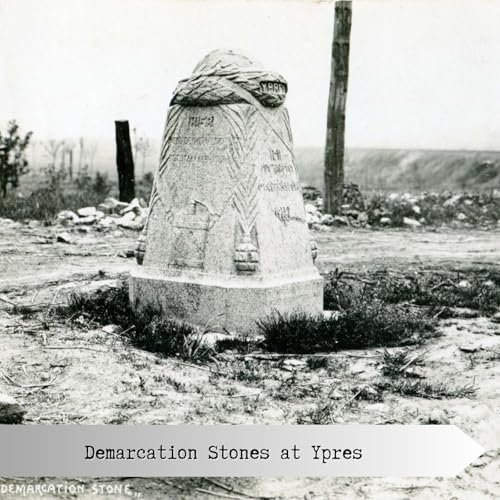
    In this special episode, Paul Reed discusses the Ypres League's mission to preserve the history of the Ypres Salient and the significance of Demarcation Stones that mark the furthest advance of German forces during the First World War in 1918. Roger Stewart and Dr Dominiek Dendooven share insights into the history, design, and restoration efforts of these stones, emphasizing the importance of community involvement and funding for their preservation. The New Ypres League aims to foster relationships between different communities and ensure that the legacy of the First World War continues to resonate with future generations.

    The New Ypres League: Join The New Ypres League Here.

    Support the Demarcation Stones Project: Pledge Support Here.

    Sign up for the free podcast newsletter here: Old Front Line Bulletin.

    You can order Old Front Line Merch via The Old Front Line Shop.

    Got a question about this episode or any others? Drop your question into the Old Front Line Discord Server or email the podcast.

    Send us a text

    Support the show

    Show More Show Less
    48 mins
  • Questions and Answers Episode 44
    Jan 10 2026

    In this episode, we explore the role of British Army Chaplains during the First World War, examining who they were, what duties they performed at the front, and how effective they were in the brutal conditions of the Great War. We also ask whether chaplains are commemorated on their own permanent memorial today.

    We then tackle a persistent myth of the First World War: were German machine-gunners really chained to their weapons, or was this story a product of wartime propaganda? Using historical evidence, we separate fact from fiction.

    Next, we investigate why certain sectors of the Western Front were far more heavily mined than others, looking at terrain, strategy, and the evolution of trench warfare. Finally, we discuss how war graves were photographed by the Imperial War Graves Commission during and immediately after the conflict, and whether these powerful images still survive in archival collections today.

    This episode delves into lesser-known aspects of the Western Front, combining military history, myth-busting, remembrance, and the legacy of the First World War.

    Long, Long, Trail website: British Army Chaplains Department.

    Book's on Army Chaplain's Department:

    Muddling Through: The Organisation of British Army Chaplaincy in World War One” by Peter Howson (Helion 2013)

    “God On Our Side: The British Padre in World War One” by Michael Moynihan (Leo Cooper 1983)

    Books on Wargrave Photography:

    Photographing the Fallen: A Wargraves Photographer on the Western Front by Jeremy Gordon Smith (Pen & Sword 2017)

    Sign up for the free podcast newsletter here: Old Front Line Bulletin.

    You can order Old Front Line Merch via The Old Front Line Shop.

    Got a question about this episode or any others? Drop your question into the Old Front Line Discord Server or email the podcast.

    Send us a text

    Support the show

    Show More Show Less
    40 mins
  • Are We Forgetting The First World War?
    Jan 3 2026

    Is the First World War slowly fading from public memory, or has our relationship with the Great War simply changed? In this episode, Are We Forgetting The First World War?, we explore how interest in WW1 has grown, shifted, and adapted over the last forty years, and what the future may hold.

    We begin in the 1980s, with the formation and growth of the Western Front Association, a turning point that helped revive serious public interest in the First World War. From there, we chart the expansion of family history research, as available records and personal archives encouraged millions to reconnect with relatives who served. We also reflect on the passing of the last surviving First World War veterans, a deeply symbolic moment that changed how the war is remembered and commemorated.

    The episode then examines the rise of battlefield tourism, local history projects, and public engagement that laid the foundations for the First World War Centenary (2014–2018), a period of unprecedented books, documentaries, exhibitions, podcasts, and community remembrance.

    But what happened after the centenary ended? We explore the unexpected “Covid bonus”, when lockdowns sparked a surge in WW1 podcasts, YouTube channels, online talks, and digital history projects, bringing the Great War to new audiences in new ways.

    Finally, we ask where we are today. Is interest in the First World War declining, fragmenting, or evolving? And crucially, what can historians, educators, content creators, and enthusiasts do to ensure the First World War is not forgotten?

    Sign up for the free podcast newsletter here: Old Front Line Bulletin.

    You can order Old Front Line Merch via The Old Front Line Shop.

    Got a question about this episode or any others? Drop your question into the Old Front Line Discord Server or email the podcast.

    Send us a text

    Support the show

    Show More Show Less
    42 mins
  • Questions and Answers Episode 43
    Dec 27 2025

    In this episode of The Old Front Line, we explore how individual lives and institutions reveal the human realities of the First World War.

    We begin by asking why only three officers were Shot at Dawn during the war, and what this striking disparity tells us about military justice, discipline, and class within the British Army.

    We then turn to the work of the Australian Wounded and Missing Enquiry Bureau, examining how its innovative and compassionate approach - under the leadership of Vera Deakin - sought to uncover the fate of the missing and bring answers to grieving families.

    Next, we consider how the experience of war shaped the men who served in the First World War, and question whether their post-war identities and challenges were truly unique, or part of a broader historical pattern.

    Finally, we analyse the Battle of Manchester Hill in March 1918, assessing its significance and discussing the possible fate of Lieutenant Colonel Wilfrith Elstob VC, who commanded the defence during the German Spring Offensive.

    Shot at Dawn episode: Shot At Dawn - Old Front Line.

    Sign up for the free podcast newsletter here: Old Front Line Bulletin.

    You can order Old Front Line Merch via The Old Front Line Shop.

    Got a question about this episode or any others? Drop your question into the Old Front Line Discord Server or email the podcast.

    Send us a text

    Support the show

    Show More Show Less
    41 mins
  • Forgotten Memoirs of the Great War Part 2
    Dec 20 2025

    We return to the subject of Forgotten Memoirs of the First World War and discuss The Years of Remembrance by Harold Maybury which was published in 1924. Maybury served in the ranks of the 2/4th Battalion South Lancashire Regiment in the 57th (2nd West Lancs) Division, on the Western Front in 1917 and 1918. We ask what the book tells us about the experience of the Great War and what value memoirs like these have to our understanding of the conflict.

    Book: The Years of Remembrance by Harold Maybury (Published by John Walker & Co., Ltd.,, Warrington, UK, 1924)

    Sign up for the free podcast newsletter here: Old Front Line Bulletin.

    You can order Old Front Line Merch via The Old Front Line Shop.

    Got a question about this episode or any others? Drop your question into the Old Front Line Discord Server or email the podcast.

    Send us a text

    Support the show

    Show More Show Less
    45 mins
  • Questions and Answers Episode 42
    Dec 13 2025

    In this episode, we delve into a lesser-known but essential aspect of First World War life: the use and organisation of latrines on the battlefield. Where did soldiers actually go to the toilet, how were these facilities constructed, and did men really need permission to use them?

    We then explore the history of the Military Police in WW1, from the Military Foot Police and Military Mounted Police to the Military Provost Staff Corps, looking at their varied roles — from traffic control and maintaining discipline to operating military prisons.

    Next, we examine the long-standing question of German trenches on the Western Front. Were they truly deeper, stronger and more permanent compared to Allied positions, and what does the archaeology and evidence show?

    Finally, we focus on the Boy Soldiers of the Great War — what happened when their real ages were uncovered, how the army dealt with them, and how to trace their stories in surviving military records.

    A wide-ranging episode exploring the daily life, policing, engineering and human stories of the Great War.

    Richard Van Emden's book: Boy Soldier's of the Great War (via Amazon).

    Main image: Military traffic control signal post at Blendecques, 6 May 1918. Note signboard pointing way to No. 7 General Hospital. (IWM Q8802)

    Sign up for the free podcast newsletter here: Old Front Line Bulletin.

    You can order Old Front Line Merch via The Old Front Line Shop.

    Got a question about this episode or any others? Drop your question into the Old Front Line Discord Server or email the podcast.

    Send us a text

    Support the show

    Show More Show Less
    41 mins
  • A Tale of Two Veterans
    Dec 6 2025

    In this episode we discuss the importance of oral history and what it tells us about the experience of conflict and the culture of the British military in the Great War, and we contrast two interviews I did with veterans in the 1980s: Jack Aston who served with 12th Squadron Royal Flying Corps and Aubrey Rose who was with the Queen's Westminster Rifles at Ypres and the Somme.

    The image for this episode shows Aubrey Rose in 1914.

    Aubrey Rose's officer killed at Gommecourt was: Captain Hugh Fenwick Mott.

    Sign up for the free podcast newsletter here: Old Front Line Bulletin.

    You can order Old Front Line Merch via The Old Front Line Shop.

    Got a question about this episode or any others? Drop your question into the Old Front Line Discord Server or email the podcast.

    Send us a text

    Support the show

    Show More Show Less
    53 mins