The President’s Inbox cover art

The President’s Inbox

The President’s Inbox

Written by: Council on Foreign Relations
Listen for free

Each episode of The President’s Inbox explores a foreign policy challenge facing the United States.Copyright 2024 All rights reserved. Political Science Politics & Government
Episodes
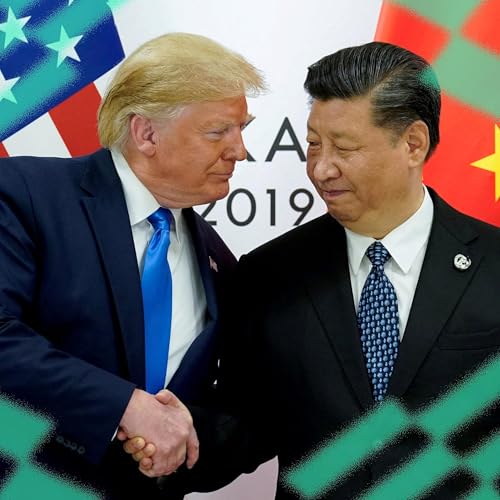
  • What Trump and Xi Didn't Settle in Beijing, With Nicholas Burns
    May 20 2026

    This episode unpacks the key discussion points from the U.S.-China summit, including Taiwan, the Iran war, AI regulation, and the future of U.S.-China relations.

    Host:

    James M. Lindsay, Mary and David Boies Distinguished Senior Fellow in U.S. Foreign Policy, CFR

    Guest:

    Nicholas Burns, Roy and Barbara Goodman Family Professor of the Practice of Diplomacy and International Relations, Harvard University Kennedy School of Government; Former U.S. Ambassador to the People’s Republic of China (2021–2025)

    We Discuss:

    • Whether the Trump-Xi summit in Beijing represented a genuine diplomatic breakthrough or merely a cooling of tensions without resolving underlying conflicts.
    • What the dueling U.S. and Chinese post-summit statements reveal about each country's divergent priorities and negotiating strategies.
    • How significant the summit's economic deliverables—agricultural sales commitments, Boeing aircraft sales, and a potential tariff truce—actually are.
    • How Xi Jinping's early and deliberate warning about Taiwan set the tone for the summit, and what his decision to leak that statement mid-meeting signals about Chinese tactics.
    • Whether President Trump's equivocation about U.S. arms sales to Taiwan and the One China policy constitutes a major strategic mistake and what it means for American credibility with allies in the Indo-Pacific.
    • What the presence of Putin in Beijing immediately after Trump's visit reveals about Chinese strategic alignments.
    • Why an emerging U.S.-China dialogue on artificial intelligence regulation could prove to be the most consequential and underappreciated outcome of the Beijing summit.
    • What concrete benchmarks—from tariff agreements to arms sales to Chinese follow-through on commitments—will determine whether this summit actually put U.S.-China relations on a more stable footing.

    Mentioned on the Episode:

    "Joint Statement Following Discussions with Leaders of the People's Republic of China (Shanghai Communiqué)" U.S. Department of State, Office of the Historian

    "President Reagan's Six Assurances to Taiwan" Congressional Research Service

    "Readout of President Joe Biden's Meeting with President Xi Jinping of the People's Republic of China" The White House

    "Taiwan Relations Act" Pub. L. 96–8, enacted April 10, 1979

    "United States-China Joint Communiqué on United States Arms Sales to Taiwan" Ronald Reagan Presidential Library

    "U.S.-PRC Joint Communiqué (1979)" U.S. Department of State, Office of the Historian

    For an episode transcript and show notes, visit The President’s Inbox at: https://www.cfr.org/podcasts/presidents-inbox/what-trump-and-xi-didnt-settle-in-beijing

    Opinions expressed on The President’s Inbox are solely those of the host or guests, not of CFR, which takes no institutional positions on matters of policy.

    Show More Show Less
    35 mins
  • Trump and Xi in Beijing, With Rush Doshi
    May 13 2026

    This episode unpacks President Donald Trump’s upcoming summit with Chinese President Xi Jinping in Beijing, the first by a sitting U.S. President in nearly a decade, as the United States and China work through a tense period of détente.

    Host:

    James M. Lindsay, Mary and David Boies Distinguished Senior Fellow in U.S. Foreign Policy, CFR

    Guest:

    Rush Doshi, C.V. Starr Senior Fellow for Asia Studies and Director of the China Strategy Initiative

    We Discuss:

    • Whether the Trump-Xi summit will represent continuity or a new phase in the U.S.-China relationship.
    • How China assesses the military and economic balance of power with the United States.
    • What last year's trade war revealed and how it produced the current period of managed competition.
    • As Rush Doshi puts it: “I don’t think there’s going to be a large structural breakthrough.”
    • What deliverables the Trump administration is seeking from the summit, and why negotiations are focused on process mechanisms and stability.
    • How China has responded to the U.S.-Iran war and why it has stayed on the sidelines despite having clear strategic interests.
    • Why China welcomes U.S. entanglement in foreign conflicts but fears their effects on global trade and resource access.
    • Why China is more exposed than the United States freedom of navigation threats and naval chokepoints.
    • Why President Biden never traveled to Beijing, and how China is framing Trump's visit.
    • Why American CEOs are joining Trump's trip, and what role they play in the summit.
    • Whether the U.S. and China will negotiate agreements on artificial intelligence and its role in great power competition.
    • How China has treated seemingly mutually-beneficial crisis communication channels as negotiation ploys in return for U.S. concessions.
    • Whether Taiwan will be on the agenda, what concessions China is seeking, and how U.S. policy shifts could affect internal Taiwanese politics on unification.
    • How a so-called Board of Trade and other bilateral mechanisms could formalize a lasting state of managed trade between the two countries

    Mentioned on the Episode:

    “President Xi Jinping Speaks with U.S. President Donald J. Trump on the Phone” Chinese Ministry of Foreign Affairs

    Evelyn Cheng, “Trump is taking more than a dozen U.S. executives to China. Jensen Huang isn’t one of them,” CNBC

    For an episode transcript and show notes, visit The President’s Inbox at: https://www.cfr.org/podcasts/presidents-inbox/trump-and-xi-in-beijing-with-rush-doshi

    Opinions expressed on The President’s Inbox are solely those of the host or guests, not of CFR, which takes no institutional positions on matters of policy.

    Show More Show Less
    38 mins
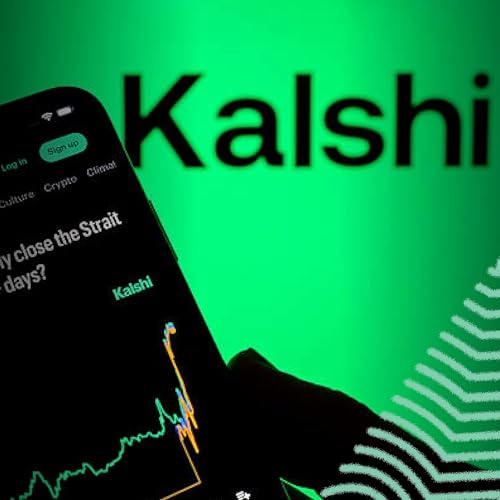
  • The Spillover: Are Prediction Markets Forecasting Tools or Virtual Casinos?
    May 6 2026

    Prediction markets have grown into a multibillion-dollar industry. This episode asks whether they are powerful forecasting tools or gambling platforms in disguise—and what their rise means for how risk and information are priced.

    Hosts:

    Rebecca Patterson, Senior Fellow, Council on Foreign Relations (CFR)

    Sebastian Mallaby, Paul A. Volcker Senior Fellow for International Economics, Council on Foreign Relations (CFR)

    Guest:

    Christy Goldsmith Romero, Former Commissioner, Commodity Futures Trading Commission (CFTC)

    We discuss:

    • How prediction markets are turning the world into a “casino” where you can bet on almost anything, from elections and geopolitics to sports and niche events.
    • The evolution of prediction markets from academic tools to mainstream platforms shaping finance, politics, and culture.
    • Why these markets sometimes outperform polls, where they fall short, and how they blur the line between forecasting and entertainment-driven gambling.
    • As Rebecca Patterson asks: “Are these markets actually useful, or are they just gambling dressed up as forecasting?”
    • The legal gray areas that are allowing prediction markets to expand so quickly and the growing risk of manipulation and insider bets.
    • An anecdote from France, where someone allegedly tampered with a weather sensor to manipulate the outcome of a prediction market bet.
    • How governments and regulators are struggling to keep up.
    • Whether these markets truly reflect the “wisdom of crowds” or just loud, well-funded players.

    Mentioned on the Episode:

    Anthony M. Diercks, Jared Dean Katz, and Jonathan H. Wright, “Kalshi and the Rise of Macro Markets,” Federal Reserve Board

    “The Future of Financial Services Regulation: A Conversation with CFTC Commissioner Christy Goldsmith Romero,” Brookings Institution

    Adam Hoffer and Jacob Macumber-Rosin, “Expanded Sports Betting Legalization Would Generate Billions in Tax Revenue,” Tax Foundation

    Andy Serwer, “Charles Schwab CEO Explains Why Investing Works—and Gambling Doesn’t,” Barron's

    Want to keep up with The Spillover? Sign up to receive an email alert when new episodes are released.

    The Spillover is a production of the Council on Foreign Relations. The opinions expressed on the show are solely those of the hosts and guests, not of the Council, which takes no institutional positions on matters of policy.

    Show More Show Less
    47 mins
adbl_web_anon_alc_button_suppression_c
No reviews yet