Episodes

  • Episode 12: CHDI's Robert Pacifici on new treatments for Huntington's toasted with a Boulevardier
    Apr 1 2025

    Send us a text

    Andy and JC get the lowdown from Robert Pacifici, CSO of CHDI Foundation, on the latest in Huntington's treatments from the recent 20th CHDI Therapeutics Conference in Palm Springs, California. Robert has spearheaded efforts at CHDI for the past 22 years, driving forward preclinical drug discovery programs and corralling efforts to develop bioassays, clinical biomarkers, patient-staging systems, clinical and regulatory consortia to galvanize industry efforts in this devastating and fatal neurodegenerative disease. Just four years after the field suffered several reverses for ASO therapies in late-stage clinical development, there is renewed optimism that a new set of disease-modifying therapies are within reach.

    The Boulevardier

    INGREDIENTS:

    1 Oz bourbon (or rye)

    1 Oz sweet vermouth

    1 Oz Campari

    Ice cubes

    DIRECTIONS:

    Stir over ice for 45 seconds, strain into a rocks glass over a large ice cube, and garnish with an orange peel.

    Enjoy!

    ---------------------

    Check out presentations given at the 20th CHDI Therapeutics Conference here

    For a summary of the latest developments keep an eye out for a forthcoming news story at Nature Biotechnology

    Paper's mentioned in the conversation:

    Ai Yamamoto, José J Lucas & René Hen. Reversal of Neuropathology and Motor Dysfunction in a Conditional Model of Huntington's Disease. Cell 101, p57-66 (2000).


    The Mixer music “Pour Me Another” courtesy of Smooth Moves!

    Show More Show Less
    59 mins
  • Episode 11: William Pao on the hunt for life-changing drugs and a refreshing Hugo spritz
    Feb 2 2025

    Send us a text

    William Pao, CEO of Revelio Therapeutics, and former Chief Development Officer for Pfizer/Head of Roche pRED, sits down with JC and Andy to talk about his new book: 'Breakthrough: The quest for life-changing medicines'. By charting the ups and downs of eight different drugs and the challenges faced by those shepherding them through the complex drug approval process, the book provides a fascinating peek into the hidden world of pharmaceutical discovery and the tireless work of the dedicated R&D professionals who develop life-changing medicines.

    INGREDIENTS:

    6-8 mint leaves

    Bar spoon of water

    Ice cubes

    1 Oz elderflower liqueur (e.g., St. Germain)

    4 Oz Sparkling wine (e.g. Prosecco)

    1-2 Oz Club soda.

    DIRECTIONS:

    Put 6-8 mint leaves and a bar spoon of water in a wine glass and muddle gently. Fill the glass with ice cubes and add the elderflower liqueur, sparkling wine and club soda. Mix gently. Slap a mint sprig to release the aromatic oils and add it as garnish. Enjoy!


    The Mixer music “Pour Me Another” courtesy of Smooth Moves!

    Show More Show Less
    54 mins
  • Episode 10: Sebastian Giwa blazing a trail in organ storage/transplantation ...and a flaming Sambuca
    Jan 1 2025

    Send us a text

    Sebastian Giwa, co-founder of the Organ Preservation Alliance and the Biostasis Research Institute and serial entrepreneur, talks to JC and Andy about the promise of organ storage research in transplantation. Seb obtained a PhD in Economics at the Stockholm School of Economics and was named a Baker Scholar at Harvard and worked at Bridgewater Associates, Bain and Goldman Sachs. Since spending time at Singularity University/NASA's Global Solutions Program and working with the Obama White House, he has worked tirelessly to galvanize the new field of whole organ preservation seeking to massively expand the availability of donor organs for the hundreds of thousands of patients awaiting transplants.

    Seb's ventures in preservation: Sylvatica Biotech (named for the wood frog that can survive freezing and developing supercooling technology to extend organ life), Ossium Health (bone marrow banking from deceased organ donors for patients with sickle cell anemia, leukemia, and lymphoma), and GaiaLife (human ovary vitrification for girls with cancer who have not yet reached puberty).

    Seb's preferred digestivo: Flaming Sambuca ("Sambuca, ghiaccio e mosche"; roughly translated: “Sambuca, ice and flies.”)

    You will need:
    1 2-1/2 oz shot glass
    3 coffee beans
    1.5 fluid Oz (44 mL) of sambuca
    1 Butane lighter

    Directions:
    Place the beans at the bottom of the glass. Pour in the Sambuca. Use the lighter (do not use matches containing sulfur or phosphorus; preferably long-reach lighter to avoid setting yourself alight!) to light the sambuca, then wait until the flame is low/blue and cover the shot glass with your hand to extinguish it.

    Groups mentioned:
    Bischof, J and colleagues. Physical vitrification and nanowarming at human organ scale to enable cryopreservation. BioRxiv. Physical vitrification and nanowarming at human organ scale to enable cryopreservation (November 11, 2024; non-peer-reviewed preprint).

    Rubsinky, B and colleagues. Bioengineering 10, (2023)

    Kizer, KW et al (eds). Realizing the Promise of Equity in the Organ Transplantation System. (National Academies Press; Washington DC; 2022).

    "Five years ago, even top cryobiologists doubted that a human organ would ever be successfully frozen and thawed...My opinion has changed." Janet Elliott, Canada Research Chair in Thermodynamics at the University of Alberta. Scuddelari, M. Proc. Natl. Acad. Sci. USA 114, 13060-13062 (2017).

    Toner, M., and colleagues. The promise of organ and tissue preservation to transform medicine. Nat. Biotechnol. 35, 530–542 (2017).

    Uygun, K. and colleagues. Supercooling enables long-term transplantation survival following 4 days of liver preservation. Nat. Med. 20, 790–793 (2014)


    The Mixer music “Pour Me Another” courtesy of Smooth Moves!

    Show More Show Less
    54 mins
  • Episode 9: Charles Fracchia on cyberattacks in biology...and downloading an Aperol Spritz
    Sep 1 2024

    Send us a text

    Andy and JC explore the murky world of cyberthreats to biopharma and biomanufacturing with Charles Fracchia, CEO of a Boston startup Black Mesa, currently in stealth mode and co-founder of BIO-ISAC, a BIO-Information Sharing and Analysis Center to educate about threat intelligence, vulnerability identification and mitigation strategies. Charles was previously CEO of BioBright, one of the first life science companies providing end-to-end encrypted data collection and analysis in the cloud.

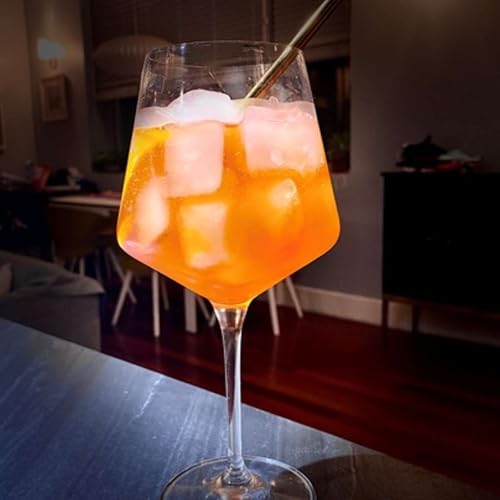
    The Spritz Veneziano (aka Aperol Spritz)

    Ingredients:
    2 Oz Aperol
    3 Oz sparkling wine
    1 Oz club soda.

    Directions:
    Add the ingredients to a large wine glass with plenty of ice, mix gently, and garnish with an orange wedge.

    Amari that can replace the aperol:

    Campari
    Amaro nonino
    Amaro montenegro
    Averna

    Check out the resources on BIO-ISAC here: https://www.isac.bio/


    The Mixer music “Pour Me Another” courtesy of Smooth Moves!

    Show More Show Less
    55 mins
  • Episode 8: Andrew Lo on fixing business models in biotech and a sparkling Mio sake!
    Aug 1 2024

    Send us a text

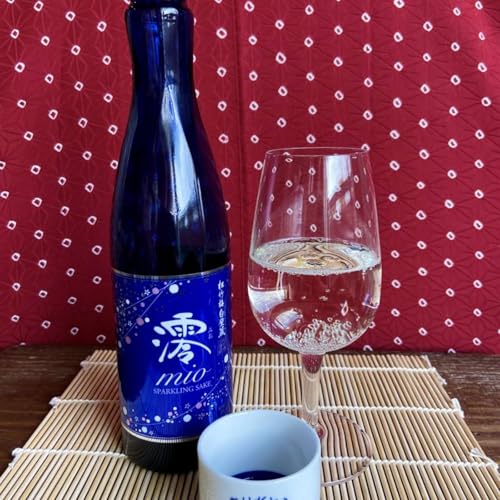
    https://bit.ly/3YxRltJ. Andrew Lo, Charles E. & Susan T. Harris Professor of Finance and director of the Laboratory for Financial Engineering at the MIT Sloan School of Management, gives JC and Andy the skinny on his progress in finding new commercialization models for rare diseases. He also reveals plans on implementing his debt securitization megafund model, first described over a decade ago. Finally, he gives us some tips on how to prepare a delicious refreshing sparkling sake:

    1) Mio sparkling sake
    1 bottle Mio sake
    1 freezer

    DIRECTIONS:
    From Andrew: "Store bottle of Mio at 58ºF (the recommended temperature of typical wine cellar). Move bottle to the freezer section of your refrigerator for about two hours before you're ready to consume it. The time is approximate, and depends on how cold your freezer is, so you may need to play around with this key parameter. After two hours, remove the bottle from the freezer; it should still be completely liquid inside (if it's partially frozen, you've kept it in too long and need to thaw it before opening).

    Assuming that the sake is completely liquid, twist open the bottle and QUICKLY POUR OUT A SERVING INTO YOUR GLASS. The reason you have to pour quickly is that the sake is sparkling, which means the carbonation creates pressure in the bottle. Once this pressure is released, the liquid starts to foam and the foam will freeze, clogging the bottle and making it impossible to pour out any liquid. By pouring it quickly, the foam forms in the class, yielding the desired frozen treat. The remaining liquid in the bottle is blocked by the frozen foam in the neck, but this will melt while you enjoy the first pour, and should be ready to be poured out in just a few minutes (though the foam won't be quite as thick in the second glass).

    This works best with Mio's individual 375ml bottles. It can be done with full 750ml bottles but it's hard to pour multiple glasses fast enough before the foam freezes in the neck (you have to line up your glasses and pour quickly in a straight line)."


    Sources mentioned in the podcast:
    Andrews new book:
    Andrew W Lo and Shomesh E Chaudhuri. Healthcare Finance (Princeton University Press, Princeton, 2023)

    Original paper describing megafund/securitization:
    Fernandez, JM et al. Commercializing biomedical research through securitization techniques. Nat Biotechnol 30, 964–975 (2012). https://doi.org/10.1038/nbt.2374

    Paper describing methodology for assessing risk (likelihood of approval) of biomedical assets:
    Siah, KW et al. Predicting drug approvals: The Novartis data science and artificial intelligence challenge. Patterns 2, 100312 (August 13, 2021).

    EU approval of Agilis Biotherapeutics/PTC’s Upstaza AAV2 gene therapy for delivering dopa decarboxylase to patients with aromatic L-amino acid decarboxylase (AADC) deficiency. As AAAC deficiency has an incidence of about 1 per 1,000,000 live newborns (332 potential US patients every year), a billion dollar return could theoretically be obtained in three years...in practice though the challenge for PTC is to find those patients!


    The Mixer music “Pour Me Another” courtesy of Smooth Moves!

    Show More Show Less
    56 mins
  • Episode 7: Anne Wyllie, COVID-19, the NBA and spit diagnostics washed down with a G&T!
    Jul 1 2024

    Send us a text

    Anne Wyllie, principal investigator at the Yale School of Public Health and pioneer of the Saliva Direct initiative, talks to JC and Andy about the potential of open and collaborative models to transform infectious disease diagnostics and pandemic preparedness.

    1) The Gin & Tonic

    1 cup ice cubes
    2 Oz gin
    ~4 Oz Schweppes Tonic Water
    1 slice Lime/lemon

    DIRECTIONS:
    Pour 2 Oz gin into your favorite glass, ideally a large goblet full of ice, as shown. Top with ~4 Oz tonic water, mix gently, and garnish with lime or lemon.

    2) The Mediterranean Gin & Tonic

    1 cup ice cubes
    1.5 Oz Gin Mare (Spanish Gin)
    0.5 Oz Dry Vermouth
    0.5 Oz Sweet Vermouth
    ~4 Oz Fever Tree Tonic water
    1 sprig Thyme
    1 slice Lime/lemon

    Fill your favorite glass with ice. Pour 1.5 Oz Gin Mare (Spanish gin), 0.5 Oz dry vermouth, 0.5 Oz sweet vermouth. Top with ~4 Oz Fever Tree Mediterranean Tonic and mix gently. Garnish with thyme and lime/lemon.

    Sources mentioned in the podcast:

    Paper comparing saliva test to nasal/nasopharyngeal test: Overmeire, Y et al. Equivalence of Saliva RT-qPCR Testing to Nasal-throat/Nasopharyngeal Swab Testing in the General Practitioner’s Setting to Detect SARS-CoV-2. J. Pediatr, Perinatol. Child Health 6, 042-053 (2022). doi: 10.26502/jppch.74050089

    CDC COVID-19 testing guidelines (now including saliva)

    The COVID-19 testing debacle Nat Biotechnol 38 653 (2020)

    Saliva Direct and its test Emergency Use Authorization

    BBC News story on kids adding soda to get false positives in COVID-19 tests


    The Mixer music “Pour Me Another” courtesy of Smooth Moves!

    Show More Show Less
    58 mins
  • Episode 6: Veronique Kiermer on open science and a White Negroni
    Jun 1 2024

    Send us a text

    Veronique Kiermer, Chief Scientific Officer and Executive Editor at the Public Library of Science, talks about the myriad ways in which open science is changing the face of research and some of the challenges it poses for AI and the translational arena.

    01:55 What is open science?
    03:55 What are barriers to openness?
    07:28 Early adopters
    10:30 Open challenges for AI
    11:35 Registered reports and publication bias
    14:20 PLOS’ priorities for open science
    18:40 The Open Science Village beyond data access and sharing
    24:25 Reproducibility and reuse in drug research
    27:30 Can biotech companies be as open as pharma?
    29:44 Pre-competitive consortia for rare disease
    32:14 Moving the needle
    38:00 Professional data curators?
    39:53 Opening science around the world
    41:05 COVID-19, infectious disease and open science
    45:34 Veronique’s favorite tipple

    The White Negroni
    1 Oz gin
    1 Oz Lillet Blanc
    1 Oz Suze

    DIRECTIONS:
    Add ingredients to a mixing glass and stir over ice for 45 seconds. Strain over fresh ice in a rocks glass and garnish with a lemon peel.

    Sources mentioned in the podcast
    Mehra, MR et al. RETRACTED: Hydroxychloroquine or chloroquine with or without a macrolide for treatment of COVID-19: a multinational registry analysis. Lancet (May 22, 2020) https://doi.org/10.1016/S0140-6736(20)31180-6).

    AlphaFold3—why did Nature publish it without its code? Nature 629, 728 (2024). Good question!

    Abramson J et al. Accurate structure prediction of biomolecular interactions with AlphaFold 3. Nature (8 May 2024).

    Promoting reproducibility with registered reports. Nat Hum Behav 1, 0034 (2017). https://doi.org/10.1038/s41562-016-0034

    The Yale University Open Data Access (YODA) Project at the Center for Outcomes Research and Evaluation advocates for the responsible sharing of clinical research data

    All Trials (https://www.alltrials.net/news/)

    Gordon, D.E., Jang, G.M., Bouhaddou, M. et al. A SARS-CoV-2 protein interaction map reveals targets for drug repurposing. Nature 583, 459–468 (2020).

    Nature’s podcast on Registered Reports: Nature's Take: Can Registered Reports help tackle publication bias?


    The Mixer music “Pour Me Another” courtesy of Smooth Moves!

    Show More Show Less
    51 mins
  • Episode 5: Nathan Price on scientific wellness and a Mojito
    May 1 2024

    Send us a text

    Nathan Price, currently on leave from the Institute for Systems Biology in Seattle and Chief Scientific Officer at Thorne HealthTech, talks to JC and Andy about his data-driven approach to understanding health and predicting personal trajectories into disease as we age.

    03:24 What is scientific wellness?
    06:53 Correlates of scientific wellness

    15:45. Generating hypotheses
    18:40 Multimodal over unimodal data
    22:04. Biomarkers and individual disease trajectories
    28:00 How to intervene to maintain wellness?
    30:01 A new era for supplements?
    32:26 Single interventions versus combinations
    37:59 Racial background and lifestyle
    41:00 Digital twins, trial design and recruitment
    43:30 Mocktails and mojitos


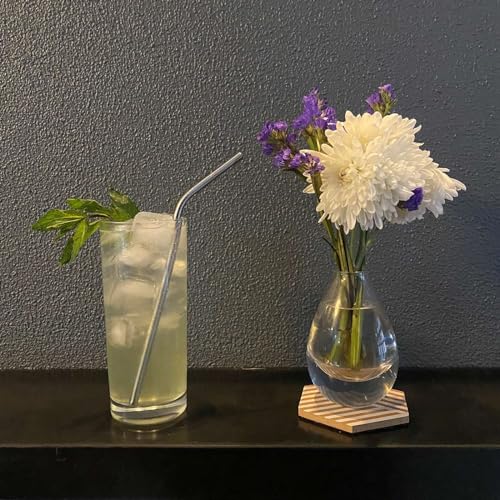
    The Mojito
    10–12 mint leaves and mint sprig
    1 Oz simple syrup (50% sugar solution)
    2 Oz white rum
    0.75 Oz freshly squeezed lime juice.
    ~1–2 Oz club soda

    DIRECTIONS: Place the mint leaves in a shaker tin, add the syrup and gently muddle the leaves 10–12 times. Add the rum and freshly squeezed lime juice. Shake over ice for 15 seconds and double strain over fresh ice into a Collins glass. Top up with the club soda and mix gently. Slap a mint sprig to release the aromatic oils and add it as garnish.

    Sources mentioned in the podcast
    The supposed Native American 'diabetes gene'. Newman, AS. Peace Rev. 12, 517-524 (2010)

    Todd Rose. The End of Average (HarperCollins, 2016).

    Can a biologist fix a radio? Lazebnik, Y. Cancer Cell 2, 172-182 (2002) https://www.cell.com/cancer-cell/pdf/S1535-6108(02)00133-2.pdf

    Lancet Commission on risk factors for dementia: Livingston, G et al. Lancet 396, 413-446 (2020) https://www.thelancet.com/article/S0140-6736(20)30367-6/fulltext

    Precision Medicine Approaches for Developing Combination Therapies for the Treatment and Prevention of Alzheimer's Disease (AD) and AD-Related Dementia, National Institute of Aging, December 4-5, 2023.

    Khullar, D How to die in good health. New Yorker (April 15, 2024)


    The Mixer music “Pour Me Another” courtesy of Smooth Moves!

    Show More Show Less
    50 mins