The WW2 Grognard cover art

The WW2 Grognard

The WW2 Grognard

Written by: ROD INOJOSA
Listen for free

About this listen

The WW2 Grognard is a documentary podcast for people who already know the war — and know that most of what they've been told about it is incomplete.

Each episode is narrated by Charles Mercer, a voice that doesn't perform history. It inhabits it. The research is deep, the judgments are earned, and the stories chosen are the ones that don't fit cleanly into the standard narrative: the commanders history celebrated without asking what they cost, the decisions that won battles and killed men for the wrong reasons, the figures on both sides who understood exactly what was happening and went forward anyway.

This is not a podcast about dates and campaigns. It is a podcast about character under extreme pressure — about what war does to the people who fight it, command it, survive it, and can't survive it. About the gap between the monument and the man. About the price of the photograph.

The host is not a journalist or an entertainer. He is someone who has read the primary sources, argued with the historians, and come to conclusions he is willing to defend. He is grumpy about myth. He is careful about facts. He is not interested in heroes.

If you've ever watched a WW2 documentary and felt it was telling you what to think instead of showing you what happened — this is the antidote.

All rights reserved.
Social Sciences World
Episodes
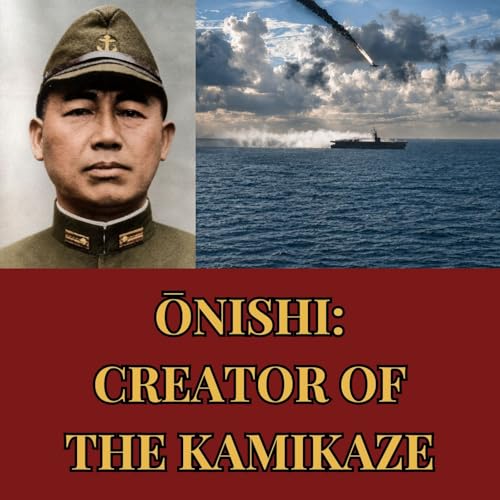
  • Ōnishi: He Created the Kamikaze. Then Left a Note Asking the Survivors Not to Follow Him.
    Apr 27 2026

    He invented the kamikaze. He sent four thousand young men to die in it. And on the night the second world war ended, he sat alone in a room, refused help, and chose a death that lasted fifteen hours.


    This is the story of Vice Admiral Takijirō Ōnishi — the Japanese naval officer who created the Tokkō special attack corps in October 1944, in a small airfield north of Manila, with six days to spare before the American invasion. He believed in what he was building. Then, somewhere in the spring of 1945, he stopped believing. And couldn't stop the machine he had started.


    The note he left for the survivors asked them not to follow him. It asked them to live. It asked them to build Japan in peace. Some pilots who were planning collective suicide read that note and didn't go through with it. We don't know the total. We know the number is greater than zero.


    This documentary is not about fanaticism. It is about a man who was capable of seeing clearly, obeyed when his clarity was overruled, and spent the last hours of his life trying to understand what that had cost.


    CHAPTERS

    00:00 — Cold Open: Fifteen Hours

    04:06 — The Japanese Admiral Who Opposed Pearl Harbor

    08:22 — Why Japan Was Losing the Air War by 1944

    10:35 — The Night the Kamikaze Was Born: Mabalacat, October 1944

    12:30 — The First Kamikaze Mission: USS St. Lo, October 25, 1944

    15:51 — How the Kamikaze Program Killed 4,000 Japanese Pilots

    16:35 — Did Ōnishi Believe in What He Built?

    22:00 — The Day Japan Surrendered: August 15, 1945

    23:17 — The Death Ōnishi Chose: Fifteen Hours Without Help

    26:44 — The Note That Saved Kamikaze Survivors From Suicide

    30:23 — What Ōnishi Left Behind — and What He Could Not Undo


    If this is the kind of history you're looking for — SUBSCRIBE. There's always another story waiting. —


    No ads. No sponsors. Just research and a lot of coffee (and beer): https://buymeacoffee.com/theww2grognard


    For the full cinematic experience — with historical photographs and archival footage — watch this episode on YouTube:

    https://www.youtube.com/@TheWW2Grognard


    RESEARCH SOURCES


    Primary:


    Rikihei Inoguchi & Tadashi Nakajima — The Divine Wind: Japan's Kamikaze Force in World War II (Naval Institute Press, 1958)

    https://amzn.to/4u60zJX


    Denis Warner & Peggy Warner — The Sacred Warriors: Japan's Suicide Legions (Van Nostrand Reinhold, 1982)

    https://amzn.to/4echtSD


    Albert Axell & Hideaki Kase — Kamikaze: Japan's Suicide Gods (Longman, 2002)

    https://amzn.to/48ZmWsv


    U.S. Strategic Bombing Survey — The Campaigns of the Pacific War, Appendix: Kamikaze Operations (1946)

    https://amzn.to/4cPwcRh


    Secondary:


    Emiko Ohnuki-Tierney — Kamikaze Diaries: Reflections of Japanese Student Soldiers (University of Chicago Press, 2006)

    https://amzn.to/4tCLQqj


    Max Hastings — Retribution: The Battle for Japan, 1944–45 (Knopf, 2008)

    https://amzn.to/4vUrSsx


    Naval History and Heritage Command — Kamikaze Attacks of World War II: A Complete History


    HistoryNet — The First Kamikaze: Yukio Seki and the Shikishima Unit


    Asia-Pacific Journal: Japan Focus — Ōnishi Takijirō and the Ethics of the Special Attack


    Wikipedia — Takijirō Ōnishi, Kamikaze, Tokubetsu Kōgekitai, Battle of Leyte Gulf, USS St. Lo


    National WWII Museum — nationalww2museum.org


    Note: This documentary covers historical events of World War II and does not address current events.


    MUSIC


    Almost in F — Tranquillity by Kevin MacLeod

    Licensed under Creative Commons Attribution 4.0

    https://creativecommons.org/licenses/by/4.0/

    Source: http://incompetech.com/


    Loss by Kevin MacLeod

    Source: YouTube Audio Library


    PRODUCTION TRANSPARENCY


    Script & Research: Human-authored | Narration: AI-generated (ElevenLabs v3) | Narrator: Charles Mercer | Images: U.S. National Archives, Japanese National Diet Library, NHHC, Wikimedia Commons — public domain

    Show More Show Less
    34 mins
  • Leyte: He Declared Victory While His Men Were Still Dying — The Ground War
    Apr 26 2026

    MacArthur declared victory on December 26th, 1944.

    His men were still dying in those mountains five months later.


    Three men. One island. A battle history buried under the naval legend.


    The general who conquered Singapore in 70 days — exiled for being too popular,

    then executed for crimes he didn't order.


    The American commander who actually won Leyte — whose name you've never heard.


    And the Japanese general left behind by his own army in those mountains,

    still fighting long after Tokyo had written him off.


    This is the ground war at Leyte. The one MacArthur said was over before it was.


    CHAPTERS

    00:00 — The Battle That Decided the Pacific

    02:35 — Chapter 1: The Tiger In Exile - Yamashita

    06:25 — Chapter 2: Walter Krueger - The Man Who Won The Battle And Disappeared

    11:31 — Chapter 3: Into The Valleys - The First Weeks

    12:55 — Chapter 4: Breakneck Ridge

    15:35 — Chapter 5: Ormoc Beach

    17:48 — Chapter 6: The General´s Last Battle - Suzuki

    20:00 — Chapter 7: The Filipinos

    22:17 — Chapter 8: The Tigers Trial - Yamashita

    25:44 — Epilogue: The Announced Victory And The Unannounced War


    If this is the kind of history you're looking for — SUBSCRIBE.

    There's always another story waiting.


    No ads. No sponsors. Just research and a lot of coffee (and beer):

    https://buymeacoffee.com/theww2grognard


    For the full cinematic experience — with historical photographs and archival footage — watch this episode on YouTube:

    https://www.youtube.com/@TheWW2Grognard


    RESEARCH SOURCES


    Primary:


    U.S. Army Center of Military History — Leyte: The Return to the Philippines

    https://amzn.to/4cAU62E


    Nathan N. Prefer — Leyte 1944: The Soldiers' Battle (Casemate, 2012)

    https://amzn.to/4cH8AxY


    Kevin Holzimmer — General Walter Krueger: Unsung Hero of the Pacific War (University Press of Kansas, 2004)

    https://amzn.to/3OWuLIH


    U.S. Strategic Bombing Survey — Interrogation of General Tomoyuki Yamashita (October 1945)

    https://amzn.to/4sTWxUe


    Secondary:


    Warfare History Network — The Liberation of the Philippines


    Warfare History Network — Doughboy White: The Lost Battalion of Leyte


    Asia-Pacific Journal: Japan Focus — Last Words of the Tiger of Malaya (Yuki Tanaka)


    HistoryNet — Translating for Yamashita: The Tiger's Trial


    EBSCO Research — Japanese General Yamashita Convicted of War Crimes


    Wikipedia — Battle of Leyte, Tomoyuki Yamashita, Walter Krueger, Sosaku Suzuki, Battle of Manila


    National WWII Museum — nationalww2museum.org


    Note: This documentary covers historical events of October 1944 and does

    not address current events.


    MUSIC


    Almost in F — Tranquillity by Kevin MacLeod

    Licensed under Creative Commons Attribution 4.0

    https://creativecommons.org/licenses/by/4.0/

    Source: http://incompetech.com/


    Loss by Kevin MacLeod

    Source: YouTube Audio Library


    PRODUCTION TRANSPARENCY

    Script & Research: Human-authored | Narration: AI-generated (ElevenLabs v3) |

    Narrator: Charles Mercer | Images: U.S. National Archives, NHHC,

    Wikimedia Commons — public domain

    Show More Show Less
    29 mins
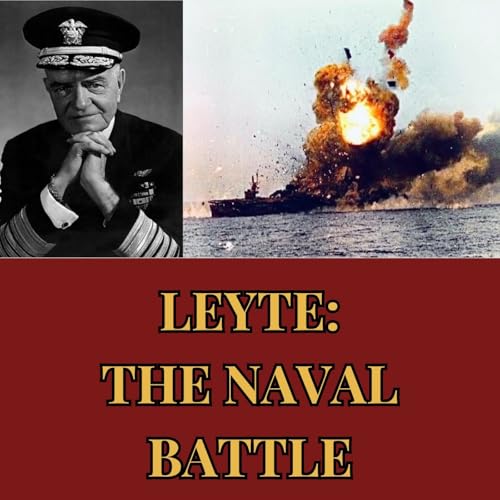
  • Leyte: The Largest Naval Battle in History — And the Decision Nobody Can Explain
    Apr 26 2026

    Leyte Gulf - The largest naval battle in history was decided not by firepower — but by a single decision no one can fully explain.


    October 1944. Four Japanese fleets are converging on the Philippines from different directions. MacArthur's invasion force is on the beach. The only thing standing between the landing fleet and the most powerful surface force Japan ever assembled is a handful of escort carriers and destroyer escorts — ships that were never meant to fight battleships.


    And the admiral who was supposed to protect them just took the entire Third Fleet and disappeared over the horizon.


    This is the story of Leyte Gulf: the admirals who knew they were sailing to their deaths, the fleet commander who took the bait, the tiny ships that faced the impossible — and the decision at the center of it all that history still cannot explain.


    CHAPTERS


    00:00 — The Battle That Decided the Pacific

    02:46 — Chapter 1: Japan's Last Gamble

    05:15 — Chapter 2: The Admiral Who Sailed to His Own Death

    11:17 — Chapter 3: The Most Powerful Fleet in History — Under Attack

    15:09 — Chapter 4: Halsey Chases the Bait

    18:32 — Chapter 5: The Southern Force — Sailing Into a Trap

    19:55 — Chapter 6: Tiny Ships Against a Battleship Fleet

    26:13 — Chapter 7: Why Did Kurita Turn Back?

    29:50 — Chapter 8: The Decoy That Worked

    32:22 — Chapter 9: What Leyte Gulf Changed Forever

    35:34 — Epilogue: Three Admirals, One Morning, Three Fates


    If this is the kind of history you're looking for — SUBSCRIBE.

    There's always another story waiting.


    No ads. No sponsors. Just research and a lot of coffee (and beer):

    https://buymeacoffee.com/theww2grognard


    For the full cinematic experience — with historical photographs and archival footage — watch this episode on YouTube:

    https://www.youtube.com/@TheWW2Grognard


    RESEARCH SOURCES


    Primary:


    Thomas J. Cutler — The Battle of Leyte Gulf (Naval Institute Press)

    https://amzn.to/4cCrLZN


    C. Vann Woodward — The Battle for Leyte Gulf (Macmillan, 1947)

    https://amzn.to/3OCcobK


    Samuel Eliot Morison — History of United States Naval Operations in

    World War II, Vol. XII

    https://amzn.to/4cAw1ZJ


    Secondary:


    James D. Hornfischer — The Last Stand of the Tin Can Sailors (Bantam, 2004)

    https://amzn.to/4tZ1kVb


    Anthony Tully & Jon Parshall — Shattered Sword (Potomac Books, 2005)

    https://amzn.to/494ps0z


    National WWII Museum — nationalww2museum.org


    Wikipedia — Battle of Leyte Gulf, Halsey, Kurita, Taffy 3


    Note: This documentary covers historical events of October 1944 and does

    not address current events.


    MUSIC


    Almost in F — Tranquillity by Kevin MacLeod

    Licensed under Creative Commons Attribution 4.0

    https://creativecommons.org/licenses/by/4.0/

    Source: http://incompetech.com/


    American Frontiers by Aaron Kenny

    Source: YouTube Audio Library


    No.4 Piano Journey by Esther Abrami

    Source: YouTube Audio Library


    PRODUCTION TRANSPARENCY

    Script & Research: Human-authored | Narration: AI-generated (ElevenLabs v3) |

    Narrator: Charles Mercer | Images: U.S. National Archives, NHHC,

    Wikimedia Commons — public domain

    Show More Show Less
    39 mins
adbl_web_anon_alc_button_suppression_c
No reviews yet