The Water Lobby cover art

The Water Lobby

The Water Lobby

Written by: Sanjay Negi and Eduardo Perez
Listen for free

About this listen

Water Lobby is co-hosted by Sanjay Negi, a water resources engineer with extensive experience in hydrologic and hydraulic modeling, and Eduardo who specializes in urban water management and flood mitigation. Together, they bring a dynamic blend of technical expertise, industry insights, and a shared passion for innovative, sustainable water solutions. Sanjay’s background in storm drainage design and resiliency strategies complements Eduardo’s on-the-ground perspective on municipal water challenges, making Water Lobby the perfect platform to explore the cutting-edge ideas shaping the future of water resources.

waterlobby.substack.comThe Water Lobby
Political Science Politics & Government Self-Help Success
Episodes
  • Episode 11: From Tires to Textbooks
    Nov 3 2025
    In Episode 11 of the Water Lobby podcast, we talk with Matt Paneitz, a former Austinite and founder of the nonprofit Long Way Home, who has spent the last two decades in Guatemala pioneering a revolutionary approach to infrastructure, education, and community-building.What starts as a conversation about building with trash (yes, trash) quickly evolves into a powerful blueprint for solving systemic poverty, not just with sustainable materials, but with a new model for education.Here are the key takeaways from our conversation.1. Solving Two Problems at OnceWhen Matt first moved to Guatemala in 2002 as a Peace Corps volunteer, he was struck by two major problems:* A Waste Crisis: With no formal trash removal system, waste was either burned, buried, or thrown into ravines.* An Infrastructure Need: A significant portion of the population lived in poverty, lacking basic infrastructure like safe housing, clinics, and schools.In 2004, he founded Long Way Home to tackle both problems at once. The big idea: What if you could use the community’s waste as a building material to create the infrastructure it desperately needed?2. Why Build with Tires?Our host asked the obvious question: Why not use conventional materials like bricks or wood?Matt explained that in Guatemala, conventional materials aren’t just expensive; they’re often not the best tool for the job. Cinder blocks, for example, don’t insulate well and perform poorly in earthquakes.This led them to an unconventional solution: used car tires.“If you lay a tire flat, you fill it with dirt, you hit it with a sledgehammer, you basically are creating an c that is surrounded by rubber... it’s never going to decompose.”The benefits are massive:* Earthquake-Resistant: Unlike rigid structures tied to a footer, these tire walls sit above ground and “move along with the earthquake rather than resisting the earthquake.” This is critical in a region that remembers the devastating 1976 earthquake.* Thermal Insulation: The thick, earth-packed walls create a “cave-like” effect, maintaining a constant, comfortable temperature year-round without heating or A/C.* Job Creation: The model is labor-intensive by design. It replaces the high cost of materials (like cement) with paid jobs for local community members.* Waste Reduction: It removes thousands of tires from local ravines and rivers.And for those wondering what it looks like? The “trash” is completely hidden. “When you tell anybody locally... ‘we’re going to build a building out of tires,’ they look at you like you’re crazy,” Matt admits. “But... we plaster them with lime plaster... When they see it, they say it’s one of the most beautiful things I’ve ever seen.”3. The Real Mission: Education as a LaboratoryThe innovative construction earned Long Way Home recognition from UNESCO, but the buildings themselves aren’t the final product. The true mission is education.Long Way Home runs a primary, middle, and high school where the community itself becomes the laboratory.“Instead of doing somewhat abstract math... the students in our seventh grade could apply their math to build ventilated stoves... The same thing happens in social studies class. Rather than... doing some abstract survey... they go from house to house and figure out what the local living conditions are like.”This hands-on approach gives students a direct role in the sustainable development of their own community. They build water tanks, compost latrines, retaining walls, and clinics, all while fulfilling their national curriculum requirements. The result is a generation of graduates who enter university or the workforce—as nurses, lawyers, engineers, or architects—with a deep, practical understanding of sustainable design and community-led problem-solving.4. The Next 20 Years: A Plan to ScaleAfter 20 years of proving the concept, Matt says Long Way Home is now entering its scaling phase. But they’re not planning to build more schools themselves.Their new goal is to give their model away.They are finalizing a complete set of lesson plans that integrate this hands-on, community-building approach directly into the public school curriculum.“We’re going to put our education model in the hands of public schools and say, ‘Let’s solve extreme poverty... and let’s also improve the quality of education.’... What politician’s gonna go, ‘You know what? I think that I’m not gonna put that on my ballot.’? ... This is not progressive, it’s not conservative. It is human dignity.”By providing these lesson plans to public school teachers—who are often under-resourced and lacking materials—Long Way Home has created a “win-win-win” situation that can scale rapidly without a massive budget.5. A Challenge to Us AllThis is more than just a feel-good story from Central America; it’s a proven, scalable model that challenges how we think about solving our own problems, from homelessness in ...
    Show More Show Less
    1 hr and 14 mins
  • Episode 10: A Tale of Two Texas Droughts
    Sep 28 2025
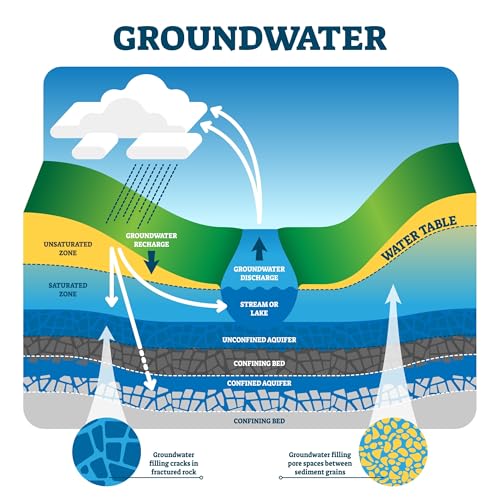
    A conversation between Sanjay and Eduardo on the complex water challenges facing Texas, from the parched reservoirs of the coast to the hidden drought beneath Austin’s feet.As the Texas summer heat finally gives way to the crisp promise of autumn, the conversation naturally turns to change. For us, it’s a time of professional growth—shifting from water resources modeling to the hands-on, under-the-bridge perspective of structural inspections. It’s this change in perspective that frames our latest discussion on a topic that affects every Texan: water.While we celebrate the milder weather, two starkly different water crises are unfolding in our state, revealing that the challenges we face are far more complex than just waiting for the next rainstorm.The Crisis in Mathis: When the Lake Runs DryOur focus first turned to Mathis, Texas, a small town of about 4,000 people near Lake Corpus Christi. The situation is dire. The lake, which supplies water to the region, is only 15% full. As a result, Mathis is on the verge of running out of water.This is a heartbreaking and deeply concerning scenario. How can a town so close to a major reservoir face such a threat? The problem is a tangled web of infrastructure, industry, and water rights. The City of Corpus Christi manages the lake and likely holds priority water rights, while local industries and farms also draw heavily from the dwindling supply.This isn’t just a resource problem; it’s an infrastructure and equity problem. As Eduardo noted, smaller communities are often at the mercy of larger entities. The immediate solutions are clear but difficult: impose water restrictions, secure emergency funding from the Texas Water Development Board, and create a rapid response plan. The town is planning to drill new wells, but this is a reactive measure to a crisis that has been building for years.The Paradox in Austin: Full Lakes, Empty AquifersIn stark contrast, here in Austin, the recent rains have left Lake Travis 85% full. Flooding was a concern just a few months ago. Yet, the Barton Springs Edwards Aquifer Authority has just declared an “exceptional drought” and is calling for water usage reductions of up to 100% for some permit holders starting October 1st.How can this be? It’s a critical lesson in hydrology: surface water and groundwater are not the same thing. While our lakes are brimming, the groundwater that so many in the Hill Country depend on is at a 30-year low.This disconnect highlights a systemic failure. We are great at managing the water we can see but have neglected the invisible, vital resource beneath our feet. Austin is exploring a $1.5 billion Aquifer Storage and Recovery (ASR) project to inject water into the ground for later use. It’s a step in the right direction, but it feels like a belated solution to a problem that required proactive planning years ago.Desalination: The Billion-Dollar Boogeyman or Our Best Hope?When a region is flanked by the Gulf of America, the conversation inevitably turns to desalination. With the cost of solar energy plummeting, the biggest historical barrier to desalination—exorbitant energy costs—is rapidly disappearing. So why aren’t we building more desal plants?The answer is a combination of political pushback and public perception. Critics often point to the high price tag, citing projects that cost half a billion dollars for what seems like a small return. But in an economy where individuals have net worths in the hundreds of billions, is a billion-dollar investment to secure water for thousands of people truly too much?Furthermore, we’re overlooking a key innovation: the “waste” from desalination, a salty brine, is actually a valuable asset. Private companies are already figuring out how to profitably extract lithium and other critical minerals from this brine. Why aren’t our public utilities being empowered to do the same, turning an expense into a revenue stream? The bottleneck isn’t technology; it’s the political will to make bold, necessary investments.It’s Not You, It’s the SystemUltimately, both crises point to a flawed narrative. For decades, the burden of conservation has been placed on individuals. We’re told to take shorter showers and let our lawns go brown, while systemic issues go unaddressed.* Leaky Pipes: Many municipal systems lose up to 50% of their water to leaks before it ever reaches a tap.* “Use It or Lose It” Policies: Archaic water rights laws force agricultural users to pump their full allocation of water, even if they don’t need it, just to avoid losing that right in the future.* Misaligned Priorities: We debate a billion-dollar water project while approving multi-billion dollar expenditures elsewhere without question. We have the talent and resources to solve these problems; we just haven’t made it a national priority.Water should be a unifying issue. Conservatives and liberals alike value conservation, stewardship, and sustainability....
    Show More Show Less
    1 hr and 3 mins
  • Episode 09 Water fall from Devastation to Disappointment
    Aug 10 2025
    This past month has been a difficult one for Central Texas, especially for those in Travis and Kerr Counties. As residents grieve and begin to rebuild after devastating floods, a different kind of storm is brewing: the ongoing conflict over water rights. While our community comes together to help one another, the political and corporate battles for Texas's most precious resource continue behind the scenes.The Great Texas Water Grab: Who's Behind the Curtain?As the Texas population explodes, so does the demand for water. People in San Antonio don't want Austin taking their water, and Austin residents get nervous when they see growth in Round Rock that depends on Lake Travis. But a recent story out of East Texas highlights a new chapter in these water wars.Two companies, Pine Bliss and Redtown Ranch (LLCs whose ownership is opaque), are seeking to install 40 high-capacity wells across Anderson, Henderson, and Houston counties. Their request? To withdraw an astonishing 15-16 billion gallons of water per year from the Carrizo-Wilcox Aquifer. This is a staggering amount that raises concerns about the sustainability of our groundwater, especially when taxpayers are burdened with the cost of refilling aquifers through methods like Aquifer Storage and Recovery (ASR).This alarming situation is further complicated by a potential conflict of interest. Individuals involved in managing the local Groundwater Conservation District (GCD) are reportedly the same people who are benefiting from these large-scale water licenses. It's a painful reality that brings to mind the documentary "Kern Water Bank," which exposed backroom deals that essentially privatized California's underground water. While East Texas residents have come together to protest this, the battle is far from over.LNRA Dam Project and the Fight for the RiversThe corporate push for water isn't limited to groundwater. The Lavaca-Navidad River Authority (LNRA) is planning a major dam project on the Lavaca River. This dam would divert an estimated 30 billion gallons of water per year, an undertaking with significant environmental consequences. Dam construction is notoriously complex, with concerns ranging from the destruction of river ecology to the death of fish populations that rely on natural upstream migration. While there are engineering solutions like fish ladders, agencies often have to cut corners to stay on budget and timeline. The LNRA project is facing public scrutiny, particularly as it may not require a federal environmental impact analysis, potentially fast-tracking a project that could permanently alter the river's ecosystem.Flooding and Fees: Disaster as a Tax Opportunity?As if a natural disaster wasn't enough, some counties are leveraging their disaster declaration powers to raise taxes. In both Kerr and Travis counties, officials are considering tax increases of up to 22%, a significant jump from the typical 5-10% limit. While these funds are meant for emergency services and infrastructure repairs, the timing feels like a betrayal to many. People who have lost homes and jobs are now facing a heavier financial burden.This happens while community members and local companies like H-E-B are donating millions of dollars and thousands of volunteer hours to the recovery effort. The contradiction is clear: Why is the burden being placed on the community's most vulnerable when non-profits are receiving millions, and corporations are being granted massive water rights? This is a moment where leaders should be offering tax relief, not tax increases.The Future of Water Management: A Political, Not Technical, ProblemThese issues point to a larger problem in how Texas manages its water. It's not a lack of engineering solutions; we have the technology to build fish ladders on dams and monitor river levels. The problem is one of political will and leadership.The current system is a complex web of agencies—Groundwater Conservation Districts (GCDs), Groundwater Management Areas (GMAs), the Texas Water Development Board (TWDB), and the Texas Commission on Environmental Quality (TCEQ)—all with overlapping responsibilities. It is a system that allows for conflict of interest and backroom deals. The recent floods and ongoing water debates demand a new approach. We must move beyond "me versus them" and focus on our shared responsibility to protect and manage our water resources for the long term. This means supporting leaders who prioritize resilient infrastructure, fair resource distribution, and proactive conservation over short-sighted gains.What are your thoughts on this? Should corporations be allowed to take such large amounts of water? Is it right for counties to raise taxes on residents after a disaster? Share your opinions in the comments below. This is a public episode. If you would like to discuss this with other subscribers or get access to bonus episodes, visit waterlobby.substack.com
    Show More Show Less
    1 hr and 17 mins
No reviews yet