The Web Usability Podcast cover art

The Web Usability Podcast

The Web Usability Podcast

Written by: Lucy Collins from Web Usability
Listen for free

About this listen

Join Lucy Collins, Director of Web Usability, as we explore what it takes to make the web a more accessible and enjoyable place for everyone. Whether you're a website owner, developer, or just a curious mind, we're here to share insights, tips, and stories that can help you improve the user experience of your digital world. Web Usability is an established User Experience (UX) agency. We are UX specialists. We provide inclusive UX research and advice to optimise your digital services. If you need a transcript of our podcasts, just visit our website at www.webusability.co.uk.Copyright 2026 Lucy Collins from Web Usability Economics Marketing Marketing & Sales Politics & Government
Episodes
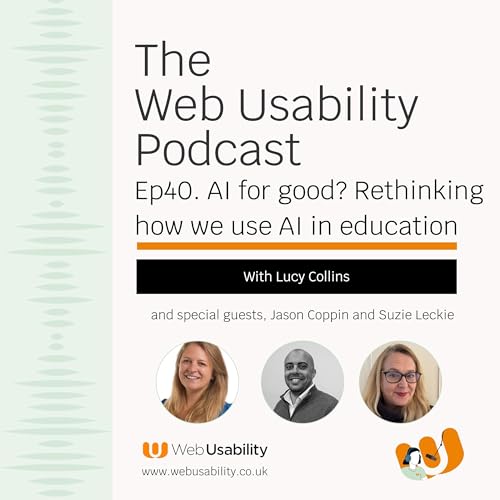
  • Ep40 AI for good? Rethinking how we use AI in education
    Apr 22 2026

    Summary

    This episode explores how AI can be thoughtfully integrated into education to enhance learning outcomes, protect institutional knowledge, and support diverse learning styles. Featuring Jason Coppin and Susie Leckie founders of Timber Yard, the discussion covers AI's potential, risks, and practical applications in educational settings.

    Take aways

    AI in education won't replace human expertise; it amplifies it.

    The value of AI is in targeted, curated content tailored to specific curricula

    AI's true potential lies in hyper-personalization accessible to all learners

    Establishing guardrails is essential to harness AI safely in education

    Speed and strategic alignment are the biggest risks in adopting AI in education

    Chapters

    00:00 Introduction and AI in Education

    01:12 Meet the Guests: Timber Yard and Their Mission

    02:24 The Evolution of Timber Yard and Their Digital Expertise

    05:26 AI Adoption in the Education Sector

    06:38 Operational Changes and Educational Content Transformation

    08:34 Balancing Innovation, Trust, and IP Protection

    09:52 Student Use of AI and Institutional Responses

    12:47 Differentiating Useful AI from the Noise

    14:46 Risks: IP, Misuse, and Adoption Speed

    17:53 AI Supporting Diverse Learning Needs

    23:10 TimberLearn: Curated AI for Specific Courses

    27:34 Hyper-Personalisation and Accessibility in Learning

    31:29 Future Vision for Timber Yard and Education

    33:18 Ensuring Responsible AI Use in Education

    35:21 Where to Find More About Timber Yard and Timberlearn

    Resources

    Timber Yard Website - About Us | Timberyard Commerce

    Show More Show Less
    33 mins
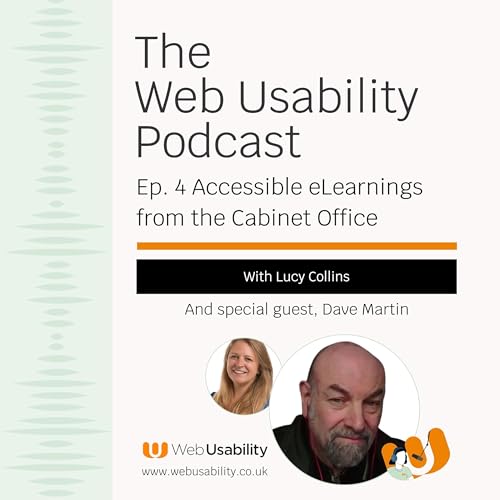
  • Minisode accessible eLearnings from the Cabinet Office
    Apr 9 2026

    Summary

    The episode delves into the importance of accessibility in e-learning, emphasising that it is not just a compliance requirement but a best practice that benefits all users. Dave Martin shares insights on how to design courses that are inclusive and user-friendly, highlighting common pitfalls and practical solutions to enhance user experience and engagement.

    Sound Bites

    "Accessibility isn’t just a checklist—it's a core design principle that benefits everyone."

    "Simplifying user journeys and removing unnecessary controls can drastically improve engagement."

    "Treat learners like adults by respecting their autonomy and simplifying course navigation."

    "Good design practices naturally lead to accessible and inclusive learning environments."

    Takeaways

    Accessibility should be integrated into the design process from the start, not treated as an afterthought or mere compliance requirement.

    By simplifying user journeys and removing unnecessary controls, e-learning platforms can significantly improve user engagement and satisfaction. This approach respects the autonomy of learners and reduces frustration.

    Good design practices, such as using plain language and ensuring clear visual contrast, naturally lead to more accessible and inclusive learning environments.

    Designing with trust in mind means allowing learners to navigate content freely and make choices about their learning paths.

    Small, practical changes in course design can have a significant impact on accessibility and user experience.

    Show More Show Less
    5 mins
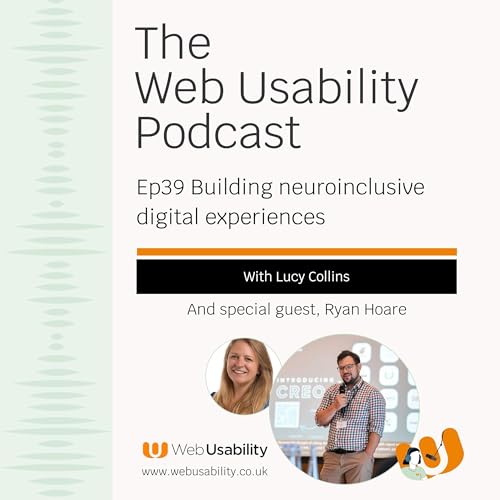
  • Ep39. Building neuroinclusive digital experiences
    Mar 26 2026

    Summary

    This episode explores neurodivergence and digital accessibility, emphasising designing inclusive experiences that benefit all users. Ryan Hoare, Founder of TryMosaic, shares insights from his lived experience and professional work to guide product teams in creating neuro-friendly digital services.

    1. Neuro-friendly design is fundamentally good design.
    2. Cognitive load can hinder user engagement and experience.
    3. Clarity in communication is essential for effective design.
    4. Predictability in user interfaces enhances usability.
    5. Forgiveness in design helps users recover from mistakes.
    6. Sensory overload can significantly impact user experience.
    7. Designing for neurodivergent individuals benefits all users.
    8. Error messages should guide users, not confuse them.
    9. Accessibility tools should not replace good design practices.
    10. Understanding diverse neurotypes is crucial for inclusive design

    Sound bites

    "Neuro-friendly design is just good design"

    "Minimize the on-ramp to hot start"

    "Decision paralysis is a major barrier"

    Chapters

    00:00 Introduction to Web Usability and Inclusivity

    00:57 Understanding Neurodivergence in Digital Spaces

    04:07 Defining Neuro-Friendly Digital Experiences

    06:54 Ryan's Personal Journey with Neurodivergence

    08:46 Hot Start: Overcoming Psychological Barriers

    11:34 Challenges of Cognitive and Sensory Overload

    15:33 Designing for Diverse Neurotypes

    17:59 Impact of Overload on User Experience

    23:26 Guiding Users to Identify Barriers

    28:25 Practical Design Changes for Neuro-Inclusivity

    34:33 Final Thoughts on Neuro-Friendly Design

    Show More Show Less
    40 mins
No reviews yet