Episodes

  • Thermal Lens: Understanding Uncertainties in Land Surface Temperature (LST)
    Mar 23 2025

    This episode of "Thermal Lens" features Dr. Claire Bulgin, a Senior Research Scientist in Earth Observation at the University of Reading.

    Claire takes us into the often-overlooked world of uncertainties in land surface temperature (LST) measurements and elaborates on the differences between error and uncertainty, the roles of accuracy, precision, and bias, and the challenges of calculating and communicating uncertainties. Claire breaks down how current satellite missions address these issues, the common sources of uncertainty, and what goes into building reliable uncertainty budgets.

    We also discuss her recommendations for both satellite data providers and users on how to better provide, interpret, and apply uncertainty information. Whether you're working in climate services, agriculture, or environmental monitoring, this conversation is packed with insights into how uncertainty shapes our understanding of the Earth’s surface.

    This episode is hosted by Jennifer Susan Adams, a postdoctoral researcher at the University of Zurich and Rachana Mamidi, a Space Engineer & Podcaster based in Berlin.

    Links to resources mentioned in the episode:

    1. The LST CCI project webpage - https://climate.esa.int/en/projects/land-surface-temperature/
    2. LST CCI product user guide - https://admin.climate.esa.int/media/documents/LST-CCI-D4.3-PUG_-_i2r0_-_Product_User_Guide.pdf
    3. Uncertainty budget document - https://admin.climate.esa.int/media/documents/LST-CCI-D2.3-E3UB_-_i3r0_-_End-to-End_ECV_Uncertainty_Budget.pdf
      For users with a strong mathematical background, the entire document will be accessible. For those less comfortable with mathematics, attention should be directed to the last three pages, where the key examples are presented.
    4. LST CCI Climate Assessment Report - https://admin.climate.esa.int/media/documents/LST_cci-D5.1-CAR_-_i3r0_-_Phase2_Climate_Assessment_Report.pdf

    Chapters:

    • (00:00) - Intro
    • (01:07) - Episode Summary
    • (02:09) - Diving into Uncertainty and Error
    • (05:22) - Importance of Uncertainty in Data
    • (08:12) - Calculating Uncertainty Budgets
    • (12:59) - Lifecycle of Uncertainty in Satellite Data
    • (24:55) - Challenges in Computing Uncertainties
    • (28:18) - Educating Users on Uncertainty
    • (30:14) - European Space Agency's LST_CCI Project
    • (37:34) - Resources for Learning About Uncertainty
    • (39:21) - Conclusion and Final Thoughts

    Show More Show Less
    40 mins
  • Merging Art and Science to Tackle Flood Prediction
    Sep 2 2024

    In this episode of Those Space People, we sit down with Priyanka Rajkakati, Head of Special Projects at Vortex IO in Toulouse, France. With a background in aerospace engineering and systems engineering, and a passion for art, Priyanka leads groundbreaking projects like Europe's first flood forecasting system (WHYLD project). She discusses her multidisciplinary approach, combining satellite data with in-situ sensors, the challenges in flood prediction, and the vital role of art in scientific endeavors. Join us for an insightful conversation that bridges the gap between technology and society, and explore how artistic perspectives can enhance technological solutions.

    Chapters

    • (00:00) - Introduction to Priyanka Rajkakati
    • (00:48) - Vortex IO and Water Intelligence
    • (01:55) - The WHYLD Project: Europe's First Flood Forecasting System
    • (05:02) - Priyanka's Journey from Art to Science
    • (07:49) - Challenges in Flood Prediction
    • (14:37) - The Role of Art in Scientific Projects
    • (25:56) - Flood Impact and Personal Motivation
    • (29:41) - Challenges in Space and Flooding
    • (30:58) - Forming the Reveins Initiative
    • (32:03) - The Role of Art in Science and Technology
    • (34:58) - Exploring Space Sci-Fi
    • (43:37) - Art and Space Collaborations
    • (49:51) - Final Thoughts and Future Projects

    Show More Show Less
    52 mins
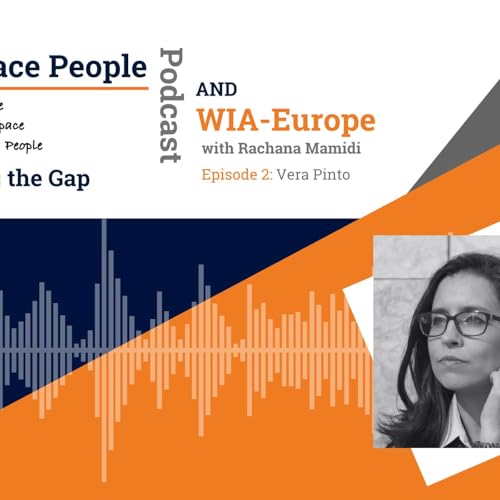
  • Bridging the Gap: Space Policy towards Greening of the Space Sector
    May 19 2024

    In today's episode, we are "Bridging the Gap" with Vera Pinto - Policy Coordinator at the European Commission (Directorate General for Defense Industry and Space). The discussion covers Vera's diverse background in international relations, political science, and space policy, and her current role focusing on equality, diversity, inclusion, and the sustainability of the space sector. Vera shares insights into the skills and backgrounds needed in the aerospace industry, the importance of greening space activities, and the development of sustainable methodologies for the space sector in collaboration with industry stakeholders. The episode also explores the potential of AI in enhancing environmental sustainability and processing vast quantities of Earth observation data, and discusses the various career paths and opportunities within the European Commission for those interested in the space sector.

    This episode is part of the "Bridging the Gap" series brought to you by Women in Aerospace Europe (WIA-Europe) and Those Space People, and ties into the theme of the WIA-Europe Symposium 2024.

    "Bridging the Gap" is a special series that spotlights inspirational figures from the aerospace industry talk about the current skills gap, and provides guidance on developing skills to future proof your career. So if you're looking to enter the aerospace industry or advancing into leadership roles, then this series is tailor made for you.


    Chapters

    • (00:00) - Introduction to Bridging the Gap Series
    • (00:38) - Spotlight on Vera Pinto: A Diverse Career in Space Policy
    • (01:06) - The Multifaceted Role of a Policy and Equality Coordinator
    • (02:12) - Skills and Backgrounds Needed in the European Commission
    • (03:31) - Sustainability in the Space Sector: Challenges and Methodologies
    • (09:41) - The Future of Green Roles in the Space Industry
    • (14:41) - AI's Role in Enhancing Space Sustainability
    • (20:55) - Diverse Career Paths at the European Commission
    • (27:41) - Advice for Aspiring Space Industry Professionals
    • (32:21) - Closing Thoughts and Personal Anecdotes

    Show More Show Less
    35 mins
  • Journey of an Aerospace Engineer into Venture Capital
    May 5 2024

    In this podcast episode, Nithish Kumar, an aerospace engineer working with the VC firm Speciale Invest, shares his diverse experiences ranging from space education and outreach to entrepreneurship. Nithish recounts his proud yet failed passion project, ALINEA, which aimed to be a startup pitching platform inspired by Shark Tank, and how it marked a transformative period in his life during the COVID-19 pandemic. He delves into his transition from being deeply fascinated with space to exploring the business side of technology, leading to his current role at Speciale Invest. Nithish discusses the value of resilience, the transition from engineering to business, and how his early passion for space and podcasting played a pivotal role in defining his career trajectory.

    Chapters

    • (00:00) - Welcome to Those Space People: Meet Nithish Kumar
    • (00:37) - The Story of ALINEA: A Failed Passion Project
    • (04:21) - From ALINEA's Lessons to Space Tech Investment
    • (05:12) - An Aerospace Engineer in the VC World
    • (08:53) - The Power of Networking in Venture Capital
    • (11:27) - A Journey Through Space Education and Outreach
    • (19:31) - The Unbounded Podcast: A Gateway to Space Tech Insights
    • (25:16) - The Resilience Required in Venture Capital


    Show More Show Less
    28 mins
  • The Future of AI in Space Exploration: Insights from JPL NASA and ISRO Experts
    Apr 22 2024

    In this episode, Asitang Mishra, a senior data scientist from JPL NASA, and Nitish Kumar, an AI team lead from ISRO, discuss the current and future applications of Artificial Intelligence in space exploration. They delve into how AI is transforming space missions, from satellite imagery analysis and space debris modeling to the automation of spacecraft systems. The conversation also covers the challenges and opportunities AI presents, the integration of AI into space agency workflows, and potential AI-driven advancements in space technology. Furthermore, the discussion touches on the necessity of AI literacy among space professionals, the impact of AI on job roles within the space industry, and the impact of AI advancements on regulations like ITAR. The guests also explore the broader implications of AI on the future of work, emphasizing the growing importance of AI in making space exploration safer, more efficient, and more innovative.

    Chapters

    • (00:00) - Welcome to Those Space People: NASA and ISRO Experts Share Insights
    • (01:18) - AI's Role and Challenges in ISRO's Space Missions
    • (03:30) - How NASA is Leveraging AI: From ChatGPT to Spacecraft Autonomy
    • (05:05) - Exploring the Use of AI in Historical and Current Space Missions
    • (07:33) - The Impact of ChatGPT and AI on Space Agencies
    • (10:25) - The Future of AI in Space: Predictions and Possibilities
    • (18:17) - Leveraging AI for Knowledge Management and Innovation
    • (27:34) - Preparing for an AI-Driven Future in the Space Industry
    • (32:31) - Exploring AI's Role in Hardware: Limitations and Potential in the Physical World
    • (41:53) - Exploring the Capabilities of Large Language Models (LLMs)
    • (47:53) - AI's Impact on Space Debris Management and Traffic
    • (52:36) - The Future of Employment in the AI-Enhanced Space Industry
    • (56:11) - Navigating ITAR and Open Source in Space Tech
    • (01:01:10) - AI Teams and Projects Across ISRO Centers
    • (01:03:29) - Concluding Thoughts on AI's Expansive Potential

    Show More Show Less
    1 hr and 6 mins
  • Impact of podcasting on space industry communication
    Mar 26 2024

    This episode of 'Those Space People' features Alice Carruth, a podcast producer at T-Minus Space Daily Podcast for a deep dive into the world of space podcasting. Alice discusses her role as a podcast producer, the similarities and differences in podcast production within the space industry, and her career journey from broadcast journalism to becoming a key voice in space news dissemination. She emphasizes the importance of making complex space technology understandable for the general audience, the evolution of space industry marketing, and the critical role of human narrative in podcasting. Alice also delves into the use of AI in content creation, the globalization of the space industry, and the significance of cultural diversity in shaping the future of space exploration. This episode offers an insightful look into the interplay between media, technology, and human stories in building a more accessible and globally representative space sector.


    Chapters

    • (00:00) - Welcome to Those Space People: Introducing Alice Carruth
    • (00:40) - The Role of a Podcast Producer in the Space Industry
    • (02:42) - Alice's Journey into Space and Media
    • (04:02) - Demystifying Space for the Public
    • (06:45) - The Impact of AI on Podcast Production
    • (08:23) - Exploring the Future of AI in Content Creation
    • (14:41) - The Global Landscape of Space Podcasting
    • (18:05) - Making a Career in Space Podcasting
    • (22:27) - The Importance of Diverse Perspectives in Space
    • (31:58) - Cultural Differences in the Space Industry
    • (35:38) - Closing Thoughts: Space as a Global Commons
    Show More Show Less
    36 mins
  • Thermal Lens: Impact of directionality on Land Surface Temperature (LST)
    Mar 10 2024

    This episode of “Thermal Lens” features Mary Langsdale, an Environmental Scientist at King’s College London. Mary has a background in mathematics and a Phd in remote sensing.


    In this episode, Mary delves into her recent multi-national ESA and NASA co-funded air-borne and ground campaign that aimed to quantify the effect of directionality on land surface temperature (LST) data. She elaborates on the significance of directionality in LST measurements, exploring techniques and data requirements for its accurate assessment. Issues surrounding data availability, correction methods, and the implications for downstream applications are also discussed. Mary emphasizes the need for better validation strategies and the potential of AI to process large-scale remote sensing data. Lastly, she offers insights into the essential skills and mindset required to excel in the field of remote sensing.


    This episode is hosted by Jennifer Susan Adams, a postdoctoral researcher at the University of Zurich and Rachana Mamidi, Space Engineer & Podcaster based in Berlin.


    Links to resources mentioned in the episode:

    1. ESA & NASA airborne and ground campaign in Italy - https://www.nceo.ac.uk/article/airborne-and-ground-campaign-in-italy-during-summer/
    2. Blogpost on the campaign - https://www.kcl.ac.uk/news/enhanced-sensor-design-developed-by-kings-accuracy-of-monitoring-for-heatwaves-wildfires
    3. Review paper on directionality - https://www.sciencedirect.com/science/article/pii/S0034425719303232

    Chapters

    • (00:00) - Intro
    • (01:07) - Episode Summary
    • (01:52) - What is directionality and what drives it (ESA & NASA airborne and ground campaign)
    • (09:35) - Quantifying, correcting and accounting for directionality
    • (16:53) - Implications for sensors, products and applications
    • (25:39) - Deep dive into the ESA & NASA airborne and ground campaign
    • (32:04) - What to look for as a non-expert
    • (35:29) - Other challenges in LST and changing landscape of thermal remote sensing
    • (41:04) - What should you study if you want to get into TIR remote sensing?
    • (43:03) - The role of AI in remote sensing
    • (45:55) - Publications and resources on the ESA & NASA campaign

    Show More Show Less
    47 mins
  • Thermal Lens: Monitoring plant health from space
    Feb 18 2024

    This episode of “Thermal Lens” features Charlie Siggs, Commercial Agronomist at constellr. constellr is a German satellite company providing thermal intelligence for better resource accountability in agriculture. They build satellites for imaging in thermal wavelengths, which allow analysing water stress in plants.
    Charlie has a background in agriculture and has been solving problems in the agriculture industry for over 15 years.

    In this episode, we discuss how agronomists work with satellite companies to monitor plant health using thermal imagery. We explain how thermal imagery reveals plant water stress and the importance of accuracy and resolution in this process. We also explore the use of different wavelengths and data fusion techniques. Commercially, we consider the value of company data for various applications and collaboration opportunities. Lastly, we touch on the skillset needed for agronomists to work in satellite applications. Join us as we explore the link between agriculture and satellite technology.

    This episode is hosted by Agnieszka Soszyńska & Rachana Mamidi

    Chapters

    • (00:00) - Intro
    • (01:06) - Episode overview
    • (01:41) - What is an agronomist doing in a satellite company?
    • (03:42) - How can we see plant stress in thermal imagery
    • (06:59) - Spatial resolution and other requirements to observe plant stress in agriculture
    • (14:22) - Using thermal bands and visible bands together
    • (17:07) - Data fusion with aerial and in-situ sensors
    • (19:14) - Predicting diseases in crops
    • (20:42) - The optimal space-borne observation for plant stress analysis
    • (24:14) - Data products for plant stress analysis
    • (25:49) - Commercial companies and large agency missions
    • (29:25) - Who needs thermal intelligence?
    • (33:44) - Applications across different geographies
    • (35:27) - constellr business model: what are the products, who are the clients?
    • (42:18) - Applications beyond agriculture
    • (44:40) - Looking for collaborations?
    • (46:47) - Required skills for a career as an agronomist specializing in space applications
    Show More Show Less
    52 mins