• Maurice by E.M. Forster — An Underrated Gem of Classic Literature
    Jan 29 2026

    Send us a text

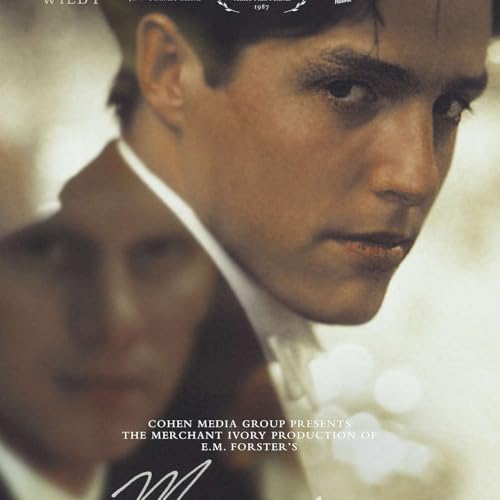
    In this deeply personal episode, Grace Curley explores Maurice by E.M. Forster as both a novel and a life-altering emotional experience. Beginning with the moment she finishes the book on a summer afternoon, she reflects on how profoundly Maurice’s journey mirrors her own: the suffocation of inauthentic living, the fear of the future, and the ache of unrealised selfhood.

    The episode traces Maurice’s story from repression and self-denial, through his doomed relationship with the intellectually cautious Clive, to his spiritual awakening through love with Alec Scudder—a love that finally gives him the courage to abandon society and live truthfully.

    Grace argues that Maurice is not merely a love story or a coming-of-age tale, but a radical meditation on freedom, identity, and the terrifying, ecstatic act of becoming oneself. It is, ultimately, a story about what happens when a human being stops asking to be fixed—and starts choosing to be free.

    NOTES:

    - Grace mistakenly mentions it is set in the 18th Century, but it is set in the 20th Century.

    - FUN FACT: Maurice was written in 1913, but was only published posthumously in 1971. The movie came out in 1987.

    - Please note these opinions are purely subjective.

    Support the show

    Thank you for listening! Leave a comment and stay tuned.

    Show More Show Less
    23 mins
  • Interstellar (2014) Explained
    Apr 13 2025

    Send us a text

    In this episode, Grace demystifies a few common misunderstandings with the movie, Interstellar (2014), directed by Christopher Nolan. Topics covered include:

    - What is the 5th and 6th Dimension?

    - How did Coop survive? What happened in the wormhole?

    - How did Coop see his daughter?

    - The positivist outlook of Interstellar (as opposed to the common Nihilism of space movies)

    *SPOILERS AHEAD*

    DISCLAIMER: I am not an expert, this is just my personal interpretation of the film.

    Support the show

    Thank you for listening! Leave a comment and stay tuned.

    Show More Show Less
    15 mins
  • East of Eden by John Steinbeck — The Best Novel Ever?
    Feb 27 2025

    Send us a text

    *MAJOR SPOILERS AHEAD*

    Grace is back (after a long-hiatus) to ramble about her new favourite novel, East of Eden (1952) by Nobel-prize winning author John Steinbeck. This episode gives a general overview of the book, the major plot-points, and the psychological/philosophical implications.

    Set in the rich farmland of Salinas Valley, California, East of Eden follows the intertwined destinies of two families — the Trasks and the Hamiltons — whose generations helplessly re-enact the fall of Adam and Eve and the poisonous rivalry of Cain and Abel. The allegory, which is the use of hidden moral meanings, teaches the theme that man is flawed but can find forgiveness by way of free will.

    DISCLAIMER: The following episode contains major spoilers and is representative of my personal interpretation of the novel. In addition, please ignore any factual mistakes in the retelling of the storyline as this episode was conducted without a script :)

    Support the show

    Thank you for listening! Leave a comment and stay tuned.

    Show More Show Less
    1 hr and 10 mins
  • Digesting Pop-Art: Warhol, Basquiat, Haring & Rothko
    Apr 7 2023

    Send us a text

    CHECK OUT THE VIDEOESSAY: https://www.youtube.com/watch?v=l3rGFoAMbKs&t=35s

    What is Pop-Art? Why is it significant?

    What is all the rage about Andy Warhol? What separates and connects the artists of the era? What differentiates the masters and the present day modern artists?

    Musings and analysis from the Pop-Masters Exhibition of New York, featuring Andy Warhol, Jean-Michel Basquiat, and Keith Haring.

    -

    I once was not a Pop Art appreciator. This podcast was inspired by my experience at a Pop Art exhibit featuring works by Andy Warhol, Jean-Michel Basquiat, and Keith Haring. Seeing their paintings in the flesh made me reevaluate everything I thought I knew about Pop Art.

    I went into this exhibition knowing relatively nothing about Pop Art. But during the exhibit, I found myself ignoring the descriptions about the art. For me, I got more out of just experiencing the paintings rather than reading the explanations of them. I believed that is how art is meant to be enjoyed: as an experience. I don't think art should require 'context' for it to be understood by the viewer. Art is, in itself, a mode of communication.


    DISCLAIMER: This is just my personal experience and perspective on Pop Art and the Pop Artists. This is by no means fact. In this essay, I may be found to romanticise a lot about life and the ugly aspects of it. But I am not trying to delude or ignore ugliness, but find beauty in ugliness — because to me, that is the only way to survive. To find meaning and beauty in everything, even the meaningless and terrible, is not meant to disguise anything — it is to experience the full facets of life as a human. To accept everything as part of our intrinsic force here on earth.


    *I am not speaking on the artist's personalities or personal lives.*


    Art referenced in this episode:

    Andy Warhol, 'Cross' (1981)
    Basquiat and Warhol, '
    Untitled' (1984)
    Basquiat,
    'New York, New York' (1981)
    Keith Haring, '
    Untitled' (1981)
    Mark Rothko, '
    Untitled, Red' (1961)

    *NOTE: Mark Rothko was not part of the 'Pop-Art' movement, but the Abstract Expressionism movement. However, I wanted to talk about him anyway in regards to these topics.

    Support the show

    Thank you for listening! Leave a comment and stay tuned.

    Show More Show Less
    28 mins
  • The Banshees of Inisherin (2022) — Meaning in a Meaningless World
    Feb 4 2023

    Send us a text

    On a remote island off the coast of Ireland, two lifelong friends find themselves at an impasse when one abruptly ends their relationship, with alarming consequences for both of them.

    In this episode, Grace talks about the 2022 (9X Oscar Nom) tragicomedy, 'The Banshees of Inisherin' by Martin McDonagh, starring Colin Farrell and Brendan Gleeson.

    Some of the topics covered include:
    — Why does Colm cut off his fingers?
    — Symbolism of Images
    — The dichotomies of Colm and Pádraic
    — The cosmic indifference of the world and the subsequent mercy
    — The mutilation of religion and religion through mutilation

    Support the show

    Thank you for listening! Leave a comment and stay tuned.

    Show More Show Less
    30 mins
  • Great Expectations by Charles Dickens — Breaking Expectations
    Mar 3 2022

    Send us a text

    In this episode, Grace shares her thoughts on the iconic classic novel 'Great Expectations' by Charles Dickens, which she just finished reading for the first time. Warning: SPOILERS AHEAD.

    Support the show

    Thank you for listening! Leave a comment and stay tuned.
    Show More Show Less
    23 mins
  • A Study In Masculinity — Why Daniel Craig is the Best James Bond
    Jan 13 2022

    Send us a text

    In response to Grace's James Bond edit reaching 1.5M views, Grace discusses (quite self-indulgently) why Daniel Craig is the best James Bond by digging into the psychology behind his Bond, the becoming relationship between him and Vesper, and the qualities that makes him a TRUE "alpha male." Mainly talking about Casino Royale (the best Bond film of all time!)

    SPOILERS AHEAD.

    Follow the official Twitter: @tsornotpod

    Support the show

    Thank you for listening! Leave a comment and stay tuned.

    Show More Show Less
    37 mins
  • The REAL Meaning of Lord of the Rings
    Sep 20 2021

    Send us a text

    In part 1 of this episode of ‘To See or Not to See,’ Grace finally dives into her favourite films of all time: The Lord of the Rings series. The topics include:

    • We are all the ‘lord of the ring’
    • What does the One Ring symbolise?
    • Why only Frodo can be the ring bearer, and why Sam cannot
    • What do the main characters symbolise? — The Essence, The Shadow, The Self, and the Higher Self
    • Why Frodo is the strongest character
    • The polarity of Frodo and Gollum
    • How Frodo and Sam are two halves of a whole
    • Why Frodo failed at the end
    • Why only the One Spirit can defeat the One Ring


    Follow the twitter account: @tsornotpod

    Support the show

    Thank you for listening! Leave a comment and stay tuned.

    Show More Show Less
    40 mins