Episodes

  • Episode 21 - Tuna Melts and Price Tampering
    Feb 26 2026

    A tuna melt in Lake Tahoe sent me down a rabbit hole. How did a fish once harvested through ancient Mediterranean trap fisheries become a cheap pantry staple — and sometimes a luxury item worth thousands?

    In this episode, we trace tuna’s journey from seasonal coastal ritual to industrial global commodity, uncover a real corporate price-fixing scandal involving major canned tuna brands, and explore how one simple sandwich connects migration, manufacturing, and modern convenience.

    Your lunch didn’t get cheap by accident.


    References:

    Food and Agriculture Organization of the United Nations. (n.d.). Tuna fisheries and resources. https://www.fao.org/fishery/en/topic/14854

    International Commission for the Conservation of Atlantic Tunas. (n.d.). Stock assessments and conservation measures. https://www.iccat.int/en/assess.htm

    National Oceanic and Atmospheric Administration Fisheries. (n.d.). Atlantic bluefin tuna (Thunnus thynnus). https://www.fisheries.noaa.gov/species/atlantic-bluefin-tuna

    National Oceanic and Atmospheric Administration Fisheries. (n.d.). Pacific sardine (Sardinops sagax). https://www.fisheries.noaa.gov/species/pacific-sardine

    Smith, A. F. (Ed.). (2007). The Oxford companion to American food and drink. Oxford University Press.

    Smithsonian Ocean Portal. (n.d.). Purse seine fishing. https://ocean.si.edu/ocean-life/fish/purse-seine-fishing

    U.S. Department of Justice, Office of Public Affairs. (2017, May 8). Bumble Bee Foods LLC agrees to plead guilty to fixing prices of canned tuna. https://www.justice.gov/opa/pr/bumble-bee-foods-llc-agrees-plead-guilty-fixing-prices-canned-tuna

    U.S. Department of Justice, Office of Public Affairs. (2018, September 11). StarKist Co. ordered to pay $100 million criminal fine for participating in canned tuna price-fixing conspiracy. https://www.justice.gov/opa/pr/starkist-co-ordered-pay-100-million-criminal-fine-participating-canned-tuna-price

    Show More Show Less
    17 mins
  • Episode 20 - Tasmanian Miner survival story and the history of Muesli
    Feb 19 2026

    What do a collapsed gold mine in Tasmania and a Swiss breakfast classic have in common?

    A single muesli bar.

    In this episode of True Crime Culinary, we start nearly a kilometer underground at Beaconsfield Mine, where two trapped miners rationed one muesli bar while rescue crews drilled through unstable rock to reach them.

    From there, we rewind to early-1900s Switzerland, where physician Maximilian Bircher-Benner first created muesli as a medical food for his sanatorium patients — part of a broader health movement shaped by tuberculosis, industrialization, and changing diets.

    Along the way, we unpack:

    🥣 how muesli went from clinic mash to global snack bar
    ⛏️ how modern mine rescues actually work
    🧠 why oats, nuts, and dried fruit make surprisingly effective emergency calories

    This isn’t a story about miracles.
    It’s about engineering, nutrition, and continuity — and how a humble Swiss food quietly became survival fuel.

    If you’ve ever wondered how breakfast cereal ends up underground, this one’s for you.


    References:

    Beaconsfield Mine collapse — Wikipedia overviewProvides a timeline of the mine collapse, survival of Brant Webb and Todd Russell, and rescue.🔗 https://en.wikipedia.org/wiki/Beaconsfield_Mine_collapse

    ABC News: Todd Russell survived 14 days undergroundFirst-hand account and detailed reporting on the 2006 collapse and rescue operation.🔗 https://www.abc.net.au/news/2024-08-21/beaconsfield-mine-disaster-todd-russell-i-was-actually-there/104245960

    Beaconsfield miners rescued recounting muesli bar survivalMentions that the two miners survived with water and a shared muesli bar as rescue efforts continued.🔗 https://www.amsj.com.au/beaconsfield-miners-rescued/

    History of muesli — WikipediaOutlines that muesli was introduced around 1900 by Swiss doctor Maximilian Bircher-Benner at his sanatorium as part of a health-focused diet.🔗 https://en.wikipedia.org/wiki/Muesli

    About Switzerland: Muesli the world-famous Swiss breakfast classicProvides context on Bircher-Benner’s original recipe and health philosophy behind muesli in Switzerland.🔗 https://www.aboutswitzerland.eda.admin.ch/en/muesli-the-world-famous-swiss-breakfast-classic

    Bio-Familia history — Swiss commercial muesli producerDescribes the industrial production of Birchermüesli beginning in 1959 and how Swiss brands helped spread muesli internationally.🔗 https://bio-familia.com/en/bio-familia/company/our-history

    🔗 “Mine Rescue — an overview” (ScienceDirect Topics) — This overview explains how mine rescue teams are structured, trained, and equipped to respond to underground emergencies — exploring roles, procedures, and safety aims in real rescue operations.

    https://www.sciencedirect.com/topics/engineering/mine-rescue


    Show More Show Less
    14 mins
  • Episode 19 - The Twinkie Made Me Do It
    Feb 13 2026

    In this episode of True Crime Culinary, Leah unpacks one of the most misunderstood legal moments in American history: the so-called “Twinkie Defense.”

    In 1978, former San Francisco supervisor Dan White murdered Mayor George Moscone and civil rights icon Harvey Milk inside City Hall.

    At trial, White’s attorneys argued diminished capacity, pointing to severe depression and sudden changes in behavior — including a reliance on junk food like Twinkies — as evidence of mental collapse. The media flattened that nuance into a headline-friendly myth: The Twinkie Defense.

    But Twinkies didn’t cause murder.

    So what really happened?

    Leah explores the crime, the courtroom, the cultural fallout — and the surprising food history behind America’s most famous snack cake. Along the way, she reflects on mental health, adaptation, and why a soft yellow sponge cake became shorthand for something far heavier.

    This isn’t just a story about dessert.

    It’s about suffering, change, and what happens when we miss the point.


    1. Cornell Law School — Twinkie Defense (legal definition & context)
      https://www.law.cornell.edu/wex/twinkie_defense

    2. Famous Trials — The Trial of Dan White (full case background + testimony)
      https://famous-trials.com/danwhite

    3. Famous Trials — Dan White Chronology (timeline of events)
      https://www.famous-trials.com/danwhite/591-chronology

    4. Wikipedia — Twinkie Defense (media framing + public reaction)
      https://en.wikipedia.org/wiki/Twinkie_defense

    5. The Spruce Eats — History of the Twinkie (food origin story)
      https://www.thespruceeats.com/the-history-of-the-twinkie-1328770


    Show More Show Less
    14 mins
  • Episode 18 - Smuggled, Sentenced, and Seasoned Popcorn
    Feb 5 2026

    In this episode of True Crime Culinary, Leah tells the story of Emily O’Brien, a young Canadian entrepreneur whose life took a dramatic turn after being caught carrying drugs across a border. What followed was incarceration — and an unexpected turning point.

    While serving time, Emily noticed how food became a rare point of connection inside prison. With limited resources and a small weekly allowance, she gravitated toward popcorn: inexpensive, customizable, and comforting. That simple snack sparked an idea that eventually became a gourmet popcorn business built around second chances and fair employment for formerly incarcerated people.

    But popcorn’s role in this story goes deeper.

    Popcorn itself has a long history as a survival food — cultivated for thousands of years and valued because it’s easy to store, simple to prepare, and transforms dramatically under heat. Long before movie theaters, people ate popcorn at home, sometimes even for breakfast, mixed with milk or sweeteners.

    Its modern association with cinema emerged in the early 20th century, when popcorn vendors began selling outside theaters. During the Great Depression, popcorn’s low cost and high profit margins helped struggling movie houses stay afloat. Eventually, theaters embraced it fully, turning popcorn into the defining movie snack we know today.

    This episode weaves Emily’s comeback story with popcorn’s cultural journey — from humble kernels to silver screens — exploring how pressure reshapes both people and food. It’s a story about consequences, resilience, and how something ordinary can become a pathway forward.

    References:

    Emily O’Brien’s story and founding of Comeback Snacks
    Toronto Life — I Started My Popcorn Business From Behind Bars. It Gave Me a Second Chance at Life
    https://torontolife.com/memoir/i-started-my-popcorn-business-from-behind-bars-it-gave-me-a-second-chance-at-life/

    Why popcorn became a movie theater staple
    Encyclopaedia Britannica — Why Do Movie Theaters Serve Popcorn?
    https://www.britannica.com/story/why-do-movie-theaters-serve-popcorn

    Popcorn and cinema culture
    Smithsonian Magazine — Why Do We Eat Popcorn at the Movies?
    https://www.smithsonianmag.com/arts-culture/why-do-we-eat-popcorn-at-the-movies-475063/

    Overview of popcorn’s long history
    SeatUp — History of Popcorn
    https://seatup.com/blog/history-of-popcorn/

    Early household uses of popcorn (including breakfast myths)
    History Myths — Revisited Myth #91: Popcorn Was the First Breakfast Cereal
    https://historymyths.wordpress.com/2016/07/02/revisited-myth-91-popcorn-was-the-first-breakfast-cereal/


    Show More Show Less
    13 mins
  • Episode 17 - Mystery Macaroni and Egyptian Koshary
    Jan 29 2026

    When police in New Jersey discovered more than 500 pounds of pasta dumped along a quiet creek, the case went viral — and nowhere. No charges. No answers.

    From that bizarre crime scene, this episode of True Crime Culinary travels to Egypt, where pasta becomes part of koshary, the nation’s beloved street food and a UNESCO-recognized cultural tradition.

    One story of waste. One story of survival.

    Because food is never just food — it’s history.


    SOURCE LIST

    1. Old Bridge Pasta Dump Coverage (News Report)
      “No charges filed against man who dumped 500 pounds of pasta in Old Bridge” — ABC 7 New York (Eyewitness News). Real reporting on the pasta dump, official statements, and aftermath.

    2. Pasta Dump Local Reporting (Detailed Account)
      “Hundreds of pounds of pasta dumped in New Jersey woods” — 6abc / WHYY. On-the-ground reporting about the discovery of the pasta piles and community reaction.

    3. UNESCO Lists Koshary as Intangible Cultural Heritage
      “Egyptian dish koshary added to UNESCO’s intangible cultural heritage list” — The New Arab. Highlights the official inscription in 2025 and cultural significance.

    4. UNESCO Official Entry for Koshary
      “Koshary, daily life dish and practices associated with it” — UNESCO Representatives List page. Details the dish’s ingredients, cultural practices, and heritage listing.

    5. Koshary History Overview (Wikipedia)
      “Koshary” — Wikipedia page. A neutral encyclopedic overview of what koshary is, its composition, and a broad history including heritage status in 2025.

    6. Origins & Cultural Context of Koshary
      “How Egypt’s National Dish, Koshary, Arrived In The Country” — Food Republic. Explores debated origins of koshary and influences from global cuisines.

    7. Extended UNESCO Cultural Context
      “UNESCO Intangible Cultural Heritage Lists” — Wikipedia. Provides placement of koshary among other heritage elements and explains what the list is.

    Show More Show Less
    10 mins
  • Episode 16 - Early Morning Murder, Late Night Falafel
    Jan 22 2026

    In January 2017, 20-year-old Birna Brjánsdóttir disappeared after a night out in Reykjavík. The last confirmed footage shows her walking alone down Laugavegur, eating a falafel pita. Within days, Iceland launched the largest search in its modern history.

    This episode of True Crime Culinary recounts the facts of Birna’s case and follows an unexpected thread: how falafel — a dish that began as fasting food in Egypt — became a common late-night meal in Iceland.

    From fava beans to chickpeas, from religious kitchens to street food, this is a story about how food travels, adapts, and becomes ordinary in places far from where it began.


    1. 📚 References

      • Falafel (Wikipedia). Overview of the dish’s ingredients, origins, variations, and cultural context. Wikipedia
        https://en.wikipedia.org/wiki/Falafel

      • Falafel: A Humble Vegetarian Staple in Middle Eastern Cuisine — Munchery. Article on falafel’s cultural role, classic preparation, and serving ideas. munchery.com
        https://www.munchery.com/blog/falafel-a-humble-staple-in-middle-eastern-cuisine/

      • The History of Falafel (CultureMap). Notes on falafel’s likely origins, the fava bean → chickpea shift, and global spread. The Culture Map
        https://theculturemap.com/history-of-falafel-and-best-countries-to-taste-it/

      • Murder of Birna Brjánsdóttir (Wikipedia). Factual timeline of the disappearance, search, and conviction. Wikipedia
        https://en.wikipedia.org/wiki/Murder_of_Birna_Brj%C3%A1nsd%C3%B3ttir

      • The Murder That Devastated An Entire Country — True Crime Edition. Context and narrative details of Birna’s case. True Crime Edition
        https://www.truecrimeedition.com/post/birna-brjansdottir

    Show More Show Less
    11 mins
  • Episode 15 - The 100 Ton Peanut Heist
    Jan 15 2026

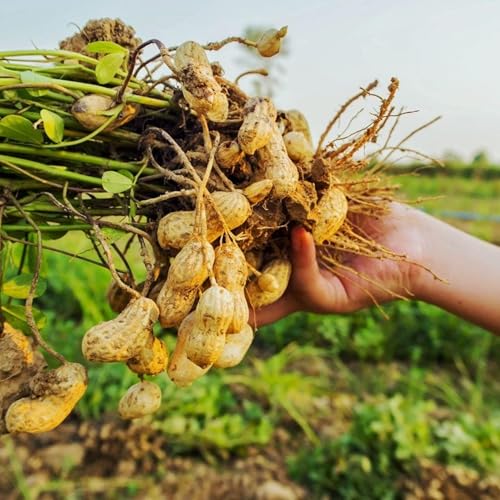
    They drilled through concrete. They lined up multiple trucks. They stole more than 100 tons of something most people would never notice.

    In early 2022, one of the largest agricultural heists in Israeli history left investigators baffled. The target wasn’t gold, fuel, or electronics — but a food so ordinary it barely registers as valuable… until you understand its history.

    In this episode of True Crime Culinary, we follow the logistics of the theft, the suspects’ background, and the surprising reason this product was worth breaking through reinforced walls to steal. Then we trace its journey across continents — from ancient burial sites in South America, through West African kitchens, into American fields — and uncover how a quiet survival food became a global commodity hiding in plain sight.

    This isn’t a story about snacks. It’s a story about planning, scarcity, and the foods we stop seeing once they become everywhere.


    Sources:

    • “That’s nuts!: 104-ton peanut heist leads to quick arrest” — Israel Hayom (2025) www.israelhayom.com

    • “Suspect arrested for stealing over 104 tons of peanuts in Be’er Sheba” — Jerusalem Post (2025) Jerusalem Post

    • Peanut plant origin and cultivation history — Wikipedia Wikipedia

    • Peanut domestication & ancient cultivation — ScienceDirect summary ScienceDirect

    • Peanut origin & spread via European trade — Etymonline etymonline.com

    • George Washington Carver biography and bulletins — Wikipedia Wikipedia

    • Carver’s contributions to peanut agriculture — History.com HISTORY

    • George Washington Carver agricultural legacy — National Peanut Board National Peanut Board

    Show More Show Less
    11 mins
  • Episode 14 - What a Can of Food Witnessed: The Story of Gwen Araujo
    Jan 8 2026

    In 2002, Gwen Araujo, a 17-year-old transgender girl, was murdered in California for living openly as herself.

    In this episode of True Crime Culinary, host Leah Llach tells Gwen’s story with care, personal reflection, and historical context — examining how everyday cruelty escalates, how violence is excused, and how one case helped change the law.

    We follow Gwen’s life, the night of the attack, and the aftermath that led to the Gwen Araujo Justice for Victims Act, which limited the use of the so-called “trans panic” defense in court.

    Then, through the show’s culinary lens, we step back to examine the object at the center of the crime: a can of food.
    Invented to preserve life — to feed armies, families, and people facing scarcity — the can represents humanity’s long struggle to protect what matters. This episode asks what it means when something designed to sustain becomes a weapon instead.

    This is a story about memory, dignity, and the responsibility to see people as fully human — before harm is done.


    📚 References & Further Reading

    • WikipediaMurder of Gwen Araujo
      https://en.wikipedia.org/wiki/Murder_of_Gwen_Araujo
      (Chronology, trial details, and legal outcomes)

    • ACLU of Northern CaliforniaTrans Panic Defense and Legal Reform
      https://www.aclunc.org

    • The New York Times — Coverage of Gwen Araujo trial and aftermath

    • Smithsonian National Museum of American HistoryThe History of Canning
      https://americanhistory.si.edu/

    • Encyclopaedia BritannicaFood Preservation / Canning
      https://www.britannica.com/topic/canning-food-processing

    • National WWII MuseumCanned Food and Military Rations
      https://www.nationalww2museum.org


    Show More Show Less
    10 mins