Episodes

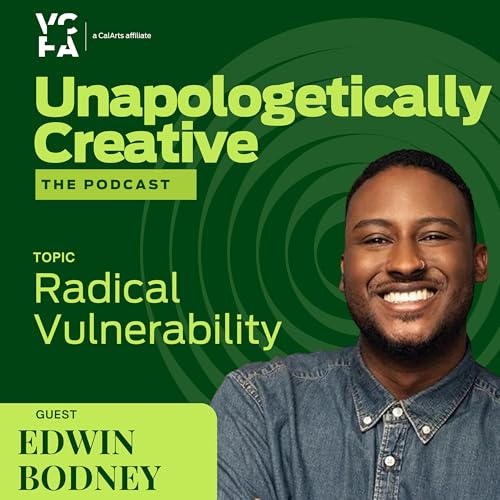
  • Creating Closer to the Nerve: edwin bodney on Grief, Performance, and living Without Apology
    Feb 17 2026

    Poet, performer, and educator edwin bodney joins Unapologetically Creative for a deeply honest conversation about writing closer to the nerve, transforming grief into a landscape for discovery, and creating work rooted in truth, vulnerability, and connection. Edwin reflects on their journey from early open mic nights at the Poetry Lounge to becoming a powerful voice in contemporary spoken word, exploring how performance sharpened their craft and how storytelling became a space for survival, joy, and radical empathy.


    Together, edwin and host Andrew Ramsammy unpack what it means to live and create without apology, why spoken word sits at the foundation of all literature, and how artists can continue their own stories on their own terms. From grief and identity to creativity as courage, this episode is a powerful reminder that no one else gets to write the ending of your story.


    2:04 Getting Closer to the Nerve
    4:00 Grief as Geography
    7:51 Discovering Poetry and Performance
    13:44 First Time on Stage
    15:55 Growth Over Time
    16:22 Identity, Belonging, and Connection
    17:50 Bringing Audiences Closer to Themselves
    19:25 Living Without Apology
    20:27 Spoken Word as the Foundation of Literature
    21:14 Breaking Rules in the Creative Process
    21:54 Where Performance and Writing Converge
    23:59 Writing for Truth and Vulnerability
    25:36 Expanding Reach Through social media
    26:58 Continuing Your Own Story

    Show More Show Less
    29 mins
  • Writing Through Humor and Pain: Brooke Champagne on Identity, Storytelling, and Creative Truth
    Feb 3 2026

    Brooke Champagne, award winning author of Nola Face: A Latina’s Life in the Big Easy, joins Unapologetically Creative for a conversation about writing from the most personal places and finding humor inside life’s contradictions. Growing up biracial in New Orleans shaped her voice, teaching her to hold darkness and joy in the same frame and to explore the complicated emotions that drive honest storytelling.


    Brooke reflects on the risks of telling intimate family stories, the power of vulnerability on the page, and why writers must abandon people pleasing in pursuit of truth. She also shares how teaching and mentoring emerging writers reinforces her belief that, even in the age of AI, human storytelling…our need for that in order to survive is not going away.


    This episode is a thoughtful look at identity, resilience, creative courage, and the responsibility artists have to document the world around them while inspiring others to make art of their own.


    1:41 — Identity, Language, and Growing Up Biracial
    4:18 — Writing the Hard Stuff
    4:57 — The Philosophy of “Bugginess”
    7:22 — Humor as Survival
    9:25 — Abandoning People Pleasing to Tell the Truth
    11:26 — Writing Risky, Intimate Stories
    13:20 — When Family Reads Your Work
    16:02 — How New Orleans Shapes Her Voice
    17:18 — Editing, Deep Reading, and Literary Context
    19:48 — Teaching Writers in the Age of AI
    21:39 — Why Writers Must Keep Going
    23:54 — What It Means to Be Unapologetically Creative
    25:13 — Advice to Her Younger Self

    Show More Show Less
    27 mins
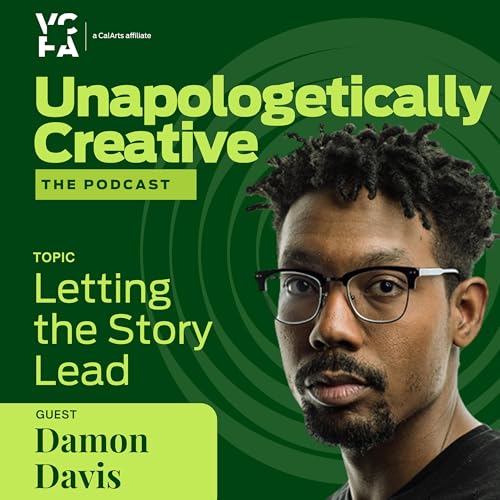
  • Letting the Story Lead: Damon Davis on Medium, Meaning, and Creative Practice
    Jan 20 2026

    Damon Davis reflects on how stories shape meaning, memory, and responsibility. Working across film, music, visual art, and public installation, Davis explains why he lets the story dictate the medium and how creative practice begins with close attention to place, history, and lived experience.

    Throughout the conversation, Davis discusses subjectivity and fairness in storytelling, the implications of local work entering national institutions, and why art often becomes one of the lasting records of a moment in time. He shares how process, patience, and care guide his decisions, and why resisting labels allows the work to remain honest and grounded in context.

    Rather than offering prescriptions, Davis leaves us with a way of thinking about creative practice that values intention over posture, meaning over speed, and the long life of work made with care.


    0:22 — Introduction and Background

    2:21 — Letting the Story Dictate the Medium

    2:54 — Early Life, Family, and Creative Roots

    4:59 — Process, Symbols, and Public Monuments

    7:53 — Local Stories Going National

    8:20 — Ferguson and Making Whose Streets?

    10:53 — The Smithsonian and Art as Historical Record

    15:06 — Art as a Tool for Truth and Authenticity

    15:52 — Grief, Tropes, and Telling Difficult Stories

    17:04 — Subjectivity, Objectivity, and Power

    18:30 — Teaching, Stillness, and Self-Awareness

    20:23 — Accolades, Ego, and Staying Grounded

    22:29 — Relationships and Creative Fuel

    23:48 — Activism, Burnout, and Branding

    25:40 — Fatigue, Relevance, and Stepping Away

    26:36 — Creating an Opera

    30:16 — The Three Phase Creative Vision

    33:00 — Being Unapologetically Creative

    Show More Show Less
    34 mins
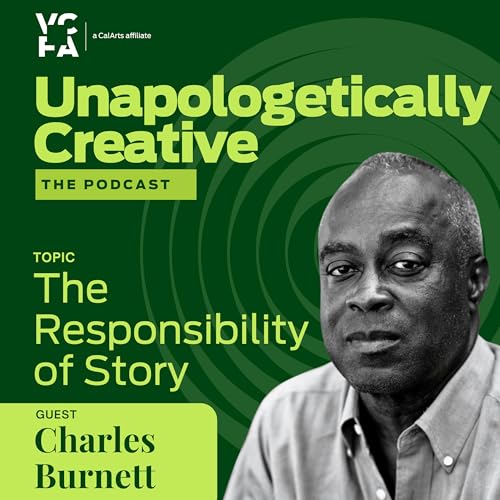
  • The Responsibility of Story: Charles Burnett on Community, History, and Filmmaking Beyond Entertainment
    Jan 5 2026

    Filmmaker Charles Burnett reflects on a career shaped by community, history, and a deep sense of responsibility to tell stories often left unseen. Growing up in Watts and coming of age during a pivotal moment in American history, Burnett shares how lived experience, observation, and empathy became central to his approach to filmmaking.

    In this conversation, Burnett discusses why he has always viewed film as more than entertainment, emphasizing storytelling as a way to preserve memory, reflect social realities, and give voice to everyday life. He speaks about his time at UCLA, the challenges Black filmmakers faced in gaining access and recognition, and how works like Killer of Sheep emerged from a commitment to authenticity rather than spectacle.

    Burnett also reflects on legacy and what it means to remain creatively engaged over time, offering insight into the responsibility artists carry to their communities and to future generations through the stories they choose to tell.

    02:10 – Early Life in Watts and Learning to Observe

    04:30 – Community as a Source of Story

    06:45 – UCLA and a Transformative Moment in History

    09:10 – Access, Barriers, and Being Seen as a Filmmaker

    11:45 – Film as Reflection, Not Explanation

    14:00 – Rejecting Spectacle and Hollywood Expectations

    16:10 – The Making of Killer of Sheep

    19:20 – Everyday Life as Cinematic Material

    21:40 – International Recognition and U.S. Resistance

    24:00 – Preservation, Memory, and Cultural Responsibility

    26:10 – Teaching, Mentorship, and Passing Knowledge Forward

    28:15 – Legacy, Responsibility, and Closing Reflections

    Show More Show Less
    31 mins
  • The Power of Welcome: Daniel Nayeri on Specificity, Truth, and Universal Storytelling
    Nov 19 2025

    Daniel Nayeri explores how specific details in a story can reveal something universal. He reflects on his fascination with “welcome,” from inviting strangers into his home for dinner to the moment characters meet around a fire, and discusses the role of food in his life and how being a pastry chef shaped his sense of pleasure, honesty, and craft. Daniel also shares what readers have taught him about vulnerability, why trusting his own palate matters, and how children and adults bring different emotional tools to stories, showing how specificity and truth help readers see pieces of their own lives in someone else’s story.


    0:41 Introduction of Daniel Nayeri and Everything Sad Is Untrue.

    1:14 The idea of “welcome” and storytelling through food.

    2:27 Shoes on or off? Cultural norms and politeness as storytelling entry points.

    3:47 Hosting strangers: the publisher’s reaction and surprising outcomes.

    4:38 Unexpected connections — photographers, dinners, and shared creative space.

    5:05 Daniel’s philosophy: everyone begins with welcome, but it can be lost.

    5:54 Campfire metaphor: the moment two strangers negotiate trust.

    7:33 Visualization and metaphor: crafting scenes with all five senses.

    10:02 Life as a pastry chef: honest reactions in an open kitchen.

    11:40 Applying the pastry chef mindset to writing.

    13:52 Entertainment vs. art: palate cleansers and deeper meaning.

    14:48 Why art isn’t just “chocolate and cocaine.”

    15:34 Cooking and fighting: Daniel’s primary metaphors for truth.

    16:35 Mike Tyson’s “everyone has a plan until they get punched.”

    18:18 “Trust your palate”: the chef’s lesson on honesty.

    19:04 Why trusting your own palate matters creatively.

    20:08 Writing for children: appropriateness and development.

    21:26 Children’s emotional depth and articulation.

    26:07 Emails from readers and the weight of their stories.

    29:03 Seeing ourselves everywhere; anthropomorphizing the world.

    29:35 Art’s purpose: inviting others in without dehumanizing them.

    30:30 Being unapologetically creative as a primal human act.

    Show More Show Less
    32 mins
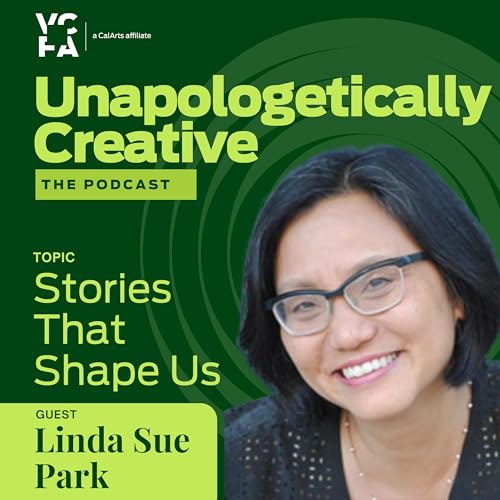
  • Stories that Shape Us: Linda Sue Park on Representation, Reading, and Real World Impact
    Nov 5 2025

    Linda Sue Park, Newbery Medalist and author of A Single Shard and A Long Walk to Water, reflects on growing up without stories that reflected her Korean identity, the importance of representation in books, and how reading helps young people develop deep thinking skills. She also shares the real-world impact of A Long Walk to Water, which inspired students to raise millions for clean water projects in South Sudan and discusses how stories give children a safe space to practice life.


    2:04 How her creative journey began, childhood reading and early influences

    6:07 Lack of identity representation in childhood reading

    6:16 Experiences growing up Korean American and early awareness of difference

    6:46 How representation influenced her writing and Korean historical focus

    23:26 Discussion of A Long Walk to Water and its global impact

    23:51 Credit to her husband’s journalism and origins of the story of Salva Dut

    24:12 How the book spread through classrooms and inspired students to act

    26:19 How it felt to see the book’s real world impact

    26:23 Reflections on young readers’ response and her newest book about coral reefs

    26:56 Question about advice to her younger self

    27:07 Advice, embracing what makes you different

    27:27 How would you present that in book form

    27:29 Continuing reflections, being true to oneself and finding strengths in difference

    Show More Show Less
    30 mins
  • The Art of Listening: Miller Wrenn on Improvisation, Authenticity, and Creative Connection
    Oct 22 2025

    Miller Wrenn is a bassist and composer who explores the beauty of improvisation, collaboration, and the deep trust that fuels creative work. In this conversation with Andrew Ramsammy, Wrenn reflects on how neurodiversity shapes his process, why true artistry begins with openness, and how music becomes a living dialogue between people. From his early days as an 11-year-old bassist to collaborations with acclaimed artists like Hildur Guðnadóttir, Wrenn reveals the lessons of resilience, community, and honesty that define his craft.

    00:00–00:23—Opening Reflection
    00:28–01:35—Introduction
    01:36–03:05—Full Circle at CalArts
    03:06–05:11—Early Beginnings in Music
    05:12–06:37—Discovering Improvisation
    07:03–09:54—Collaboration and Connection
    09:54–13:04—The First “Date” with Hildur Guðnadóttir
    13:04–16:13—Experimentation and Musical Honesty
    16:14–18:29—Balancing Structure and Spontaneity
    18:30–19:52—Preparing for Improvised Performance
    19:53–21:24—Themes and Emotional Exploration
    21:25–22:56—Creative Blocks and Deep Listening
    22:57–24:46—Letting Go of Ego
    24:47–26:39—AI and the Future of Music
    26:40–28:51—Advice to His Younger Self
    28:52–29:51—Defining “Unapologetically Creative”
    29:57–30:39—Closing Thoughts

    Show More Show Less
    31 mins
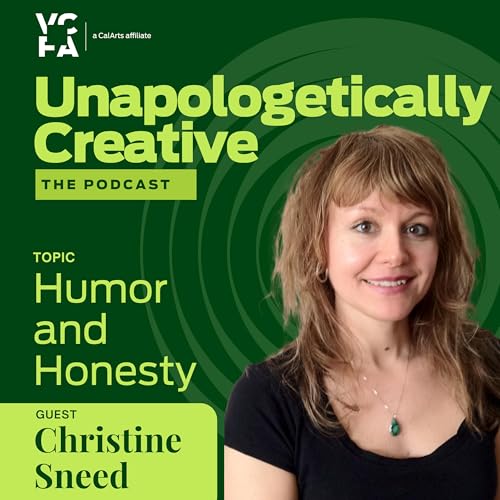
  • Between Humor and Honesty: Christine Sneed on Story, Identity, and Creative Persistence
    Oct 8 2025

    Christine Sneed, award-winning author and creative writing professor, reflects on her path from teenage poetry journals to national acclaim. She shares how humor, specificity, and emotional honesty shape her storytelling, the moment in Paris that cemented her identity as a writer, and why trusting your instincts matters more than chasing trends. Christine also opens up about the realities of publishing, the craft lessons she teaches her students, and the quiet persistence required to build a life in literature.


    01:54 — What Inspired Christine to Start Writing
    02:38 — The Epiphany Moment in Paris: “I’m Going to Be a Writer”
    04:36 — Returning from France & Early Mentors
    05:53 — Getting an MFA at Indiana University
    06:59 — Balancing Life, Writing, and Early Struggles
    07:24 — What is “Domestic Realism”?
    07:51 — Writing Structure, Titles, and Episodic Thinking
    08:47 — Narrative Structure & Flashbacks
    09:44 — Christine’s Writing Process & Routine
    11:28 — Writing Humor & Her Book *Please Be Advised*
    13:58 — Corporate Life as Creative Fuel
    15:52 — Writing *Little Known Facts* and Hollywood Dynamics
    17:30 — Who She Writes For (and Why)
    18:08 — Research & Writing from Different Perspectives
    19:39 — Writing for Publication vs Writing for Passion
    21:12 — The “First Pancake” Philosophy
    21:33 — Teaching & How It Shapes Her Writing
    22:56 — How to Create Specific, Real Characters
    23:09 — Craft Advice & The Power of Detail
    25:23 — The Importance of Organic Strangeness in Fiction
    25:26 — Advice to Her Younger Self
    26:36 — What It Means to Be Unapologetically Creative

    Show More Show Less
    30 mins