Episodes

  • Walk This Way: The song that changed everything [RE-UPLOAD]
    May 13 2026

    Back in 1975 Aerosmith created a song out of luck, and it became a Billboard Top 10 hit. The beat and the guitar riff was heavily used years later in underground rap parties in the Bronx, and Run-DMC had actually already rapped over the song before without realizing it was an Aerosmith's song, or even who the rock band was. The story behind this cover is so unique because at first, the rap group did not want to record it for considering the lyrics "hillbilly gibberish", but when released it became an instant hit and it even peaked higher than the original version. It also catapulted Aerosmith again to mainstream at a time the band wasn't having their best time.Listen to the full episode above and let us know yout thoughts behind this incredible cover.

    📱 Follow Uncovering the Cover:

    Instagram: [@uncoveringthecover]

    TikTok: [@pinzondiego]

    Website: [pinzondiego.com/podcast]

    CREDITS:

    Host, Producer, Editor: Diego Pinzón

    SUPPORT THE SHOW:

    If you enjoyed this episode: ✅ Subscribe to the show ✅ Leave a 5-star review ✅ Share with a friend ✅ Follow us on social media

    DISCLAIMER: The views and opinions expressed in this podcast are those of the host and do not necessarily reflect the official policy or position of any artist, label, or organization mentioned. All music samples are used for educational and commentary purposes under fair use doctrine.

    Show More Show Less
    50 mins
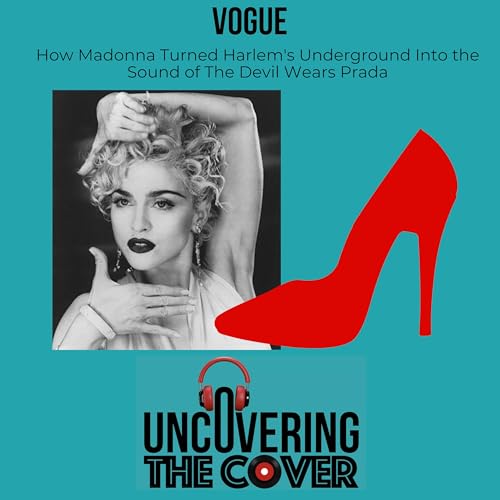
  • Vogue, the Song that Covered a Culture and Soundtracked The Devil Wears Prada
    Apr 29 2026

    In 1990, Madonna released a song that wasn’t supposed to be a single. It was a B-side throwaway, recorded in a basement studio in Manhattan with a $5,000 budget and a vocal booth converted from a closet. It became one of the best-selling singles of the year, hit number one in over 30 countries, and 35 years later, it still soundtracks the most iconic fashion moments on screen — from Andy Sachs’ Paris montage in The Devil Wears Prada to the teaser trailer of its 2026 sequel.

    But Vogue isn’t just a Madonna song. It’s the story of a culture. Voguing was invented in Harlem in the 1970s and 1980s by Black and Latino LGBTQ+ kids who had been thrown out of their homes, building chosen families called Houses, competing in underground ballroom competitions, and turning fashion poses into a dance language. Names you may not know — Crystal LaBeija, Willi Ninja, Hector Xtravaganza, Jose Gutierez, Luis Camacho — built the entire visual world that Madonna would later put on MTV.

    In this episode of Uncovering the Cover, we trace Vogue’s journey from the ballroom floor to the global pop charts, into Paris Is Burning, onto the Blond Ambition Tour, through Pose, and onto the runway of The Devil Wears Prada 2. We ask the question that has followed the song for three and a half decades: was Madonna an ambassador, or was she an extractor? And we tell the story of the people who built the dance she would make immortal.📱 Follow Uncovering the Cover:Instagram: [@uncoveringthecover]TikTok: [@uncoveringcover.podcast]Website: [pinzondiego.com/podcast]

    CREDITS: Host, Producer, Editor: Diego Pinzón

    SUPPORT THE SHOW:If you enjoyed this episode:✅ Subscribe to the show✅ Leave a 5-star review✅ Share with a friend✅ Follow us on social mediaDISCLAIMER:The views and opinions expressed in this podcast are those of the host and do not necessarily reflect the official policy or position of any artist, label, or organization mentioned. All music samples are used for educational and commentary purposes under fair use doctrine.

    Show More Show Less
    47 mins
  • Michael Jackson, a cultural legacy beyond the movie
    Apr 16 2026

    Michael Jackson has a complex story, which will be the subject of the very anticipated biopic film, titled "Michael", in theaters everywhere April 26, 2026.In 1983, Michael Jackson debuted the moonwalk on live television in front of forty-seven million people while performing "Billie Jean" — a song Quincy Jones almost cut from the Thriller album. That night, pop music changed forever. But the deeper story is this: "Billie Jean" has never stopped traveling. In 2007, grunge legend Chris Cornell stripped it to its acoustic bones and made it cry. In 2008, David Cook covered Cornell's cover on American Idol and became a star. In 2015, a Peruvian-American musician reimagined Michael Jackson's entire catalog in Latin jazz and salsa — and the world finally caught up to something Latin America had already known for decades: that Michael Jackson's music was never just American. It was always global. In this episode of Uncovering the Cover, we trace the extraordinary journey of "Billie Jean" as the conductive thread through Michael Jackson's legacy — the most covered, most complicated, and most consequential catalog in the history of popular music. We explore the songs he wrote, the barriers he broke, the controversies that still have no resolution, and the artists who felt compelled to reckon with his genius long after his death. This is the story of the songs the world won't stop singing.


    This is the story of how "Billie Jean" — and the Legends who dared cover It — reveals the most complicated legacy in Pop History.

    📱 Follow Uncovering the Cover:

    Instagram: [@uncoveringthecover]

    TikTok: [@uncoveringcover.podcast]

    Website: [pinzondiego.com/podcast]


    CREDITS: Host, Producer, Editor: Diego Pinzón

    SUPPORT THE SHOW:

    If you enjoyed this episode:

    ✅ Subscribe to the show

    ✅ Leave a 5-star review

    ✅ Share with a friend

    ✅ Follow us on social media


    DISCLAIMER:The views and opinions expressed in this podcast are those of the host and do not necessarily reflect the official policy or position of any artist, label, or organization mentioned. All music samples are used for educational and commentary purposes under fair use doctrine.

    Show More Show Less
    51 mins
  • The REAL story behind "I Will Always Love You" - It was never a love song [RE-UPLOAD]
    Apr 8 2026

    This episode was originally recorded back in 2020. It hasn't been altered since its recording.

    Most people have sung this song at karaoke. Most people have cried to it. Most people have no idea what it's actually about."I Will Always Love You" was never a love song. It was a resignation letter — written by Dolly Parton in 1973 to say goodbye to the most powerful man in her career: her mentor, her producer, the man who gave her a national stage and then couldn't handle watching her outgrow it.

    On this episode of Uncovering the Cover, we trace the full journey of one of the most commercially successful songs in music history: from a two-room cabin in the Smoky Mountains, to a Nashville TV show where Parton was booed every week, to the moment she turned down Elvis Presley to protect her copyright, to a hotel ballroom in Miami where Whitney Houston opened her mouth — and stunned everyone in the room.

    We tell the story of two of the most extraordinary women in music history: a country songwriter who understood the value of her own words when no one else did, and a gospel-trained voice from New Jersey who turned a simple country song into the greatest vocal performance of a generation.And we tell the story of what the song became: #1 in three consecutive decades. 24 million copies sold. The best-selling single by a female artist of all time. A song played at its own singer's funeral. A promise Dolly Parton kept, all the way to the end.

    This is Uncovering the Cover. This is "I Will Always Love You."In this episode, Diego Pinzón tells the complete story of "I Will Always Love You" — from Dolly Parton's original 1973 composition to Whitney Houston's record-breaking 1992 cover, and everything in between. The episode covers the full arc of the song's journey: the personal, professional, and cultural forces that shaped one of the most recognized songs in the world.

    📱 Follow Uncovering the Cover:

    Instagram: [@uncoveringthecover]

    TikTok: [@uncoveringcover.podcast]

    Website: [pinzondiego.com/podcast]


    CREDITS: Host, Producer, Editor: Diego Pinzón

    SUPPORT THE SHOW:

    If you enjoyed this episode:

    ✅ Subscribe to the show

    ✅ Leave a 5-star review

    ✅ Share with a friend

    ✅ Follow us on social media


    DISCLAIMER:The views and opinions expressed in this podcast are those of the host and do not necessarily reflect the official policy or position of any artist, label, or organization mentioned. All music samples are used for educational and commentary purposes under fair use doctrine.

    Show More Show Less
    55 mins
  • Twist and Shout: The Biggest Song The Beatles Didn't Write
    Apr 2 2026

    You know the opening riff. You know the shout. You've probably assumed, like most people, that The Beatles wrote "Twist and Shout."

    They didn't.

    In this episode of Uncovering the Cover, host Diego Pinzón traces the complete and extraordinary journey of one of rock and roll's most beloved songs — from the Afro-Cuban dance halls of Havana to the streets of Liverpool, from a tiny Cincinnati R&B label to the top five on the Billboard Hot 100.

    "Twist and Shout" was written by Bert Berns — a dying man from the Bronx who absorbed the rhythms of Cuban mambo, blended them with rock and roll, and handed the world a song that Phil Spector first ruined, that the Isley Brothers first made great, and that The Beatles recorded in one single take, sick and exhausted at the end of a 13-hour studio marathon.

    Along the way, we'll meet the man who turned The Beatles down and said "groups with guitars are on their way out," hear the story of how JFK's assassination accidentally launched Beatlemania, and witness the most extraordinary chart achievement in music history — a week in April 1964 that will never, ever be repeated.


    What You'll Learn in This Episode

    Cold Open & Introduction

    • Why most people still believe The Beatles wrote 'Twist and Shout' — and who actually did
    • Why the song's raspy, broken vocal quality isn't a studio effect

    Act I: The Man Who Was Supposed to Die Young

    • The biography of Bert Berns: childhood illness, Havana mambo, Brill Building beginnings
    • The role of Afro-Cuban music — mambo, clave rhythms — in the creation of 'Twist and Shout'
    • Why Phil Spector's original 1961 production of the song flopped — and why Berns was furious about it
    • The cultural explosion of mambo in 1950s New York: Tito Puente, Pérez Prado, and the Havana connection


    Act II: From Cincinnati to Liverpool

    • How the Isley Brothers rescued the song and gave it its definitive sound
    • The infamous Decca Records audition: how one executive's rejection of The Beatles accidentally set up everything that followed
    • The 13-hour Abbey Road session: how and why George Martin saved 'Twist and Shout' for last
    • What John Lennon's voice actually sounds like — and why he could barely speak the next day
    • Why 'Twist and Shout' was never released as a UK single


    Act III: The Week No One Will Ever Repeat

    • How JFK's assassination and a grieving nation accidentally created Beatlemania
    • The story of Marsha Albert, the 15-year-old whose letter to a radio station changed music history
    • The legal battle between Vee-Jay Records and EMI over the US release of The Beatles
    • April 4, 1964: The week The Beatles held all five top positions on the Billboard Hot 100 — a record that still stands
    • The deaths of John Lennon and Bert Berns — and the legacy they left behind


    Resources & Further Reading

    • Here Comes the Night: The Dark Soul of Bert Berns and the Dirty Business of Rhythm and Blues — Joel Selvin (2014)
    • BANG! The Bert Berns Story — documentary directed by Brett Berns and Bob Sarles (2016, SXSW)
    • Rock and Roll Hall of Fame: Bert Berns — inducted 2016
    • Grammy Hall of Fame: 'Twist and Shout' — inducted 2010


    📱 Follow Uncovering the Cover:

    Instagram: [@uncoveringthecover]

    TikTok: [@uncoveringcover.podcast]

    Website: [pinzondiego.com/podcast]

    CREDITS: Host, Producer, Editor: Diego Pinzón

    SUPPORT THE SHOW:

    If you enjoyed this episode:

    ✅ Subscribe to the show

    ✅ Leave a 5-star review

    ✅ Share with a friend

    ✅ Follow us on social media


    DISCLAIMER: The views and opinions expressed in this podcast are those of the host and do not necessarily reflect the official policy or position of any artist, label, or organization mentioned. All music samples are used for educational and commentary purposes under fair use doctrine.

    Show More Show Less
    35 mins
  • "Girls Just Want to Have Fun", the story behind Cindy Lauper's cover
    Mar 26 2026

    In this episode of Uncovering the Cover, we tell the full origin story of one of the most covered and culturally durable songs of the 20th century. From a motel bathtub in 1979 to the Billboard Hot 100, from the first MTV VMAs to the 2022 Supreme Court fallout — "Girls Just Want to Have Fun" is a song that has been reshaped by every era that encountered it.What You'll Learn in Each SegmentCold OpenWhy almost nobody knows who actually wrote this songWhat the original version sounded like — and why it's so surprisingThe moment Cyndi Lauper decided she'd never record itAct One — The Man in the Motel BathtubRobert Hazard's extraordinary career arc: opera family → folk → country → reggae → New WaveThe 15-minute composition that changed both his life and someone else'sHow the song circulated in Philadelphia before reaching Rick Chertoff's handsThe bittersweet economics of being the most anonymous songwriter of a billion-stream songAct Two — The Bankrupt Girl from QueensCyndi Lauper's difficult early life: abuse, bankruptcy at 30, and running out of chancesHow She's So Unusual was assembled — and why Rob Hyman and Eric Bazilian of the Hooters were essentialThe exact lyric change that inverted the song's meaningChart performance: No. 2 USA, No. 1 Canada, No. 1 Mexico, No. 2 UKThe first-ever MTV VMAs, Captain Lou Albano, and the birth of a billion-view videoAct Three — The Song That Became a WeaponGreg Laswell's haunting piano ballad reimagining — and what it reveals about the song's true structureMiley Cyrus and the 2008 Breakout cover — how Cyndi personally suggested it at the GrammysNicki Minaj's 2023 interpolation and the continuing life of the melody"Girls Just Want to Have Fundamental Rights" — from a handmade protest sign to a political fundCyndi Lauper's 2025 Rock & Roll Hall of Fame induction and farewell tourFeatured Music & Artists

    • Robert Hazard — original 1979 demo (YouTube)
    • Cyndi Lauper — "Girls Just Want to Have Fun" (1983, She's So Unusual, Portrait Records)
    • Cyndi Lauper — "Hey Now (Girls Just Want to Have Fun)" (1994 re-recording)
    • Greg Laswell — "Girls Just Want to Have Fun" (2007)
    • Miley Cyrus — "Girls Just Wanna Have Fun" (2008, Breakout)
    • Nicki Minaj — "Pink Friday Girls" (2023, Pink Friday 2)

    Recommended Listening / Further Exploration

    • Start with Robert Hazard's original 1979 demo on YouTube — it recontextualizes everything
    • Cyndi Lauper — She's So Unusual (full album) — still sounds fresh
    • Greg Laswell's version for a completely different emotional experience of the same melody
    • Documentary: Let the Canary Sing (Paramount+, dir. Alison Ellwood) — Lauper's own story in her own words

    📱 Follow Uncovering the Cover:

    Instagram: [@uncoveringthecover]

    TikTok: [@uncoveringcover.podcast]

    Website: [pinzondiego.com/podcast]

    CREDITS: Host, Producer, Editor: Diego Pinzón

    SUPPORT THE SHOW:

    If you enjoyed this episode:

    ✅ Subscribe to the show

    ✅ Leave a 5-star review

    ✅ Share with a friend

    ✅ Follow us on social media


    DISCLAIMER:The views and opinions expressed in this podcast are those of the host and do not necessarily reflect the official policy or position of any artist, label, or organization mentioned. All music samples are used for educational and commentary purposes under fair use doctrine.

    Show More Show Less
    24 mins
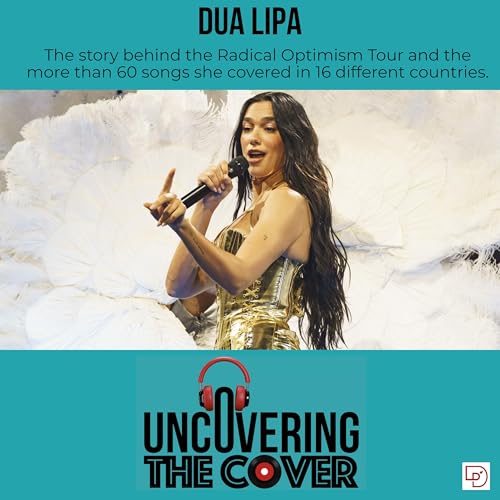
  • Dua Lipa - The World Is Her Cover Story
    Mar 19 2026

    Dua Lipa covered a different local artist's song every night on her 2025 world tour — 60+ songs, 16 countries. Today we tell the full story: her career, her sampled songs, and the covers that had already hit #1 in the US.What if a pop star committed — every single night, across 16 countries — to covering a different song by a local artist? Not as a gimmick. As a love letter. That's exactly what Dua Lipa did on her Radical Optimism Tour in 2025, and it became the most talked-about live music moment of the year.In this episode of Uncovering the Cover, Diego Pinzón digs deep into the full story: Dua Lipa's journey from the daughter of Kosovo Albanian refugees to one of the most streamed artists in music history. The three massive hits in her catalog that openly borrowed from music history — "Love Again" (a 1932 trumpet), "Break My Heart" (an INXS interpolation), and "Cold Heart" (built on Elton John's Rocket Man). And the extraordinary cover tradition on the Radical Optimism Tour, where she performed "Hey Jude" in Liverpool, "Nothing Compares 2 U" in Dublin, "Hey Ya!" in Atlanta, "No One" in New York — songs that had already conquered the US on behalf of their home countries.Plus: the night in Mexico City where 65,000 people heard her sing "Bésame Mucho." The duet with Lenny Kravitz at MSG. The emotional final night tribute to Selena. And the burning question: will there ever be a covers album?This episode is the story of what happens when the greatest cover tradition in modern pop history meets the woman bold enough to make it happen every single night.📱 Follow Uncovering the Cover:Instagram: [@uncoveringthecover]TikTok: [@uncoveringcover.podcast]Website: [pinzondiego.com/podcast]CREDITS:Host, Producer, Editor: Diego PinzónSUPPORT THE SHOW:If you enjoyed this episode:✅ Subscribe to the show✅ Leave a 5-star review✅ Share with a friend✅ Follow us on social mediaDISCLAIMER:The views and opinions expressed in this podcast are those of the host and do not necessarily reflect the official policy or position of any artist, label, or organization mentioned. All music samples are used for educational and commentary purposes under fair use doctrine.

    Show More Show Less
    46 mins
  • My Prerogative, from Bobby Brown to Britney Spears
    Mar 17 2026

    In 1988, 19-year-old Bobby Brown walked into a studio and improvised the opening of one of the most defiant songs ever to reach number one in America. "My Prerogative", written with production genius Teddy Riley, was a direct response to everyone who had ever told Brown he was too much: too loud, too wild, too himself. It hit #1 on the Billboard Hot 100 and defined an era.

    Sixteen years later, Britney Spears chose that same song to represent her entire career on a greatest-hits album, at the exact moment the tabloid press was at its most merciless. Swedish producers Bloodshy & Avant demolished the New Jack Swing architecture and rebuilt it as ruthless electropop. The result topped charts in seven countries.

    In this episode, we trace the full journey: Bobby Brown's early life in Roxbury, his ejection from New Edition, and the recording sessions that created a genre. Then we examine what Britney's cover says about autonomy, media, and who gets to claim their prerogative, and what happens when they try. And we sit with the devastating irony that both artists, having recorded this song, had their freedom taken from them anyway.

    This is Uncovering the Cover. Two versions. One story. All the defiance.

    📱 Follow Uncovering the Cover:

    Instagram: [@uncoveringthecover]

    TikTok: [@uncoveringcover.podcast]

    Website: [pinzondiego.com/podcast]

    CREDITS:

    Host, Producer, Editor: Diego Pinzón

    SUPPORT THE SHOW:

    If you enjoyed this episode:

    ✅ Subscribe to the show

    ✅ Leave a 5-star review

    ✅ Share with a friend

    ✅ Follow us on social media

    DISCLAIMER: The views and opinions expressed in this podcast are those of the host and do not necessarily reflect the official policy or position of any artist, label, or organization mentioned. All music samples are used for educational and commentary purposes under fair use doctrine.

    Show More Show Less
    23 mins