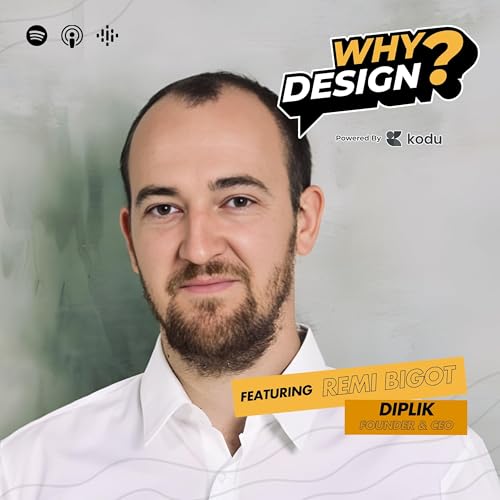
WHY DESIGN? cover art

WHY DESIGN?

WHY DESIGN?

Written by: Chris Whyte | Kodu
Listen for free

About this listen

Why Design is a podcast exploring the stories behind hardware and physical product development. Hosted by Chris Whyte, founder of Kodu, the show dives into the journeys of founders, senior design leaders, and engineers shaping people and planet-friendly products. Formerly "The Design Journeys Podcast", each episode uncovers pivotal career moments, lessons learned, and behind-the-scenes insights from industry experts. Whether you’re a designer, engineer, or simply curious about how great hardware products come to life, Why Design offers real stories, actionable advice, and inspiration for anyone passionate about design and innovation. Join us as we listen, learn, and connect through the stories that define the world of physical product development.Chris Whyte | Kodu Art Careers Economics Personal Success
Episodes
  • How Paul Marshall Built Rapid Fluidics into a Global Microfluidics Partner Through Curiosity and Good Engineering
    Dec 17 2025

    What connects offshore engineering, inkjet printers, molecular diagnostics and a small workshop in a church in Newcastle?

    For Paul Marshall, it’s all part of the same journey: a lifelong fascination with how things work, and a belief that good engineering can solve meaningful problems.

    Paul is the co-founder of Rapid Fluidics, a UK consultancy and prototyping company specialising in microfluidic cartridges. What began as a part-time side project; evenings, weekends and two 3D printers in a rented room has grown into a profitable, globally recognised business serving life sciences startups, research labs and multinational pharma companies.

    But the part that makes Paul’s story compelling isn’t the technology.

    It’s the honesty:

    He never wanted to be a founder.

    He never set out to run a business.

    And yet here he is, leading a team, travelling the world for client meetings, navigating cash flow, BD, branding, and hiring… all while staying open, self-aware and disarmingly human about the whole thing.

    In this episode of Why Design, Paul joins host Chris Whyte to unpack the journey: the technical foundations, the unexpected turns, the small risks, the networking habits, the content strategy, the international expansion, and what it really means to grow a niche hardware business without investment.

    Don’t just listen. Go beyond the podcast.

    Join the Why Design community → teamkodu.com/events


    💡 What You’ll Learn

    🧪 Why microfluidics is exploding, and how Rapid Fluidics carved out a niche

    🎓 How a grandfather, Lego and curiosity shaped Paul’s engineering mindset

    🚀 The step-by-step transition from contractor → founder → employer

    📈 Why transparency about cash flow builds trust inside a team

    🔗 How LinkedIn and trade shows built a global BD pipeline

    🇸 How Paul is expanding into the US without losing his UK roots

    💬 Why the best founders “make it up as they go along”, and why that’s okay

    💬 Memorable Quotes

    “I wanted to see how machines work. I wanted to design machines… building things, breaking things, probably more breaking than building.”

    “If an engineer can design a solution to a problem, it doesn’t matter if it’s a 36-inch pipe or a 200-micron pipe.”

    “Six months in, we hired our first intern… and that’s when I realised: if I’m going to have employees full time, I need to do this full time.”

    “I’m making it up as I go along but as long as I’m one page ahead, that’s all that matters.”

    “You can’t beat sitting in a room showing people what we can make and watching the lightbulb moment.”


    🔗 Resources & Links

    🎧 Listen on Spotify, Apple, YouTube & Amazon → whydesign.club

    👥 Join the Why Design community → teamkodu.com/events

    🔍 Explore Rapid Fluidics → https://www.rapidfluidics.com/

    🔗 Connect with Paul Marshall → https://www.linkedin.com/in/paul-marshall-rapid-fluidics/

    📸 Follow @whydesignxkodu on Instagram

    🎥 Watch...

    Show More Show Less
    1 hr and 3 mins
  • Leading with Purpose: How Will Butler-Adams Scaled Brompton into a Global Icon
    Dec 10 2025

    What happens when you mix engineering instinct, a folding bike prototype built by an eccentric inventor, and a chance conversation with a stranger on a London bus?

    For Will Butler-Adams, it became the start of a 20-year journey transforming Brompton from a tiny, chaotic workshop into one of Britain’s most recognisable global brands.

    Today, Brompton bikes are commonplace in cities across the world. But when Will joined in 2002, the company had “a stock turn of one… tons and tons of racking pallets… and squeezed in the edges where people actually adding value.”

    In this episode of Why Design, Will joins host Chris Whyte for a rare look behind the scenes at what it actually takes to grow a purpose-led engineering business without compromising on quality, trust or long-term thinking.

    This is an episode about risk, leadership, hiring, confidence, perspective… and why the world’s most efficient vehicle is still a bicycle.

    Don’t just listen. Go beyond the podcast.

    Join the Why Design community → teamkodu.com/whydesign

    💡 What You’ll Learn

    🚲 Why Brompton’s mission is urban freedom for happier lives, not bikes

    🎯 The leadership mindset that helped grow Brompton from a small team to a global brand

    💬 Why Will believes most people “worry too much about everything” at work

    💼 The danger of chasing growth too quickly, and why patience beats hyper-scaling

    🧭 Why hiring “perfect people” is a mistake, and why a “motley crew” builds better products

    🔥 How innovation accelerates when you embrace risk and disorder

    🧠 Why the next era of engineering belongs to designers who can think beyond their job titles


    💬 Memorable Quotes

    “Opportunity passes us all the time… The challenge is whether we're prepared to get off our ass and grab it.”

    “Most people regret not taking enough risk. Very few regret taking it.”

    “Perfect doesn’t deliver innovation. It’s the imperfection, the grit in the oyster, that creates the pearl.”

    “Purpose is important, but it must be in parallel with profit. Without profit, you have no business.”

    “The role of the leader is not to create order… it’s to create disorder.”

    “We're not selling a bike. We're selling freedom; health, wellbeing, exploring, decluttering your mind.”


    🔗 Resources & Links

    🎧 Listen on Spotify, Apple Podcasts, YouTube & Amazon → whydesign.club

    👥 Join the Why Design community → teamkodu.com/whydesign


    🔗 Explore Brompton → http://www.brompton.com/

    🔗 Connect with Will Butler-Adams → https://www.linkedin.com/in/eur-ing-will-butler-adams-obe-freng-ceng-frgs-fcgi-fimeche-b05651b/


    📸 Follow @whydesignxkodu on Instagram

    🎥 Watch full episodes → YouTube.com/@whydesignpod

    🔗 Follow Chris Whyte → LinkedIn.com/in/mrchriswhyte

    About the Episode

    Why Design is powered

    Show More Show Less
    1 hr and 14 mins
  • Designing Play: How Rémi Bigot Built Bitpong and a Creative Hardware Studio in Berlin
    Dec 3 2025

    What do furniture exhibitions, glowing tables, and digital design have in common?

    For Rémi, founder of Diplik, they’re all stops on a creative journey that ultimately led to Bitpong; a tech-enhanced, interactive ping-pong table that feels equal parts sport, art installation, and arcade.

    From early ambitions in car design to studying industrial design in northern France, to guest lecturing and building his own hardware studio in Berlin, Rémi’s story is a reminder that creative careers rarely move in straight lines. Bitpong didn’t emerge from a sudden idea. It came from years of exploring where technology meets physical experience.

    In this episode of Why Design, host Chris Whyte sits down with Rémi to explore the realities of building a hardware product in 2025, the compromises that shape every designer, and why the best ideas still begin with curiosity.

    Don’t just listen. Go beyond the podcast.

    Join the Why Design community → teamkodu.com/events

    💡 What You’ll Learn

    🎨 Why design often begins as a “compromise” between art and engineering

    💡 How a single furniture exhibition changed the trajectory of Rémi’s career

    🎮 The design story behind Bitpong and what makes playful products so hard to build

    🏓 Why running a small hardware company requires resilience, iteration and long-term thinking

    🧰 The role of cross-functional collaboration in bringing interactive products to life

    💬 Memorable Quotes

    “Design became the bridge between engineering and creativity, the compromise that made sense.”

    “You need inspiring things early on. A drill doesn’t make you want to become a designer.”

    “When I say I studied design, what I really mean is I found a way to mix creativity, technology and play.”

    “Building hardware isn’t just about the product. It’s about what it takes to keep going.”

    🔗 Resources & Links

    🎧 Listen on Spotify, Apple Podcasts, YouTube & Amazon → whydesign.club

    👥 Join the Why Design community → teamkodu.com/events


    🔗 Connect with Rémi → https://www.linkedin.com/in/remi-bigot-03101a5/

    🔍 Explore Diplik → http://www.bit-pong.com/


    📸 Follow @whydesignxkodu on Instagram

    🎥 Watch full episodes → YouTube.com/@whydesignpod

    🔗 Follow Chris Whyte → LinkedIn.com/in/mrchriswhyte


    About the Episode

    Why Design is powered by Kodu, a specialist recruitment partner for the hardware and product-development industry.

    Through candid conversations with designers, engineers and creative leaders, we explore not just what they build, but why they build it; the belief, doubt, and persistence behind meaningful innovation.


    About Kodu

    Why Design is produced by Kodu, a recruitment partner for ambitious hardware brands, design consultancies, and product start-ups.

    We help founders and teams hire top talent across industrial design, mechanical engineering and product leadership.

    🔗 Learn more → teamkodu.com

    Show More Show Less
    58 mins
No reviews yet