We're Only Human cover art

We're Only Human

We're Only Human

Written by: WRKdefined Podcast Network
Listen for free

An HR podcast focusing on the intersection of people and technology at work, We’re Only Human examines research, technology, and practical strategies for creating better outcomes for employers and the workforce. It’s a wealth of insight for anyone looking to create a high-performing organization.All rights reserved by WRKdefined Careers Economics Management Management & Leadership Personal Success
Episodes
  • Building High-Impact HR Technology: Featuring Employ, CandorIQ, ClearCo, and TalentGuard
    Oct 13 2026
    What does it take to build HR technology that delivers real business results? Four HR tech product leaders explain how they turn customer ideas into product features, use AI to shorten feedback cycles from months to days, and apply AI in talent processes such as job architecture, skills data, and reporting. Guests are @Haris Ikram (CandorIQ), @Dara Brenner (Employ), @Linda Ginac (TalentGuard), and @Arnaud Grunwald (ClearCo). They also cover the risks of HR teams vibe coding their own tools, how MCP and headless HR tech change who needs to learn the software, and where the industry is heading: AI-native services, shared data across customers, and governance for AI agents. Key Takeaways HR technology only works when the data going in is clean. Bad data multiplies when you add AI. Good product teams solve the underlying business problem. They don’t just build the feature a customer asks for. AI can pull themes out of sales and customer success calls, which gives product teams feedback that customers never send directly. Building prototypes with AI lets customers co-develop features and see changes within days. AI can build job architectures, keep skills data current, and generate board decks automatically. With MCP and headless HR tech, hiring managers, interviewers and finance partners can do their part of a workflow in tools they already use. Vibe coding is fine for personal tools. Shared tools bring risks to data security, compliance and ownership. Code built inside a company is company property. It should live in the cloud, not on someone’s laptop or personal account. Don’t shut down employee excitement about AI. Point it at fixing internal processes, and leave the high-risk builds to vendors. As companies deploy more AI agents, they will need rules for who builds them, how governance works, and who approves them. Timestamps 00:01 What makes HR technology work 00:05 Turning customer ideas into product features 00:07 How AI shrinks the product feedback cycle 00:09 How employers can become product partners 00:12 AI use cases in talent processes 00:15 MCP and headless HR technology 00:19 The risks of vibe coding HR tools 00:26 Compliance, sensitive data, and build vs. buy 00:32 AI-native services and shared data across customers 00:38 Why AI agents need governance Keywords HR technology, AI in HR, HR tech product development, vibe coding risks, MCP, headless HR tech, AI agents, HR data quality, change management, AI governance Connect with the guests from this episode: Haris Ikram, CandorIQ Linda Ginac, TalentGuard Dara Brenner, Employ Arnaud Grunwald, ClearCo
    Show More Show Less
    44 mins
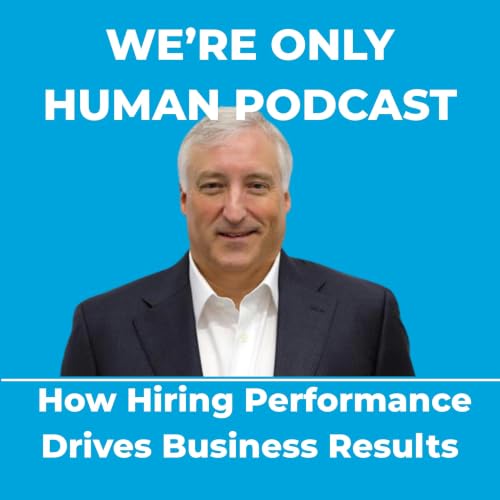
  • How Hiring Performance Drives Business Results
    Sep 30 2026
    How does hiring performance affect business performance, and how can talent leaders use AI without losing candidate trust? In this conversation, the Marc Thompson, CEO of ICIMS explains why hiring belongs in strategy and board discussions, not just HR. He covers why job openings are rising while hires stay flat, how to show a CFO or board the cost of vacancies and bad hires, and where AI helps recruiters and where humans must stay in charge. You will also hear why the difference between AI and automation matters, why context and the applicant tracking system are central to the next wave of agentic hiring, and how conversational tools may change the way managers hire. Key Takeaways Hiring is a strategy and operations issue. Businesses cannot meet their goals without the right people in the right roles at the right time. Job openings rose 17 percent in July while hires stayed flat, according to ICIMS workforce data. That means demand is not converting into people on the job, which delays projects and growth. One customer reached a 33-day time to fill, 33 percent better than its industry benchmark, while recruiter productivity rose 17 percent. To win board support, tie vacancies and bad hires to specific business objectives and back the case with data. Estimates put the cost of a bad hire at 50 to 200 percent of salary, and hiring, onboarding, and replacing someone can consume months of a 12-month plan. Speed matters, but a good hiring decision from a process both candidates and recruiters trust matters more. 58 percent of TA leaders could not clearly tell AI from automation. Automating a broken process only gets you to the wrong answer faster. AI works best on repetitive tasks like screening, scheduling, and interview communications. 80 percent of TA leaders say recruiters now spend more time engaging candidates, and 73 percent say it strengthens hiring manager partnerships. Humans should own the final decision. Candidates preferred the message "We use AI for screening, but a human makes the final decision." AI adoption will move at the speed of trust. The biggest AI opportunity is intelligence built on context such as roles, skills, hiring manager preferences, policies, and interview history. The system of record becomes more valuable as agentic hiring grows, with 46 percent of companies already using or planning agentic AI. Timestamps 00:03:00 Why the right person, role, and timing matter 00:04:00 Job openings up, hires flat: what it means 00:07:00 How to make hiring a board-level priority 00:09:00 The real cost of a bad hire 00:11:00 Balancing hiring speed with candidate trust 00:12:00 AI versus automation in recruiting 00:14:00 Keeping humans in charge of hiring decisions 00:17:00 Why context makes recruiting AI useful 00:19:00 Agentic hiring and the system of record 00:22:00 Conversational hiring and the future of the ATS Keywords talent acquisition, hiring performance, AI in recruiting, agentic AI, applicant tracking system, candidate trust, cost of a bad hire, time to fill, enterprise hiring, recruiting automation Connect with Marc and ICIMS To connect with Marc Thompson, follow him on LinkedIn, and to learn more about ICIMS, its intelligent hiring platform, and customer case studies, visit the company LinkedIn page and website below. Marc Thompson on LinkedIn: https://www.linkedin.com/in/marc-thompson-284a783/ ICIMS on LinkedIn: https://www.linkedin.com/company/icims/home/ ICIMS website: https://www.icims.com/
    Show More Show Less
    29 mins
  • How to Explain Pay Decisions at Work
    Sep 8 2026
    In this episode, Shari Kalsta of Jera Compensation Consulting explains why compensation strategy is no longer just about spreadsheets and market data. As pay transparency laws spread and employees gain access to more information about salaries, organizations must rethink how they explain compensation decisions. Shari shares practical lessons from two decades in compensation consulting on why communication, storytelling, and leadership alignment are now essential skills for HR and compensation teams. Listeners will learn how to build a clear compensation philosophy, align leaders on pay decisions, and translate complex pay data into messages employees and managers actually understand. Key Takeaways Compensation strategy is becoming more social and emotional as pay transparency increases. Many organizations publish salary ranges but fail to explain the reasoning behind them. Employees often have partial information about pay that leads to confusion or false assumptions. A clear compensation philosophy should explain how pay decisions are made and why. Compensation teams must shift from technical analysis to storytelling and communication. Leaders often define promotions and pay decisions differently, creating misalignment. Successful compensation programs require leadership alignment before rollout. Managers and recruiters need clear guidance so they can explain pay decisions consistently. Storytelling helps leaders and employees understand compensation concepts better than data alone. Compensation systems fail when organizations build the structure but do not train people to use it. Connect with Shari on LinkedIn: https://www.linkedin.com/in/shari-kalsta-ccp-grp-22578b7/ Timestamps 00:00 Why compensation conversations matter today 01:00 Shari’s path into compensation consulting 04:00 Learning the complexity of compensation strategy 06:00 How perspective and bias shape compensation decisions 09:00 The impact of pay transparency laws 12:00 Why most companies lack a clear compensation philosophy 15:00 The biggest mistake compensation teams make 18:00 Why storytelling is essential in compensation communication 21:00 The car shopping analogy for compensation budgets 26:00 Solving hiring pain points with structured compensation Keywords compensation strategy pay transparency compensation philosophy salary ranges HR compensation communication pay equity compensation consulting HR leadership alignment compensation storytelling workplace pay strategy
    Show More Show Less
    32 mins
adbl_web_anon_alc_button_suppression_t1
No reviews yet