PRIME MEMBER EXCLUSIVE | 3 Months Free Trial

Auto-renews at INR 199/mo after 3 months. Cancel anytime. Offer ends 15 July, 2026.
Western Baul Podcast Series cover art

Western Baul Podcast Series

Western Baul Podcast Series

Written by: westernbaul.org
Listen for free

The Western Baul Podcast Series features talks by practitioners of the Western Baul path. Topics are intended to offer something of educational, inspirational, and practical value to anyone drawn to the spiritual path. For Western Bauls, practice is not a matter of philosophy but is expressed in everyday affairs, service to others, and music and song. There is the recognition that all spiritual traditions have examples of those who have realized that there is no separate self to substantiate—though one will always exist in form—and that “There is only God” or oneness with creation. Western Bauls, as named by Lee Lozowick (1943-2010), an American spiritual Master who taught in the U.S., Europe, and India and who was known for his radical dharma, humor, and integrity, are kin to the Bauls of Bengal, India, with whom he shared an essential resonance and friendship. Lee’s spiritual lineage includes Yogi Ramsuratkumar and Swami Papa Ramdas. Contact us: westernbaul.org/contactCopyright 2022 All rights reserved. Spirituality
Episodes
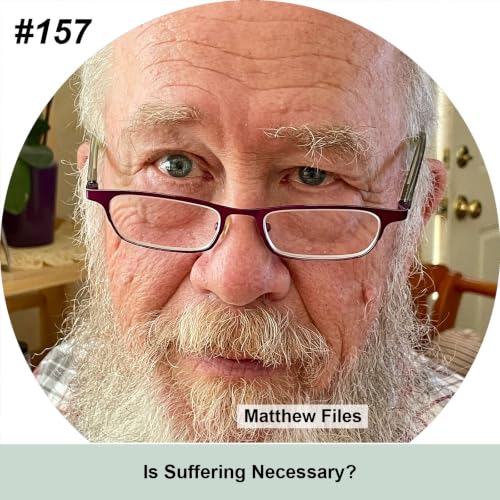
  • Is Suffering Necessary? (Matthew Files)
    Jul 2 2026

    There are aspects of suffering that may not be necessary, such as “luxury suffering.” Luxury suffering may be defined as self-observation while judging ourselves. Judgment can be positive or negative. Trying to avoid things or make them better is suffering. Constantly watching the news can keep suffering in place. Without seeing the extreme state of the world so regularly in the media, we might be more aware of the suffering that’s closer to us—our own and that of the people around us. The world may not be in a worse condition than it’s ever been. Pain and suffering are different. We suffer when we do not accept the here and now, such as when we want things to be different than they are and when we only want things that make us feel good. The distinction between troubles and problems which are real problems is considered. Since we live in luxury relative to many people in the world, our suffering is going to be luxury suffering. This kind of suffering, which we can do something about, drains our energy. Work on the path may involve intentional suffering, such as enduring the displeasing manifestations of others. The primal event of suffering is incarnation since we identify as our names and bodies. We suffer the illusion of me-ness because we don’t know our true nature, who we really are. Everyone suffers and no one can fix another’s suffering. Our suffering does not come from an event that happened to us in life that therapy can fix. Awareness and transformation are not the same thing. We cling to suffering as a facet of our identity. Compassion does not need to have a nice face to it. In this talk, there are interactions between Matthew and attendees about different perspectives on relating to suffering. Matthew Files facilitates groups that support people to look deeper into their process, formulate their own questions, and become responsible for their choices.

    Show More Show Less
    56 mins
  • What Would You Die For? From Quiet Desperation to Making a Difference (Juanita Violini)
    Jun 18 2026

    There is a distinction between what we would die for and what is worth living for. What we would die for brings us to reflect on something beyond this life. To consider this requires us to know and accept three things: our bodies are going to die, we are all connected, and we make a difference. Aging brings an imperative with it. Our society is uncomfortable with death. Keeping death from children makes life harder. If we weren’t identified with the body, losing it wouldn’t be such a big deal. We are not a drop of water in the ocean; we are the whole ocean in a drop. If we come to accept we are going to die, we are less controlled by fear and have more space to find what really matters to us. Is there a principle we would do anything for? What we would die for is something we can stand on and measure our actions from. It is unlikely we would actually have to die for it but knowing it makes a difference. Part of knowing ourselves, which is one of the most important pieces of work we have in this lifetime, is knowing what we would die for. It is impactful to consider dying like a hero going home. Even if we live an apparently good life, there is often an underlying pervasive dissatisfaction and lack of fulfillment. We can make a distinction between belonging and fitting in. If we look for validation and feel like we don’t belong it’s because we don’t belong to ourselves. Self-assurance comes from inside, whereas confidence is something we put on for others. Being offended poisons us and manipulates others. Without our transformation, there can be no transformation of the world. We can experiment with expressing urges to say or do things, which may make a difference. There is a distinction between impulsive and intuitive urges. Juanita Violini is an artist and writer/producer of interactive mystery entertainment who has been a student of the spiritual path for over 35 years.

    Show More Show Less
    1 hr and 2 mins
  • Your Life Is a Tree (Mary Angelon Young and Regina Sara Ryan)
    Jun 4 2026

    If we put aside concepts, we really don’t know what a tree is. It’s a mystery of creation. The tree of life is a universal archetypal symbol. African, Celtic, Norse, and Cabala trees of life are discussed. Trees are a portal into appreciation of life and nature. Walking in a forest, we can feel sacred space. The decimation of trees and forests is also heartbreaking. It’s important to connect to and respect all beings, including trees. The three parts of a tree—roots, trunk and branches, and crown—are considered metaphorically. Our roots, including belief systems we’ve inherited, are useful to revisit. Gender, cultural, historical, and familial roots sometimes need pruning. Trees have interconnected root systems and are not separate from other trees. We grow together and absorb from others. The heartwood near the center of the trunk is analogous to the stored wisdom we gather through experience. The lifeblood of the tree moves to and from the leaves. Every tree has a pattern which can be seen in its rings. We all have patterning and go through cycles as trees do. Being aware of our patterns opens us to the call of our heart. Individuation, a term used by Jung, is an ordeal of growth. There is stability in the trunk and effortless expansiveness in the branches. The crown produces shade, berries, seeds, and fruits which are shared. We can honor our outpouring and what we affect in the world. Seeds contain a legacy, the thing that comes next. The fruit of life is about realizing our immortality. The seed is perfect, despite a tree’s twistedness due to environmental conditions. Creativity is a way to take refuge in our being. The practice of praise counterbalances hatred and polarization. Mary Angelon Young is an author and workshop leader with a background in Jungian psychology. Regina Sara Ryan, who was the editor of Hohm Press for 35 years, is an author, workshop leader, and retreat guide.

    Show More Show Less
    1 hr and 2 mins
adbl_web_anon_alc_button_suppression_t1
No reviews yet