• Ring's 4K Doorbell and the AI Features That Are Changing Home Security
    Apr 21 2026

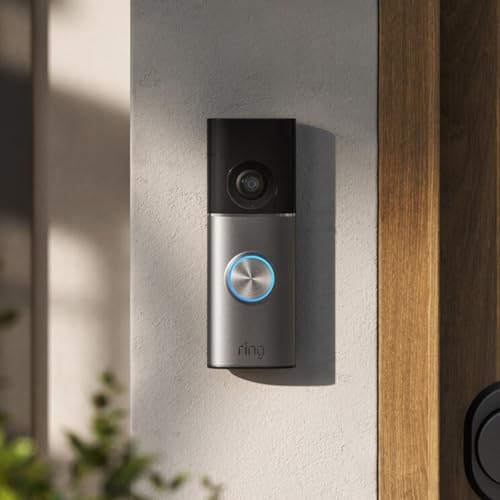
    The video doorbell category has come a long way since Ring helped create it, and this conversation covers exactly how far. Marc and Dave dig into the current generation of Ring products, including the first-ever battery-powered doorbells with 2K and 4K resolution, and what that jump in clarity actually means in practice — think six-times zoom on 2K and ten-times on 4K, with the image detail to help identify faces, read license plates, and capture the kind of footage that actually holds up when law enforcement comes knocking.

    Marc shares firsthand stories of Ring footage helping catch burglars in his neighborhood and of suspects visibly skipping his house when they spotted the camera. Dave Ward doesn't just let that land as a testimonial — he connects it to the broader design philosophy at Ring: making products that feel set-and-forget, that don't require technical knowledge to install, and that work just as well for someone's 70-something mom as for a tech-forward homeowner.

    The episode gets into AI features that are changing the daily experience, including smart video descriptions that tell you exactly what's happening at your door before you even open the notification — a person, a brown bag, a dog — so you can decide whether to engage. There's also a practical look at the quick-release battery pack upgrade, solar options, and how Ring's software update approach means older devices keep getting better over time.

    Marc pushes on the subscription question directly, and Dave gives a clear answer: every Ring product works out of the box with no plan required. The Ring Protect subscription layers on features like six months of cloud storage, smart video descriptions, and familiar face recognition — all of which require real processing power behind the scenes.


    Hosted by Simplecast, an AdsWizz company. See pcm.adswizz.com for information about our collection and use of personal data for advertising.

    Show More Show Less
    17 mins
  • Paige Frame: Why Simplicity Is the Most Powerful Feature in Elder Care Tech
    Apr 19 2026

    When Bob Millar's mother began losing her ability to use phones and tablets as her cognition declined, he didn't find a solution on the market — so he helped build one. Paige is a large-format digital clock that displays photos of family members. When a loved one taps a face, it triggers a video call to that person's phone. No typing. No navigation. No confusion. Just a familiar face on a screen.

    Marc shares his own experience as a caregiver for his mother-in-law, who was diagnosed with frontotemporal dementia after a broken leg led to a rapid decline. That personal backdrop makes this conversation feel less like a product pitch and more like two people trying to solve a problem that millions of families quietly face alone.

    Bob talks about the deliberate choice to keep Paige focused on one thing — connection — and why adding features like pill reminders or photo galleries would undermine the core mission. He draws on his enterprise software background, including five years at BlackBerry, to explain why "simple is the Swiss Army knife" when the user is someone who has been left behind by modern technology.

    The episode also covers Paige's enterprise integration for care facilities, how the device works on both Wi-Fi and SIM card, the current pricing model (including a $200 discount at time of recording), and the broader issue of how little guidance families receive after an Alzheimer's or dementia diagnosis. Bob and Todd both emphasize that tools like Paige deserve a place in government-supported care frameworks — not as a luxury, but as an essential resource.

    Instagram @thepaigeframe

    Facebook ThePaigeFrame

    LinkedIN Paige


    Hosted by Simplecast, an AdsWizz company. See pcm.adswizz.com for information about our collection and use of personal data for advertising.
    Show More Show Less
    20 mins
  • How to Convert Podcast Listeners Into Paying Clients
    Apr 2 2026

    Nathalie Doremieux, co-founder of Podcast Leadflow, breaks down a problem most podcasters face. You can grow an audience, but turning listeners into leads or revenue is much harder. Her platform focuses on closing that gap.

    The core idea is simple. Treat a podcast episode like a lead magnet. Instead of sending listeners to generic links or downloads, Podcast Leadflow creates a personalized experience. It analyzes your episode, builds a short form, and delivers a custom response based on each listener’s answers. That turns passive listening into a direct conversation.

    The episode also covers strategy. Too many calls to action reduce conversions. You need one clear action and content designed to support it. Nathalie introduces the idea of “asset episodes,” which are built with conversion in mind. These episodes guide listeners toward a specific outcome instead of just delivering information.

    Another key point is ownership. Relying only on platforms like Apple Podcasts or Spotify limits your ability to capture leads. You need to bring listeners to your own site, where you control what happens next. Podcast Leadflow helps by embedding forms, capturing data, and integrating with your CRM.

    Real-world results show the impact. Even a small audience can convert if the content is targeted. One example generated a $7,500 sale from a single qualified lead. The focus is quality over volume.

    The platform also reduces friction. It uses your existing content, generates lead magnets automatically, and allows you to test quickly without spending weeks building PDFs or guides. 

    👉 Like, comment, and subscribe for more insights on podcast growth, monetization, and tech tools.

    Relevant Links
    Podcast Leadflow: https://saas.podcastleadflow.com


    Hosted by Simplecast, an AdsWizz company. See pcm.adswizz.com for information about our collection and use of personal data for advertising.

    Show More Show Less
    19 mins
  • ASUS ZenBook Duo Hands-On: The Best Laptop for Multitasking?
    Mar 30 2026

    This hands-on look at the ASUS ZenBook Duo shows what happens when a laptop breaks the usual limits. You get two full 14-inch OLED touchscreens with identical resolution, not a secondary display compromise. Remove the keyboard and you unlock a vertical dual-screen workspace designed for real work, not a gimmick.

    The discussion walks through real workflows. Video editing with Adobe Premiere becomes more flexible, with timelines, previews, and tools split across both screens. Multitasking improves across the board. Email, browser, video calls, notes, and AI tools can all stay open at once without feeling cramped.

    Performance holds up under pressure. The device includes an Intel Core Ultra processor, Intel Arc graphics, up to 32GB RAM, and a 2TB SSD. It handles 4K video editing and heavy workloads while staying cool with dual fans. You also get Thunderbolt 4, HDMI, USB-A, and strong audio with Dolby Atmos speakers.

    The biggest shift is how you work. This form factor pushes you to rethink layout, workflow, and mobility. It targets creators, remote workers, and anyone who relies on multiple apps at the same time.

    Call to Action
    Like, comment, and subscribe for more real-world tech reviews and hands-on insights.


    Hosted by Simplecast, an AdsWizz company. See pcm.adswizz.com for information about our collection and use of personal data for advertising.

    Show More Show Less
    16 mins
  • AI Meets E-Ink: Inside the Fraimic Smart Canvas
    Mar 28 2026

    Anthony Mattana, founder of Fraimic, shares how his smart e-ink canvas blends AI image generation with ultra-low power display tech. You speak what you want to see, and the frame creates and displays it instantly. No apps, no typing. It feels simple but powerful.

    The device uses color e-ink, similar to an Amazon Kindle, which only uses power when the image changes. That means the frame can last up to three years on a single charge if updated daily. It looks like ink on paper, not a traditional screen, which makes digital art feel more natural in a home or workspace.

    The conversation goes deeper into real use cases. Families can display memories or generate custom art for events. Teachers can bring dynamic visuals into classrooms. Businesses can use it for menus or signage. It also supports multiple languages through OpenAI tools, making it accessible globally.

    Anthony also explains what drives him as a creator. After selling his first company, he still felt the need to build. His focus is simple. Put something useful into the world and let others take it further than you imagined.

    Future plans include smart home integration with tools like Home Assistant, API access for developers, multi-frame syncing across rooms, and a marketplace where artists can earn revenue from their work. 

    👉 Like, comment, and subscribe for more conversations with founders building real tech products.

    Relevant Links
    Fraimic: https://fraimic.com


    Hosted by Simplecast, an AdsWizz company. See pcm.adswizz.com for information about our collection and use of personal data for advertising.

    Show More Show Less
    16 mins
  • Xbox vs PC vs Handheld: The Future of Gaming
    Mar 19 2026

    Gaming has changed dramatically in the last few years. Consoles, PCs, and handheld gaming systems now coexist in a much larger ecosystem.

    In this episode of YourTechReport, Marc Aflalo and Mitchell Whitfield dive into the evolving world of gaming hardware. Mitchell shares his experience upgrading to a powerful new gaming PC and compares it with his Xbox Series X.

    The conversation explores the differences between console gaming and PC gaming, including performance, customization, and cost. PCs offer incredible flexibility and power, but they also introduce complexity that many gamers have not dealt with in years.

    They also discuss the rise of handheld gaming PCs, which bring full desktop gaming power into portable devices. These systems are quickly becoming a third pillar of modern gaming alongside consoles and traditional desktop PCs.

    The discussion also touches on how companies like Microsoft are building ecosystems that connect gaming across console, PC, and handheld devices, allowing players to move between platforms while keeping the same library and experience.

    Marc and Mitchell break down how these platforms compare and where the gaming industry could go next.

    Chapters
    00:00 Introduction
    00:35 New Apple products and upcoming guests
    01:10 Mitchell’s new gaming PC
    02:00 Comparing PC gaming and Xbox Series X
    03:00 Why PC gaming is so customizable
    04:00 Performance differences between console and PC
    05:15 Heat, power, and gaming hardware realities
    06:00 Handheld gaming PCs
    07:05 The three-platform gaming ecosystem
    08:10 Console vs PC vs handheld future


    Hosted by Simplecast, an AdsWizz company. See pcm.adswizz.com for information about our collection and use of personal data for advertising.

    Show More Show Less
    9 mins
  • The Future of Apple: Foldable iPhone, Mac Pro, and What’s Next
    Mar 17 2026

    Apple has released a wave of new products, but the real conversation is about what comes next.

    In this episode of YourTechReport, Marc Aflalo and Mitchell Whitfield look ahead at the future of Apple’s product lineup. The discussion explores the growing rumors around a foldable iPhone, why Apple may finally be ready to enter the foldable market, and what improvements in display technology could make the device possible.

    They also discuss Apple’s professional desktop lineup, including the Mac Mini, Mac Studio, and Mac Pro, and whether Apple still sees a future for high-end desktop machines.

    The conversation expands into how Apple typically approaches new technologies. Instead of rushing to market, Apple tends to wait until a technology matures before entering the space. The question now is whether foldable devices have reached that point.

    If Apple launches a foldable iPhone, what form factor would make the most sense? Would a clamshell design be practical, or would a book-style fold create new productivity possibilities?

    Marc and Mitchell break down the rumors, the technology behind the displays, and what Apple’s next generation of devices could look like.

    Chapters
    00:00 Introduction
    00:32 Apple’s latest product announcements
    01:20 What Apple hasn’t updated yet
    02:10 Mac Mini, Mac Studio and Mac Pro discussion
    03:15 Foldable iPhone rumors heating up
    04:10 Display technology and crease-free folding screens
    05:10 Why Apple waits before entering new categories
    06:00 Clamshell vs book-style foldable designs
    07:00 Productivity vs portability debate
    08:10 When a foldable iPhone could arrive


    Hosted by Simplecast, an AdsWizz company. See pcm.adswizz.com for information about our collection and use of personal data for advertising.

    Show More Show Less
    10 mins
  • Apple’s New Budget Devices Could Change Everything
    Mar 13 2026

    Apple just announced seven new products, including the new iPhone 17e, the MacBook Neo, refreshed MacBook Pro models, and updated iPad Air and Studio Displays.

    In this episode of YourTechReport, Marc Aflalo and Mitchell Whitfield break down the biggest announcements and what they mean for Apple’s product lineup.

    The new iPhone 17e delivers a surprising amount of performance for the price. It includes the A19 chip, Apple Intelligence support, MagSafe, improved battery life, and a refined 48-megapixel Fusion camera. At $599, it offers many flagship features while skipping some high-end options like ProMotion and multi-lens cameras.

    The bigger surprise may be the MacBook Neo, Apple’s lowest-cost laptop yet. Powered by the A18 Pro chip, the same processor used in the iPhone 16 Pro, the Neo challenges the traditional Mac lineup by delivering performance that rivals older MacBook Air models at a significantly lower price.

    Marc and Mitchell also discuss the broader shift happening across Apple’s lineup. As entry-level devices become more powerful, the differences between “standard,” “Air,” and “Pro” products are getting harder for consumers to understand.

    Is Apple preparing to restructure its entire product lineup?

    This episode explores how Apple’s latest releases may signal a major shift in how the company positions its devices moving forward.

    Chapters


    00:00 Apple announces seven new products

    01:10 The iPhone 17e and why it matters

    02:10 Specs and features of the iPhone 17e

    03:10 What Apple removed to hit the price point

    04:20 Why the 17e could replace the base iPhone

    05:30 The MacBook Neo announcement

    06:30 Apple’s cheapest laptop ever

    07:30 How the Neo compares to MacBook Air

    08:40 Are Apple’s product lines getting confusing

    10:00 MacBook Pro updates with M5 chips

    11:15 Studio Display and XDR display updates

    12:30 Why Apple may change product names


    Hosted by Simplecast, an AdsWizz company. See pcm.adswizz.com for information about our collection and use of personal data for advertising.

    Show More Show Less
    18 mins