• The Quiet Architecture of Violence - part 2
    Feb 9 2026

    Economies, Power, and Systems That Make Harm Profitable

    This is part 2 of my conversation with Guillaume.

    If violence is not a distortion of economic life but one of its foundations, what does that mean for markets, governance, and political power? In the second part of the conversation with Guillaume Soto-Mayor, we sharpen our focus on the arguments and case studies explored in his book, The Economies of Violence.

    We examine how violence creates value, sustains competitiveness, and infiltrates systems often considered legitimate, from labor markets and financial systems to development aid and democratic institutions. Along the way, we confront a difficult but necessary question: how can societies reclaim power and authority without reproducing the very violence they seek to overcome?

    In this episode, we explore:

    00:00:00 — Violence as a foundation of economic life00:04:45 — Legal vs illegal economies: a false separation00:11:25 — How GDP calculations absorb illicit economies00:17:55 — Prison labor and undocumented labor as competitiveness drivers00:26:35 — Organized crime in waste management, construction, and finance00:35:25 — Coercive supply chains in the fast fashion industry00:42:45 — Corruption as a central mechanism of structural violence00:50:25 — Algorithmic “prisons” and violence in the digital realm00:58:35 — Why mass social movements demanding justice so often fail01:06:55 — Reclaiming power and authority as contracts of responsibility01:14:45 — Building shared spaces for non-violent authority

    Links and resources:

    • The Economies of Violence: The Forgotten Variable — Guillaume Soto-Mayorhttps://brill.com/display/title/70924

    • Le Capitalisme de l’apocalypse (and other works) — Quinn Slobodianhttps://www.seuil.com/ouvrage/le-capitalisme-de-l-apocalypse-quinn-slobodian/9782021451405

    • Sand Talk — Tyson Yunkaportahttps://birchbarkbooks.com/products/sand-talk

    Show More Show Less
    1 hr and 26 mins
  • The Quiet Architecture of Violence:
    Feb 1 2026

    Part I: Memory Identity and What We Learn Not to See

    We often think of violence as something visible: a war, a riot, a gun. Yet much of the violence shaping our world is quieter—folded into the ways we trade, govern, build institutions, and even convince ourselves we are doing good. My guest today, Guillaume Soto-Mayor, examines how violence becomes part of economic and social life, how it hides behind legality and necessity, and how it continues to shape societies long after the shooting stops.

    His book, The Economies of Violence, explores how power and harm intertwine across very different contexts, from human trafficking and forced labour to digital systems and political institutions.

    In the first part of our conversation, we identify and unpack different forms of violence in global society. We draw on examples ranging from hidden family histories and colonial legacies, to child abuse, public health, film industries, and political systems. Together, we lay the foundations for understanding how violence and economic life become deeply entangled.

    In this episode, we explore:

    00:00:00 — Intro: Visible vs. invisible violence

    00:04:55 — How violence operates on both macro and micro levels

    00:10:30 — “Quiet” forms of legal and institutional violence

    00:18:15 — How violence becomes tied to identity, self-worth, and belonging

    00:44:20 — Why “just transition” and climate policies often fail to account for violent actors

    00:27:40 — The normalization of gendered, social, and environmental violence

    00:36:35 — What connects protest movements across very different societies

    00:52:10 — Violence as a hidden variable shaping global markets

    01:00:30 — How The Economies of Violence came about

    Links and resources:

    • The Economies of Violence: The Forgotten Variable — Guillaume Soto-Mayor

    https://brill.com/display/title/70924

    • Egregor — a non-profit catalyst for social and environmental justice

    https://www.egregor.net/

    • Connect with Guillaume Soto-Mayor

    https://www.linkedin.com/in/guillaume-soto-mayor-60416769/

    • Freakonomics — Steven D. Levitt & Stephen J. Dubner

    https://freakonomics.com/books/

    • The Tyranny of Merit — Michael J. Sandel

    https://www.penguin.co.uk/books/313112/the-tyranny-of-merit-by-sandel-michael-j/9780141991177

    • Eichmann in Jerusalem: A Report on the Banality of Evil — Hannah Arendt

    https://www.penguin.co.uk/books/62456/eichmann-in-jerusalem-by-arendt-hannah/9780241552292

    Show More Show Less
    1 hr and 6 mins
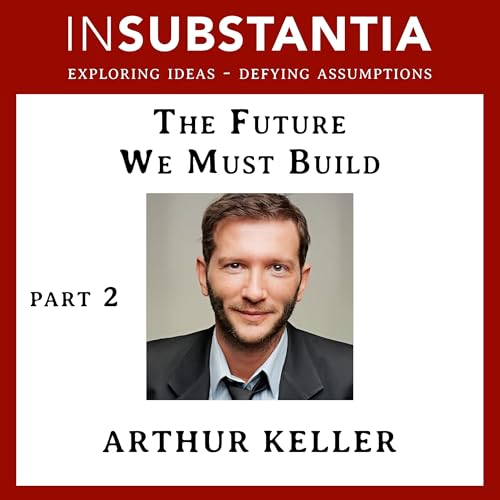
  • 🎙 Arthur Keller - The Future We Must Build - part 2
    Dec 10 2025

    If Part 1 names the crisis, Part 2 confronts the consequences of continuing as we are.

    This second part of my conversation with Arthur Keller moves from diagnosis to responsibility, and from observation to choice.


    We explore what collapses first when systems fail, not just infrastructures, but trust, meaning, and social cohesion.


    🧠 Psychological denial

    🔥 Escalating systemic shocks

    🏙 Fragile urban concentration

    ⚖ Growing inequality and exposure

    🗳 Democratic systems under strain


    Collapse is rarely sudden. It is cumulative, uneven, and deeply political.

    Some populations are protected longer than others, but no one is outside the system.


    Arthur challenges the idea that adaptation will happen naturally or smoothly.

    Without conscious choices, adaptation becomes brutal selection.


    The question is no longer whether change is coming.

    It is whether we prepare together, or fragment under pressure.


    In this episode we explore

    ✨ why resilience is not a technical problem

    ✨ how fear shapes political responses

    ✨ the risk of authoritarian reflexes

    ✨ the limits of individual solutions

    ✨ what collective lucidity actually demands


    Part 2 closes the conversation by asking what it would mean to act without illusion, without panic, and without false comfort.

    Show More Show Less
    1 hr and 16 mins
  • Arthur Keller - The Future We Must Build - Part 1
    Dec 4 2025

    🎙 The Future We Must Build - Part 1


    The world is entering a period of deep instability and no society will be spared. In this first part of my conversation with Arthur Keller, we explore the forces already reshaping the conditions of life on this planet.


    🌡 Climate overshoot

    🌿 Biodiversity collapse

    Resource depletion

    📉 Economic fragility

    🏛 Institutions unable to think systemically


    These are not separate problems. They form a single planetary crisis that will affect everyone, rich or poor, north or south.


    Arthur explains why our societies remain unprepared, why institutions cannot think at the scale required, and why information alone rarely leads to meaningful change.

    His formulation is stark.


    Almost no one changes after understanding the issues.

    Information does not move people.


    So what does move people

    And what does it really mean to face a systemic crisis with clarity instead of denial


    In this episode we explore

    ✨ the limits of institutional thinking

    ✨ why warnings are ignored

    ✨ how stories shape action

    ✨ the collapse of political imagination

    ✨ the need to rebuild meaning before rebuilding systems


    Part 1 lays the groundwork for the ethical and cultural questions taken up in Part 2.

    Show More Show Less
    1 hr and 1 min
  • AI and Blockchain Convergence with Mariana de la Roche Wills
    Nov 1 2025

    Artificial intelligence now influences decisions in health, justice, and finance. In this episode of inSUBSTANTIA, Gabor Farkas speaks with Mariana de la Roche Wills, Co Chair of INATBA’s AI and Blockchain Convergences Task Force and leader at BlackVogel. They explore how blockchain can enhance trust, transparency, and accountability in AI, the limits of decentralisation, and why human oversight remains essential.


    🎙️ Blockchain and AI. Trust, fairness, and accountability with Mariana de la Roche Wills


    Artificial intelligence now shapes decisions that affect real lives, from healthcare to criminal justice. How do we make sure these systems remain transparent, fair, and accountable. Can blockchain, often described as a trust machine, help us achieve that, or does it create new risks of its own.


    In this episode of inSUBSTANTIA, Gabor Farkas speaks with Mariana de la Roche Wills, Co Chair of INATBA’s AI and Blockchain Convergences Task Force and leader at BlackVogel. Drawing from her background in law, human rights, and digital governance, Mariana explores how these two transformative technologies converge in practice, and what it takes to align them with human values.


    💡 In this conversation

    • How blockchain could enhance transparency and accountability in high stakes AI

    • The paradox of privacy and traceability under GDPR

    • Governance in decentralised systems and the limits of democracy in code

    • Environmental impact and tokenisation beyond greenwashing

    • Equity, inclusion, and the risk of digital colonialism

    • Why human oversight must remain central in automated systems


    ⚙️ Editorial note

    A technical issue affected the start of the recording. The introduction and Mariana’s first response were re recorded, so you may notice a small difference in tone at the beginning.


    🎧 inSUBSTANTIA. Exploring ideas, challenging assumptions.

    Show More Show Less
    1 hr and 31 mins
  • Karen Hitschke – Building Bridges (Part 2)
    Sep 30 2025

    Platforms, Power, and Purpose

    In Part 2 of this two-part conversation, we shift our focus to Building Bridges as a platform: its role within Geneva’s global landscape, the challenges of multistakeholder governance, and the ethical tensions that arise when finance, diplomacy, and development intersect.


    Karen Hitschke reflects on what it means to hold space for collaboration across sectors and worldviews, and how that work is being reshaped by shifting geopolitics, decentralised technologies, and rising global inequality.


    We discuss:

    • The evolving role of Switzerland and Geneva in sustainable finance

    • The structure and long-term vision of Building Bridges

    • The fine line between convening and influencing

    • The power dynamics that shape development conversations

    • The importance of staying anchored in values when working across asymmetries


    This episode is about institutions, but also about intentionality, what it takes to build credibility in a world where trust is increasingly fragile.

    Show More Show Less
    46 mins
  • Karen Hitschke – Building Bridges (Part 1)
    Sep 29 2025

    A Life in Systems Thinking

    In Part 1 of this two-part conversation, Karen Hitschke, CEO of Building Bridges, shares the personal and professional journey that shaped her leadership.

    From childhood experiences during the Cold War and the Ethiopian famine, to a career in biology, consulting, venture capital, and impact investing.

    We explore:

    • The values that shaped her worldview

    • The pivotal moments that redirected her career path

    • How she came to lead one of Geneva’s most ambitious sustainability platforms

    • The founding story and guiding ethos behind Building Bridges


    This is a conversation about systems thinking, humility, and the power of convening across difference — told through a life lived at the intersection of science, finance, and social purpose.


    🎧 Part 2 explores Building Bridges as a platform: its governance, global role, and the ethical tensions it must navigate as it grows.


    #KarenHitschke #BuildingBridges #inSUBSTANTIA #Leadership #SustainableFinance #SystemsChange

    Show More Show Less
    1 hr and 5 mins
  • Beyond Recycling: The Circular Economy Challenge with Dr Ing. Phillip Wallat
    Sep 4 2025

    🎙️ What does circular economy really mean, beyond the green slogans? ♻️


    In this conversation, Gabor and Dr Phillip Wallat cut through the buzz to explore why turning circular theory into practice is messy, political, and full of trade-offs.


    What you’ll hear:

    • 🚫 Why circularity ≠ just recycling
    • 🔧 The design choices that decide repairability and reuse
    • ⚖️ Trade-offs between cost, performance, and sustainability
    • 🤖 How AI, robotics, and 3D printing might help—or not
    • 🌍 Global inequalities and the risk of leaving poorer regions behind
    • 📜 The policy gaps and IP battles that block progress


    This episode isn’t a celebration of circularity as a cure-all. It’s a candid look at the blind spots, cultural barriers, and hard questions we must confront if circular economy is to be more than a marketing slogan.

    Show More Show Less
    1 hr and 30 mins