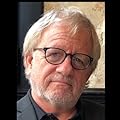
Stuart Firestein's newest book, It Could be Otherwise, is now available for pre-order on Amazon and will be released on August 4.
Stuart Firestein is Professor of Neuroscience and former Chair of the Department of Biological Sciences at Columbia University. He has been honored with several major teaching awards and his classes are highly sought after. His laboratory is one of the world’s leading laboratories on the neuroscience of our sense of smell. He has published over 100 scientific papers in journals such as Nature, Science, PNAS (Proceedings of the National Academy of Sciences), Cell and Neuron and presented his work at numerous national and international meetings. He regularly consults for the fragrance and flavor industry.
In addition to his laboratory research Professor Firestein is deeply engaged in science communication and science policy. He is a fellow of the Alfred P Sloan Foundation, a Guggenheim Fellow and recipient of support for his efforts from numerous public and private foundations (e.g., Sloan, Templeton, Mellon). He has published two books on the inner workings of science for a popular audience. Ignorance, how it drives science, was based on a class he originated at Columbia in which members of the science faculty were invited to talk to students about what they did NOT know, about the questions they were asking. The class became one of the most popular in the Columbia undergraduate curriculum, attracting students from both the sciences and humanities. It has now been replicated at the PSL Universities in Paris. Firestein was invited to give a TED talk on Ignorance in 2013 which continues to be among the more popular talks on the TED website, currently with over 3 million views. He has also given numerous TEDx talks around the world.
A second book, Failure, Why Science is so Successful was published in 2016 and highlights the value of failure, not only as a learning experience but as an integral part of the process of science. Failure was written while Firestein was a visiting scholar at Cambridge University, England, and he remains an Honorary Fellow of Kings College, Cambridge. Both books have been translated into more than 12 languages and are widely used in university philosophy and science classes and (most gratifyingly ) in many high school classes.
His third and newest book titled, It Could Be Otherwise, will be released on August 4 and is currently available for pre-order on Amazon. In this book Firestein examines the under-appreciated value of optimism in science, and in what science brings to society. In particular, he tackles the hard question of why uncertainty is optimistic and desirable, rather than negative and a reason to mistrust science. In fact it is uncertainty that opens up possibilities and allows us, in a way not available to previous generations, to say, “It could be otherwise.” According to Firestein, we should not try to eliminate uncertainty, but rather learn to navigate it and thereby open up unimagined opportunities for progress.
Firestein lectures regularly on these subjects to varied audiences including educators, High School students, University students and faculty, business leaders, development officers, biotech companies, even churches and synagogues. He has lectured throughout Europe and in South America, China, Japan and New Zealand. He has appeared on numerous NPR and BBC programs as well as Book TV and Science Goes to the Movies. Opinion pieces and essays have appeared in the LA Times, NY times, Wired magazine, Quanta magazine, Nautilus magazine (where he also serves as a member of the advisory board).
In 2022 Firestein joined the Fractal Faculty of the Santa Fe Institute (SFI). The Fractal Faculty are a small group of scientists, writers, artists (others include physicist Sean Carrol, authors Andrea Wulf and Ted Chiang) who are frequently in residence at the Institute.
Read more
Read less