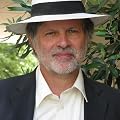
Yiannis Gabriel is a Greek writer, scholar and storyteller whose books explore the stories, myths, fantasies and memories through which people make sense of themselves and the world around them.
For much of his academic career, Gabriel was a leading voice in the study of organizations and organizational life. His pioneering work on storytelling challenged the conventional view of organizations as rational systems governed by structures, strategies and managerial decisions. He showed instead that organizations are also places of emotion, imagination, conflict and storytelling, where people create heroes and villains, remember the past, exchange gossip, construct identities and struggle to make sense of their experiences. His influential Storytelling in Organizations: Facts, Fictions, and Fantasies helped establish storytelling as an important field of organizational research, demonstrating how stories can open windows onto the emotional, political and symbolic life of organizations.
His interests have always extended beyond the boundaries of any single academic discipline. Trained initially as an engineer and subsequently as a sociologist, with a doctorate from the University of California, Berkeley, Gabriel has drawn on sociology, psychoanalysis, anthropology, literature, folklore and cultural studies. His early book Freud and Society examined the relationship between psychoanalysis and social life, while later work explored leadership and followership, organizational culture, consumerism, learning, nostalgia, emotions, insults and apologies.
Stories gradually became more than an object of research for Gabriel: they became a way of thinking. His work has consistently asked how human beings use narratives to live with uncertainty, loss, desire and contradiction. This interest led naturally to the myths and legends of the past. As editor of Myths, Stories, and Organizations: Premodern Narratives for Our Times, he brought ancient and traditional narratives into dialogue with contemporary questions about organizations, power, leadership, knowledge, consumption and identity.
In his more recent writing, Gabriel has moved still further towards the humanities and towards the wider public. Greek Myths for a Post-Truth World explores what some of the oldest stories in Western culture can tell us about a world increasingly troubled by misinformation, conspiracy theories, political myth-making and competing claims to truth. His approach is neither antiquarian nor simply nostalgic. He treats myths as living narratives whose characters, conflicts and moral ambiguities continue to illuminate contemporary life.
Alongside his academic writing, Gabriel writes about music, memory, literature, history and personal experience. His writing is animated by a lifelong fascination with the power of stories—not only the stories people tell about organizations and society, but the stories through which we remember our own lives.
Across more than a dozen books, his work has pursued a remarkably consistent question: how do human beings create meaning in a world that is often confusing, contradictory and resistant to rational explanation? His answer has never been that stories replace facts. Rather, stories reveal dimensions of experience that facts alone cannot capture.
Yiannis Gabriel is Emeritus Professor of Organizational Theory at the University of Bath. He lives in Britain and continues to write on myths, stories, culture, music, and memory. For more, visit his blogsite.
Read more
Read less