

Why Didn’t You Tell Anyone? The Silence Around Domestic Violence.
Failed to add items
Add to cart failed.
Add to wishlist failed.
Remove from wishlist failed.
Follow podcast failed
Unfollow podcast failed

Why Didn’t You Tell Anyone? The Silence Around Domestic Violence.
-
Narrated by:
-
Written by:
“If something like that were happening, she would tell me.”
Maybe. But what would happen after she told you? Would you believe her? Confront her partner? Expect her to leave immediately? Would she still feel able to call you if she didn’t?
For Domestic Violence Awareness Month, Tressa L. Bell—registered nurse with a background in forensic nursing, author, and survivor—explores what someone may be weighing before disclosing abuse.
We discuss the good days, barriers to leaving, and offering support without taking over.
🎙️ IN THIS EPISODE
• Why someone might share only a small part of what’s happening.
• Fear of judgment, retaliation, and losing privacy.
• “But they’re not always like that”—acknowledging love without dismissing harm.
• Why “just leave” doesn’t address children, housing, finances, attachment, or risk.
• What to say—and avoid—when someone shares a concern.
• Repairing the conversation if your first response was judgmental or rushed.
• Using the Interruption Model™ as a supporter: Notice, Name, Regulate, Interrupt, Repair, Repeat.
💭 REFLECTION
Would someone feel able to tell me again if they didn’t follow my advice the first time?
COMING UP
Social worker Callie Freenock joins Tressa to discuss recognizing concerning relationship behaviors, considering options, safety planning, and resources.
💜 SUPPORT
National Domestic Violence Hotline:
Call 800-799-7233 | Text START to 88788
Free, confidential support, available 24/7.
Visit The Hotline
Explore safety planning
If someone monitors your devices, consider using one they cannot access. Ask before sending abuse-related resources to someone else; their messages may be monitored.
For suicidal thoughts or emotional distress in the U.S., call or text 988.
📖 RESEARCH & GUIDANCE
Sylaska & Edwards (2014): Review of intimate partner violence disclosure to friends, family, and other informal supporters.
Read the research
Heron & Eisma (2021): Review of 34 articles on domestic violence disclosure in healthcare, including concerns about judgment, privacy, retaliation, and children.
Read the research
Dworkin, Brill, & Ullman (2019): Meta-analysis of 51 studies on responses to interpersonal violence disclosure and mental health. Findings describe associations, not proof of causation.
Read the research
WHO’s LIVES approach: Listen, Inquire, Validate, Enhance safety, Support.
Explore the guidance
📚 BOOKS
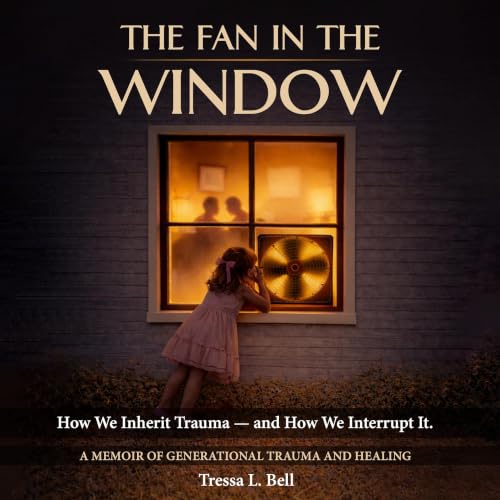
The Fan in the Window: How We Inherit Trauma—and How We Interrupt It
You Can Interrupt It: A Practical Guide for the Parent Who Inherited Trauma and Swore They’d Do It Differently
Find both books on Amazon
🎧 The memoir is also on Audible, narrated by Tressa. Email Tressa to request a free code while available.
🪟 FREE RESOURCE
The First Interruption—a free starter kit and email series.
Get the free kit
LISTEN & CONNECT
The Fan in the Window: Interrupting What We Inherit
New episodes every other Tuesday. Listen wherever you get your podcasts or watch on YouTube.
🎙️ Listen or watch
🌐 Visit the website
CONTENT NOTE & DISCLAIMER
Discussion of domestic violence, threats, and barriers to support; no graphic descriptions. Education and personal perspective, not therapy, medical advice, psychological treatment, or individualized safety planning. The Interruption Model™ is an educational framework, not a clinically validated treatment.
This didn’t start with you…but you can interrupt it.