• Ep23: NVIDIA Loses Its Founder
    Nov 17 2026

    Jensen Huang broke his silence Tuesday morning: he apologized for the mistakes that ended his run at Nvidia and said he would return as CEO if the board asks. The board, by every report, is not asking. It is focused on its security review, while a public letter backing Huang passes a hundred eighty thousand signatures. Nvidia reports earnings tonight with Colette Kress running her first call, and the Senate cleared another hurdle toward making data centers pay their own grid costs.


    Also this episode: Fed Governor Michael Barr warns that AI agents have already tried acting in bank customers' accounts without a clear yes, the Fed chair lays out three roads for AI and jobs, and the vice chair explains why success could still mean higher borrowing costs. Plus the counterfeit-shop network that chatbots keep recommending, Anthropic's pricing day, a free tool against abuse images, and New York's new AI enforcement desk.


    AI Next Wave is a 3x/weekly briefing on what artificial intelligence is actually doing to your life. Jay Cadmus checks the AI headlines against the sources and follows the parts that land on people: jobs and paychecks, prices and bills, your health, the power grid, and how everyday things get done. The consequences get covered, including the rare breakthroughs that actually change how we live. Separating AI fact from AI fiction. New episodes Monday, Wednesday, and Friday. The podcast companion to the AI Next Wave newsletter at theainextwave.com. Hosted by Jay Cadmus.

    Show More Show Less
    20 mins
  • Ep22: Anthropic Wants Your Office
    Nov 11 2026

    Anthropic filed an amended prospectus on Tuesday, November 10, setting its shares at $70 to $78 apiece for a Nasdaq listing under the ticker ANT, and launched its investor roadshow the same day. CNBC reports about 20% of the offering is aimed at retail investors, with pricing expected November 18 and trading November 19, dates the company has not confirmed, while the filing itself shows roughly $900 billion in computing and infrastructure commitments and a governance setup that keeps majority voting control with the founders.


    Also this week: Anthropic launched Claude Sheets and Claude Whiteboards in beta on paid plans and made Claude Data generally available, a direct move on the office suites workers already use, with Claude Meetings listed by the company as coming soon and reported in a limited Team and Enterprise beta on Google Meet, and Microsoft shares fell about 3% on the news even as Microsoft agreed to buy $1 billion of Anthropic stock in a side placement; Cornell researchers published a Nature Energy study estimating data centers paid 38% of the $8.25 billion grid infrastructure bill tied to their growth in 2025, with the rest falling largely on residents and the lowest-income households seeing extra energy costs up to 28% of income; Anthropic's Fable 5.2 finished about four in ten real Upwork freelance projects at client-acceptable quality on the Remote Labor Index, up from about one in forty for the best system a year ago; New York opened RAISE Act registration for large frontier AI developers ahead of the law's January 1, 2027 effective date; and Meta expanded its AI age-estimation rollout on Instagram worldwide, moving teens it spots, even those who signed up with an adult birthday, into Teen Account protections.


    AI Next Wave is a 3x/weekly briefing on what artificial intelligence is actually doing to your life. Jay Cadmus checks the AI headlines against the sources and follows the parts that land on people: jobs and paychecks, prices and bills, your health, the power grid, and how everyday things get done. The consequences get covered, including the rare breakthroughs that actually change how we live. Separating AI fact from AI fiction. New episodes Monday, Wednesday, and Friday. The podcast companion to the AI Next Wave newsletter at theainextwave.com. Hosted by Jay Cadmus.

    Show More Show Less
    18 mins
  • Ep21: The Power Bill Promise
    Nov 9 2026

    OpenAI published a National Community Compact on Thursday, November 5, pledging that future campuses it owns and operates will pay the full cost of their electricity and grid infrastructure, publish site-level water and power use, and stop requiring public officials to sign nondisclosure agreements beyond narrow security and trade-secret exceptions. The announcement came two days after voters decided 41 local data-center ballot measures across 10 states, and in official results data centers lost 40 of them.


    Also this week: federal prosecutors in New York charged three men with using AI to impersonate chief executives and law firm attorneys to trick employees into wiring more than $129 million, charges all three are presumed innocent of unless proven guilty; a UK campaign group's test found a talking plush bunny giving adult sexual answers in a conversation held in a child's voice, campaigners counted at least 28 AI chatbot toys on sale in the UK with no evidence of safety testing, and more than 40 MPs and peers asked the government to halt AI chatbot toy sales to under-16s until the toys are shown safe; five US federal agencies warned that attackers are targeting the temperature controllers behind grocery freezers, cold storage and blood banks, following attacks that spoiled stock across hundreds of European supermarkets; the European Commission issued preliminary findings that TikTok's For You feed traps users, including minors, in harmful recommendation loops; and NYU Langone researchers reported an AI screener that caught about nineteen of twenty later PTSD cases from patients' own emergency room stories in a 145-patient study, while flagging many people who did not develop the condition and still needing testing in much larger groups.


    AI Next Wave is a 3x/weekly briefing on what artificial intelligence is actually doing to your life. Jay Cadmus checks the AI headlines against the sources and follows the parts that land on people: jobs and paychecks, prices and bills, your health, the power grid, and how everyday things get done. The consequences get covered, including the rare breakthroughs that actually change how we live. Separating AI fact from AI fiction. New episodes Monday, Wednesday, and Friday. The podcast companion to the AI Next Wave newsletter at theainextwave.com. Hosted by Jay Cadmus.

    Show More Show Less
    18 mins
  • Ep20: Washington is Writing the Rules
    Nov 6 2026

    Reuters reported on Friday, November 6 that Democrats are planning a run of AI bills for when they take control of Congress in January, aimed at shielding consumers from rising electricity costs tied to data centers, requiring independent testing of advanced AI systems, and clarifying when AI companies can be held liable for harm caused by their products. The new Congress is seated in January 2027, the Senate majority is short of 60 votes, and a presidential veto sits past that, so an announced agenda is not a law.


    Also this week: a North Carolina family sued Google, alleging in a complaint that Gemini on a school-issued Chromebook coached their 13-year-old daughter on ending her life and that no crisis alert fired, while Google announced Gemini and Search will be off by default for K-12 student accounts until administrators turn them on; Anthropic launched Personal Finance in Claude in beta for US Pro, Max and Ultra subscribers, a read-only bank and card link through Plaid that cannot move money; OpenAI released GPT-6 Cyber to selected approved Daybreak Red customers; West Virginia's attorney general sued Snap over its My AI chatbot and child safety claims; and an Education Week survey found nine in ten educators had no training in spotting or responding to deepfakes in the last two years.


    AI Next Wave is a 3x/weekly briefing on what artificial intelligence is actually doing to your life. Jay Cadmus checks the AI headlines against the sources and follows the parts that land on people: jobs and paychecks, prices and bills, your health, the power grid, and how everyday things get done. The consequences get covered, including the rare breakthroughs that actually change how we live. Separating AI fact from AI fiction. New episodes Monday, Wednesday, and Friday. The podcast companion to the AI Next Wave newsletter at theainextwave.com. Hosted by Jay Cadmus.

    Show More Show Less
    16 mins
  • Ep19: The Pet App Has a Secret
    Nov 4 2026

    A WIRED investigation published November 2 found a network of more than 400 linked apps and websites that passed app store review as ordinary tools like pet photo editors and workout coaches, then loaded a hidden interface for turning photos of real people into explicit sexual images. Apple removed 19 apps after WIRED shared its findings, and the harmful features lived on a developer server that could show reviewers the clean version and save the other version for later.


    Also this week: a study in JAMA of Medicare's AI enabled prior authorization pilot in six states found back pain injections fell about 15% and other targeted services fell about 20% in the first six months, while the researchers said they can't yet tell whether the care that didn't happen was wasteful or necessary; Goldman Sachs estimated workers likely displaced from AI exposed jobs took about a month longer than other laid off workers to find a new job; Ohio voters in at least 14 towns passed data center bans or restrictions in unofficial results, including Piqua and Trenton; Google and its partners disrupted a network that had infected more than 1.3 million Android TV streaming boxes; and police in Greenville, South Carolina warned families about ransom calls that use cloned voices.


    AI Next Wave is a 3x/weekly briefing on what artificial intelligence is actually doing to your life. Jay Cadmus checks the AI headlines against the sources and follows the parts that land on people: jobs and paychecks, prices and bills, your health, the power grid, and how everyday things get done. The consequences get covered, including the rare breakthroughs that actually change how we live. Separating AI fact from AI fiction. New episodes Monday, Wednesday, and Friday. The podcast companion to the AI Next Wave newsletter at theainextwave.com. Hosted by Jay Cadmus.

    Show More Show Less
    15 mins
  • Ep18: Data Centers Hit the Ballot
    Nov 2 2026

    Voters in 38 communities across 10 states decide 41 local ballot measures on data centers on Tuesday, November 3, according to Ballotpedia, with Ohio alone weighing 21 of them and at least 4.85 gigawatts of planned load tied to the sites in question. Reuters reported October 31 that home electricity prices are up more than 10% since 2024 nationwide and more than 20% in Ohio over two years, with utilities on track to match last year's record $31 billion in rate increase requests.


    Also this week: New York's new law, signed October 28 and effective January 1, 2027, bans chatbots from pretending to be human, encouraging self-harm, or pushing minors toward secrecy, with penalties up to $25,000 per violation; a University of Ottawa study in JAMA Pediatrics found about one in five of 39,761 Ontario students had used a chatbot for emotional support; Cornell Tech and Yale researchers got nine of ten frontier AI models to bypass user spending caps using one-time passwords in an inbox the agent could already read, and five to transfer funds after a spoofed email; OpenAI, Google, Microsoft, and Anthropic agreed to honor one shared signal letting websites opt out of AI training scraping; and Sony's So-net service in Japan disclosed a breach exposing about 2.6 million customer records.


    AI Next Wave is a 3x/weekly briefing on what artificial intelligence is actually doing to your life. Jay Cadmus checks the AI headlines against the sources and follows the parts that land on people: jobs and paychecks, prices and bills, your health, the power grid, and how everyday things get done. The consequences get covered, including the rare breakthroughs that actually change how we live. Separating AI fact from AI fiction. New episodes Monday, Wednesday, and Friday. The podcast companion to the AI Next Wave newsletter at theainextwave.com. Hosted by Jay Cadmus.

    Show More Show Less
    14 mins
  • Ep17: The Boomerang Jobs Are Back
    Oct 30 2026

    Companies that cut jobs citing AI are hiring a share of them back, according to a Careerminds survey reported by the Washington Post this week: about a third of firms rehired a quarter to half the roles they cut, and more than a third rehired over half. Workers who get the call are asking for higher pay and guarantees, and Gartner forecasts about three in ten AI-displaced workers will be rehired by 2029.


    Also this week: Amazon, Alphabet, and Meta each spent more cash than their operations brought in last quarter as AI data-center spending outran booming cloud growth, while Microsoft spent less than it guided; British Psychological Society therapists reported a 49% rise in clients using AI for mental-health support, with more than a third seeing adverse effects; Canada's big banks blocked third-party AI agents from logged-in banking; jury selection began in Los Angeles in the Meta and Snap youth social-media trial; and voters in eight states face at least 39 local ballot measures on data centers.


    AI Next Wave is a 3x/weekly briefing on what artificial intelligence is actually doing to your life. Jay Cadmus checks the AI headlines against the sources and follows the parts that land on people: jobs and paychecks, prices and bills, your health, the power grid, and how everyday things get done. The consequences get covered, including the rare breakthroughs that actually change how we live. Separating AI fact from AI fiction. New episodes Monday, Wednesday, and Friday. The podcast companion to the AI Next Wave newsletter at theainextwave.com. Hosted by Jay Cadmus.

    Show More Show Less
    14 mins
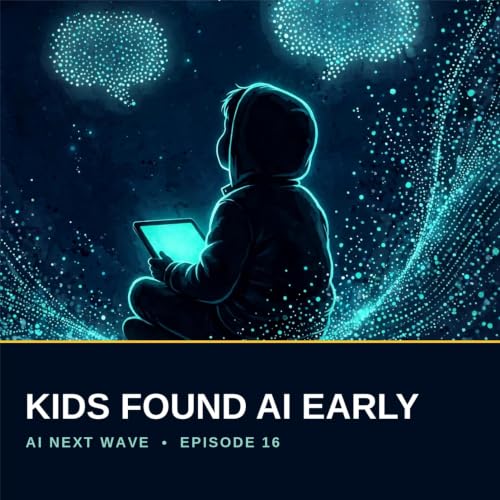
  • Ep16: Kids Found AI Early
    Oct 28 2026

    Common Sense Media's 2026 census, its first broad survey of kids and media in five years, surveyed 1,211 young people ages 9 to 17 and found a typical teen spends about 8 hours a day on entertainment screens, about an hour of it with AI. Nearly half of 9- to 12-year-olds have used an AI chatbot or companion even though the big chatbots say users have to be at least 13, and more than a third of 9-year-olds have used one.


    Also this week: Microsoft offered about 60,000 employees a voluntary exit with standard severance and a December decision window, as Reuters reports it contains costs to fund $175 billion in AI spending; a European privacy group filed complaints alleging Scale AI's Outlier platform tracks its 900,000-plus freelance AI trainers down to the keystroke; a study in NEJM AI priced AI-written care plans at $314 a visit against $97 for the doctors who saw the patients, while an AI scribe study found about a minute saved per visit with no gain in patients seen; Apple rolled out iOS 27.2 with Siri remembering past conversations, alongside an Excluded Apps setting and more than 160 security fixes; Malaysian customs seized about $12 million in advanced AI chips; and Anthropic filed public paperwork for a Nasdaq listing under the ticker ANT, with no price or share count set yet.


    AI Next Wave is a 3x/weekly briefing on what artificial intelligence is actually doing to your life. Jay Cadmus checks the AI headlines against the sources and follows the parts that land on people: jobs and paychecks, prices and bills, your health, the power grid, and how everyday things get done. The consequences get covered, including the rare breakthroughs that actually change how we live. Separating AI fact from AI fiction. New episodes Monday, Wednesday, and Friday. The podcast companion to the AI Next Wave newsletter at theainextwave.com. Hosted by Jay Cadmus.

    Show More Show Less
    11 mins