• EP 170 - Jim Pulcrano: Why Most Venture Capital Fails And What Europe Still Gets Wrong
    Jan 25 2026

    Nine out of ten startups fail, yet Europe keeps funding them the same way.
    Governments replace judgment with bureaucracy, capital replaces experience, and failure is misunderstood instead of learned from.


    This conversation exposes why venture capital is a profession, not a policy tool — and why getting this wrong quietly kills innovation.

    In this episode, Jim Pulcrano, Adjunct Professor at IMD and longtime venture investor, explains why most venture capital systems fail before capital is even deployed.

    Drawing on four decades across Silicon Valley, Europe, and academia, Jim dismantles the myth that VC success comes from spreadsheets, credentials, or government programs. Instead, he shows why pattern recognition, lived experience, and exposure to failure are the real differentiators.

    As Jim puts it:
    (01:13:27) “Silicon Valley is the world’s capital of failure — and also the capital of learning.”

    That mindset difference explains why Europe struggles to scale founders, why governments unintentionally create zombie companies, and why operators consistently outperform theorists when backing the next generation of companies.

    This is not a motivational episode.
    It’s a structural diagnosis of how innovation ecosystems actually work — and where Europe still gets in its own way.

    💡 What You’ll Learn in This Episode

    1️⃣ Why most venture capital fails long before money is invested
    2️⃣ Why governments cannot replace judgment, experience, or risk-taking
    3️⃣ Why operators outperform bankers as investors
    4️⃣ Why failure is data — not stigma — in high-performing ecosystems
    5️⃣ What Europe must change to unlock its next innovation cycle

    👤 About Jim Pulcrano

    Jim Pulcrano is an Adjunct Professor at IMD with over four decades of experience across venture capital, entrepreneurship, and executive education. He has worked extensively in Silicon Valley and Europe, advising founders, investors, and institutions on scaling companies, leadership development, and venture capital as a professional discipline.

    💬 Quotes

    (01:13:27) “Silicon Valley is the world’s capital of failure — and also the capital of learning.”
    (01:33:58) “You have to be there at midnight when you’re trying to make a decision on Sunday night.”
    (01:40:14) “I’ve never met a successful entrepreneur who hasn’t been weeks from running out of money.”
    (01:23:21) “A government purchase order is worth more than the same amount in cash.”

    🧭 Timestamps

    (00:04:25) Why most startups fail — and why that’s not the real problem
    (00:09:55) Why Europe still misunderstands venture risk
    (00:16:42) Why founders matter more than ideas
    (00:24:13) Why governments create zombie startups
    (00:32:34) Why operator VCs outperform financial engineers
    (00:40:14) Failure as data, not disgrace
    (00:48:26) Why venture capital cannot be taught without simulation
    (01:04:48) What LPs should really look for in fund managers
    (01:19:46) Government as customer vs government as controller
    (01:30:10) Why young people should not rush into VC
    (01:32:38) Why empathy separates great investors from average ones
    (01:45:13) Leadership shifts from startup to scale-up
    (01:50:06) Three changes Europe must make now

    🎙️ Beginner’s Mind

    Top 10% globally. The

    Send us a text

    Support the show

    Join the Podcast Newsletter: Link

    Show More Show Less
    1 hr and 55 mins
  • EP 169 - Why New Year’s Goals Fail by February - Even for Disciplined People
    Jan 11 2026

    Most goals don’t fail because of laziness or lack of ambition.

    They fail quietly — buried under daily noise, competing priorities, and forgotten intentions.

    By March, even the most meaningful goals have slipped down the list… replaced by urgency, meetings, and excuses.

    In the last years, whenever I work with companies or people in my executive coaching a pattern showed up frequently.

    In private life: marathons abandoned, educations postponed, mountains left unclimbed.

    In business: bold visions diluted, priorities scattered, companies losing momentum — not because the goal was wrong, but because it was never protected.

    This Year in Review 2025 episode is my answer to that problem.

    After working with founders, executives, and teams throughout the year, one truth became unavoidable:

    Big goals don’t fail because people stop caring. They fail because they lose daily contact.

    So I stripped goal-setting down to what actually works.

    To make it memorable, I revisited the conversations of 2025 and selected six voices — from politics, investing, entrepreneurship, and professional sport — each illustrating one essential principle for achieving meaningful goals.

    No hype. No motivational slogans.
    Just a clear, calm framework you can apply immediately to your most important goal for 2026.

    🧭 What You’ll Learn in This Episode

    1️⃣ Why discipline and motivation are overrated — and what replaces them
    2️⃣ How goals quietly disappear without friction or resistance
    3️⃣ Why choosing one goal is the highest-leverage decision you can make
    4️⃣ How to keep goals present without pressure or obsession
    5️⃣ Why process builds identity — and outcomes don’t
    6️⃣ What real commitment looks like when nobody is watching

    ⏱️ Timestamps

    (00:00) Why New Year’s Resolutions Collapse — and What Actually Works
    (02:57) Karl Nehammer — “Sometimes there is no guidebook”
    (04:19) How Goals Quietly Disappear
    (07:56) Alex Dang — Focus, Selection, and Knowing When to Fold
    (11:45) Hack Away the Unessential — Choosing One Goal
    (14:05) Fabrizio Conicella — Skills Entrepreneurs Need in 2026
    (17:54) Why You Must Review Goals Daily
    (19:43) Jason Foster — Setting Big Goals and Chipping Away
    (20:48) Process Over Outcome
    (22:48) Alasdair Milton — Doing the Work When Nobody Is Watching
    (26:05) Start Now — Before It Feels Comfortable
    (27:50) Vadim Fedotov — What Commitment Really Means
    (30:54) Before You Leave — Ed Sheeran’s Approach to Progress

    🎙️ About This Episode

    This episode isn’t about setting more goals.
    It’s about protecting one goal that actually matters — whether you’re building the next NVIDIA, scaling a company, or working toward a personal milestone.

    If 2025 taught us anything, it’s this:
    Clarity beats intensity. Direction beats urgency. Process beats motivation.

    May 2026 be the year your most important goal doesn’t get lost.

    I’m glad you’re here.

    Send us a text

    Support the show

    Join the Podcast Newsletter: Link

    Show More Show Less
    36 mins
  • EP 168 - Alasdair Milton: The Innovation Inflection Point: Why 70% of Cures Never Reach Patients
    Dec 30 2025

    Breakthrough science has never been stronger — yet patients still miss life-saving therapies.

    Despite decades of innovation, most precision medicines fail at the last mile of healthcare delivery.

    The problem isn’t discovery. It’s how science, capital, and systems are aligned — or not.

    Possessing elite science is no longer enough to win in the multi-trillion-dollar biopharma ecosystem.

    As innovation shifts from West to East and from treatment to prevention, leadership teams struggle to bridge scientific depth with incentives, execution, and real-world delivery. Capital follows speed and scale — not intention — and healthcare systems built decades ago are failing to keep up.

    In this episode, Alasdair Milton, Principal at KPMG, explains where innovation actually breaks — and what must change for cures to reach patients at scale. From diagnostics and data silos to capital allocation and prevention models, this conversation reframes the next decade of precision medicine.

    💡 What You’ll Learn in This Episode

    1️⃣ Why only a fraction of eligible patients receive precision therapies
    2️⃣ How delivery systems — not science — kill innovation outcomes
    3️⃣ Why prevention is the next major value shift in healthcare
    4️⃣ How capital allocation decisions quietly determine patient access
    5️⃣ What leaders must change now to compete in the next biopharma cycle

    👤 About Alasdair Milton

    Alasdair Milton is a Principal at KPMG advising global biopharma leaders on strategy, transactions, and innovation models. With a PhD in cancer biology and two decades at the intersection of science and capital, he works with executives navigating precision medicine, prevention, and large-scale healthcare transformation.

    💬 Quotes That Reframe the Debate

    (01:00:20) “Great science only creates value when translated into clear commercial decisions.”
    (01:37:24) “Power has swung decisively to pharma, with biotechs now starved for capital and leverage.”
    (01:36:10) “Markets shift fast, but leverage always follows capital, data, and disciplined execution.”
    (02:26:30) “Life sciences must move from treating sickness to predicting risk and sustaining lifelong wellness.”
    (01:46:24) “China is catching up fast, and by the 2030s, truly innovative molecules may originate there.”

    🧭 Timestamps

    (00:04:04) Shifting from treating disease to preventing it
    (00:05:32) Turbulent markets, steady scientific progress
    (00:07:03) In-vivo CAR-T and the next leap in cellular medicine
    (00:11:00) From chronic disease management to functional cures
    (00:20:20) Bridging specialized science with corporate strategy
    (00:21:55) Translating lab precision into business language
    (00:22:07) Bridging scientific depth to business acumen
    (00:57:40) Turning complex science into decisive commercial implications
    (01:08:46) Why in-person collaboration still drives leadership and learning
    (01:11:48) Navigating the $200B biopharma patent cliff through M&A
    (01:17:25) Capital concentrates on de-risked teams with proven leadership
    (01:18:17) Interpreting the biotech market recovery and tailwinds
    (01:28:26) Long-term capital returns as pharma reclaims deal leverage
    (01:38:03) Navigating IRA impacts and macro headwinds
    (01:43:39) China’s rapid ascent in the global monoclonal pipeline
    (01:46:24) China accelerates the eastward shift in global innovation
    (02:07:31) Precision medicine redefines individualized healthcare outcomes
    (02:09:03) Standardi

    Send us a text

    Support the show

    Join the Podcast Newsletter: Link

    Show More Show Less
    2 hrs and 42 mins
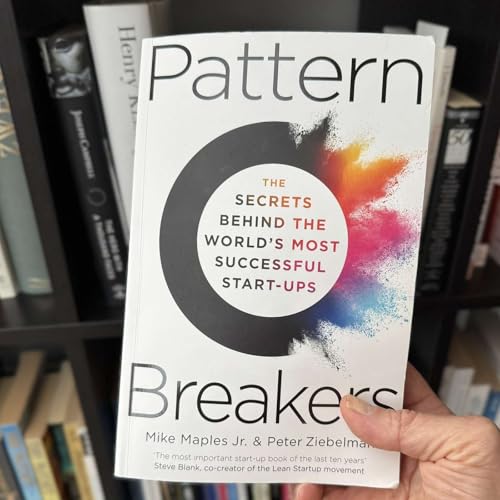
  • #167: Pattern Breakers — 7 Laws Behind Category-Defining Companies
    Dec 15 2025

    Most founders obsess over ideas.
    Breakthrough companies obsess over inflections, conviction, and structure.

    This episode unpacks Pattern Breakers by Mike Maples Jr.—a book that quietly explains why most startups never break out… and why a small minority reshape entire categories.

    But this isn’t a book summary.

    It’s a thinking upgrade for founders, operators, board members, and investors navigating the most fragile phase of company building: Series A to IPO, where timing, conviction, and structure matter more than features or pitch decks.

    Across seven tightly structured lessons, this episode explores how pattern-breaking companies are built before the world is ready for them—and why success is rarely about genius ideas, and almost always about seeing the future early and designing for it deliberately.

    You’ll hear why:

    • breakthroughs start with external inflections, not internal brainstorming
    • winning companies are non-consensus and right, long before they’re popular
    • movements outperform products when markets get noisy
    • MVPs test interest, but prototypes test desperation
    • productive disagreeableness protects insight when pressure rises
    • corporate success quietly creates biases that kill innovation
    • and why structure—not culture—is the hidden lever behind breakthroughs

    Each lesson is grounded in real company examples, translated into today’s market reality, and finished with coaching questions you can use immediately—in leadership meetings, boardrooms, or investment decisions.

    Key Takeaways

    Inflections Beat Ideas
    Breakthrough timing comes from external change, not creativity.

    Non-Consensus Is the Signal
    If everyone agrees, upside is already gone.

    Movements Outrun Products
    Identity compounds longer than features.

    Test Desperation, Not Interest
    Scalability starts with craving, not curiosity.

    Protect Conviction
    Consensus feels safe. It rarely creates breakthroughs.

    Design for Breakthroughs
    Small, protected, fast teams outperform bureaucracy every time.

    Timestamps

    (00:00) Intro
    (02:58) The Big Idea Behind Pattern Breakers
    (05:19) Who Is Mike Maples — and Why His Perspective Matters
    (07:35) Lesson 1: Start With Inflections, Not Ideas
    (12:36) Lesson 2: Be Non-Consensus and Right
    (17:31) Lesson 3: Prototype the Future, Not the MVP
    (21:31) Lesson 4: Recruit, Lead, and Scale Through Movements
    (26:20) Lesson 5: Master Productive Disagreeableness
    (30:04) Lesson 6: Break the Corporate Biases That Kill Breakthroughs
    (35:00) Lesson 7: Structure for Breakthrough Execution
    (39:41) Key Takeaways — The Lenses and Habits That Matter
    (42:21) Personal Reflection & Critique

    Why Listen

    • Learn how category-defining companies are built before markets open
    • Upgrade how you evaluate startups, strategies, and leadership teams
    • Replace product thinking with inflection, conviction, and structure
    • Walk away with questions that immediately sharpen decisions

    Found this valuable?
    Like, share, and follow.

    Every signal helps grow the show—and brings you more thinking frameworks from people and companies who didn’t follow patterns… they broke them.

    Send us a text

    Support the show

    Join the Podcast Newsletter: Link

    Show More Show Less
    47 mins
  • SPARK20 – 156: Janos Pasztor | The Climate Diplomat Who Refuses to Give Up on Humanity
    Nov 23 2025

    The world has grown quiet about climate change. Too quiet.

    We scroll past floods, fires, droughts… and move on with our day.
    As if the problem solved itself.
    As if we’ve earned the luxury to look away.

    Janos Pasztor (full episode) has spent 40 years inside the rooms where climate decisions are made — from serving as UN Assistant Secretary-General for Climate Change to advising presidents, prime ministers, and global institutions.

    And in this SPARK20 highlight episode, one truth stood out:

    We are not done with climate change.
    We are only entering its most consequential chapter.

    This is not a doom story.
    It is the story of a man who still believes humanity can choose a better future — if we’re willing to face the questions we’ve been avoiding.

    What You’ll Learn in 20 Minutes

    Why global warming accelerates even as we reduce emissions
    (00:01:15)
    And why governments are still “not addressing the issue sufficiently.”

    Why adaptation alone cannot save us
    (00:01:54)
    And what the real limits of adaptation look like.

    Why Janos believes we may need to cool parts of the planet
    (00:02:32)
    And why no political leader wants to say it out loud.

    How climate diplomacy changed since the 1980s — and why it matters now
    (00:03:32)
    Including the rise of China in global negotiations.

    Why capitalism itself may need to evolve
    (00:08:05)
    And what this means for investors, innovation, and global stability.

    What geoengineering really is (and is not)
    (00:09:16)
    Forget the internet myths — this is the factual explanation.

    Why volcanic eruptions hold a clue to future climate solutions
    (00:12:04)

    Why SRM is scientifically feasible — and politically dangerous
    (00:17:11)
    The technology is simple. The governance is not.

    Why the biggest risk of SRM is not cost — but consent
    (00:17:44)
    And what happens when societies don’t get a say.

    What a unilateral climate intervention could trigger
    (00:20:33)
    A scenario every policymaker should hear.

    Why Janos still believes in a brighter future
    (00:21:07)
    A rare moment of optimism from someone who has seen every side of the crisis.

    Quotes to Carry With You

    📌 “Global temperatures continue to rise — and the world is not ready.”
    (00:01:15)

    📌 “We must consider whether the time has come to start cooling parts of the planet.”
    (00:02:32)

    📌 “Three degrees of warming is cuckoo land. You simply cannot adapt to that.”
    (00:18:23)

    📌 “Technology is not the issue. It’s cheap. The real question is: do societies want this?”
    (00:17:11)

    📌 “I wouldn’t be here if I didn’t believe we can still get this right.”
    (00:21:07)

    Why This Conversation Matters

    Because climate change isn’t a chapter we finished.
    It’s the foundation on which every other chapter of the future will be written — our economies, our food systems, our borders, our investments, and the lives of our children.

    And while Elon Musk may one day take humans to Mars, no one alive today will move there.
    This planet is the one we must keep habitable.

    Janos Pasztor is a reminder that realism and hope are not opposites — they’re partners.

    👉 Listen now. Share it fo

    Send us a text

    Support the show

    Join the Podcast Newsletter: Link

    Show More Show Less
    25 mins
  • EP 166 - Karl Nehammer: Why Europe Fails to Scale – And How the EIB Plans to Fix It
    Nov 6 2025

    Europe leads the world in discovery — yet too often, its breakthroughs never become global companies.

    Billions in research funding turn into patents, not products.

    While others build empires from ideas, Europe risks becoming the world’s laboratory — brilliant, but broke.

    That’s the paradox at the heart of this conversation.

    In this episode, Karl Nehammer, Vice-President of the European Investment Bank (EIB) and former Chancellor of Austria, joins Christian Soschner live at BIO-Europe 2025 to discuss how Europe can turn its world-class science into world-class companies.

    He shares how leadership forged in crisis can rebuild confidence, competitiveness, and growth — and why every crisis hides an opportunity to start thinking differently.

    💡 What You’ll Learn in This Episode

    1️⃣ Why Europe’s innovation system struggles to turn discovery into scale
    2️⃣ How the EIB can bridge the gap between science, capital, and market impact
    3️⃣ Lessons from leading through COVID-19, the energy crisis, and diplomatic challenges
    4️⃣ Why changing culture and regulation is key to Europe’s competitiveness
    5️⃣ The mindset Europe needs to move from surviving to building

    💬 Quotes from Karl Nehammer

    (00:03:33) “Every crisis is also maybe a chance — you learn a lot, decide quickly, and think in totally new ways.”
    (00:07:00) “We have the knowledge now of what we must change — it’s a window of opportunity.”
    (00:20:03) “Empower yourself. Don’t wait for another person — you can do it yourself.”


    🧭 Timestamps

    (00:00:00) Opening – Why Europe Struggles to Scale
    (00:03:33) Karl Nehammer – Leadership Lessons from Crisis
    (00:06:21) Europe’s Innovation Challenge – Science vs. Commercialization
    (00:09:17) Life-Science Resilience – Lessons from COVID-19
    (00:12:52) A Realistic Vision for Europe’s Future
    (00:17:05) Inside the European Investment Bank – Building Bridges Between Capital and Innovation
    (00:18:59) Empowering Founders – Karl Nehammer’s Message to Europe’s Builders
    (00:20:14) Closing – Optimism, Collaboration, and Confidence

    🎙️ Beginner’s Mind

    Top 10% globally. The leading podcast for founders, investors, and policymakers shaping the future of biotech, deep tech, and innovation.

    Follow the show to explore more conversations like this one — where science meets strategy and leadership builds the future.

    Send us a text

    Support the show

    Join the Podcast Newsletter: Link

    Show More Show Less
    20 mins
  • EP 165 – Jason Foster: 153 Rejections Later — What Every Founder Must Learn About Resilience
    Oct 28 2025

    Most founders dream of raising millions. Few survive the 153 “no’s” it takes to get there.

    Behind every biotech breakthrough lies exhaustion — late-night calls, failed rounds, and investors who walk away at the finish line.

    What separates the ones who make it isn’t luck or timing — it’s resilience built into process.

    In this episode, Jason Foster, CEO of Ori Biotech, shares how he transformed relentless rejection into a billion-dollar trajectory. From rebuilding cell-therapy manufacturing to leading global teams through economic storms, Jason reveals how founders can systematize grit, master storytelling, and survive when everything seems to fall apart.

    You’ll learn how to navigate fundraising winters, why leadership begins with self-care, and how to build companies that endure long after the hype fades.
    If you’ve ever doubted your path as a builder, this conversation will remind you that resilience is not a trait — it’s a practice.

    💡 What You’ll Learn in This Episode

    1️⃣ The real reason most founders fail long before capital runs out
    2️⃣ How to turn rejection into momentum using process and habit
    3️⃣ Why storytelling is the most underrated skill in biotech leadership
    4️⃣ How resilience and self-care directly drive performance and valuation
    5️⃣ The mindset that separates enduring companies from short-term success

    👤 About Jason Foster

    Jason Foster is the CEO of Ori Biotech, a leading innovator transforming cell and gene therapy manufacturing. With 20+ years in global health, he has raised over $140M, led companies through IPO-level growth, and serves as a mentor and investor to emerging founders in life sciences. His mission: make advanced therapies accessible to every patient, everywhere.

    💬 Quotes That Might Change How You Think

    (00:14:09) “There are cures for cancer today, but patients can’t reach them — access must change.”
    (00:37:22) “The science is extraordinary — but if we can’t make it at scale, it means nothing.”
    (01:22:17) “Purpose, not money, drives talent to transform lives through innovation.”
    (01:46:17) “Fundraising is a war of attrition — constant rejection tests your resilience more than your idea.”
    (02:02:16) “You only have to get up one more time than you’re knocked down.”

    🧭 Timestamps to Explore

    (00:02:00) Embracing Hard Challenges — How Biotech Founders Build Resilience That Lasts
    (00:13:40) The Unacceptable Truth: Cures Exist, Yet Patients Still Can’t Access Them
    (00:26:23) Navigating Cultures — What European and American Biotech Leaders Can Learn From Each Other
    (00:32:52) Why Great Science Isn’t Enough Without Commercial Viability
    (00:39:19) Revolutionizing Cell Therapy Manufacturing — The Seven-Day Bottleneck Explained
    (00:50:11) Automation and Digitization — Unlocking Scalable Patient Access in Cell and Gene Therapy
    (01:09:30) Rethinking Capacity Utilization — Making Regional Biotech Manufacturing Centers Work
    (01:14:27) Mass Personalization — The Future Delivery Model for Advanced Therapies
    (01:23:00) Purpose-Driven Talent — The Secret to Retaining Top Biotech Performers
    (01:32:18) Fundraising as a War of Attrition — Building Vision Alignment With Investors
    (01:39:14) Building Investor Trust Before You Need It — A Founder’s Long Game
    (01:47:23) Resilience Transforms Rejection Into Triumph — Lessons From 153 Investor “No’s”

    🎙️ Beginner’s Mind

    Top 10% globally. The

    Send us a text

    Support the show

    Join the Podcast Newsletter: Link

    Show More Show Less
    2 hrs and 7 mins
  • EP 164 - Kat Kozyrytska: AI in Pharma Is a Yesterday Problem – Why Ethical Frameworks Can’t Wait
    Oct 3 2025

    Imagine waking up to find your company’s most valuable IP leaked—not by hackers, but by the very AI tools you trusted.
    This isn’t a distant scenario; it’s happening inside pharma and biotech right now.
    And the cost isn’t just financial—it’s patient lives, broken trust, and an industry on the edge of losing credibility.

    In this episode, Kat Kozyrytska shares how leaders can act before invisible risks become catastrophic. From her personal journey in post-Soviet Ukraine to building frameworks in global biotech, Kat reveals why “yesterday problems” with AI demand urgent attention today.

    You’ll learn how data privacy failures propagate quietly, why embedding organizational values into AI is essential, and how collaboration across companies can safeguard innovation and accelerate therapies.

    The future of biotech won’t be secured by hype or speed—but by trust, ethics, and the courage to act before it’s too late.

    🎧 What You’ll Learn in This Episode
    1️⃣ Why “yesterday problems” with AI in pharma are already costing billions
    2️⃣ How data privacy failures silently erode trust, IP, and patient safety
    3️⃣ The difference between collaboration and competition in biotech innovation
    4️⃣ Why embedding organizational values into AI is no longer optional
    5️⃣ The future of drug discovery, clinical trials, and manufacturing in an AI-first world

    👤 About Kat Kozyrytska
    Kat Kozyrytska is the Founder of the Cell Therapy Manufacturability Program and a global thought leader at the intersection of biotech and AI. With roots in Ukraine and a career spanning MIT, Stanford, Thermo Fisher, Sartorius, and global biotech startups, she bridges technical depth with ethical foresight.

    💬 Quotes That Might Change How You Think
    (00:14:50) "AI can amplify good or bad behaviors — the choice is ours."
    (00:38:14) "Discovering dark personalities is like learning Santa isn’t real — traumatic, but suddenly everything makes sense."
    (01:03:26) "AI speaks with absolute confidence, but confidence is not the same as truth."
    (01:20:22) "AI gives us a rare chance to embed ethics and values into innovation."
    (01:57:01) "If personalized therapies work better, we have an ethical duty to deliver them."

    🧭 Timestamps to Explore
    (00:05:16) From Math to Medicine – Kat’s unexpected path from equations to biotech leadership
    (00:09:38) Inside a Nobel Lab – How neuroscience breakthroughs shaped her ethical lens
    (00:12:27) Shadow AI – Why biotech leaders can’t wait to govern hidden systems
    (00:23:03) Data Sharing Paradox – Collaboration vs confidentiality in pharma innovation
    (00:31:31) Neurobiology of Manipulation – How dark personalities exploit human trust
    (00:41:18) Hidden Privacy Risks – What your everyday data footprint really reveals
    (00:52:17) Soviet Control vs American Individualism – Lessons for AI governance today
    (00:57:30) The Danger of One Answer – Why converging on a single AI truth is risky
    (01:02:51) Confidence ≠ Expertise – Rethinking how we trust AI in science
    (01:18:16) Embedding Core Values – How leaders can align AI with human ethics
    (01:51:28) Breaking Down Silos – The future of collaborative drug discovery with AI
    (02:14:39) Biotech 2035 – Kat’s optimistic vision for an ethical AI future

    🎙️ Beginner’s Mind
    Top 10% globally. The leading podcast for VCs, operators, and anyone obsessed with building what comes n

    Send us a text

    Support the show

    Join the Podcast Newsletter: Link

    Show More Show Less
    2 hrs and 20 mins