• What We Practiced in 2025: A Nervous-System Praxis for Entering 2026
    Jan 4 2026

    Episode 30 is a threshold episode — not a recap, not a reflection, but a praxis.

    In this closing episode of 2025, Tracy Gantlin-Monroy, MDiv, LPC, Brainspotting Trainer, names what the nervous system learned through the year’s conversations on grief, anger, boundaries, no contact, liminality, neurodivergence, culture, and liberation. Rather than offering resolutions or goals, this episode centers capacity — the ability to stay with sensation, truth, and emergence without rushing to label, fix, or perform healing.

    As 2025 comes to a close, this episode offers a reflective pause — not to measure productivity, but to name what the nervous system learned to stay with.

    This is not a recap of accomplishments. It is a praxis — an invitation to enter 2026 with regulation, honesty, and embodied wisdom.

    Listeners are guided to reflect on what softened, what stabilized, and what no longer requires explanation in order to be honored.

    Listeners are invited to carry forward what has integrated in their bodies, release what no longer serves, and enter 2026 with greater honesty, regulation, and relational integrity.

    This episode is an offering of grounding, reverence, and slow integration — honoring that healing is not what we accomplished, but what we can now stay with.

    Show More Show Less
    21 mins
  • “The Space Between Who You Were and Who You’re Becoming”
    Dec 24 2025

    In this episode, Tracy Gantlin-Monroy, MDiv, LPC, offers a deep nervous-system and spiritually rooted exploration of liminal space — the transitional terrain between who we were and who we are becoming. Contrary to dominant narratives that equate uncertainty with pathology, liminality is framed as a place of sacred reorganization, meaning-making, and identity expansion.

    Tracy unpacks:

    • What the nervous system does in seasons of transition
    • Why liminality often feels like disorientation
    • How social and cultural systems mislabel becoming as instability
    • The grief embedded in transformation
    • How Brainspotting and somatic witnessing support identity shifts
    • The spiritual dimension of wandering, waiting, and unfolding

    Listeners are guided through grounded reflection as Tracy challenges the myth that we must “know” in order to move — and instead affirms that becoming is its own form of knowing.

    Show More Show Less
    21 mins
  • THE AFTERCARE OF BOUNDARIES: How the body heals after Truth-Telling
    Dec 14 2025

    In this episode, Tracy Gantlin-Monroy, MDiv, LPC, offers a grounded, decolonized exploration of what happens after we set a boundary. While Episode 27 unpacked the complexity of no contact and relational rupture, Episode 28 moves into the healing phase that most conversations skip: aftercare.

    Drawing from Polyvagal Theory, somatic psychology, intergenerational trauma, Brainspotting, and liberatory practice, Tracy names the nervous-system shifts that occur once a boundary is set — and why shame, guilt, collapse, freeze, or loneliness often surface afterward.

    Through somatic invitations and Brainspotting-inspired interventions, listeners learn how to:

    • regulate after relational rupture
    • grieve the roles they once held
    • metabolize inherited guilt
    • understand the silence that follows separation
    • rebuild identity from a rooted, regulated place

    This episode offers language, compassion, and nervous-system clarity for anyone navigating the emotional terrain of boundary-setting and the sacred work that follows.

    This is not just an episode about saying “no.” It’s about becoming yourself again afterward.

    “A boundary protects you in the moment; aftercare heals the parts of you that learned to live without protection.”

    Happy to share references for further engagement:

    • Porges, S. (2011). The Polyvagal Theory.
    • Levine, P. (1997). Waking the Tiger.
    • Grand, D. (2013). Brainspotting.
    • Menakem, R. (2017). My Grandmother’s Hands.
    • hooks, bell. (2000). All About Love.
    • Bowen, M. (1978). Family Therapy in Clinical Practice.
    • Ogden, P., Minton, K., Pain, C. (2006). Trauma and the Body.
    Show More Show Less
    31 mins
  • “NO CONTACT: When Roles Replace Relationship and Humanity Gets Lost”
    Dec 7 2025

    In this episode, Tracy Gantlin-Monroy, MDiv, LPC, Brainspotting Trainer, reframes no contact as neither rebellion nor rejection, but a relational and nervous-system response to ruptures that were never repaired. Tracy explores how family systems operate through roles instead of relationships, how parents and adult children both lose their humanity within these roles, and why no contact can emerge from deep grief, trauma, or safety needs on either side.

    The episode further examines no contact within LGBTQIA+ families — naming the grief parents experience when the child they imagined no longer exists, and the grief adult children carry when acceptance is withheld.

    With woven reflective invitations and Brainspotting/somatic imprint interventions, this conversation offers a decolonized, embodied, and compassionate lens for understanding rupture, repair, boundaries, and the generational cost of silence.

    Core Insight: No contact is not the end of the story — it is the truth about what was never repaired.

    Show More Show Less
    39 mins
  • “The Sacredness of Anger in a Season of Grief” A nervous-system, spiritual, and decolonized exploration of anger during collective heaviness
    Dec 1 2025

    In this episode, Tracy Gantlin-Monroy explores the sacredness of anger during a season marked by grief, loneliness, recession, uncertainty, and collective emotional fatigue. Tracy reframes anger not as pathology, but as a nervous system signal — a spiritual truth-teller, and a decolonized emotional intelligence — a holy flare revealing need, boundary, and truth.

    Through a hybrid blend of somatic wisdom, decolonized psychology, and ancestral/spiritual grounding, she teaches listeners how anger functions as grief’s bodyguard and as a clarifier in seasons of despair. She reveals how anger often rises in seasons of forced joy, financial pressure, unresolved grief, and cultural expectations that silence pain. Through a blend of somatic wisdom, spiritual grounding, and liberation psychology, Tracy gently suggests listeners own their power and embrace the “how to” honor anger as a companion emotion to grief and a guide toward unmet needs, boundaries, and truth. This episode offers listeners permission to honor their fire, instead of shaming it — especially when the world demands joy while people are quietly struggling.

    Core Insight: Anger is not the opposite of peace — it is a pathway back to integrity, care, and belonging. Anger is not the enemy. Anger is the body insisting on honesty during collective heaviness.

    Show More Show Less
    28 mins
  • Healing in Community vs. Individualism: The Pathologizing of Connection
    Nov 15 2025

    Healing in Community vs. Individualism: The Pathologizing of Connection Beyond the Spot: Decolonizing Healing One Brain at a Time with Tracy Gantlin-Monroy, MDiv, LPC, Brainspotting Trainer

    Episode Summary: In this episode, Tracy Gantlin-Monroy dismantles the Western myth that healing is a solo journey. She traces how colonialism, capitalism, and modern psychology severed people from the collective rituals that once held the nervous system in rhythm: circle-work, song, drumming, witnessing, reciprocity. Through a decolonial lens, Tracy reveals how many of the states Western culture labels “pathology”—anxiety, depression, burnout—are often the body grieving the loss of community.

    She restores the lineage of Indigenous, African, and ancestral healing practices that centered connection rather than confinement. With poetic precision and clinical clarity, Tracy reframes healing as a communal act: shared breath, shared rhythm, shared witnessing. For clinicians, leaders, and anyone longing for belonging, this episode calls us back to the circle — the original nervous system sanctuary.

    Core Insight: Pathology is often a story of disconnection. Healing lives in relationship.

    Show More Show Less
    50 mins
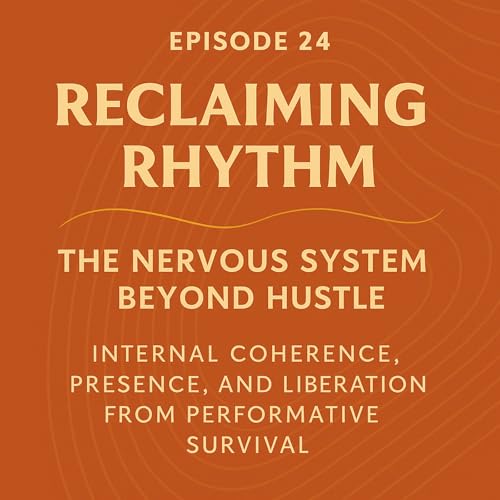
  • Reclaiming Rhythm — The Nervous System Beyond Hustle
    Nov 2 2025

    Episode 24: Reclaiming Rhythm — The Nervous System Beyond Hustle

    In this powerful new episode of Beyond the Spot, Tracy Gantlin-Monroy reframes hustle culture as a trauma imprint on the nervous system — not a mindset to overcome.

    Tracing the historical roots of urgency, exploitation, and performative professionalism, Tracy explores how disconnection from rhythm leads to burnout, limbic countertransference, and loss of internal coherence.

    Through a Brainspotting and somatic lens, this episode invites listeners to return to the body’s original rhythm — a rhythm built on truth, safety, and liberation.

    Because healing doesn’t happen in the hustle. It happens in the rhythm of coherence.

    Show More Show Less
    32 mins
  • The Soft Life Era: A Collective Reclamation Toward Liberation
    Oct 25 2025

    Episode 22: The Soft Life Era — A Collective Reclamation Toward Liberation

    In this powerful new episode of Beyond the Spot, Tracy Gantlin-Monroy reframes the “soft life” movement through the lens of nervous system healing and decolonized rest; a collective reclamation of safety, rest, and liberation.

    More than an aesthetic, the soft life is a somatic reclamation — a nervous system remembering safety after generations of survival. Tracy invites listeners, especially women and helpers, to explore how the longing for ease and rest is actually the body’s wisdom calling us back to regulation and liberation.

    Because the soft life isn’t luxury—it’s liberation.

    Show More Show Less
    19 mins