Episodes

  • When Ego Paves the Wrong Road with Bryce Harem
    Feb 20 2026

    Fresh out of college with a construction management degree, Bryce walked onto job sites telling field crews how to build based on what the book said.

    Fast forward to 2022 when he became a general manager and led his company to their largest financial loss ever at $1.5 million, forcing him to lay off 66 people.

    Instead of quitting, Bryce stood in front of the 35 remaining employees, wrote "I'm sorry" on a whiteboard, and owned the failure completely.

    We explore how treating people like numbers on a spreadsheet destroys companies, why chasing titles instead of impact sets you up for disaster, and how Bryce turned things around by asking field crews to teach him instead of pretending he knew everything.

    He shares his journey through alcohol and nicotine dependence trying to handle stress, the weekend journaling session that saved his career, and why the middleman mindset matters more than any title on your business card.

    Highlights:
    1. Why requesting to work with the toughest superintendents who didn't respect him became the turning point for earning trust.
    2. How treating a 100-person company like a spreadsheet with budgets and assets instead of people led to catastrophic financial loss.
    3. The moment where owning complete failure in front of his team changed everything.
    4. How to retain Gen Z talent by showing them the impact they're making instead of dangling titles and pay as the only rewards.
    5. How building personal power through relationships beats title power every time, especially when you're the middleman holding culture together.

    Subscribe to Blue Collar BS for practical advice on running your business better. Leading through failure requires more vulnerability than most people are willing to show - are you ready to own it?

    Get in touch with Bryce:

    LinkedIn

    Instagram

    Facebook

    Get in touch with us:

    Check out the Blue Collar BS website.

    Steve Doyle:

    Website

    LinkedIn

    Email

    Brad Herda:

    Website

    LinkedIn

    Email


    This podcast uses the following third-party services for analysis:

    Podtrac - https://analytics.podtrac.com/privacy-policy-gdrp
    OP3 - https://op3.dev/privacy
    Show More Show Less
    30 mins
  • Shoebox Accounting & Other Bullsh*t That’s Costing You
    Feb 13 2026

    Too many trades and construction business owners ignore their accounting until tax season hits, then spend days manually entering receipts from shoeboxes instead of using technology that does it automatically.

    We tackle the business operations side that gets pushed aside when you're busy doing the work that actually gets you paid.

    Steve reveals his manual QuickBooks process while Brad walks through why people fail to pay themselves properly, the three different rates you should be charging as owner-operator-CEO, and how to stop leaving money on the table with bad estimating.

    We explore tactics for building overhead into quotes without overcomplicating the math, why technology like receipt scanning apps can save days of work, and how understanding your customer's busy season changes your sales follow-up game completely.

    Highlights:Highlights
    1. Why paying yourself only after everything else is taken care of means you're getting a fraction of what you're worth instead of paying yourself first.
    2. How to calculate what you actually need to charge by separating your field labor hours from your CEO hours from your ownership compensation
    3. Why most jobs are quoted wrong because overhead and profitability aren't properly estimated into the numbers.
    4. The garage door company example where tactical empathy in follow-up messaging closed the deal after understanding their busy season.
    5. Why seven touches before giving up beats three attempts, but only if you change your approach when the message isn't landing.

    Subscribe to Blue Collar BS for practical advice on running your business better. If you're still using shoeboxes and spreadsheets to track your money, this episode is for you.

    Get in touch with us:

    Check out the Blue Collar BS website.

    Steve Doyle:

    Website

    LinkedIn

    Email

    Brad Herda:

    Website

    LinkedIn

    Email


    This podcast uses the following third-party services for analysis:

    Podtrac - https://analytics.podtrac.com/privacy-policy-gdrp
    OP3 - https://op3.dev/privacy
    Show More Show Less
    26 mins
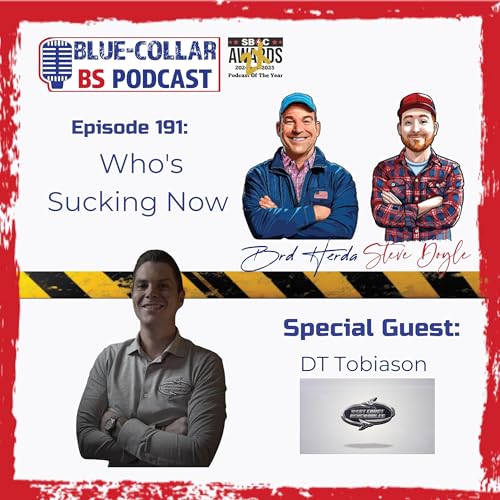
  • Who's Sucking Now with DT
    Feb 6 2026

    Starting with a shop vac in a Ford Ranger, DT built a grease trap company that now runs 14 trucks across Washington State with his sights set on going national before turning 40.

    He's built a team that runs the business smoothly when he's not there, and employees talk up the company so much they're recruiting people from completely different industries.

    We explore how unconventional leadership creates this level of ownership, why creative benefits matter when you can't compete with corporate packages, and what happens when you give people freedom to figure things out instead of controlling every process.

    Highlights:
    1. Why 13 years of trial and error taught DT that internal communication was the missing piece until hiring a CFO.
    2. When employees ask for more responsibility, letting them take it and own it completely creates better results than telling them exactly how to do it.
    3. Monthly company shutdowns for yard day and meals show employees you value spending time with them beyond just getting work done.
    4. How DT's willingness to admit he screwed up 100 times makes employees want to help build the company instead of just collect paychecks.
    5. Why mistakes are inevitable but what you do about them determines whether your team fears failure or learns from it.

    Make sure to subscribe to the Blue Collar BS podcast where we talk about the real gaps between generations in blue collar work and what it takes to lead across different age groups in today's trades.

    Get in touch with DT:

    Website

    Facebook

    Instagram

    Get in touch with us:

    Check out the Blue Collar BS website.

    Steve Doyle:

    Website

    LinkedIn

    Email

    Brad Herda:

    Website

    LinkedIn

    Email


    This podcast uses the following third-party services for analysis:

    Podtrac - https://analytics.podtrac.com/privacy-policy-gdrp
    OP3 - https://op3.dev/privacy

    Show More Show Less
    33 mins
  • Chasing Checks Sucks with Joe Kaye
    Jan 30 2026

    Home service is now 4% of the US workforce and the fastest growing industry in the country, yet many successful businesses still struggle with basic invoicing and cash flow management.

    Joe Kaye, a tech veteran who worked construction through college, started exploring investments in blue collar businesses and discovered a massive gap between the amount of work available and the systems companies used to actually get paid.

    He teamed up with co-founder Luke to build Procured, a field service management software helping businesses get paid the same day jobs are completed instead of waiting weeks to send invoices.

    We explore why younger people are choosing trades over college debt, how 60-70% of home service businesses now embrace technology, and Joe's rapid-fire revelations including his vendetta against Reese's for changing their formula and why being 10 minutes early means you're on time.

    Highlights:
    1. Why tracking financials only when checks arrive creates cash flow chaos that makes it impossible to know if you can pay rent, staff, or buy equipment.
    2. The real cost of waiting 30-plus days to send invoices after completing jobs when you're paying for trucks, materials, and payroll today.
    3. How the gap between available work and getting paid is crushing successful businesses that should be thriving.
    4. Why younger workers choosing trades over college debt are forcing the industry to adopt technology or get left behind.
    5. The invoice that never gets sent because there's no system to track what's been completed versus what's been billed, leaving thousands of dollars on the table.

    Subscribe to Blue Collar BS where we talk about the real gaps between generations in blue collar work and what it takes to lead across different age groups in today's trades.

    Get in touch with Joe:

    Website

    Instagram

    LinkedIn

    Email

    Get in touch with us:

    Check out the Blue Collar BS website.

    Steve Doyle:

    Website

    LinkedIn

    Email

    Brad Herda:

    Website

    LinkedIn

    Email


    This podcast uses the following third-party services for analysis:

    Podtrac - https://analytics.podtrac.com/privacy-policy-gdrp
    OP3 - https://op3.dev/privacy
    Show More Show Less
    32 mins
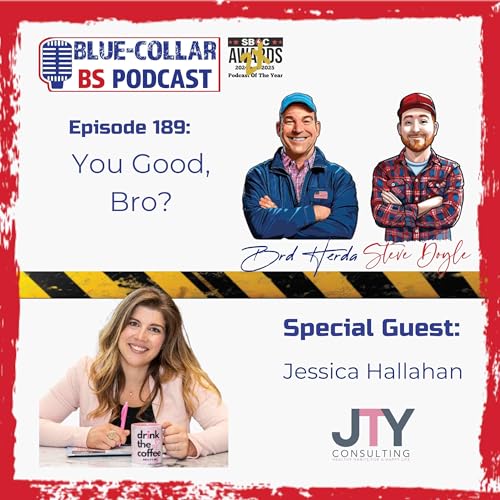
  • You Good, Bro? with Jessica Hallahan
    Jan 23 2026

    Construction is the second leading industry for death by suicide, yet most leaders don't know how to recognize when someone's struggling or how to have those check-in conversations.

    Jessica Hallahan grew up in a household full of addiction and poverty, became a drug and alcohol counselor, then burned herself out at age 24 before founding Journey to Yourself to help individuals and teams build resilience.

    We explore how different generations approach mental health from boomers who view it as unnecessary (62% are skeptical according to SHRM) to Gen Z who reports the highest rates of mental health issues and takes the most time off.

    Jessica shares why the angry person might need help just as much as the sad one, how older generations actually did care about mental health by going to the bar to "comment" about work, and why bringing your whole 70% is better than pretending you're at 100% when you're not.

    HighlightsHighlights:
    1. How to spot when someone's really struggling versus just having a bad day by watching for behavior that's different from their typical pattern.
    2. Why accountability goes both ways where leaders need to check in but employees also need to communicate when they're struggling.
    3. The difference between using ADHD or other diagnoses as awareness versus excuses and what to actually do with that information.
    4. Creating open door policies that actually work by leaders modeling vulnerability about their own rough days instead of hiding behind closed office doors.
    5. Why Gen Z needs the "yes and" lesson where you can acknowledge bad days and still understand other people have their own struggles too.

    Subscribe to Blue Collar BS for honest discussions about leadership challenges you're actually facing. Mental health isn't just a younger generation obsession share this episode with someone who needs to understand why it matters for everyone on their team.

    Get in touch with Jessica:

    Website

    Instagram

    LinkedIn

    Get in touch with us:

    Check out the Blue Collar BS website.

    Steve Doyle:

    Website

    LinkedIn

    Email

    Brad Herda:

    Website

    LinkedIn

    Email


    This podcast uses the following third-party services for analysis:

    Podtrac - https://analytics.podtrac.com/privacy-policy-gdrp
    OP3 - https://op3.dev/privacy
    Show More Show Less
    31 mins
  • OnlyFans for Engineers? Let's Talk Strategy
    Jan 16 2026

    Most business owners are sitting here in early January without any real plan for 2026 because they're still trying to close out 2025.

    Steve makes the case for one single measurable outcome that determines a successful year while Brad pushes back with the reality of "we just want more" thinking.

    Using gross margin improvement as an example, we walk through how to get every department aligned on the same goal, why supplier accountability is an untapped opportunity, and how to turn objectives into 12-week strategies.

    We also tackle why leadership is hard when you actually have to make decisions, how the Hoshin planning system creates 81 squares of complexity nobody needs, and why squirrels with shiny objects will always try to derail your focus unless pet projects directly support your singular goal.

    Highlights:
    • Why "we just want more" or "we want better" fails without defining what that actually means in measurable terms.
    • The trust but verify approach to supplier invoices especially around tariff line items that might have been passed through five times.
    • How employees come back with excuses about SAP tickets and IT problems when you give them nine goals instead of one clear focus.
    • The danger of operating in a one-year vacuum where beneficial three-year projects get killed because they hurt this year's numbers.
    • Why amazing things happen when you make actual decisions instead of living in "I'll think about it" mode that keeps everyone guessing.

    Subscribe to Blue Collar BS for more real conversations about running and growing your business. Share this episode with a business owner who's still trying to figure out what 2026 looks like.

    Get in touch with us:

    Check out the Blue Collar BS website.

    Steve Doyle:

    Website

    LinkedIn

    Email

    Brad Herda:

    Website

    LinkedIn

    Email


    This podcast uses the following third-party services for analysis:

    Podtrac - https://analytics.podtrac.com/privacy-policy-gdrp
    OP3 - https://op3.dev/privacy
    Show More Show Less
    20 mins
  • Inviting Women In, Changing the Game with Meaghan Ziemba
    Jan 9 2026

    Manufacturing has a storytelling problem and it's costing the industry talent to the skilled trades.

    Meaghan Ziemba, a technical writer with a master's degree who's been in the industry since 2008, got tired of watching male hosts ignore her suggestions to interview women in manufacturing.

    So she started Mavens of Manufacturing during the 2020 pandemic and has since interviewed over 200 women, creating a movement that's now bringing Gen Z into the industry through TikTok.

    We explore the broken rung theory keeping women stuck in their careers, why assumptions about family responsibilities block women from networking while men face no such barriers, and why communication breakdowns across genders, generations, and hierarchy levels keep shop floor workers out of strategic conversations where they could solve real problems.

    Highlights
    • The broken rung theory where missing that first promotion opportunity creates a stagnant career path especially for women in manufacturing.
    • How assumptions about women's family responsibilities exclude them from networking opportunities while the same assumptions don't apply to men.
    • Gen Z isn't lazy but purpose-driven and tech-savvy enough to expect immediate results while wanting meaningful work.
    • Communication breakdowns happen across genders, generations, and hierarchy levels when shop floor workers get excluded from strategic conversations.

    Subscribe to Blue Collar BS for more real conversations about running and growing your business. Share this episode with a manufacturer who's looking to attract and retain more women in their workforce.

    Get in touch with Meaghan:

    Website

    Facebook

    LinkedIn

    Youtube

    Get in touch with us:

    Check out the Blue Collar BS website.

    Steve Doyle:

    Website

    LinkedIn

    Email

    Brad Herda:

    Website

    LinkedIn

    Email


    This podcast uses the following third-party services for analysis:

    Podtrac - https://analytics.podtrac.com/privacy-policy-gdrp
    OP3 - https://op3.dev/privacy
    Show More Show Less
    33 mins
  • The wins, you know you have them
    Jan 2 2026

    Most business owners get so stuck in daily operations overwhelm that they forget everything they accomplished throughout the year.

    Brad shares his process for helping clients identify wins they didn't even realize they had, while Steve explains the psychology behind why your success list is actually programming you for future achievements.

    We tackle the recency effect in performance reviews, why most people announce seven goals when they should focus on two, and how to use your wins as a catapult into 2026 instead of starting from scratch.

    Highlights
    • Breaking down the overwhelm by separating what feels like fifteen problems into the two actual tasks you need to complete.
    • How the recency effect causes recent setbacks to overshadow an entire year of accomplishments in performance reviews.
    • Why your success list is actually programming your brain to understand that progress is possible and you can achieve goals with determination.
    • The difference between announcing top-line revenue goals that mean nothing to your team versus specific targets like twelve projects of X dollars.
    • How analyzing your wins helps you identify whether successes were repeatable systems or random acts of kindness.

    Subscribe to Blue Collar BS for more real conversations about running and growing your business. Share this episode with a business owner who could use a reminder to celebrate their wins.

    Get in touch with us:

    Check out the Blue Collar BS website.

    Steve Doyle:

    Website

    LinkedIn

    Email

    Brad Herda:

    Website

    LinkedIn

    Email


    This podcast uses the following third-party services for analysis:

    Podtrac - https://analytics.podtrac.com/privacy-policy-gdrp
    OP3 - https://op3.dev/privacy
    Show More Show Less
    27 mins