Season's Savings | ₹5/mo for 3 months

₹199/month after first 3 months. Renews automatically. Terms apply.
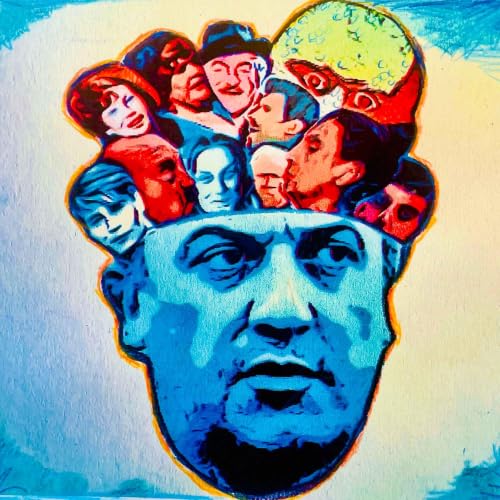
CAPOLAVORO! cover art

CAPOLAVORO!

CAPOLAVORO!

Written by: Ken Barrett
Listen for free

About this listen
In this podcast Russell Kilbourn, Professor of Literature and Film at Wilfrid Laurier University, Ontario discusses classic Italian movies, old and new with Ken Barrett, host of the Brainland podcast, visual artist and former neuropsychiatrist. Each episode focuses on one film and lasts about 30 minutes.

Hosted on Acast. See acast.com/privacy for more information.

Ken Barrett
Art World
Episodes
  • PIER PAOLO PASOLINI: Performing author?
    Nov 19 2026

    In this episode our discussion of Pier Paolo Pasolini centres on the idea of 'performing authorship' put forward by Gian Maria in his recent book, identifying common threads across the many media Pasolini worked with (film, poetry, fiction, writing for the stage and screen, painting, journalism and interviews). Our wide ranging conversation includes discussion formative influences in Pasolini's early life, his early poetry, painting and screen writing, including work with Fellini. Several films with themes or features linked to Pasolini's interest in painting and discussed, including Mamma Roma, Teorema and Decameron, also Salo, Medea and Edipo, further literary adaptations. Several other movies and literary works are referenced, alongside the social and political context in which he was working and his attitude to his homosexuality. But the above doesn't begin to represent the depth of discussion of Pasolini in this episode, with an academic who, beginning with poetry, has worked on Pasolini for two decades. Another extraordinary episode.


    Participants:

    Gian Maria Annovi is a poet and associate professor of Italian and comparative literature at the university of Southern California. https://dornsife.usc.edu/profile/gian-maria-annovi/

    Ken Barrett, visual artist, writer, podcaster and former neuropsychiatrist: http://www.kenbarrettstudio.co.uk


    Gian Maria's book 'Pier Paolo Pasolini: Performing authorship: https://cup.columbia.edu/book/pier-paolo-pasolini/9780231542708/

    The films discussed:

    Mama Roma (1962): https://www.imdb.com/title/tt0056215/?ref_=nv_sr_srsg_0_tt_3_nm_5_in_0_q_Mama%20Roma

    La Ricotta (1963): https://www.imdb.com/title/tt26923328/?ref_=nv_sr_srsg_3_tt_4_nm_4_in_0_q_Ricotta

    Teorema (1968): https://www.imdb.com/title/tt0063678/?ref_=nv_sr_srsg_0_tt_8_nm_0_in_0_q_Teorema

    Decameron (1971): https://www.imdb.com/title/tt0065622/?ref_=fn_t_2

    Salo: 120 Days of Sodom (1975). https://www.imdb.com/title/tt0073650/?ref_=fn_t_

    Media (1969) https://www.imdb.com/title/tt0066065/?ref_=nv_sr_srsg_0_tt_6_nm_2_in_0_q_medea

    Edipo (1967) https://www.imdb.com/title/tt0061613/?ref_=nv_sr_srsg_0_tt_8_nm_0_in_0_q_edipo

    Pasolini's portraiture: https://www.theartnewspaper.com/2023/10/27/pier-paolo-pasolini-heretical-writings-on-painting-are-spirited-and-contrarian


    Theme music: Tarantella composed by Stephen Brown

    Illustration by KB

    Hosted on Acast. See acast.com/privacy for more information.

    Show More Show Less
    1 hr and 11 mins
  • FELLINI'S 'AMARCORD' AND THE ANTI-FASCIST TREND IN '60S AND '70S ITALIAN CINEMA
    Oct 29 2026

    In this episode Fellini specialist Frank Burke discusses 'Amarcord' with Russ and ken, with briefer considerations of Visconti's 'The Damned' and Pasolini's 'Salo: 120 Days of Sodom' and the wider trend for revisionist films on fascism in the late 1960s and early '70s. After discussing the torrid political atmosphere of the period and the influential ideas of Gramsci and Reich we move on to the structure of 'Amarcord', the interesting resonances of the title, Fellini's use of characters speaking directly to camera and the film's circular structure and especially humour (the latter perhaps due to the involvement of screenwriter Tonino Guerra). The significance of obviously fake sea, fanciful flashbacks and ridiculous teachers and fascist get consideration before a more detailed consideration of Fellini's objectification of women. We end with a shorter discussion the two other films, highlighting especially Visconti's use, not accidental, in Frank's view, of very fake-looking blood in the massacre scene in 'The Damned' and what the absence of today's safeguarding might have meant for the many naked young people on Salò. In short, a great discussion with two experts in the field.


    Participants:

    Frank Burke is an independent film scholar and Professor Emeritus, Department of Film and Media, Queen’s University, Ontario, Canada. https://www.queensu.ca/

    filmandmedia/people-search/frank-burke

    Russ Kilbourn is professor of English and Film Studies, Wilfrid Laurier University, Waterloo, Ontario (Canada) http://rjakilbourn.com/

    Ken Barrett, visual artist, writer, podcaster and former neuropsychiatrist: http://www.kenbarrettstudio.co.uk

    The films:

    Amarcord:https://www.imdb.com/title/tt0071129/?ref_=fn_t_1

    The Damned: https://www.imdb.com/title/tt0064118/?ref_=fn_t_2

    Salò: 120 days of sodom. https://www.imdb.com/title/tt0073650/?ref_=fn_t_1

    More on Federico Fellini: https://en.wikipedia.org/wiki/Federico_Fellini

    Other subjects discussed:

    Wilhelm Reich's 'The mass psychology of fascism;: https://en.wikipedia.org/wiki/The_Mass_Psychology_of_Fascism

    Olivia Laing's novel 'The Silver Book': https://www.olivialaing.com/the-silver-book

    Theme music: Tarantella composed by Stephen Brown

    Illustration by KB

    Hosted on Acast. See acast.com/privacy for more information.

    Show More Show Less
    1 hr and 6 mins
  • VITTORIO DE SICA'S NEOREALIST CINEMA
    Aug 19 2026

    In this episode Russ and Ken discuss three of the earliest films made by director Vittorio de Sica, Sciusia (Shoeshine, 1946), Ladri di Biciclette (The bicycle thieves,1948) and Umberto D (1952), all films made in and around Rome, mainly with non-professional actors. We talk about De Sica's extraordinary career as actor, comedian, theatre then film director as well as his commitment to leftist politics and social justice, alongside his catholic faith and unusual, double, family life. Russ talks about the main elements of neorealism in cinema as evidenced in these films, and its parallel in the literature of the time, before outlining the plot of each film, each co-scripted by the director. We talk about the interesting use of locations and camera, capturing less-known areas of Rome and, the successful and affective impact of the music, composed by composed by Alessandro Cicognini in each case. Great conversation on an important director and movement.


    Participants:

    Russ Kilbourn, Professor of English and Film Studies, Wilfrid Laurier University, Waterloo, Ontario (Canada) http://rjakilbourn.com/

    Ken Barrett, UK based visual artist, writer, podcaster and short film producer http://www.kenbarrettstudio.co.uk/

    The movies:

    Sciuscia (1946): https://www.imdb.com/title/tt0040522/

    Ladri di Biciclette (1948): https://www.imdb.com/title/tt0040522/?ref_=fn_i_1

    Umberto D (1952): https://www.imdb.com/title/tt0045274/?ref_=fn_t_1


    More on De Sica: https://en.wikipedia.org/wiki/Vittorio_De_Sica

    More on Neorealism: https://en.wikipedia.org/wiki/Italian_neorealism


    Theme music: Tarantella composed by Stephen Brown.

    Artwork by KB

    Hosted on Acast. See acast.com/privacy for more information.

    Show More Show Less
    53 mins
adbl_web_anon_alc_button_suppression_t1
No reviews yet