CHANGE YOUR TUNE cover art

CHANGE YOUR TUNE

CHANGE YOUR TUNE

Written by: Susan Eldridge
Listen for free

About this listen

The 𝗛𝗨𝗠𝗔𝗡 side of orchestras and classical music. In early 2026 we’re relaunching the podcast to explore what helps people and culture thrive and where systems, hierarchy and tension get in the way. We'll uncover the dynamics that shape collaboration, communication, well-being and performance in classical music. Ingrid and Susan are both outsiders and insiders in classical music. Ingrid is a professional conductor who used to be an emergency doctor. Susan is a trainer and consultant who founded a multi-million dollar tech company. Between them, they know what supports people to be their best at work. Check out the back catalogue of 5 seasons featuring conversations with classical musicians about feelings (YES!), finding their value and career transitions. Meet professional classical musicians now thriving as entrepreneurs, master craftsmen, counsellors, personal trainers, software developers, lawyers and more. We need to NORMALISE the reality of underemployment, unemployment, career pivots and exits for classical musicians.2026 Change Your Tune Art Entertainment & Performing Arts Music Self-Help Success
Episodes
  • Suffering as the Status Quo
    Apr 26 2026

    This week, Susan and Ingrid recognise that classical music is an industry that often causes psychological harm, in a way that other industries do not. Fortunately, it is very possible to unlearn harmful practices, and to make choices that change the way our organisations operate – the rapid development of hearing safety in orchestras is a good example of this. The idea of suffering is central to many of our musical cultures, and we need to start having the conversation about what actually helps people thrive in the classical music industry.

    🤐 Many of us learn that in order to stay in the system, progress in the system, and succeed in the system, we need to stay quiet about our suffering.

    🚀 Suffering escalates: first it becomes invisible, then normalised, then necessary, then competitive.

    🧑‍💼 Some good questions to ask ourselves and our colleagues: “What would an outsider see here?” “What other ways might there be of doing this?”

    If this conversation has brought up awareness of suffering that you have experienced, know that this doesn’t have to be the reality in our industry. Seek support, and support those around you in their own experiences, as we work together to improve the way we support everyone in our industry to thrive.

    LINKS

    Pelletier, B. (2025). Effects of Sleep Extension on Musical Performance Skills. Music & Science, 8. "While further research is necessary to establish causality and explore long-term effects... the findings underscore sleep extension's potential to significantly enhance musical skills and psychological flexibility among musicians, potentially opening new avenues for optimizing performance and fostering resilience in creative pursuits."

    Bergen, P. (2024). Substance use in Australian orchestras: a scoping study "Previous research has established that musicians use a range of substances to manage performance anxiety, with beta-blockers and alcohol reported as the most common. To discover current patterns of use, we distributed an anonymous, online scoping survey to all professional Australian orchestras. The survey response rate was 17% of musicians, and representative of orchestral instrument groupings, with just over 50% of participants reporting using substances to manage performance anxiety. The most used substance was beta blockers, but other drugs and recreational substances were also reported. Notably, substance use does not noticeably ease for musicians with permanent orchestral jobs as they age."

    Find Ingrid at Ingrid Martin and Conducting Artistry

    Find Susan at Notable Values

    PODCAST TEAM

    Production support and audio engineering by Thomas Grayden

    Theme music composed by QiQi

    Theme music performed by QiQi and Darby Lee

    LAND ACKNOWLEDGEMENT

    This podcast was recorded on Waawiiyaataanong Country and produced on Wurundjeri Woi Wurrung Country. We pay our respects to Elders past and present, and acknowledge the ongoing impacts of colonisation on Indigenous communities.

    Show More Show Less
    36 mins
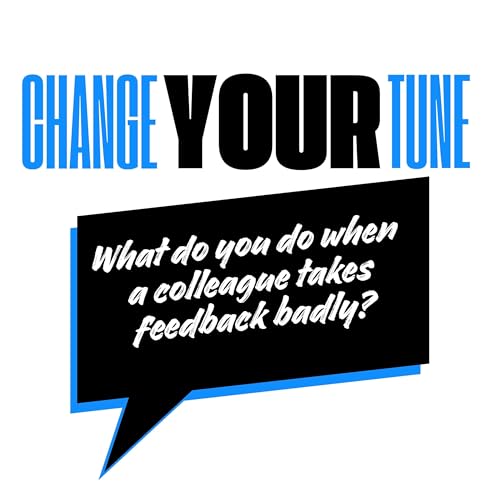
  • Colleagues Who Receive Feedback Badly
    Apr 20 2026

    This week, Susan and Ingrid dive more deeply into a question that came up frequently in Susan's recent workshops on feedback with the League of American Orchestras: what do I do when a colleague takes feedback badly? Susan and Ingrid discuss what might be going on under the surface for those around us, how to give feedback effectively, and what we actually mean by 'taking feedback badly.'

    🤕 What might people really be reacting to when they react to our feedback? Our training model in music can be an unsafe place to receive feedback, which sets us up to react to things we’ve experienced in the past, rather than the thing in front of us in our workplace.

    📝 How we frame feedback matters. We need to be aware of how our choice of words can help the people around us feel safe enough to receive feedback with clarity and openness.

    🛠️ Praise = specific notes on what was good, constructive feedback = what to do differently next time, destructive feedback = what was bad this time. Destructive feedback by itself is not useful and can cause harm.

    🗺️ Within constructive feedback, feed BACK = what happened, feed UP = what happens next, feed FORWARD = what we’re working towards. Research indicates that 40% feed back, 60% feed up and forward, is the optimum balance.

    They are not giving you a hard time. They’re having a hard time.

    LINKS

    Gary E. McPherson: Feedback in Music Performance Teaching (2022 article in Frontiers in Psychology)

    Find Ingrid at Ingrid Martin and Conducting Artistry

    Find Susan at Notable Values

    PODCAST TEAM

    Production support and audio engineering by Thomas Grayden

    Theme music composed by QiQi

    Theme music performed by QiQi and Darby Lee

    LAND ACKNOWLEDGEMENT

    This podcast was recorded on Waawiiyaataanong Country and produced on Wurundjeri Woi Wurrung Country. We pay our respects to Elders past and present, and acknowledge the ongoing impacts of colonisation on Indigenous communities.

    Show More Show Less
    37 mins
  • I Didn't Sign Up For This
    Mar 29 2026

    This week, Susan and Ingrid discuss how each person's version of success differs, but these versions can exist at the same time within an organisation – in fact, for a thriving organisation, that diversity is crucially important. They talk about the mismatch between what we might believe we signed up for and the actual reality of a role, and how organisations can make this clearer for better outcomes for everybody.

    Some good questions:

    🎻 When auditioning or interviewing for a role, are we representing that role accurately with our process, and our choice of excerpts and interview questions? This is our first chance to set people up to succeed, by choosing the person who is best for this actual role. Also, clear expectations are vital for psychosocial safety.

    🎓 Educators, are we providing opportunities for young musicians that represent the reality of a modern music career? Are we doing education concerts, playing with click tracks, learning to play live with a film? Sometimes we don't even have to teach it – but we do need to talk about the things that make a career in music sustainable.

    👥 What is it for, and who is it for? Our training model sets us up to expect a certain set of motivations, but the reality is that our work is mostly for the audience. We need to be united as an organisation around a clear shared purpose.

    Find Ingrid at Ingrid Martin and Conducting Artistry

    Find Susan at Notable Values

    PODCAST TEAM

    Production support and audio engineering by Thomas Grayden

    Theme music composed by QiQi

    Theme music performed by QiQi and Darby Lee

    LAND ACKNOWLEDGEMENT

    This podcast was recorded on Waawiiyaataanong Country and produced on Wurundjeri Woi Wurrung Country. We pay our respects to Elders past and present, and acknowledge the ongoing impacts of colonisation on Indigenous communities.

    Show More Show Less
    32 mins
No reviews yet